
Martians Go Home 1989

Made by

Image Organization
Martians Go Home Plot Summary
Read the complete plot summary and ending explained for Martians Go Home (1989). From turning points to emotional moments, uncover what really happened and why it matters.
Mark Deveraux [Randy Quaid] spent years chasing a true jazz breakthrough, drifting between gigs writing TV show themes and jingles to pay the bills. He’s technically successful—busy and steady—but the work doesn’t satisfy his creative itch. When a shot at scoring a sci‑fi film comes through, he packs up for a weekend in a cabin with one goal: to composer a piece that could serve as a universal greeting, something that would speak to everyone, everywhere. The process is painstaking but intimate, turning a personal longing into a measured, expressive experiment.
The moment he finally drafts something he believes could work, he reaches out to his girlfriend, a producer for an internationally syndicated talk show. She accidentally broadcasts the track, setting off a chain of unlikely consequences. The song, meant to be a private milestone, slips into the public sphere in an instant, and what begins as a personal victory becomes the spark for something far larger and stranger than either of them anticipated.
The next day brings an unexpected visitor: a Martian who claims the project’s greeting has reached Mars and that peace on Earth might be possible. The visitation quickly sours when the visitor retracts the claim and admits it was a joke. The Martian, who can read minds and teleport, demonstrates abilities that shock Deveraux and everyone watching. The encounter reveals a larger truth—billions of Martians are bored and itching to have fun at humanity’s expense. The threat is not a single visitor but a global invasion of mischief, as Martians begin to disrupt major events, expose intimate secrets, and even voyeuristically spy on people who are intimate, all while the Earth’s defenses scramble to respond.
As the Martian mischief spreads, Deveraux realizes the invasions feel curiously invited by his music. He interrupts a national broadcast once more, only to learn that the proper approach is to play the song in reverse. The revelation hits hard: the power behind the invasion isn’t force but resonance, and the key to reversing the chaos lies in reversing the tune itself. The Martians’ antics escalate, and the situation culminates in a dramatic push to reclaim control of the airwaves.
Bleeding from a failed attempt to stop the spectacle, Deveraux finds himself committed to a psychiatric hospital, where his recovery becomes intertwined with the ongoing crisis. His girlfriend aids in a daring rescue, and together they hijack another international broadcast to try the song again—this time in reverse. The plan unfolds amid a flurry of distractions and counter‑moves from the Martians, but the reversal works, and the Martians begin to withdraw across the globe.
With the threat gone, Deveraux face a new realization: he has found his true talent. He decides to leave Hollywood behind, stepping away from the studio world to pursue a life in music on the road. He reunites his Jazz quartet and hits the road at last, ready to explore a creative path that had always lived just out of reach. In this new frame, the once‑stalled composer discovers not just a career, but a sense of purpose that resonates far beyond a single song.
Mars is a dump
Even the President [Ronny Cox] is drawn into the growing disruption, a reminder that the stakes stretch from private studios to national broadcasts. In the end, the story circles back to a single, hopeful truth: music has the power to reveal, unite, and heal—as long as it speaks with authenticity, even when the world seems to be listening to something entirely alien. Dr. Jane [Anita Morris] provides quiet support in the hospital phase, grounding the chaos with care as the true rhythm of Deveraux’s life reclaims its beat.
Martians Go Home Timeline
Follow the complete movie timeline of Martians Go Home (1989) with every major event in chronological order. Great for understanding complex plots and story progression.
Mark's struggle and steady gigs
After years chasing a meaningful jazz career, Mark Deveraux settles into writing TV show themes and commercial jingles to make ends meet. He achieves stability in this work, yet the music he longs to create remains elusive. The dissatisfaction fuels his drive to prove himself with a truly original piece.
Win to score a sci‑fi film
He competes against more experienced composers and wins the job to score a sci‑fi film. The victory confirms his talent and gives him a chance to prove himself artistically. This success also sets up the upcoming creative retreat to craft his 'universal greeting'.
Cabin weekend: composing the universal greeting
During a weekend at a remote cabin, he engages in focused work to craft a piece that sounds like a 'universal greeting' per the producer's instruction. He experiments with motifs, hoping the tune will unify listeners worldwide. By the end, he believes he has produced something worthwhile.
Call to the producer girlfriend; accidental broadcast
He calls his girlfriend, who runs an internationally syndicated talk radio show, to share the new work. She is excited by the piece but, in a twist of fate, the song is accidentally broadcast to millions. The incident launches the story into unforeseen, global territory.
Martian arrival: peace, then joke
The next day, Deveraux, still recovering, meets a Martian who claims they heard the greeting and came to Earth to foster peace. The Martian immediately retracts the statement, joking that Mars is a 'dump' and that bored Martians want to have fun at humanity's expense. The visitors' numbers are described as billions with a plan to cause mischief.
Martians unleash havoc with mind-reading and teleportation
Almost instantly, billions of Martians use their powers to wreak havoc around the globe. They reveal intimate secrets, disrupt major sporting events, and spy on couples, exploiting the inability to reproduce to invade private moments. The chaos demonstrates how deeply the invasion affects everyday life.
Deveraux recognizes the invitation in his music
Realizing the Martians felt invited by his tune, Deveraux vows to counter the invasion by using the broadcast system. He interrupts a national broadcast to replay the song, hoping to drive the Martians away. He soon discovers that the solution requires the song to be played in reverse.
Feigning insanity and hospital confinement
After the failed attempt, Deveraux feigns insanity to be committed to a psychiatric hospital. His girlfriend works to secure his release, showing the strength of their bond and her commitment to stopping the Martian threat. The hospital sequence isolates him from the world as he plans a new strategy.
Escape and new plan: reverse-broadcast
The girlfriend ultimately frees him, and they prepare to counter the Martians by playing the song backwards on a global stage. They expect the reversed version to neutralize the threat and turn the tide of events. The plan marks a pivot from avoidance to direct musical intervention.
Second international broadcast: backward song
They hijack another international broadcast, and Deveraux performs the song in reverse as disruptions mount around the world. The Martians complicate the broadcast with distractions, but the reverse version ultimately prevails. The moment culminates in the Martians disappearing from Earth.
Martians vanish, world returns to normal
With the reverse song played, the Martians disappear from around the globe, ending the invasion. The world slowly recovers as private secrets are no longer exposed and public events return to normal. The crisis ends with a sense of relief and a newfound respect for the power of music.
Mark pivots to road, jazz quartet on tour
Having realized his talent, Deveraux quits his Hollywood assignments and reforms his jazz quartet to go on the road. He chooses a life devoted to live performance and meaningful music, free from the commercial pressures that once defined him. The film closes on a new chapter for his career.
Martians Go Home Characters
Explore all characters from Martians Go Home (1989). Get detailed profiles with their roles, arcs, and key relationships explained.
Mark Devereaux (Randy Quaid)
A struggling jazz composer who writes TV jingles to make a living, yet longs to create meaningful music. He crafts the 'universal greeting' that he believes could be worth pursuing as art. After the greeting triggers a Martian arrival, he struggles to adapt as events spiral globally, testing his creative resolve and nerve.
The President
A political leader thrust into a global crisis as Martian mischief disrupts world events. He represents authority under pressure as governments contend with mind-reading aliens and unpredictable technology. His responses highlight the tension between leadership, media, and public panic.
Sara Brody (Producer)
Devereaux's girlfriend and producer for an internationally syndicated talk radio show. She facilitates communication and helps orchestrate critical media maneuvers during the crisis. Resourceful and loyal, she ultimately plays a key role in turning the tide by leveraging mass media.
Voyeur Martian
A Martian who reveals intimate secrets by spying on humans and exploiting privacy for mischief. His telepathic abilities make him a roaming observer who intrudes on private moments, contributing to the film's satirical critique of public exposure.
Main Martian 1
A leading Martian envoy who embodies the prankish interference of the invasion. Teleportation and mind-reading let him foresee human reactions and dodge any attempts to stop him, turning the invasion into a game of wits. He embodies the nonchalant, cosmic amusement of the extraterrestrial visitors.
Dr. Jane
A doctor who deals with the Martian crisis, representing the medical and scientific response to the alien presence. Her perspective anchors the human side of the emergency as Martians unfold their disruptions. She observes the consequences of Martian interactions with public and private life.
Newsroom Martian
A Martian who materializes in the newsroom, using its abilities to interact with journalists and expose secrets during broadcasts. His presence heightens the satire of media coverage and the fragility of information during a crisis.
Stupid Medley Martian
One of the more zany Martians who adds a chaotic, comic layer to the invasion. His antics contribute to the film's tone of humorous, farcical intrusion into human affairs.
Main Martian 2
Another Martian participant who amplifies the invasive prank across different locales. His presence reinforces the scale of the invasion and the aliens' penchant for mischief.
Martians Go Home Settings
Learn where and when Martians Go Home (1989) takes place. Explore the film’s settings, era, and how they shape the narrative.
Location
Earth, Cabin retreat, Psychiatric hospital, International broadcast studios
Earth serves as the global stage for an alien invasion triggered by a single composition. The action shifts from a quiet cabin to crowded broadcast studios and a psychiatric hospital, illustrating how creativity intersects with mass media under pressure. The setting juxtaposes intimate spaces with large-scale media events, underscoring the film's satirical sci-fi tone.
Martians Go Home Themes
Discover the main themes in Martians Go Home (1989). Analyze the deeper meanings, emotional layers, and social commentary behind the film.
🎼
Music as Catalyst
Mark Devereaux's composition starts as a personal attempt to craft a universal greeting but becomes a literal invitation to an alien audience. The Martians' mind-reading and teleportation magnify the song's impact, turning music into a tool for shaping reality. The film treats music as more than background—it's a catalyst that destabilizes nations and triggers global spectacle. This theme explores how art can unexpectedly alter the world when it resonates beyond human listeners.
📡
Broadcast Power
Mars' invasion unfolds through public broadcasts, turning television and radio into instruments of mischief and revelation. The protagonist's attempt to hijack a broadcast—and his need to play the song in reverse—shows the double-edged power of media to create and control reality. The plot uses the spectacle of global events disrupted by alien interference to critique mass media's reach. It also demonstrates the fragility of communication when an unintended chorus from space enters the airwaves.
👀
Privacy & Voyeurism
The Martians' voyeuristic spying on couples exposes a humorous but pointed invasion of privacy. Minds reading and intimate secrets being exposed satirize the public's obsession with celebrity and personal life. The theme contrasts intimate human moments with the aliens' intrusive curiosity, underscoring the film's satirical bite.

Coming soon on iOS and Android
The Plot Explained Mobile App
From blockbusters to hidden gems — dive into movie stories anytime, anywhere. Save your favorites, discover plots faster, and never miss a twist again.
Sign up to be the first to know when we launch. Your email stays private — always.
Explore the mobile appMartians Go Home Spoiler-Free Summary
Discover the spoiler-free summary of Martians Go Home (1989). Get a concise overview without any spoilers.
In a world suddenly swamped by a legion of green‑skinned pranksters, Earth has become a stage for relentless one‑liners and cosmic practical jokes. These extraterrestrial comedians arrive with the confidence of a worldwide comedy tour, turning traffic lights into punchlines and sporting events into improv sketches. The atmosphere is a mix of bewildered panic and slapstick absurdity, as ordinary moments are hijacked by beings who thrive on exposing secrets, rewiring reality with jokes, and refusing to take anything seriously. The daily grind now feels like an unending sitcom, with humanity caught between laughter and madness.
Mark Devereaux drifts through this chaos as a talented but underappreciated composer. After years of chasing a jazz career that never quite materialized, he settles into writing jingles and TV theme songs—crafting catchy hooks that pay the bills while leaving his deeper artistic ambitions unfulfilled. He is a man of melody, yearning to create something that truly matters, and his personal life mirrors his professional compromise: a supportive girlfriend who runs an internationally syndicated talk‑radio program, and a restless desire to break free from the monotony of commercial work.
When a producer asks for a “universal greeting” for a sci‑fi movie, Mark pours his yearning into a single, resonant phrase. Unbeknownst to him, the tune becomes an inadvertent beacon, summoning the billions of bored Martians who interpret it as an invitation to Earth’s stage. Their arrival thrusts Mark from the safety of the studio into the eye of a planetary prank, and the weight of the world’s sanity suddenly rests on the very song he crafted.
The film balances razor‑sharp humor with a gently unsettling undercurrent, inviting the audience to wonder how far humanity can tolerate a universe that refuses to be taken seriously. As Mark grapples with the absurdity of an alien invasion laced with punchlines, he must uncover the source of the Martians’ invitation and devise a way to send the comedic hordes home—before the planet’s collective sanity slips entirely into the punchline.
Movies with Similar Twists and Themes
Uncover films that echo the narrative beats, emotional arcs, or dramatic twists of the one you're exploring. These recommendations are handpicked based on story depth, thematic resonance, and spoiler-worthy moments — perfect for fans who crave more of the same intrigue.
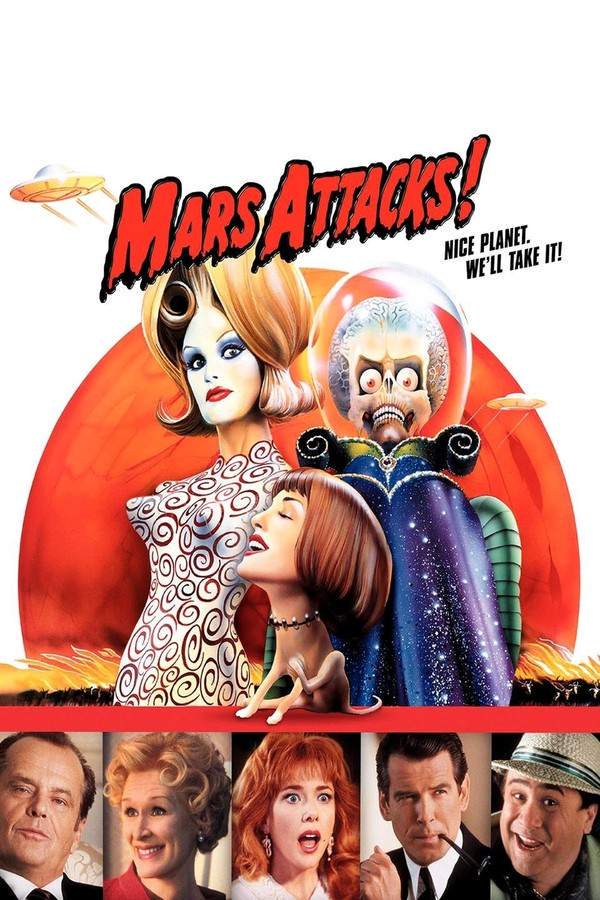


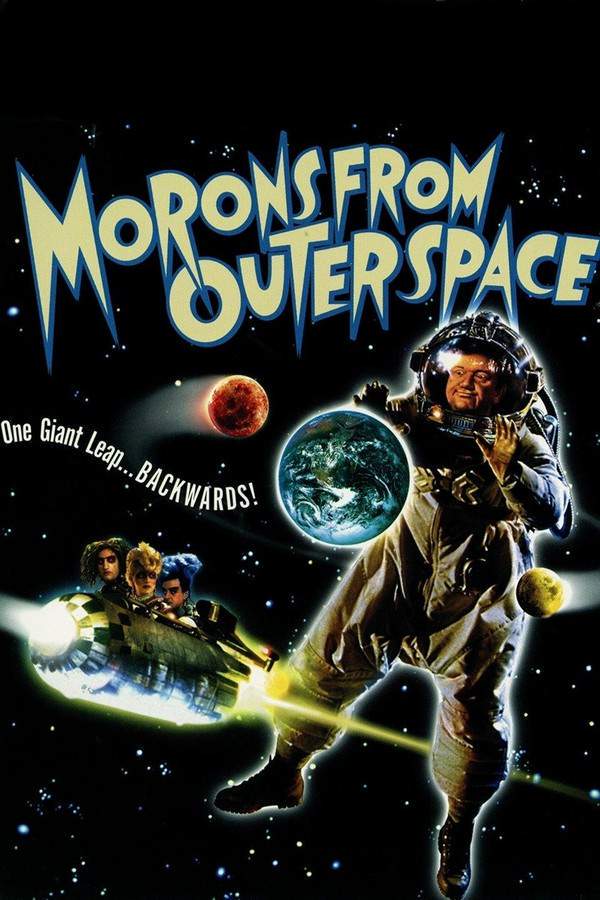


Featured on this page

What's After the Movie?
Not sure whether to stay after the credits? Find out!
Check out our other apps:

SAT Sphere
Build confidence for the Digital SAT.

Mori Atlas
Discover wild places worth protecting.

Luntero
Search smarter for a home in Amsterdam.

Plot Explained
Unravel movie endings and hidden clues.

Pokechamp
Dive into Pokémon data and battle logic.

Driving Theory
Get ready for your European theory test.

Movie Dust
Plan your next cinema trip with ease.

Musemap
Find art and culture as you travel.

Selkobase
Compare credentials before committing.

Local Manual
Turn an unfamiliar country into practical next steps.

Lernavi
Compare school systems before your next move.

GymRoam
Find a workout stop wherever your plans take you.
Explore Our Movie Platform
New Movie Releases (2026)
Famous Movie Actors
Top Film Production Studios
Movie Plot Summaries & Endings
Major Movie Awards & Winners
Best Concert Films & Music Documentaries
Movie Collections and Curated Lists
© 2026 What's After the Movie. All rights reserved.
Privacy Policy