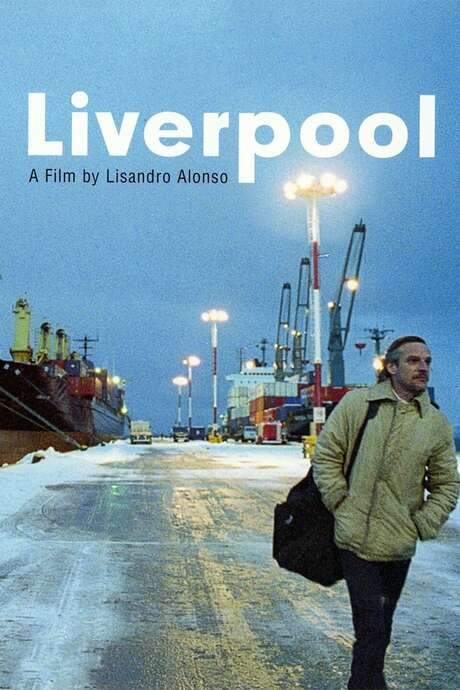
Liverpool 2008

Directed by

Lisandro Alonso
Made by

Black Forest Films
Where to Watch Liverpool
See current US streaming, rental, and purchase options for Liverpool (2008) via JustWatch.

Streaming availability powered by 
Liverpool Plot Summary
Read the complete plot summary and ending explained for Liverpool (2008). From turning points to emotional moments, uncover what really happened and why it matters.
The film tracks Farrel, Juan Fernández, a seasoned merchant seaman who asks for a leave of absence in Ushuaia, Tierra del Fuego, hoping to visit his mother in his long-ago homeland after twenty years apart. A native of Ushuaia who drives a snow plow for a living, Farrel carries a sense of distance and weathered resolve as he slides back into the rhythms of a life he left behind.
The opening vignettes shuttle us through the ship’s quiet, utilitarian world: a rec room where video games glow, a larder stacked with sausages and snacks, an instrument room, and the clamor of an engine room. We follow Farrel closely as he is abruptly rousted from sleep, inspects his sparse quarters, and does a bit of maintenance painting in a workshop. He climbs the steel stairs to the deck, taps a door en route, and stands on the railing in a gusting wind, gazing at the rushing sea. Later, on the bridge, he’s dressed in calmer gear, tending to a small control wheel while a navigator pores over maps. The captain appears with a directive: the ship is seven hours from Ushuaia, weather is foul, but Farrel has permission to go ashore so long as he returns in time.
Back on board, he prepares to depart: showered, packing his kit and a bottle of vodka, he casts a last look at the dim, wintry landscape through the ship’s corridors. He slips away in the bowels of the vessel, exchanging a large bag for a smaller one and stashing the surplus to be retrieved later. He spends his last hours ashore in solitary moments—sharing a meal in a restaurant and later drinking alone in a nude dance bar—before dawn breaks, the water gleaming and the day beginning to reveal a harsher world outside.
By morning he wakes along the shore, finding himself on what looks like a derelict ferry with a battered interior. The day opens with a cigarette and a pocketful of vodka as he makes his way across a shipping yard toward Tolhuin, hoping for a ride. A traveler’s dorm with a kitchen and a radiator offers a brief warmth; two card players offer coffee, and a woman with packed bags sits watching a soap opera on TV, a quiet scene of ordinary life continuing despite his absence. A driver with a flatbed truck ferries Farrel, along with two other passengers, through a stark landscape where bare trees, snow-tinged mountains, and long roads form the frame. Farrel, with a canteen of vodka in hand, leans into the chill of the evening as a third passenger disembarks, and the journey toward a distant patch of work and memory continues.
Near a weathered soccer post, Farrel pauses to study something carved or written beneath the ice, then takes a long drink beside a rusty storage tank, a dog barking in the background. In a small residential settlement an older man, Nieves Cabrera, known as Trujillo, seems to recognize him, and Farrel sinks into the warmth of a rugged canteen where bread, stew, and red wine are shared around a long table. A shortwave radio crackles with talk of fuel, road conditions, and a flock of sheep; Nazarena, a sick woman whose condition is not improving, is tended in the same space. A shy young woman, Analía, enters with a serving dish but does not speak, standing near Farrel and stealing glances as the serving is prepared. Trujillo escorts her home, and Farrel follows, peeking through a window as he drinks from his vodka, trying not to be seen in a place that feels both intimate and distant.
The morning after, Farrel wakes again in an abandoned shed, the bottle emptied, and he is carried into Trujillo’s cottage to warm up. A gentler truth emerges: “Shortly after you left, Analia was born,” he is told, a line that lands with a sudden weight. Nazarena’s illness, Analia’s delicate presence, and Farrel’s fading connection to the village all sharpen the sense that the past has not simply waited for him but has waited with him. Farrel moves through the day with a half-formed plan and a half-formed conscience, buying fresh bread at the canteen and later returning to the house, where Analia stands at the window with quiet resolve and a stubborn simplicity.
Inside the home, Farrel observes Analia as she asks for money, her manner gentle but blunt, while a mother’s fragility remains the unspoken center of the scene. He places a few bills into Analia’s hand and, after taking a photograph from a shelf, offers her a keepsake—an emblem of the life he has left behind. On the snow, he hands over the small gift and begins his slow retreat, never looking back as the distance stretches between him and the cottage. From the window, Trujillo peels apples as rabbits hop about their hutch, and Analia wanders through the sawmill, guided to safety by a cautious hand.
That night Nazarena drinks broth and rests, and Analia finally climbs into bed beside her grandmother, drawing the light from the room and the day to a close. The next morning, Analia assists with fur traps, though most are empty; a fox is caught, and the pair retreat to a barn where Trujillo prepares the carcass and Analia feeds the sheep with a mix of care and a touch of mischief. Earlier in the day, she had tucked away a private message on a wooden fencepost, and now, with a pencil in hand, she checks that she’s alone before revealing the keepsake she’s kept. The object—a gaudy metal keychain from the port of Liverpool—dangles in her grasp, a gift that strikes as thoughtless and flashy, and she watches it spin as the screen fades to black.
Shortly after you left, Analia was born.
You left me quite a legacy. What are you hoping to find? Your mother is sick.
used to live near a sawmill.
Liverpool Timeline
Follow the complete movie timeline of Liverpool (2008) with every major event in chronological order. Great for understanding complex plots and story progression.
Shipboard life and Farrel's routine
Vignettes show life aboard an oceangoing cargo vessel: games in the rec room, a larder stocked with snacks, an instrument room and an engine room. The focus centers on Farrel, who is rousted from sleep and moves through a sparse cabin, doing maintenance painting before heading to the deck. He stands at the railing in a strong wind, watching the rushing water as the sea swirls around the ship.
Farrel asks for leave to visit his mother
With the ship seven hours from Ushuaia and weather turning bad, Farrel tells the captain he needs ashore to check on his mother. The captain approves the leave but imposes a return deadline to the vessel. This moment marks a personal turning point as his longing overrides routine discipline.
Preparing to go ashore
Farrel showers, packs his gear, and pockets a bottle of vodka he drinks before departure. He signs out and descends the metal staircase into whipping wind, underdressed for ice and wet conditions. In an alley he swaps his large bag for a smaller one, stashing the extras to be collected later.
Evening on land: meal and bar
On land Farrel spends time in a restaurant for a quiet meal and later drinks alone at a nude dance bar. The solitary rituals underscore his isolation and longing for home. The sequence foreshadows the hardship of his journey to reach his mother.
Derelict ferry morning
Morning finds Farrel waking by the water in a derelict ferry with a ruined interior. He starts the day with a cigarette and a swallow of vodka, surveying the bleak surroundings. The setting signals a rough, improvised trek ahead.
Journey to Tolhuin begins
Farrel hitches a ride from a truck depot to Tolhuin, climbing into the back of a flatbed with two other passengers while a woman waits in the cab. The barren forest and snowy mountains roll by as they travel. He takes a swig from the vodka bottle, bracing himself for the road ahead.
Canteen meet: Nazarena and Analia
In a rugged canteen Farrel encounters Nazarena, who is ill, and a shy young woman named Analia who enters with a serving dish. Trujillo escorts Analia home, and Farrel follows, watching the fragile household dynamics unfold. The scene plants the seeds of Farrel’s connections with the mother and the child.
Farrel sheltered at Trujillo's cottage; birth and illness revealed
That night Farrel wakes in an abandoned shed with an empty bottle, and Nazarena remains bedridden. He is carried to Trujillo's cottage to warm up, where he learns that shortly after he left, Analia was born. The moment confirms the price of his long absence and the fragile ties that bind the family.
Bread and a tense exchange with Analia
Back in the canteen, Farrel buys bread and returns to the house where Analia sits drawing by a window. Farrel offers her the bread, but she ignores it and instead asks for money, revealing a child’s straightforward hunger and dependence. The moment sharpens the distance between Farrel and Analia.
Meeting with Nazarena and the mother
Farrel finds Nazarena bedridden and sits beside her, stating his name. She does not recognize him, underscoring the ache of years apart and the cost of his absence. The scene intensifies the emotional stakes of his visit.
A farewell with a keepsake
Before leaving, Farrel presses money into Analia's hand and takes a photograph from a shelf. He gives her a keepsake—a gaudy metal Liverpool port keychain—and sets off back toward the road, not looking back as the world goes on around him. A window scene in Trujillo’s cottage offers a quiet counterpoint to the departure.
Final image: Analia with the keepsake
In the final beat, Analia is seen with the keychain—the Liverpool keepsake Farrel gave her—while a private message is revealed on a fencepost earlier in the story. The keychain spins in her hand as the screen cuts to black, leaving Farrel's fate and the family’s future unresolved. The image ties together absence, memory, and a fragile gift from a father who could not stay.
Liverpool Characters
Explore all characters from Liverpool (2008). Get detailed profiles with their roles, arcs, and key relationships explained.
Farrel (Juan Fernández)
A seasoned merchant seaman on shore leave, he travels to Ushuaia to visit his ailing mother. He moves with practical routines, carrying a bottle of vodka and a guarded demeanor that hides a deeper longing for belonging and responsibility.
Analía (Giselle Irrazabal)
A shy, simpleminded girl who appears in the canteen and becomes a small, vulnerable figure in Farrel’s world. Her earnest demeanor and quiet presence hint at a need for stability and care within the remote community.
Trujillo (Nieves Cabrera)
An older man who recognizes Farrel and acts as a quiet anchor for Nazarena and Analía. He embodies practical care and steadfast presence in a landscape defined by weather and distance.
Liverpool Settings
Learn where and when Liverpool (2008) takes place. Explore the film’s settings, era, and how they shape the narrative.
Location
Ushuaia, Tolhuin, Tierra del Fuego, Liverpool
The story moves between an oceangoing cargo vessel navigating icy Patagonian waters and remote settlements in Tierra del Fuego. Farrel travels from shipboard life to a homecoming near a sawmill to check on his ailing mother Nazarena and to encounter Analia. The stark, wind-swept landscapes and harsh weather emphasize distances that shape his choices and relationships.
Liverpool Themes
Discover the main themes in Liverpool (2008). Analyze the deeper meanings, emotional layers, and social commentary behind the film.
💔
Homecoming
After years away, Farrel returns to care for a frail mother and to reconnect with Analia and Trujillo. The voyage and the village meet in a quiet reckoning of duties, memories, and what it costs to return. His guarded demeanor gradually yields to moments of vulnerability as he confronts what he left behind. The encounter exposes the fragility of family ties and the price of leaving.
🕰️
Memory
Objects tether the present to the past—a keychain from the port of Liverpool, a photograph, and a bottle of vodka. Farrel’s choices are propelled by the memories those items evoke, revealing how the past guides but does not dictate his actions. The remote Patagonian landscape becomes a mnemonic space where places stand in for people. Time in the film is felt through echoes and reminders more than explicit chronology.
🌨️
Isolation
Wintry, wind-swept settings—the ship, the canteen, and the village—frame the characters’ lives and distances between them. Isolation sharpens both resilience and loneliness as Farrel navigates duty, memory, and desire. The weather often acts as a silent force that tests loyalty and the will to stay or leave.

Coming soon on iOS and Android
The Plot Explained Mobile App
From blockbusters to hidden gems — dive into movie stories anytime, anywhere. Save your favorites, discover plots faster, and never miss a twist again.
Sign up to be the first to know when we launch. Your email stays private — always.
Explore the mobile appLiverpool Spoiler-Free Summary
Discover the spoiler-free summary of Liverpool (2008). Get a concise overview without any spoilers.
In the stark, wind‑blown reaches of Tierra del Fuego, a weathered merchant vessel drifts toward the isolated port of Ushuaia. Its corridors hum with the quiet routines of a crew accustomed to endless horizons, while the sea outside churns with a relentless gray. Farrel, a seasoned seaman who has spent two decades navigating distant trade routes, finally receives permission for a brief leave—an opportunity to step ashore and confront a fragment of his past that has long been muffled by the clamor of ship life.
The town he returns to is a patchwork of snow‑capped roofs, rusted machinery, and the low, steady cadence of everyday labor. Here, life is measured in simple exchanges: a shared meal in a modest restaurant, the glow of a television in a modest dormitory, the quiet presence of locals who have learned to endure the harsh climate. Among them, an older man known as Trujillo runs a modest canteen, and a shy young woman, Analia, moves through the streets with a hesitant grace. Their interactions offer Farrel a glimpse of a community that has persisted long after his departure, each face a reminder of the world he once left behind.
Yet beneath the cold exterior of the settlement lies a lingering warmth of memory and unspoken questions. Farrel carries with him the weight of an uncertain reunion—whether his mother still lives, what the passage of time has wrought, and how his own hardened resolve will meet the tender, weather‑worn ties of his hometown. The film settles into a meditative rhythm, inviting viewers to feel the pull of home against the backdrop of an unforgiving landscape, where every breath of wind may carry a fragment of the past back to the present.
Movies with Similar Twists and Themes
Uncover films that echo the narrative beats, emotional arcs, or dramatic twists of the one you're exploring. These recommendations are handpicked based on story depth, thematic resonance, and spoiler-worthy moments — perfect for fans who crave more of the same intrigue.


Featured on this page

What's After the Movie?
Not sure whether to stay after the credits? Find out!
Check out our other apps:

SAT Sphere
Build confidence for the Digital SAT.

Mori Atlas
Discover wild places worth protecting.

Luntero
Search smarter for a home in Amsterdam.

Plot Explained
Unravel movie endings and hidden clues.

Pokechamp
Dive into Pokémon data and battle logic.

Driving Theory
Get ready for your European theory test.

Movie Dust
Plan your next cinema trip with ease.

Musemap
Find art and culture as you travel.

Selkobase
Compare credentials before committing.

Local Manual
Turn an unfamiliar country into practical next steps.

Lernavi
Compare school systems before your next move.

GymRoam
Find a workout stop wherever your plans take you.
Explore Our Movie Platform
New Movie Releases (2026)
Famous Movie Actors
Top Film Production Studios
Movie Plot Summaries & Endings
Major Movie Awards & Winners
Best Concert Films & Music Documentaries
Movie Collections and Curated Lists
© 2026 What's After the Movie. All rights reserved.
Privacy Policy