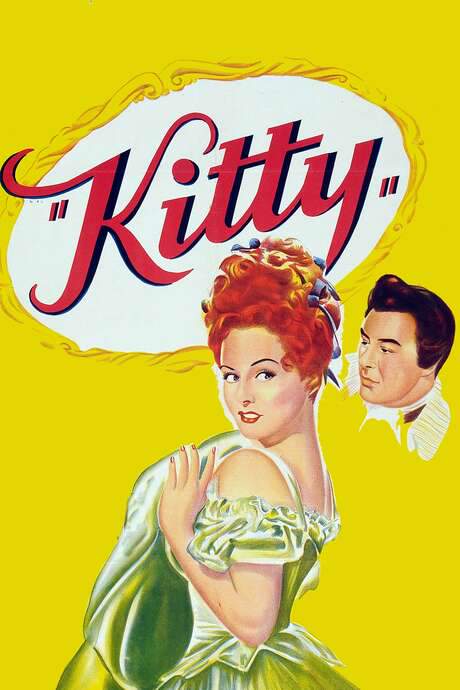
Kitty 1945

Directed by

John Rice
Made by

Paramount Pictures
Where to Watch Kitty
See current US streaming, rental, and purchase options for Kitty (1945) via JustWatch.

Amazon Video
SD
Apple TV Store
SD
Fandango At Home
SD Streaming availability powered by 
Kitty Plot Summary
Read the complete plot summary and ending explained for Kitty (1945). From turning points to emotional moments, uncover what really happened and why it matters.
In 1783 London, a poor thief named Kitty is caught pickpocketing the celebrated painter Gainsborough. Amused, he pays her to sit for a portrait, and as she poses, she catches the eye of Sir Hugh Marcy, who offers her a job as a scullery maid and, later, becomes his aunt’s ward. Kitty learns that he is impoverished, having lost his post in the Foreign Office.
Gainsborough’s portrait, The Anonymous Lady, creates a stir, as people try to guess the subject. The Duke of Malmunster(/actor/reginald-owen), who buys the painting, asks Gainsborough about the model, and Hugh interjects that she is his aunt’s ward. So in exchange for an introduction to Kitty, the Duke offers to have Hugh reinstated in the Foreign Office. But the relationship goes no further than the promised introduction. Meanwhile, Kitty develops an attraction for Hugh—so much so, that when he is sent to debtors’ prison, Kitty charms wealthy industrialist Jonathan Selby into marriage, using her dowry to free Hugh. But he and his aunt once again go broke. Kitty breaks into her husband’s strongbox to bail them out, but Selby beats her. He dies at the hands of Kitty’s loyal maid.
As a result, Kitty inherits a large fortune. She desires happiness with Hugh, but he is determined that she marry the Duke of Malmunster(/actor/reginald-owen) so that Hugh can reclaim his career. Kitty gives in. After the honeymoon, the duke announces that Kitty is pregnant (though the father was the late Selby). After the birth of the boy, the old duke dies, leaving Kitty extremely wealthy.
After she has a respectable mourning period, Hugh attempts to arrange a third marriage for Kitty, this time to the Prince of Wales(/actor/michael-dyne). But Kitty says that she has already married twice out of love for him. Unimpressed, Hugh replies that he considers their relationship a business arrangement, nothing more.
Meanwhile, Kitty becomes engaged to Hugh’s close friend, the Earl of Carstairs(/actor/patric-knowles). Seeing them together, Hugh realizes he actually is in love with Kitty. The Earl, ever the gentleman, chooses not to stand in the way of Hugh’s happiness. So in the end, Hugh and Kitty are free to affirm their mutual devotion.
Kitty Timeline
Follow the complete movie timeline of Kitty (1945) with every major event in chronological order. Great for understanding complex plots and story progression.
Kitty is caught stealing; Gainsborough hires her
In 1783 London, Kitty, a poor thief, is nabbed while pocket-picking the painter Thomas Gainsborough. Amused, Gainsborough pays her to sit for a portrait, starting an unlikely collaboration between artist and model. The opportunity marks the start of Kitty's ascent from poverty to influence.
The Anonymous Lady becomes a sensation
Gainsborough's portrait The Anonymous Lady captures public imagination as people try to guess who sits for it. The painting attracts attention from patrons and curiosity-seekers alike. Kitty's presence lingers behind the mystery, fueling talk in London art circles.
Hugh Marcy offers Kitty work and wardship
Sir Hugh Marcy notices Kitty during the pose and makes an unexpected offer: a job as a scullery maid and ward under his aunt. He reveals his own poverty and ambition, and sees Kitty as a potential ally or instrument. The encounter shifts Kitty from thief to someone with doors opening before her.
Duke of Malmunster queries the model
The Duke of Malmunster buys The Anonymous Lady and asks Gainsborough who the model might be. Sir Hugh interjects, claiming Kitty is his aunt's ward, which protects her identity. The exchange ties Kitty’s fate to aristocratic politics and Gainsborough's promotion.
Duke offers introduction for reinstatement
The Duke proposes to help Hugh reclaim his Foreign Office post in exchange for an introduction to Kitty. Gainsborough and Hugh navigate a delicate wager of influence and reputation. Kitty becomes a focal point in a web of power, art, and marriage ambitions.
Kitty marries Selby to free Hugh
Kitty's growing affection for Hugh leads to a radical move: she charms wealthy industrialist Jonathan Selby into marriage, using her dowry to secure Hugh's release from debtors' prison. The scheme binds Kitty to a fortune and to a man whose wealth may both help and hinder her. The action sparks a new set of consequences for all involved.
Selby dies; Kitty inherits wealth
Selby dies at the hands of Kitty's loyal maid, leaving Kitty with a large fortune. This windfall shifts her position and power in society, intensifying the draws and dangers of her evolving relationships. The fortune also deepens Hugh's resolve to control Kitty's future.
Kitty agrees to marry the Duke to aid Hugh
Desiring happiness with Hugh but seeing his determination, Kitty agrees to marry the Duke of Malmunster so that Hugh can reclaim his career. The arrangement tests their affection against ambition and social leverage. Kitty's choice reflects the persistent tension between love and advancement.
Honeymoon, pregnancy, and the Duke's death
After the wedding, the Duke announces that Kitty is pregnant, though the father is the late Selby. Following the birth of a son, the old Duke dies, leaving Kitty extremely wealthy. The rapid turn of events consolidates her power and reshapes her prospects.
Hugh plots a third marriage to the Prince of Wales
After a solemn mourning period, Hugh tries to arrange a third marriage for Kitty, this time to the Prince of Wales. Kitty asserts that she has already married twice for love, not convenience. Hugh insists their bond is a business arrangement, not merely romance.
Kitty engaged to Earl of Carstairs; Hugh's awakening
Kitty becomes engaged to Hugh's close friend, the Earl of Carstairs, stirring tension between the two men. Seeing them together, Hugh realizes he actually loves Kitty. The Earl, a true gentleman, chooses not to stand in the way of their happiness.
Hugh and Kitty affirm their devotion
With obstacles resolved, Hugh and Kitty are free to affirm their mutual devotion. Their relationship evolves from strategic maneuvering to genuine partnership based on shared history and affection. The ending emphasizes love overcoming status and ambition.
Kitty Characters
Explore all characters from Kitty (1945). Get detailed profiles with their roles, arcs, and key relationships explained.
Kitty (Paulette Goddard)
A poor thief who becomes Gainsborough's muse and later an heiress. She is charming and resourceful, using wit and affection to navigate a world of men who control her fate. Her loyalties shift as she seeks happiness, wealth, and protection for the people she cares about.
Thomas Gainsborough (Cecil Kellaway)
A celebrated painter who buys Kitty's silence with a portrait and helps catalyze her transformation from thief to social actor. He is perceptive, ambitious, and playful, using art to influence others while remaining morally aware of his own ambitions.
Sir Hugh Marcy (Ray Milland)
A once-prominent Foreign Office official who has fallen on hard times. He is calculating, proud, and deeply in love with Kitty, willing to bend rules to reclaim status, which complicates their relationship and drives the plot.
Duke of Malmunster (Reginald Owen)
A wealthy aristocrat who buys Gainsborough's painting and uses influence to broker outcomes. He embodies old-world power and the transactional nature of social advancement in the period.
Brett Harwood, Earl of Carstairs (Patric Knowles)
Kitty's eventual fiancé, a courteous nobleman whose marriage vows are a stabilizing force in Kitty's life, even as romantic rivalries complicate loyalties. He embodies chivalry and social duty.
Kitty Settings
Learn where and when Kitty (1945) takes place. Explore the film’s settings, era, and how they shape the narrative.
Time period
1783
The story unfolds in late 18th-century London, during the Georgian era. Wealth, reputation, and patronage dictate who can marry whom and who can pursue a career. The period's fashions, salons, and public performances provide the backdrop for Kitty's rise from thief to heiress.
Location
London, England
In 1783 London, a bustling Georgian metropolis, painters and patrons mingle in a thriving art scene while poverty and debt shadow many lives. The city serves as both workshop and stage for social climbing, where a thief can become a muse and wealth can open doors. Debtors' prisons and aristocratic patronage shape the fates of lovers and artists alike.
Kitty Themes
Discover the main themes in Kitty (1945). Analyze the deeper meanings, emotional layers, and social commentary behind the film.
💖
Love vs Money
Kitty's relationships are shaped by money and status as much as affection. She navigates romance with Hugh while leveraging her dowry to affect others, revealing how wealth can both enable and complicate true connection. The narrative shows that love often collides with social expectations, and personal happiness can hinge on financial leverage.
🏛️
Society & Class
The film probes the rigid class system of the era, where aristocrats, merchants, and artists negotiate power through marriages, patronage, and appearances. Kitty's ascent exposes the fragility of social status and the compromises demanded by society. Wealth can tilt the balance of power, yet public perception remains a powerful force guiding choices.
🎨
Art & Identity
Gainsborough's portrait of Kitty acts as a catalyst for speculation about identity and worth. The painting functions as social currency, stirring intrigue about who she is beyond the sitter. Through art, the film comments on how reputation can be manufactured and consumed in a fame-driven society.

Coming soon on iOS and Android
The Plot Explained Mobile App
From blockbusters to hidden gems — dive into movie stories anytime, anywhere. Save your favorites, discover plots faster, and never miss a twist again.
Sign up to be the first to know when we launch. Your email stays private — always.
Explore the mobile appKitty Spoiler-Free Summary
Discover the spoiler-free summary of Kitty (1945). Get a concise overview without any spoilers.
In the bustling streets and glittering salons of 1783 London, a city of stark contrasts, a young woman survives by weaving charm into every interaction. Kitty moves through the shadows of markets and the bright glare of aristocratic gatherings, her livelihood built on a talent for reading people and a willingness to take what she needs. The atmosphere crackles with a mix of gritty street‑wise humor and the polished veneer of high society, setting a tone that is both lively and tinged with the uncertainty of a life lived on the edge.
When the celebrated portraitist Thomas Gainsborough catches her in the act of pickpocketing, his amusement leads to an unexpected invitation. He pays her to sit for a portrait, offering a brief glimpse into a world where art, reputation, and wealth intersect. The studio becomes a liminal space where Kitty’s streetwise allure meets the refined elegance of the painter’s brush, hinting at a fragile partnership that could change the course of both their lives.
The completed portrait, a striking yet enigmatic likeness, quickly captures the attention of a powerful patron, Sir Hugh Marcy. An ambitious former foreign‑office official, he sees in Kitty more than a muse—he perceives a potential instrument for his own schemes. Their encounter sets the stage for a subtle contest of wits, where charm and ambition vie for dominance amid the intricate social choreography of London’s elite.
The film balances the sharp edge of Kitty’s survival instincts with the ornate decadence of eighteenth‑century art and politics. Its mood is a blend of whimsical intrigue and understated tension, inviting the audience to wonder how a small‑time thief might navigate a world where every smile could be a bargain and every portrait a silent negotiation.
Movies with Similar Twists and Themes
Uncover films that echo the narrative beats, emotional arcs, or dramatic twists of the one you're exploring. These recommendations are handpicked based on story depth, thematic resonance, and spoiler-worthy moments — perfect for fans who crave more of the same intrigue.





Featured on this page

What's After the Movie?
Not sure whether to stay after the credits? Find out!
Check out our other apps:

SAT Sphere
Build confidence for the Digital SAT.

Mori Atlas
Discover wild places worth protecting.

Luntero
Search smarter for a home in Amsterdam.

Plot Explained
Unravel movie endings and hidden clues.

Pokechamp
Dive into Pokémon data and battle logic.

Driving Theory
Get ready for your European theory test.

Movie Dust
Plan your next cinema trip with ease.

Musemap
Find art and culture as you travel.

Selkobase
Compare credentials before committing.

Local Manual
Turn an unfamiliar country into practical next steps.

Lernavi
Compare school systems before your next move.

GymRoam
Find a workout stop wherever your plans take you.
Explore Our Movie Platform
New Movie Releases (2026)
Famous Movie Actors
Top Film Production Studios
Movie Plot Summaries & Endings
Major Movie Awards & Winners
Best Concert Films & Music Documentaries
Movie Collections and Curated Lists
© 2026 What's After the Movie. All rights reserved.
Privacy Policy