What Is Kanchenjungha About?
The premise of Kanchenjungha in 307 words, with nothing given away. The full story follows below.
Set against the misty, atmospheric backdrop of the Himalayan foothills, the film unfolds in real time within the hill town of Darjeeling. A wealthy family from Calcutta, led by the commanding patriarch Indranath Chaudhuri, is nearing the end of a vacation marked by a persistent fog that has kept the peak of Mount Kanchenjungha hidden from view. The landscape serves as a quiet mirror to the family’s internal state, where unspoken tensions and intricate dynamics swirl beneath a surface of privilege and tradition.
Indranath sees this final day as a strategic opportunity to finalize a marriage proposal for his daughter, orchestrating a scenario where she might be left alone with his chosen suitor. However, his domineering will is met with quiet resistance; his wife, Labanya Roy Chaudhuri, watches his maneuvering with wary reservation, acutely aware of the emotional undercurrents he seems determined to ignore. As the family disperses into the town, the narrative captures the subtleties of their relationships through long conversations and reflective walks, highlighting the clash between old-world authority and the stirrings of individual desire.
The arrival of Ashoke, a young student who has previously rejected a job offer from Indranath, introduces an outsider’s perspective to this insular family drama. His presence, along with the ever-present yet elusive mountain, begins to shift the emotional equilibrium. The story weaves together themes of post-colonial class divides and generational friction, capturing a society poised between holding on to the past and stepping toward an uncertain future.
As the hours pass, the family’s collective focus remains fixed on human concerns—status, duty, and expectation—while the natural world waits patiently around them. The mist that obscures the mountain range becomes a metaphor for the clarity they seek, leaving the audience to wonder if the clouds will lift in time for the characters to see the peaks—or the truth—before the day ends.
What Happens in Kanchenjungha?
The complete story of Kanchenjungha, from the first scene to the last, in 264 words (about 1 minute). Spoilers throughout. Names in the text link to 3 cast member pages.
Spoilers ahead
A wealthy family from Calcutta, led by Indranath Chaudhuri, spends the last day of a vacation in Darjeeling, a hill town at the foot of Mount Kanchenjungha. The peak has remained elusive all trip, and the father uses the setting to press his plan: he wants his daughter to marry a man of his choosing, and he hopes that if they are left alone with the chosen suitor for a stretch, the man will finally propose. The family dynamic is dominated by Indranath’s will, but his wife, Labanya Roy Chaudhuri, watches with wary eyes as the idea takes shape and tensions begin to surface.
The heart of the film unfolds through long walks and long conversations that render the daughter’s feelings in real time, while the mother’s reservations and the broader family opposition weigh on every step. An outsider, Ashoke, a young student who has refused a job offer from Indranath, enters the frame. Although nothing romantic blossoms between him and the daughter, his presence—and the mountains surrounding them—coupled with the fallout of her sister’s failed marriage, nudges the daughter toward rejecting the proposed match.
As the day wears on, Indranath reaches a rendezvous point, expecting to find his family and the successful suitor waiting for him. Instead, no one appears. When the mist finally lifts, the peak of Kanchenjungha stands in full view, a silent monument to the natural grandeur around them. Yet Indranath remains preoccupied, seemingly unable to pause and take in the moment, leaving the final image to linger on the tension between duty, desire, and the elusive promise of perspective.
Kanchenjungha Timeline: Every Key Event in Order
12 key events in the order they happen, from “Last day of the Darjeeling vacation” to “Real-time drama through walks and conversations”. 12 events name a place, across 2 locations.
- 1
Last day of the Darjeeling vacation
The Calcutta-based family is on the final day of their Darjeeling vacation, with tensions bubbling beneath polite surfaces. Father Indranath dominates the scene and clings to a plan to arrange his daughter’s marriage. The impending confrontation about marriage hangs over the day as the family moves through the hill town.
Where:Darjeeling
- 2
Father's plan for arranged marriage
Indranath openly weighs the idea of marrying his daughter to a suitor of his choosing, hoping distance and proximity together will coax a proposal. He imagines a future where his choice secures the family’s status. The rest of the family reacts with wary silence rather than enthusiastic agreement.
Where:Darjeeling
- 3
Long walks and conversations begin
Across several extended walks, the family engages in quiet conversations that reveal desires, doubts, and loyalties. The mountainous setting mirrors mounting tension as everyone learns to read between the lines. The father presses his agenda while the daughter listens and weighs her options.
Where:Darjeeling
- 4
Daughter’s inner conflict surfaces
The daughter starts to acknowledge her own feelings about the father's plan and the possibility of forced marriage. She grapples with filial duty versus personal happiness as her emotions become clearer. Her mother and others respond with concern and disapproval, adding strain to the day.
Where:Darjeeling
- 5
Ashoke, the outsider, enters the story
During a moment away from the family discussions, the daughter meets Ashoke, a young student who has refused Indranath's job offer. His casual, outsider presence introduces a counterpoint to the family’s controlling plans. The mountains and Ashoke's quiet stance unsettle the daughter’s assumptions about her future.
Where:Darjeeling
- 6
Ashoke's influence and sister's failed marriage
Ashoke's presence and the surrounding landscape, coupled with the memory of her sister's failed marriage, prompt the daughter to rethink the proposed suitor. She begins to see that happiness cannot be manufactured by parental designs. The contrast between Ashoke's independence and her father's rigidity becomes more evident.
Where:Darjeeling
- 7
Sister's failed marriage adds pressure
News of the sister’s failed marriage unsettles the daughter further and reinforces the fragility of plans built on circumstance rather than mutual affection. The family confronts the reality that love cannot be forced. This event pushes the daughter toward a rejection of the arranged match.
Where:Darjeeling
- 8
End of the walk; rendezvous point
At the end of a walk, Indranath reaches a rendezvous point expecting to find his family and a successful suitor waiting. He finds no one there, and the absence illuminates the widening gap between him and his kin. The moment marks a turning point in the family dynamics and in his sense of control.
Where:Rendezvous point, Darjeeling
- 9
Mist clears; Kanchenjungha emerges
As the mist lifts, the peak of Kanchenjungha stands revealed in full glory. The majestic view offers a transcendent moment that contrasts with the father's preoccupation. Despite the beauty, Indranath remains absorbed in his plan and fails to share the moment with his daughter.
Where:Darjeeling
- 10
The moment’s moral: distance over pride
The mountain's grandeur becomes a silent commentary on emotional distance within the family. Indranath's fixation on control prevents him from acknowledging his daughter's perspective. The day ends with unresolved tension and a quiet sense of loss rather than reconciliation.
Where:Darjeeling
- 11
Conclusion: unresolved tension on the last day
The film closes with a clear sense that the family remains divided, and the hoped-for agreement never materializes. The landscape offers beauty, while internal distances persist. Viewers are left with a nuanced meditation on generational conflict and choice.
Where:Darjeeling
- 12
Real-time drama through walks and conversations
The narrative unfolds in real time through the long walks and intimate conversations rather than dramatic set-pieces. The mountains and weather reflect the characters' evolving emotional states. The daughter’s sense of independence quietly rises as she chooses a path beyond her father’s plan.
Where:Darjeeling
Who Are the Main Characters in Kanchenjungha?
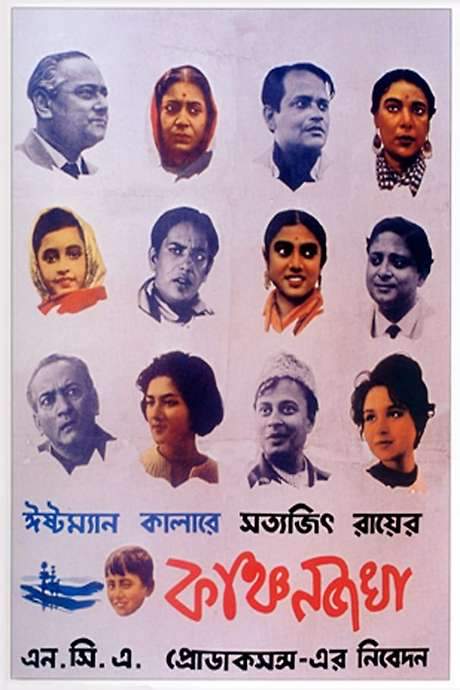
4 characters, among them Indranath Chaudhuri (Chhabi Biswas), Monisha (Alokananda Roy) and Ashoke (Arun Mukherjee): who each one is and the part they play in the story. Every profile links to the actor’s page.
- IC
Indranath Chaudhuri (Chhabi Biswas)
Played by Chhabi Biswas
A powerful industrialist who dominates the family and hopes his daughter will marry a man of his choosing. He pursues a closed agenda, seeking social status over personal happiness, and appears oblivious to his daughter's feelings until the moment of truth.
- 🏷️ Authority
- 👔 Family
- 🧭 Control
- M(
Monisha (Alokananda Roy)
Played by Alokananda Roy
The daughter caught between filial duty and her own desires. She wrestles with her father's plans and the fear of disappointing her family, seeking a path that could reconcile love with loyalty.
- 💬 Inner conflict
- 🎨 Individuality
- A(
Ashoke (Arun Mukherjee)
Played by Arun Mukherjee
A young outsider and student who has declined a job from Indranath. His presence unsettles the family dynamics and adds a new lens through which Monisha views her situation.
- 🌟 Outsider
- 🧭 Catalyst
- LR
Labanya Roy Chaudhuri (Karuna Banerjee)
Played by Karuna Banerjee
The mother whose reactions to the arranged marriage plan reflect the emotional strain of tradition. She embodies the tension between care for her daughter and adherence to social expectations.
- 👩👧 Family
- 🧭 Tradition
Where and When Is Kanchenjungha Set?
Kanchenjungha is set in Darjeeling. Here is why the place matters to the story.
Where
Darjeeling
Darjeeling, a hill station at the foot of Mount Kanchenjungha, offers misty peaks, tea gardens, and colonial charm. A wealthy Calcutta family spends their vacation here, hoping to catch a glimpse of Kanchenjungha. The town's crisp air and elevated streets frame the real-time drama of family expectations and personal awakening.
- 🏔️ Hill station
- 🏞️ Mountain town
What Are the Themes of Kanchenjungha?
3 ideas the story keeps returning to, among them Love vs Duty, Freedom vs Constraint and Nature Witness.
-
01
Love vs Duty
The film centers on a daughter's inner conflict between romantic possibility and her father's plan for an arranged match. It probes how duty, family reputation, and social expectations shape intimate choices. The outsider Ashoke triggers reflection on personal desires that conflict with tradition. The tension between love and obligation culminates in a moment of quiet realization as the mountains loom over the scene.
-
02
Freedom vs Constraint
Monisha's autonomy clashes with Indranath's controlling vision for her future. The setting and mounting pressure push her to question where her own happiness fits within family ambitions. The mother's reactions reveal deeper generational differences about autonomy and compliance. The narrative uses real-time conversations and walks to map the evolution from restraint to self-definition.
-
03
Nature Witness
The Darjeeling landscape, with mountains and mist, mirrors the characters' inner uncertainty. Kanchenjungha's reveal becomes a symbolic moment, with nature bearing witness to choices and missed opportunities. The film treats the mountain as a silent observer of human drama, elevating a personal story into a meditation on perception and truth.
What Kind of Film Is Kanchenjungha?
Melancholic in tone, with slow pacing and a moderate story, going by the plot summary.
- Tone
- Melancholic
- Pacing
- Slow
- Story
- Moderate
- Intensity
- Low
- Ending
- Bittersweet
A contemplative and atmospheric drama unfolding in real time, where the quiet tension of a family vacation masks deep generational conflict and the slow emergence of personal rebellion against patriarchal control.
- contemplative
- oppressive
- atmospheric
- quiet
- melancholic
- reflective
- dysfunctional family
- generational conflict
- marriage customs
- personal freedom
Quiz
How well do you remember Kanchenjungha? Test yourself on the story.