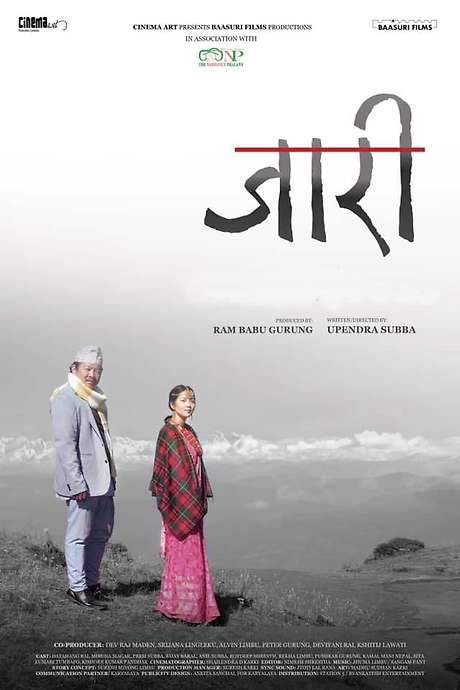
What Is Jaari About?
The premise of Jaari in 347 words, with nothing given away. The full story follows below.
In the rolling hills of eastern Nepal, a close‑knit Limbu community holds fast to the rituals and beliefs that have shaped its identity for generations. The year is 1995, and the landscape—a patchwork of terraced fields, vibrant festivals, and ancient songs—forms a living backdrop to a story where personal longing collides with collective expectation. The film’s tone is both intimate and lyrical, inviting the audience to feel the weight of tradition while breathing the fresh air of the mountains.
At the heart of this world are Namsang and Hangma, a couple whose five‑year marriage has become a crucible of frustration and unspoken yearning. Namsang carries the weight of patriarchy, his pride tangled with the pressure to produce an heir, while Hangma bears the quiet desperation of a life that feels increasingly constrained. Their bond is symbolised by the Yuparung, a sacred coin that marks their union, yet the same token also underscores the fragile balance between duty and desire.
A heated disagreement forces Hangma to return the Yuparung, a decisive act that severs the traditional tie that bound her to Namsang. Seeking a chance at happiness, she encounters Serang—a young man whose presence awakens a new sense of possibility. Their connection leads to a second marriage, which in turn activates the custom of jaari: a compensation claim that places a heavy burden on both families. When the demanded payment proves unattainable, Hangma chooses a path of personal sacrifice, returning to Namsang’s home not as a wife but as someone bound to work off the debt.
The film sways between the stark realities of rural life and the delicate threads of cultural ritual, rendering a portrait of love, honor, and the limits of what one will endure for freedom. Its atmosphere is suffused with the sounds of Palam drums, the rustle of traditional garments, and the unspoken tensions that linger in every exchange. As the story unfolds, the audience is left to wonder how the characters will navigate the space between ancient custom and the yearning for a future that might bend, rather than break, those very traditions.
What Happens in Jaari?
The complete story of Jaari, from the first scene to the last, in 476 words (about 2 minutes). Spoilers throughout. Names in the text link to 4 cast member pages.
Spoilers ahead
Set against the scenic backdrop of the Limbu community in rural Eastern Nepal, circa 1995, Jaari delves into a traditional compensation custom that sits at the heart of the story. Namsang and Hangma are a Limbu couple whose five-year, volatile, childless marriage is defined by simmering anger and a struggle for control.
Namsang is depicted as an angry patriarch whose bitterness over their infertility fuels verbal and physical abuse toward Hangma. He coldly threatens to take a second wife to produce an heir, while Hangma endures the pressure in silence. After a particularly fiery argument, Hangma returns the Yuparung, a sacred coin, to Namsang, severing the couple’s traditional bond and returning to her parents. Namsang’s stubborn pride keeps him from seeking reconciliation, or even bringing her back home.
While living with her family, Hangma attends a local cultural fair where the Palam dance—an emblematic Limbu folk song and dance—takes center stage. There she encounters Serang, a charming and bright young man who draws her attention during the Palam competition. The pair quickly fall in love, and Hangma makes a bold choice: she elopes with Serang, legally cementing a second marriage.
The elopement triggers Jaari, the social demand for compensation from Hangma’s family. Unable to afford the substantial sum, Hangma makes the painful decision to return to Namsang’s house, not as his wife but as a servant working to repay the debt. Namsang, still wrapped in ego and anger, enlists help from Mangal Singh to find a suitable bride for a second marriage, but the plan falters amid his reputation and infamy.
Bardhoj, heartbroken by his sister’s plight, steps forward to help in a different way. He decides to pay the Jaari debt himself by manufacturing and selling the Chyabrung, trying to amass the funds as quickly as possible. The emotional core of the film lies in Namsang’s gradual transformation following his mother’s death. Watching Hangma endure hardship slowly chips away at his toxic pride, turning anger into guilt and stirring a quiet empathy.
When Bardhoj arrives with the necessary funds to settle the Jaari, Namsang makes a powerful pivot: he rejects the payment and steps forward to reclaim Hangma, signaling a profound change in his character. The reconciliation intensifies as Hangma, still bound by obligations to Serang, challenges Namsang to a Palam contest to win her hand. Namsang sings the traditional song for the first time, drawing on verses learned from his late mother to express remorse and devotion. Seeing the sincerity of his transformation, and the depth of his love, Hangma deliberately loses the contest, allowing their renewed bond to grow beneath the weight of tradition.
In the mid-credits scene, a sequel tease—Jaari 2—reveals that their story continues. It also shows Hangma having given birth to a baby girl, suggesting that the arduous journey they endured may finally bear the hopeful fruit they once sought.
Jaari Timeline: Every Key Event in Order
13 key events in the order they happen, from “A volatile, childless marriage” to “Sequel tease and new life”. 13 events name a place, across 12 locations.
- 1
A volatile, childless marriage
Namsang and Hangma's five-year marriage is fraught with anger and conflict, set against the backdrop of a rural Limbu community in Eastern Nepal. Namsang's bitterness over infertility fuels verbal and physical abuse, and he threatens to take a second wife to produce an heir. Their home becomes a tense stage where pride and tradition clash with personal happiness.
When:circa 1995 Where:Namsang and Hangma's home, rural Limbu community, eastern Nepal
- 2
Yuparung returned; bond severed
After a violent argument, Hangma returns the Yuparung, severing their traditional bond and returning to her parent's home. Namsang's pride blocks any chance of reconciliation or bringing her back. The couple's separation marks a turning point that sets Hangma on a new path.
When:shortly after the argument Where:Namsang's home and Hangma's parental home
- 3
Palam fair brings a new connection
Hangma stays with her family and attends a local cultural fair, where she participates in the Palam dance, a Limbu folk tradition. It is at the Palam competition that she meets Serang, a charming young man who captures her attention. The festival becomes a catalyst for new possibilities beyond her marriage.
When:during the Palam festival Where:Local Palam cultural fair
- 4
Love and elopement with Serang
Hangma and Serang quickly fall in love and decide to marry, with Hangma eloping to formalize a second union. Their choice challenges social expectations and the family’s authority. The elopement marks the beginning of Jaari-triggered consequences for Hangma and her family.
When:shortly after meeting Where:Palam grounds and Serang's community
- 5
Jaari demands deplete the family purse
Namsang and his family invoke Jaari, pressing for a hefty monetary compensation from Hangma's parents. Unable to meet the debt, Hangma returns to Namsang's house not as his wife, but as a servant who will work off the debt. The debt-culture tension casts a long shadow over both households.
When:after elopement Where:Namsang's home; Jaari proceedings
- 6
A second wife plan meets social limits
Still driven by ego and anger, Namsang enlists Mangal Singh to find a girl for a second marriage. The plan falters because of his infamy and lack of social legitimacy, underscoring how pride can backfire in a tightly knit community.
When:shortly after Hangma's return Where:Namsang's home
- 7
Hangma endures servitude in the shed
Hangma is confined to a small shed and subjected to relentless labor under the watchful, conflicted eyes of her former in-laws and Namsang. The harsh conditions test her resilience and symbolize the heavy cost of pride and failed reconciliation. Her quiet endurance compounds the emotional stakes of the tale.
When:during the debt period Where:Small shed at the in-laws' compound
- 8
Bardhoj raises the funds with Chyabrung
Bardhoj decides to pay the Jaari debt by manufacturing and selling Chyabrung as many as possible. He endures financial risk and personal strain to secure the necessary funds for Hangma's freedom. His sacrifice becomes a pivotal act that reshapes the family's future.
When:midpoint of the debt period Where:Bardhoj's workshop and village marketplace
- 9
Mother's death sparks transformation
Namsang's mother's death becomes a catalyst for change, as he witnesses Hangma's suffering and begins to question his own pride. His anger slowly dissolves into guilt and empathy, signaling a shift toward tenderness. The emotional core of the film deepens as transformation takes root.
When:after mother's death Where:Namsang's home
- 10
Funds arrive; Jaari payment nears
Bardhoj arrives with the funds to pay Jaari, bringing Hangma closer to freedom. Yet the dynamics have already begun to shift, as Namsang's changed heart complicates the straightforward payment. The scene marks a turning point where repayment intersects with personal growth.
When:after Bardhoj's fundraising Where:Village central scene / Jaari payment setting
Show the other 3 events of Jaari Hide the last 3 events
- 11
Namsang reclaims Hangma
Publicly, Namsang rejects the Jaari payment and steps forward to reclaim Hangma, signaling a reversal of his earlier demands. The community witnesses a confrontation between pride and renewed commitment. This act lays the groundwork for a fragile reconciliation.
When:immediately after funds arrive Where:Public setting, central square or home
- 12
Palam contest seals reconciliation
Hangma challenges Namsang to a Palam contest to win back her hand. Namsang sings the traditional verses learned from his late mother, expressing remorse and devotion. Seeing the sincerity of his transformation, Hangma deliberately loses the contest, culminating in a renewed bond between them.
When:during the reconciliation period Where:Palam festival grounds
- 13
Sequel tease and new life
In the mid-credits scene, a sequel Jaari 2 is announced, signaling that their story continues. It also reveals Hangma has given birth to a baby girl, suggesting the long-awaited fulfillment of their family’s desires.
When:mid-credits scene Where:Mid-credits scene (location unspecified)
Who Are the Main Characters in Jaari?
6 characters, among them Namsang — Dayahang Rai, Hangma — Miruna Magar and Serang — Roy Shrestha: who each one is and the part they play in the story. 5 of them link to the actor’s page.
-

Namsang — Dayahang Rai
Played by Dayahang Rai
A volatile, patriarchal husband whose bitterness over infertility fuels verbal and physical abuse of Hangma. His rigid pride drives him to threaten a second marriage to produce an heir. After his mother’s death, he experiences a slow-burn transformation as he witnesses the consequences of his pride in Hangma’s suffering, leading to a reconsideration of his actions and a reluctant path toward reconciliation.
- 🧔 Patriarchy
- 💢 Anger
- 🌧️ Guilt and Change
- H—
Hangma — Miruna Magar
Played by Miruna Magar
A Limbu woman trapped in a volatile, childless marriage who endures abuse and social pressure. She asserts her autonomy by eloping with Serang, triggering the Jaari debt but choosing her own happiness. Returning to work off the debt, she endures hardship with quiet strength, and later challenges Namsang in a Palam contest as part of their evolving relationship.
- 👩 Agency
- 💪 Resilience
- 🎯 Choice
- S—
Serang — Roy Shrestha
Played by Roy Shrestha
A charming, earnest young man who wins Hangma’s heart at a cultural fair and becomes the catalyst for her second marriage. His presence intensifies the Jaari dynamic and heightens the stakes of Hangma’s pursuit of personal happiness within a traditional framework.
- 💘 Romance
- 🔥 Temptation
- 🧭 Influence
- B
Bardhoj
Hangma’s brother, crestfallen by his sister’s plight, takes on the burden of paying the Jaari debt by manufacturing and selling Chyabrung drums as fast as possible. His decision embodies familial loyalty and sacrifice in the face of social obligation.
- 🤍 Sacrifice
- 🪙 Money
- 🧑🤝🧑 Family loyalty
- MS
Mangal Singh — Bijay Baral
Played by Bijay Baral
Namsang’s ally who is enlisted to find a second wife for Namsang, but his efforts fail due to Namsang’s infamy. He functions as a foil to Namsang’s pride and as a practical reminder of how tradition operates through social networks.
- 🧭 Pressure
- 🗣️ Social norms
- 🧩 Influence
- MS
Mangal Singh's Father — Upendra Subba
Played by Upendra Subba
An elder figure representing the older generation’s perspective on honor and tradition. His presence underscores the weight of ancestral expectations that shape the actions of his son and the family as a whole.
- 🪶 Tradition
- 👵 Elder influence
- 🗺️ Cultural memory
Where and When Is Jaari Set?
Jaari is set in Limbu community and rural Eastern Nepal (circa 1995). Here is why the time and place matter to the story.
When
circa 1995
The story is set in the mid-1990s Nepal, a period when rural communities clung to age-old customs while facing gradual shifts. Life revolves around family honor, ceremonial obligations, and tightly monitored marriages. This era highlights the tension between tradition and the possibility of personal choice.
Where
Limbu community, rural Eastern Nepal
Jaari unfolds within a tight-knit Limbu village in rural Eastern Nepal. The setting emphasizes traditional housing, open courtyards, and community gatherings that mirror ancestral customs. The landscape and culture amplify the weight of social norms and the Jaari debt that drives the plot.
- 🏞️ Rural Nepal
- 🪕 Limbu culture
- 🗺️ Eastern Nepal
What Are the Themes of Jaari?
3 ideas the story keeps returning to, among them Tradition vs Change, Love and Agency and Debt and Social Pressure.
-
01
Tradition vs Change
The film centers on how deep-rooted customs bind individuals and communities. Hangma’s elopement triggers Jaari, exposing how tradition constrains happiness for both women and men. Namsang’s pride gradually yields to guilt as he witnesses the consequences of his actions. The narrative suggests change emerges from personal reckoning and acts of compassion rather than coercion.
-
02
Love and Agency
Hangma asserts agency by seeking happiness with Serang, challenging the boundaries of remarriage and social expectation. Her choice becomes a catalyst that tests family ties and exposes the cost of traditional rules. The love story is framed as a prompt for reflecting on gender roles and personal resilience.
-
03
Debt and Social Pressure
Jaari functions as a monetary mechanism that externalizes the cost of a wife’s remarriage. Hangma’s family struggles to raise the required sum, prompting sacrifices from others in the community. The film uses money and debt to explore pride, honor, and the collective judgment of a traditional society.
What Kind of Film Is Jaari?
Bittersweet in tone, with steady pacing and a moderate story, going by the plot summary.
- Tone
- Bittersweet
- Pacing
- Steady
- Story
- Moderate
- Intensity
- High
- Ending
- Happy
A heavy and emotionally intense drama set against a backdrop of rigid tradition, following a woman's profound suffering and a man's slow redemption, culminating in a cathartic but bittersweet reconciliation.
- tragic romance
- oppressive
- slow burn
- guilt-ridden
- resigned
- cathartic
- domestic abuse
- cultural tradition
- redemption
- forgiveness
Content notes: domestic abuse, emotional abuse, forced servitude.
Quiz
How well do you remember Jaari? Test yourself on the story.