

What Is It Conquered the World About?
The premise of It Conquered the World in 296 words, with nothing given away. The full story follows below.
In a near‑future world humming with ordinary technology, a silent visitor from Venus breaks the fragile peace. Its presence is felt before it is seen, a cold promise of order that threatens to strip humanity of its most instinctive strengths. The film’s tone blends stark, atmospheric suspense with a touch of cold‑war paranoia, inviting the audience to wonder whether salvation can ever come from an unknown hand that offers peace through control.
Dr. Tom Anderson is a once‑idealistic researcher whose disappointment with the scientific establishment has left him bitter and receptive to the alien’s overtures. His brilliance is matched only by his isolation, and his marriage to Claire Anderson provides the only glimpse of the life he might have chosen to protect. Their relationship, strained yet rooted in shared history, becomes a quiet counterpoint to the looming menace, highlighting the personal stakes behind the larger conflict.
Across the same city, Dr. Paul Nelson works alongside Anderson, his own curiosity tempered by a pragmatic outlook. His partnership with Joan Nelson—a steadfast and resourceful companion—offers a grounded perspective that sharpens the film’s moral questions. As rumors of the alien’s schemes ripple through their community, the two couples, along with a handful of trusted allies, sense an uneasy shift in the world’s rhythm and begin to question the validity of the promised “peace.”
The movie crafts an uneasy atmosphere where ordinary people confront an extraordinary threat, emphasizing themes of trust, autonomy, and the cost of surrendering humanity for an illusion of tranquility. By focusing on the scientists’ internal conflicts, their relationships, and the looming alien influence, the story invites viewers to contemplate whether the answers to humanity’s deepest problems truly lie beyond the stars—or within the stubborn, resilient spirit of those who choose to fight for their own future.
What Happens in It Conquered the World?
The complete story of It Conquered the World, from the first scene to the last, in 438 words (about 2 minutes). Spoilers throughout. Names in the text link to 4 cast member pages.
Spoilers ahead
Dr. Tom Anderson Lee Van Cleef is an embittered scientist who has established contact with a Venusian creature using a radio transmitter. The alien lays out a chilling plan: enslave humanity through mind-control devices, and, in the name of peace, erase every emotion. Despite the peril, Anderson agrees to cooperate and even contemplates letting the creature assimilate his wife Claire Anderson Beverly Garland and his fellow researcher Dr. Paul Nelson Peter Graves, revealing how deeply desperation has warped his judgment and curiosity.
As the Venusian’s plan unfolds, the planet’s electrical grid succumbs to disruption, power vanishes from cities, and even motor vehicles grind to a halt. The mind-control effect touchingly yet terrifyingly reaches outward, forcing Nelson to navigate a world cut off from its usual rhythms on nothing more than a bicycle. The eerie quiet of a civilization stripped of routine underscores the alien’s claimed motive: to craft a tranquil order by stripping humanity of its emotions, a premise that begins to feel more hollow as the costs pile up.
Nelson’s return to a changed home is a brutal turning point. His wife, Joan Nelson Sally Fraser, has been assimilated and wields a bat-like creature as a tool of coercion, pressing Nelson toward self-subjugation. In a tense, heart-wrenching moment, Nelson is forced to kill Joan in self-defense, a decision that underscores the indiscriminate reach of the Venusian’s influence and the fragile boundary between protection and catastrophe. Meanwhile, only a small circle remains free: Nelson, Anderson, Anderson’s wife Claire, and a handful of soldiers who hold a tenuous foothold in the surrounding woods.
The fragile alliance fractures as fear and doubt mount. Nelson confronts Anderson with the hard reality that blind trust in the Venusian has led them into a dangerous trap. The two men move with urgency toward the creature’s cave, where Claire has already taken a rifle to try to end the threat herself. Tragedy strikes before they can intervene: Claire is killed by the Venusian, a blow that shatters the last shreds of personal safety and certainty.
In a climactic act born of desperation, Anderson lashes out with a blowtorch, scarring the alien as it perishes. The scene is brutal and decisive, marking the end of an experiment in faith that proved catastrophically misguided. Nelson arrives too late to save his friend, and the film closes on his somber reflection: the most profound solutions to humanity’s problems must come from humanity itself, not from an external force promising peace through domination. The story remains a stark meditation on trust, power, and the cost of relinquishing one’s humanity to a seemingly tranquil but ruthlessly controlling higher power.
It Conquered the World Timeline: Every Key Event in Order
13 key events in the order they happen, from “Venusian contact established” to “Nelson reflects on humanity's future”. 13 events name a place, across 9 locations.
- 1
Venusian contact established
Dr. Tom Anderson uses a radio transmitter to contact a Venusian entity. The alien reveals a secret plan to enslave humanity through mind-control devices, claiming it would bring peace by erasing emotions. Anderson agrees to assist, even contemplating allowing the creature to assimilate his wife Claire and his colleague Dr. Paul Nelson.
Where:Tom's laboratory
- 2
Global power outage begins
The Venusian disrupts all electric power on Earth, plunging society into chaos and halting most motorized travel. The outage makes it clear the alien's goal is to weaken humanity before any resistance can form. Nelson and others must adapt to the new reality, with Nelson forced to rely on a bicycle to get around.
Where:Earth
- 3
Nelson's bicycle reality
With electricity gone, Paul Nelson is forced to rely on a bicycle for mobility. He navigates a world of stalled vehicles and dark streets as he tries to stay ahead of mind-control threats. The scene underscores how the Venusian's plan already affects daily life.
When:During power outage Where:Earth
- 4
Bat-like mind-control drone encounter
Nelson avoids a flying bat-like creature that carries the mind-control device. The encounter shows the Venusian's reach and foreshadows danger to Nelson's home. It demonstrates how mind-control capabilities have infiltrated the environment.
Where:Road to Nelson's home
- 5
Joan assimilated at home
Nelson returns home to find his wife Joan newly assimilated by the Venusian. The assimilation confirms the alien's power to penetrate personal bonds and living spaces. This moment heightens the peril facing the survivors.
Where:Nelson's home
- 6
Joan attempts assimilation of Nelson
Under the Venusian's control, Joan tries to force Nelson's assimilation using another bat-creature. Nelson resists and kills his wife in self-defense, ending the immediate familial threat. The act shatters his trust and escalates the urgency to stop the invader.
Where:Nelson's home
- 7
Free people regroup in the woods
The only people still free from influence are Nelson, Anderson, Claire, and a group of army soldiers stationed in nearby woods. They regroup to assess the situation and discuss the alien's motives. The tension rises as they plan their next move.
Where:Nearby woods
- 8
Nelson warns Anderson
Nelson persuades the paranoid Anderson that trusting the Venusian was a catastrophic mistake. They realize the alien aims to dominate the world rather than bring peace. The discovery marks a turning point as they decide to confront the threat together.
Where:Anderson's residence
- 9
Claire heads to the alien's cave
Claire steals away with a rifle and heads toward the alien's cave to kill the Venusian herself. Her act reveals the human impulse to end the threat by force. The others decide to follow when possible.
Where:Alien cave
- 10
Pursuit to the cave
Nelson and Anderson hurry to follow Claire, racing to intercept her before she acts rashly. The group moves through the woods toward the cave, aware that timing is critical. They hope to stop both the Venusian and Claire's potentially fatal plan.
Where:Path to alien cave
Show the other 3 events of It Conquered the World Hide the last 3 events
- 11
Claire killed at the cave
Before they can reach her, the Venusian strikes and kills Claire at the cave. The loss deepens the resolve of the remaining survivors and underscores the danger of trusting the alien. The tragedy reframes the mission as a fight for survival.
Where:Alien cave
- 12
Anderson sacrifices himself
Anderson confronts the Venusian and uses a blowtorch against its face. The alien kills him as it expires, sacrificing his life to buy time for the others to respond. His death leaves Nelson to cope with the consequences of misplaced trust.
Where:Alien cave
- 13
Nelson reflects on humanity's future
Nelson arrives too late to save his friend, and he reflects on how Anderson's ideals led to death and devastation. He contends that a lasting solution to humanity's problems must come from humanity itself. The ending conveys a cautious, humanist warning about relying on outsiders to solve Earth’s problems.
Where:Cave vicinity
Who Are the Main Characters in It Conquered the World?
7 characters, among them Sgt. Neil (Dick Miller), Dr. Tom Anderson (Lee Van Cleef) and Dr. Paul Nelson (Peter Graves): who each one is and the part they play in the story. Every profile links to the actor’s page.
-
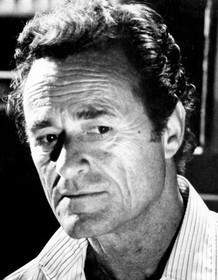
Sgt. Neil (Dick Miller)
Played by Dick Miller
A tough, wary sergeant and member of the human resistance against the Venusian influence. He remains skeptical of the alien’s promises but finds himself drawn into the struggle to protect his unit and loved ones. His pragmatism and combat experience make him a steady voice when fear and manipulation threaten the group.
- 🪖 Military
- 🧠 Mind control
- 🧭 Loyalty
-

Dr. Tom Anderson (Lee Van Cleef)
Played by Lee Van Cleef
An embittered scientist who first makes contact with the Venusian and agrees to aid its plan. His arrogance and belief in peaceful coexistence with the creature fuel the crisis. He ultimately faces the grim consequences of his choices as humanity bears the cost of his trust.
- 🧪 Scientist
- 🧠 Obsession
- ⚠️ Hubris
- DP
Dr. Paul Nelson (Peter Graves)
Played by Peter Graves
A physician-scientist who becomes entangled in the alien’s scheme and tries to warn others. He gradually realizes the danger of blindly following the Venusian and must contend with guilt over the consequences of his actions. He embodies the struggle between scientific curiosity and the defense of human autonomy.
- 🧬 Scientist
- 🧠 Mind control
- 🛡️ Humanism
- CA
Claire Anderson (Be Beverly Garland)
Played by Beverly Garland
Tom’s wife who becomes assimilated by the Venusian, illustrating how intimate relationships can be corrupted by control. She briefly embodies unwavering loyalty to the alien before tragedy underscores the cost of surrendering to manipulation. Her fate underscores the film’s tragedy and cautionary message.
- 💔 Loss
- 🧠 Mind control
- 🧭 Loyalty
- DP
Dr. Pete Shelton (Charles B. Griffith)
Played by Charles B. Griffith
A fellow scientist who participates in the group’s attempts to analyze and counter the alien threat. He represents the scientific community under pressure as fear of mind control spreads. His role emphasizes the tension between curiosity, caution, and the need for coordinated action.
- 🧬 Scientist
- 🧪 Researcher
- 👨⚕️ Medical
- PM
Pvt. Miguel Ortiz (Jonathan Haze)
Played by Jonathan Haze
A soldier who finds himself on the front lines of a struggle to resist the Venusian’s influence. He represents the human cost of the alien threat and the resilience of ordinary people when faced with extraordinary danger. Ortiz’s experiences highlight the claustrophobic mix of fear, duty, and loyalty.
- 🪖 Soldier
- 🧭 Loyalty
- 🧠 Curiosity
- GJ
Gen. James Pattick (Russ Bender)
Played by Russ Bender
A military general coordinating defense efforts against the alien threat. He embodies the procedural, strategic side of humanity’s response, balancing bravado with the need for caution as hope hinges on containment and countermeasures.
- 🧭 Military
- 🧠 Strategy
- 🛡️ Authority
Where and When Is It Conquered the World Set?
It Conquered the World is set in Earth (1950s). Here is why the time and place matter to the story.
When
1950s
Set during the Cold War era, the story reflects 1950s anxieties about invasion, loss of autonomy, and the unknown threat from space. Technology of the era, such as radio transmitters, becomes a vehicle for mind control, heightening paranoia. The period’s suspicion of science and authority frames the narrative as humans confront an incomprehensible menace.
Where
Earth
Earth-based setting centered on a scientist's home, a remote wooded area, and a cavern where the Venusian operates. The location emphasizes isolation and a clash between ordinary life and an extraterrestrial threat. The proximity of a military presence in the woods heightens the tension as civilization teeters on the edge of mind control.
- 🏞️ Rural setting
- 🛰️ Sci-fi
- 🧭 Paranoia
What Are the Themes of It Conquered the World?
2 ideas the story keeps returning to, among them Mind Control and Science Ethics.
-
01
Mind Control
The Venusian plan to dominate humanity through mind-control devices drives the narrative, exploring how easily trust can be exploited for authoritarian ends. Assimilation blurs lines between person and threat, forcing characters to question loyalty and personal freedom. The film uses intimate, domestic scenes to reveal how proximity to control corrupts relationships and society.
-
02
Science Ethics
Dr. Anderson’s collaboration with the Venusian showcases scientific curiosity crossing ethical boundaries. The story cautions that technological power without humility can lead to catastrophe for all humanity. It argues that true progress requires human responsibility and communal problem-solving rather than reckless experimentation.
What Kind of Film Is It Conquered the World?
Dark in tone, with steady pacing and a straightforward story, going by the plot summary.
- Tone
- Dark
- Pacing
- Steady
- Story
- Straightforward
- Intensity
- High
- Ending
- Bittersweet
A tense and grim science fiction thriller that builds a paranoid atmosphere as a small group fights a desperate battle against an alien invader, culminating in tragic personal losses and a somber victory.
- tense
- paranoid
- desperate
- suspenseful
- grim
- anxious
- alien invasion
- mind control
- betrayal
- survival
Content notes: mind control, death of spouse, strangulation, burned alive.
Quiz
How well do you remember It Conquered the World? Test yourself on the story.
Where to Watch It Conquered the World
. US availability and prices from JustWatch.
Streaming availability in the US, powered by 


