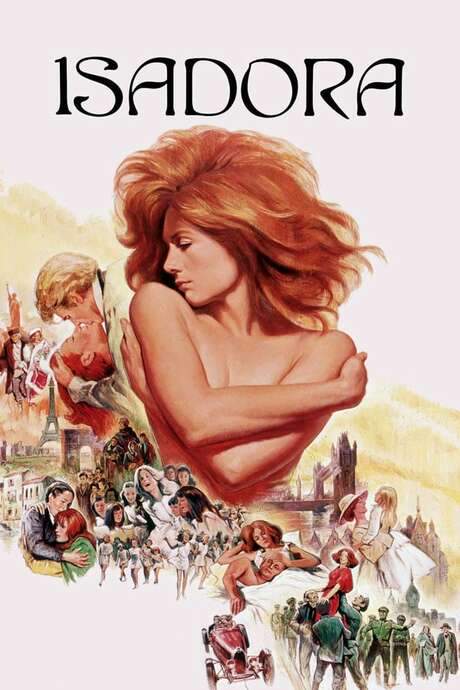
Isadora 1968


Directed by
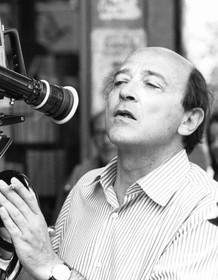
Karel Reisz
Made by

Universal Pictures
Where to Watch Isadora
See current US streaming, rental, and purchase options for Isadora (1968) via JustWatch.







Isadora Plot Summary
Read the complete plot summary and ending explained for Isadora (1968). From turning points to emotional moments, uncover what really happened and why it matters.
Isadora Duncan, Vanessa Redgrave, stands in 1927 as a legend of modern dance—volatile, iconoclastic, and a tireless advocate of free love—even as poverty gnaws at her. Now past forty, she huddles in a small hotel on the French Riviera with her companion Mary and her secretary Roger, dictating the memoir that will frame a life lived in defiance of convention. The film traces a journey from a California childhood to a globe-trotting artist whose every choice challenges society’s expectations, self-made and unafraid to burn bridges in pursuit of art.
As a girl, she challenges domestic norms, burning her parents’ marriage certificate and pledging herself to art and beauty. In Chicago, 1896, she performs under the banner Peppy Dora in a rambunctious music hall, so fearless that she persuades the theater manager to pay her $300 so she can take her family to England. Her early resolve—dance as a form of truth—takes shape against the backdrop of a crowded stage and enraptured audiences, foreshadowing a career that will redefine movement itself.
Her rising fame travels with her into Berlin, where she meets her first great muse, Gordon Craig, James Fox, a gifted stage designer who promises to help birth a new theatre. After bearing a daughter to the already-married Craig, she moves on to Paris and is welcomed by Paris Singer, a wealthy patron who lavishes gifts and eventually buys her a vast estate to open a School for Life, where beauty and simplicity become guiding tenets of her craft.
The arc intensifies with the birth of a son, and Isadora returns to England with Singer. Yet the quiet domestic life soon feels constraining, and she rekindles an affair with her pianist Armand, Christian Duvaleix. The film darkens as tragedy strikes: both of her children die in a chauffeur-driven car accident that plunges into the Seine. Crushed by grief, she abandons Singer and wanders across Europe, a path that leads toward new opportunities and renewed purpose, including a chance to open a dancing school in the Soviet Union.
In the Soviet Union, she discovers a different rhythm of life, gaining a strong rapport with the peasantry and beginning a passionate affair with Sergei Essenin, a volatile poet whom she eventually marries so he can secure a visa to accompany her to the United States. Essenin’s uncontainable behavior destabilizes public appearances, and U.S. sentiment toward the dancer shifts dramatically after she bares her torso during a Boston performance, a moment that becomes a flashpoint in her controversial career. After the marriage dissolves, she returns to the Riviera to gather her thoughts and write, but she remains restless, selling off possessions to fund a new school in Paris.
Back on the move, she slips into a moment of celebration at a coastal cafe and notices Bugatti, a dashing Italian admirer she has pursued for days. They set off on a sea-kissed drive along a winding road, where a long scarf becomes tangled in the car’s spokes, and Isadora’s life ends in a dramatic, emblematic finale.
Throughout, the film frames not just a sensational performer, but a woman who repeatedly rewrites the rules of art and love, forging a path that is as controversial as it is illuminated. The story blends intimate scenes with public spectacles, capturing the intoxicating pull of a legend who believed that movement could alter perception and that beauty should be accessible to all, even as it cost her dearly.
Isadora Timeline
Follow the complete movie timeline of Isadora (1968) with every major event in chronological order. Great for understanding complex plots and story progression.
Isadora's 1927 life in poverty, dictating memoirs
Isadora Duncan is living in poverty in a small hotel on the French Riviera, dictating her memoirs to Mary and Roger. The scene frames her as a legendary artist facing precarious finances, merging memory with art. It establishes the memoir as both a personal confession and a chronicle of her life.
A rebellious California girl
She is a young girl in California who rejects conventional expectations by burning her parents' marriage certificate. She pledges to dedicate her life to art and beauty, foreshadowing a life lived on her own terms. These acts reveal her fearless defiance and fierce creative drive.
Chicago 1896: Peppy Dora earns her chance
In 1896, Isadora performs under the name Peppy Dora in a rowdy Chicago music hall. She publicly shames the manager into paying her $300 so she can take her family to England. The performance launches her on a path to international recognition.
Greek-inspired dance and international fame
She develops a free-form style modeled on Greek classicism and quickly earns international acclaim. Her daring dances and costumes push boundaries of what performance can be. The rising fame carries her across Europe, setting the stage for future collaborations.
Berlin meeting with Gordon Craig
Berlin is where she meets Gordon Craig, a promising stage designer who envisions a new world of theatre. Their intense partnership leads to the birth of a daughter for Isadora. The relationship marks a turning point from solo dancer to powerful artistic collaborator.
Paris and Paris Singer: estate for School for Life
She moves to Paris, where Paris Singer showers gifts on her and buys an enormous estate to open a School for Life, teaching beauty and simplicity. The arrangement expands her artistic reach beyond performance into education and patronage. This period blends romance, luxury, and a new public persona.
Birth of a son and return to England with Singer
Following the birth of a son, Isadora returns to England with Singer, seeking a quieter life but quickly grows restless again. The domestic path gives way to new artistic ambitions and travel across Europe. The episode foreshadows the continual reshaping of her life.
Affair with Armand; the tragedy of the drowning children
Isadora begins an affair with her pianist Armand while still with Singer. Soon after, tragedy strikes when both of her children drown after their chauffeur-driven car plunges into the Seine. The catastrophe shatters her family and drives her into a period of wandering.
Wandering Europe and the Soviet offer
Broken by the tragedy, she leaves Singer and wanders across Europe until 1921, when she is offered to open a dancing school in the Soviet Union. The opportunity marks a dramatic turn toward cultural diplomacy in a communist state. Her wanderings finally funnel into a defined new phase of her career.
Affair and marriage with Sergei Essenin
In the Soviet Union, she forms a passionate relationship with Sergei Essenin, a volatile poet. To obtain a visa to accompany her to the United States, she marries Essenin. The marriage becomes entangled with his temper and public notoriety.
US controversy: Boston recital and anti-Bolshevik backlash
Essenin's antics and Isadora's free-spirited performances boil over in the United States, culminating in a chaotic press conference and a controversial moment when she bares her breasts during a Boston recital. Anti-Bolshevist sentiment in the country intensifies the personal and professional strain. The episode hardens her resolve to continue her art on her own terms.
Memoirs, a new Paris school, and Bugatti
After the marriage dissolves, she returns to Nice to write her memoirs and, impulsively, sells her possessions to open a new school in Paris. While celebrating in a local café, she spots Bugatti, a handsome Italian driver, and begins a new, unsettled romance. Her plans to reshape her life through art face a dramatic detour.
Tragic death: scarf strangulation in the car
Back on the road near the sea, Isadora's long chiffon scarf catches in the spokes of a wheel and strangles her, ending her life and sealing her legend. The accident crystallizes the paradox of a life lived for freedom and danger. Her death becomes a final, iconic image of the Isadora Duncan story.
Isadora Characters
Explore all characters from Isadora (1968). Get detailed profiles with their roles, arcs, and key relationships explained.
Isadora Duncan (Vanessa Redgrave)
A legendary innovator of modern dance who defies social norms in pursuit of art and beauty. She evolves from a rebellious young performer in California to a globally famous bohemian figure, bearing personal losses and enduring relationships across continents. Her spirit is intense and volatile, yet she remains devoted to her creative vision throughout a life marked by upheaval.
Paris Singer (Jason Robards)
A wealthy benefactor who showers Isadora with gifts and later funds a School for Life. He embodies luxury and control, inviting Isadora into a world of comfort that contrasts with her need for artistic freedom. Their relationship helps shape the later chapters of her career and supports her artistic ventures.
Gordon Craig (James Fox)
A young stage designer and Isadora’s passionate, complicated lover who promises to reshape theatre. He fathered a daughter with Isadora while already married, signaling a tumultuous personal life intertwined with their artistic collaboration.
Sergei Essenin (Zvonimir Črnko)
A volatile poet whose intense affair with Isadora coincides with a controversial marriage that confirms her willingness to blend personal passion with public life. His unpredictable behaviour and fame complicate their union and public perception.
Mary Desti (Cynthia Harris)
Isadora’s companion and secretary, who accompanies her through speeches, memoirs, and travels. She represents stability and support in a life that otherwise leans toward dramatic upheaval. The dynamic between Isadora and Mary anchors the memoir portions of the story.
Armand (Christian Duvaleix)
Isadora’s pianist lover during a quieter period of her life; his presence signals an intimate but ultimately transient phase away from the spotlight. The affair with Armand highlights Isadora’s continuous search for new modes of expression and companionship.
Bugatti (Vladimir Leskovar)
An adventurous Italian admirer whose charm draws Isadora into a final romantic motif. Their road-drive culminates in a fatal accident when her scarf wraps around the wheel, ending her life in a dramatic, fateful gesture of fate.
Isadora Settings
Learn where and when Isadora (1968) takes place. Explore the film’s settings, era, and how they shape the narrative.
Time period
1890s–1920s
The film traces Isadora Duncan's ascent from a Chicago 1890s performer to a world-renowned dancer by the 1920s. It spans the fin-de-siècle bohemian milieu and post-World War I Europe, highlighting artistic experimentation, celebrity, and personal upheaval.
Location
Chicago, England, Berlin, Paris, Soviet Union, Boston, Nice, French Riviera
Isadora's life unfolds across a mosaic of cosmopolitan cities. She rises from a gritty Chicago venue to European cultural capitals like Berlin and Paris, with chapters in England and the Soviet Union, then experiences public life in Boston and reflective moments on the French Riviera. The narrative moves through multiple urban centers known for art, politics, and social change, shaping her as a transnational figure in modern dance.
Isadora Themes
Discover the main themes in Isadora (1968). Analyze the deeper meanings, emotional layers, and social commentary behind the film.
🎨
Artistic Freedom
Isadora challenges conventional dance and social norms, forging a new movement inspired by classical forms. The film treats her as an innovator who blends art with life, risking public censure for creative expression. Her work embodies a philosophy that beauty and authenticity justify personal risk.
📰
Public Scrutiny
Her life becomes a matter of public spectacle as media and society fixate on her romances, political stances, and controversial performances. The Boston breast-bearing incident and anti-Bolshevik backlash illustrate how fame magnifies private choices. The narrative uses scandal to explore the price of fame.
💔
Tragedy
Personal losses punctuate her journey, notably the drowning of her children, which shatters her family and redirects her path. Grief colors her later travels and artistic choices. The film presents tragedy as a catalyst for reinvention and continued artistic pursuit.
🧭
Bohemian Identity
Isadora's identity is forged through a life of multiple loves, homes, and roles—from dancer to lover to school founder. Her continual movement across continents mirrors a search for belonging and self-definition in a world that resists fixed labels. The narrative emphasizes art as a way of living.

Coming soon on iOS and Android
The Plot Explained Mobile App
From blockbusters to hidden gems — dive into movie stories anytime, anywhere. Save your favorites, discover plots faster, and never miss a twist again.
Sign up to be the first to know when we launch. Your email stays private — always.
Explore the mobile appIsadora Spoiler-Free Summary
Discover the spoiler-free summary of Isadora (1968). Get a concise overview without any spoilers.
In the sun‑drenched cafés of the French Riviera, Isadora Duncan sits at a modest desk, the sound of waves mingling with the scratch of a fountain pen as she dictates the story that will become her legacy. Surrounded by her steadfast companion Mary and her diligent secretary Roger, she confronts the restless tide of memory, recalling a life built on the audacity to strip away convention—both in clothing and in the very language of dance. The film opens in a world where the glitter of the 1920s art scene clashes with the stark realities of poverty, setting a tone that is at once sensual, rebellious, and deeply human.
From the dusty backroads of California to the glittering stages of Europe, the narrative sketches a portrait of a woman who turned movement into a manifesto. Her performances—often daringly nude or semi‑nude—spark scandal and fascination, while her outspoken convictions on free love, dress, and politics reverberate through the bohemian circles she inhabits. The atmosphere shimmers with the restless energy of a generation eager to break free from Victorian restraint, and Isadora moves through it with a blend of fierce independence and fragile yearning, inviting the audience to feel the pulse of an era in flux.
The film’s world is a patchwork of cafés, studios, and grand theatres, each a backdrop for her relentless pursuit of beauty and truth. As she revisits the moments that shaped her—early triumphs in ragged music halls, artistic collaborations with visionary designers, and the magnetic pull of distant lands—the story maintains a lyrical, almost dream‑like rhythm. It is a meditation on a legend who continually reshaped the rules of art and love, leaving a trail of inspiration that feels both intoxicating and inevitable, urging viewers to wonder how far one can go when every step is a revolt against the ordinary.
Movies with Similar Twists and Themes
Uncover films that echo the narrative beats, emotional arcs, or dramatic twists of the one you're exploring. These recommendations are handpicked based on story depth, thematic resonance, and spoiler-worthy moments — perfect for fans who crave more of the same intrigue.



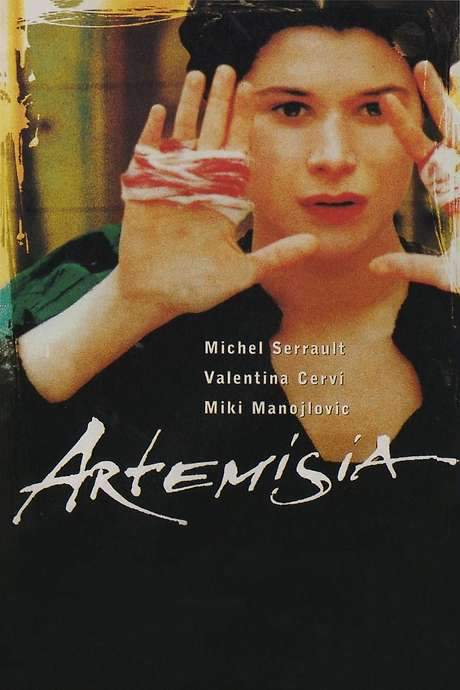
Featured on this page

What's After the Movie?
Not sure whether to stay after the credits? Find out!
Check out our other apps:

SAT Sphere
Build confidence for the Digital SAT.

Mori Atlas
Discover wild places worth protecting.

Luntero
Search smarter for a home in Amsterdam.

Plot Explained
Unravel movie endings and hidden clues.

Pokechamp
Dive into Pokémon data and battle logic.

Driving Theory
Get ready for your European theory test.

Movie Dust
Plan your next cinema trip with ease.

Musemap
Find art and culture as you travel.

Selkobase
Compare credentials before committing.

Local Manual
Turn an unfamiliar country into practical next steps.

Lernavi
Compare school systems before your next move.

GymRoam
Find a workout stop wherever your plans take you.
Explore Our Movie Platform
New Movie Releases (2026)
Famous Movie Actors
Top Film Production Studios
Movie Plot Summaries & Endings
Major Movie Awards & Winners
Best Concert Films & Music Documentaries
Movie Collections and Curated Lists
© 2026 What's After the Movie. All rights reserved.
Privacy Policy