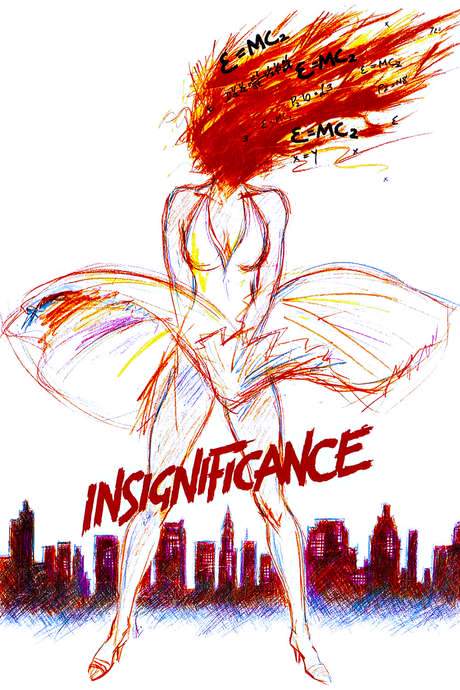
Insignificance 1985


Directed by
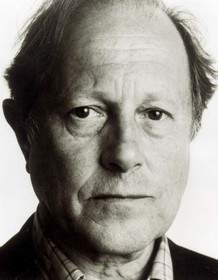
Nicolas Roeg
Made by

Recorded Picture Company
Where to Watch Insignificance
See current US streaming, rental, and purchase options for Insignificance (1985) via JustWatch.


Streaming availability powered by 
Insignificance Plot Summary
Read the complete plot summary and ending explained for Insignificance (1985). From turning points to emotional moments, uncover what really happened and why it matters.
On a crowded New York City street, a film crew stages a provocative sequence: The Actress, Theresa Russell in a white dress stands on a grate while a towering fan imitates subway gusts, blowing her skirt up around her waist. The Ballplayer, Gary Busey, watches with obvious discomfort as onlookers ogle her from every angle. Instead of joining him after the shot, she slips into a taxi and disappears. She then stops at a shop to gather a curious assortment—toys, flashlights, balloons—tiny symbols of spectacle and desire that will echo through the night’s events.
Meanwhile, The Professor, Michael Emil, is alone in a hotel room, absorbed in pages of complex calculations. The Senator, Tony Curtis, arrives with a mix of coaxing and intimidation, insisting that the Professor appear before a committee to answer the old, haunting question about identity and loyalty. The confrontation grows tense, and the Senator lays out his demand with a clockwork certainty of the era. To underscore the pressure, he presses on with the infamous prompt, and the air thickens with unspoken history:
Are you now or have you ever been…?
The Professor refuses to appear, a choice that seals his distance from the world outside his window. The Senator leaves, vowing to return at eight the next morning, a threat and a reminder of power that travels through walls and rooms alike.
That night, The Actress arrives at the Professor’s door, and a conversation about fame, pursuit, and the pull of the stars unfolds. The two discuss how being watched changes you, how imagination can become a cage, and how fear can drive human connections. The Professor seems drawn to the possibility of a different life, while The Actress demonstrates a playful scientific wonder, using the toys, lights, and balloons to illustrate ideas of relativity in a practical, almost childlike way. As their camaraderie deepens, she flirts with him, admitting she’d like to sleep with him, and they decide to retreat to bed. Their moment is interrupted when The Ballplayer, having tracked his wife to the hotel, arrives, forcing The Professor to slip away and seek another room. On the hotel stairs, he pauses to speak with a Cherokee elevator man, a brief human connection with Will Sampson, a quiet counterpoint to the night’s spectacle.
In the morning, The Senator returns to the Professor’s room to find him gone, but The Actress lies naked and alone in theProfessor’s bed. The Senator mistakes her for a call girl and threatens to expose the Professor to ruin him, then delivers a harsh blow to her abdomen. The Professor bursts in as the Senator gathers his papers, attempting to take away the hundred pages of work that hold years of thought. In a sudden fit of protest, the Professor grabs the papers and throws them from the windows, while The Actress writhes in pain on the bed. The Senator leaves defeated, and The Ballplayer returns to share stories of his fame and the strains cracking their marriage. The Actress, now in the bathroom, reveals she may be miscarrying; she ultimately declares that the marriage is over, and he leaves with a quiet, desolate weariness.
As the room wrestles with the tension between scrutiny and secrecy, The Professor sits on the bed with a stopped watch in one hand and the alarm clock in the other, waiting for the moment at 8:15. The time—symbolic and ominous—marks the hour when the world’s horrors were once unleashed. The Professor acknowledges a deep guilt about the events that intersect science, power, and human frailty, while The Actress offers a quiet, steady reassurance. Then, at 8:15 a.m., a vision erupts: the room, Hiroshima, and the world catch fire in flames of destruction. The Actress’s skirt swirls as she appears to burn in the vision, a stark image of collapse and fear. Yet the vision abruptly reverses, and order is restored. The Actress smiles at The Professor, who replies with a hopeful, shared grin as she waves and leaves, leaving behind a sense that, even amid catastrophe, the human spirit can choose renewal.
Insignificance Timeline
Follow the complete movie timeline of Insignificance (1985) with every major event in chronological order. Great for understanding complex plots and story progression.
Film crew shoots on a crowded NYC street
A crowd gathers on a crowded New York City street as a film crew shoots a sequence. The Actress stands on a grate while wind from a huge fan simulates a subway rushing by beneath her. The Ballplayer, her husband, watches with obvious discomfort as she is ogled by onlookers.
The Ballplayer watches with unease
The Ballplayer watches the scene with visible unease, feeling the strain of fame and the gaze of strangers. He stands apart from the crowd, clearly affected by the public spectacle. The moment foreshadows trouble in their marriage.
Actress leaves the scene to shop
After the shoot, The Actress disappears in a taxi rather than joining her husband. She stops at a store and buys a variety of toys, flashlights, and balloons, moving further from the public eye. The sequence hints at a personal, away-from-camera direction in her life.
The Professor works in his hotel room
The Professor is surrounded by pages of mathematical calculations in his hotel room. He is interrupted by The Senator, who pressures him about appearing before a committee. The Professor refuses, stating that he will never appear.
Senator demands and departs with a warning
The Senator tries to coax and threaten the Professor into answering the famous inquiry about loyalty. The Professor remains firmly opposed to testifying. The Senator leaves, vowing to return at 8 a.m. the following morning to compel his appearance.
Actress visits the Professor; relativity lesson
The Actress appears at the door of the Professor's hotel room and is invited in. They discuss fame, being chased, and the stars, and she performs a lively demonstration of the theory of relativity using toys and balloons. She declares she would like to sleep with him, and they decide to go to bed.
Ballplayer interrupts; Professor seeks another room
The Ballplayer tracks The Actress to the hotel and interrupts their plans. The Professor leaves to find another room, and in the hallway he meets a Cherokee elevator man, their brief exchange underscoring the odd, intimate world they inhabit.
Marital problems surface; pregnancy tease
The Actress and The Ballplayer discuss their troubled marriage. She tells him she believes she is pregnant, but he has fallen asleep, leaving the tension unresolved. The moment deepens the sense of personal strain beneath public performances.
Senator confronts naked Actress the next morning
The Senator returns the following morning to find The Actress naked and alone in The Professor's bed. He mistakes her for a call girl and threatens to use her to embarrass The Professor, then punches her in the abdomen.
Professor retrieves papers, chaos erupts
The Professor arrives as The Senator is gathering hundreds of pages of his work to take away. The Professor grabs the papers and throws them out of the windows as The Actress writhes in pain on the bed. The Senator leaves, defeated in his purpose.
Ballplayer returns; marriage ends
The Ballplayer returns and talks about his fame in the baseball world, then confides in the Professor about their marital problems. The Actress, in the bathroom, is possibly miscarrying as she reveals that their marriage is over. He leaves, leaving the future unresolved.
Guilt and the 8:15 moment
The Actress grows impatient with the Professor, who sits with a stopped watch and an alarm clock as 8:15 approaches. He confesses his guilt about the event, and she reassures him. The moment tightens the emotional tension between them.
Vision at 8:15; world restored
Right at 8:15 a.m., as she is leaving, the Professor has a vision of the room, Hiroshima, and the world in ashes. The Actress's skirt swirls in flames as she seems to burn in the vision, but the sequence reverses and the world is restored to order. She waves goodbye and departs, leaving the Professor smiling amid the calm.
Insignificance Characters
Explore all characters from Insignificance (1985). Get detailed profiles with their roles, arcs, and key relationships explained.
The Ballplayer (Gary Busey)
A famous baseball star and husband to The Actress, he watches his wife’s public allure with discomfort and insecurity. His marriage is fraying as fame and desire push at the boundaries of fidelity. He offers a grounded male perspective amid the film’s swirling debates about performance and propriety.
The Actress (Theresa Russell)
The focal point of attention who navigates flirtation, independence, and theatricality. She uses allure and wit to influence those around her, while also confronting the fragility of her own personal life, including moments of pregnancy and marital strain. Her interactions drive the plot toward revelations and confrontations.
The Professor (Michael Emil)
A brilliant mathematician whose work becomes entangled with political pressure and personal guilt. He wrestles with secrets, the ethics of knowledge, and the consequences of his discoveries. His encounter with The Actress and his reaction to the Hiroshima memory reveal a complex inner conflict.
The Senator (Tony Curtis)
A powerful political figure who seeks to compel the Professor to testify before a committee. He embodies the era’s appetite for control and exposure, using threats to achieve his aims. His maneuverings illuminate the clash between public duty and personal loss, leaving him morally tested by the end.
Elevator Attendant (Will Sampson)
A Cherokee elevator operator who engages the Professor in a quiet, human moment amidst the surrounding chaos. He provides a calm, grounding presence and represents a bridge between the film’s public spectacle and private humanity. His interaction adds a note of humility and worldly perspective.
Insignificance Settings
Learn where and when Insignificance (1985) takes place. Explore the film’s settings, era, and how they shape the narrative.
Time period
1950s
Set in postwar America during the early Cold War, the narrative channels the era’s climate of public scrutiny and political pressure. A senator’s threat to the intellect and a professor’s defiance anchor the story in a time of inquiry and censorship. The Hiroshima reference at 8:15 a.m. ties the personal dramas to a broader memory of destruction and responsibility.
Location
New York City, New York
The action unfolds on a crowded New York City street where a film crew stages a dramatic sequence. The setting shifts to a hotel room and nearby venues, highlighting the contrast between public spectacle and private turmoil. The city serves as a bustling backdrop that amplifies the tension between fame, art, and personal lives.
Insignificance Themes
Discover the main themes in Insignificance (1985). Analyze the deeper meanings, emotional layers, and social commentary behind the film.
🎭
Fame
Fame acts as a powerful force that shapes desire, behavior, and self-perception. The Actress’s allure and the Ballplayer’s public persona collide with private insecurity, exposing how performance can mask vulnerability. The film probes how celebrity culture demands a constant display of spectacle, often at the cost of genuine connection.
😔
Guilt
Guilt threads through the narrative, from the Professor’s moral burden over wartime acts to the consequences of personal choices within a relationship. Characters wrestle with secrets and the weight of knowledge that could harm others. The atmosphere suggests that memory and guilt persist long after public scenes end.
☢️
Nuclear Memory
The Hiroshima reference anchors the drama in a collective memory of catastrophe. The vision of destruction followed by restoration underscores a meditation on humanity’s capacity for self-destruction and resilience. The film links scientific achievement with ethical accountability, blurring the lines between intellect, power, and consequence.

Coming soon on iOS and Android
The Plot Explained Mobile App
From blockbusters to hidden gems — dive into movie stories anytime, anywhere. Save your favorites, discover plots faster, and never miss a twist again.
Sign up to be the first to know when we launch. Your email stays private — always.
Explore the mobile appInsignificance Spoiler-Free Summary
Discover the spoiler-free summary of Insignificance (1985). Get a concise overview without any spoilers.
In a restless, post‑World War II New York that feels both familiar and slightly surreal, a single night becomes a prism through which the film explores the biggest questions of existence—life, death, desire and the very structure of the universe. An off‑beat comedy‑drama, the story is built around a fanciful encounter of four cultural icons from the 1950s who, in reality, never shared a table. Their imagined meeting is framed by fleeting flashes of memory and speculative glimpses of the future, giving the narrative a dreamy, modern‑fable quality that constantly blurs the line between the ordinary and the extraordinary.
The Actress arrives with a magnetic blend of glamour and curiosity, wielding the optics of performance to probe deeper truths about fame and imagination. The Ballplayer, a symbol of mid‑century celebrity, carries the weight of personal expectation and the echo of a public life lived under constant scrutiny. The Professor is an introspective scientist whose abstract calculations hint at a broader cosmic order, yet he is also tethered to the anxieties of an era that demands loyalty and conformity. The Senator embodies the political pressures of the time, pressing the intellectual mind with questions of identity and duty that reverberate far beyond a single courtroom.
When these disparate personalities converge in a cramped hotel suite, their conversations become a lively dance of wit, flirtation, and uneasy alliances. The film’s tone shifts effortlessly from sly humor to contemplative reverie, using the characters’ quirks and the layered setting to ask how much of ourselves is shaped by the gaze of others and how much remains untouchable. The interplay of bright props—a fan, balloons, flashlights—serves as visual metaphors for the invisible forces that bind and repel them.
Through sharp dialogue and a visual style that feels both vintage and avant‑garde, the story invites viewers to contemplate the paradoxes of progress and intimacy. The night’s lingering questions about power, love, and the unseen currents of history linger long after the lights dim, promising a rich, thought‑provoking experience without revealing the outcomes that lie ahead.
Movies with Similar Twists and Themes
Uncover films that echo the narrative beats, emotional arcs, or dramatic twists of the one you're exploring. These recommendations are handpicked based on story depth, thematic resonance, and spoiler-worthy moments — perfect for fans who crave more of the same intrigue.




Featured on this page

What's After the Movie?
Not sure whether to stay after the credits? Find out!
Check out our other apps:

SAT Sphere
Build confidence for the Digital SAT.

Mori Atlas
Discover wild places worth protecting.

Luntero
Search smarter for a home in Amsterdam.

Plot Explained
Unravel movie endings and hidden clues.

Pokechamp
Dive into Pokémon data and battle logic.

Driving Theory
Get ready for your European theory test.

Movie Dust
Plan your next cinema trip with ease.

Musemap
Find art and culture as you travel.

Selkobase
Compare credentials before committing.

Local Manual
Turn an unfamiliar country into practical next steps.

Lernavi
Compare school systems before your next move.

GymRoam
Find a workout stop wherever your plans take you.
Explore Our Movie Platform
New Movie Releases (2026)
Famous Movie Actors
Top Film Production Studios
Movie Plot Summaries & Endings
Major Movie Awards & Winners
Best Concert Films & Music Documentaries
Movie Collections and Curated Lists
© 2026 What's After the Movie. All rights reserved.
Privacy Policy