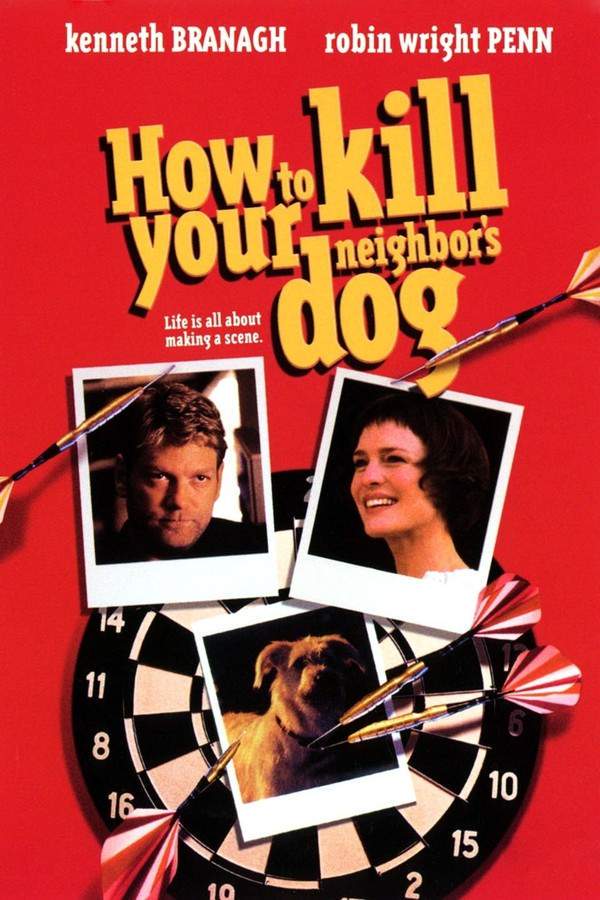
How to Kill Your Neighbor's Dog 2002


Directed by

Michael Kalesniko
Made by

Artistic License
Where to Watch How to Kill Your Neighbor's Dog
See current US streaming, rental, and purchase options for How to Kill Your Neighbor's Dog (2002) via JustWatch.

Amazon Prime Video
HD
Amazon Prime Video with Ads
HD
Howdy Amazon Channel
HD
Fawesome
HD
Hoopla
SD
Amazon Prime Video Free with Ads
HD
Plex
HD
Plex Channel
HD
The Roku Channel
HD
Tubi TV
SD
YouTube Free
HD
Amazon Video
SD Streaming availability powered by 
How to Kill Your Neighbor's Dog Plot Summary
Read the complete plot summary and ending explained for How to Kill Your Neighbor's Dog (2002). From turning points to emotional moments, uncover what really happened and why it matters.
Peter McGowan, a once-celebrated British playwright living in Los Angeles, finds himself creatively barren, emotionally frayed, and far removed from the early acclaim that defined his career. Ten years into a slump, his latest productions have flopped, and he bears the marks of insomnia, heavy smoking, and a mounting sense of personal and professional failure. His current project, a last-ditch play directed by the flamboyant Brian Sellars, bears the weight of expectation as Sellars’s exuberant energy and fixation on one of the lead actresses ripple through the creative process, further unbalancing Peter’s fragile grip on his work. Amid this turmoil, his wife Melanie, Robin Wright, a patient and steadfast partner, longs for a baby, a desire Peter cannot satisfy, and the tension between them grows heavier with every conversation about family and future.
To complicate his already delicate balance, a loud new neighbor’s dog invades Peter’s sleepless nights, pushing him to wander the streets of Los Angeles after dark. On one such walk, he encounters a strange man who claims to be named Peter McGowan—a doppelgänger of sorts, eccentric, enigmatic, and unsettling in equal measure. The two men form an uneasy, strangely supportive friendship that unsettles Peter even as it offers him a mirror of his own flaws and yearnings. Meanwhile, Peter’s life becomes tangled with Amy Walsh, the shy, lonely daughter of the neighbors. Amy, who has mild cerebral palsy, becomes a quiet catalyst for Peter’s awakening. Their relationship begins awkwardly, with Peter resenting the disruption Amy’s family brings to his routine, yet he gradually discovers a genuine connection with her—one grounded in honesty, resilience, and a surprising openness that begins to soften his cynicism.
This growing bond with Amy also influences Peter’s work. He uses their conversations and mannerisms to craft authenticity for a child character in his script, a choice that stirs mixed reactions from his collaborators, who worry it crosses lines of exploitation. Melanie, who dreams of motherhood, begins to see Amy as part of their extended family, and their time together reshapes the dynamic of their home. The situation becomes more complicated when Amy’s mother Trina notices the shift and pulls back, hiring a new babysitter. Yet Amy resists this change, insisting that the babysitter contact Peter and Melanie to reaffirm the tie that binds them all.
Throughout the upheaval, Peter’s insecurities are pressed from every direction. A televised talk-show mockery of his string of failures gnaws at his already fragile ego, amplifying his fear of irrelevance. In parallel, Melanie—an accomplished dancer—teaches Amy how to move with grace, and they stage a small recital to celebrate their fragile, fragile progress. Amy performs with courage, but a stumble or two triggers embarrassment in Trina, who halts the music in a moment of painfully public frustration. Peter’s patience snaps, and he accuses Trina of being the principal obstacle to Amy’s happiness and potential, a confrontation that reveals how deeply he has come to care for this young girl.
The plot takes a shocking turn when the noisy dog is mysteriously shot. Neighbors quickly suspect Peter, and the authorities close in. The investigation leads to the arrest of Peter’s doppelgänger after he is found with a rifle, seemingly connecting him to the crime and forcing Peter to confront the corrosive bitterness and misanthropy that have taken root in his life. In the wake of the incident, Amy’s mother decides to move away, and the emotional farewell between Amy and her new guardians is heartrending. Amy’s departure leaves Peter and Melanie with a renewed, yet tempered, sense of hope as they resume their attempts to conceive. The little girl’s brief, meaningful presence has left an indelible mark, reminding them of the power of empathy, connection, and the possibility of renewal.
In the end, this story is not about violence or revenge but about midlife crisis, the erosion and rediscovery of inspiration, and the redemptive capacity of human connection. Through dark humor and tender relationships, the film portrays a flawed man who, despite his flaws and failures, finds a glimmer of light in the most unexpected places, a testament to the quiet ways that people can alter each other’s lives.
In the final assessment, this is a nuanced meditation on how ordinary encounters—whether with a dog, a doppelgänger, or a child—can catalyze a shift from bitterness to generosity, from isolation to belonging. The emotional core rests with Melanie, whose steady love and quiet strength, enacted by [Robin Wright], anchors Peter’s tumultuous journey and reveals how redemption can emerge from acts of care and openness.
How to Kill Your Neighbor's Dog Timeline
Follow the complete movie timeline of How to Kill Your Neighbor's Dog (2002) with every major event in chronological order. Great for understanding complex plots and story progression.
Slump and burnout
Peter McGowan is a once-celebrated playwright living in Los Angeles who now finds himself creatively barren and emotionally frayed. He has spent ten years in a career slump, with his latest works flopping both critically and commercially. He battles chronic insomnia, smokes heavily, and feels impotent to boot.
Director's chaotic push
His latest play is directed by the flamboyant Brian Sellars, whose enthusiasm borders on chaotic. Sellars's obsession with one of the lead actresses undermines Peter's control over the production. The project wobbles between rehabilitation and collapse as tensions mount on set.
Marriage and the baby longing
Melanie longs for a baby, a wish that highlights the growing rift in their relationship. Peter's inability to conceive fuels his self-doubt and distances him from his wife. The quiet conflict intensifies as they navigate commitment and hope.
Noise and insomnia sharpen the edge
A relentlessly barking dog moved in by new neighbors becomes a new irritant that gnaws at Peter's already fragile sleep. He ends up taking long, aimless night walks through the city to escape the noise. The disturbances deepen his sense of disconnection from the world.
Meeting a doppelganger on the streets
During one such night walk, Peter encounters a strange man who appears to be his doppelganger, also calling himself Peter McGowan. The man is eccentric and unstable, yet Peter feels drawn to this odd, unsettling friendship. The encounter unsettles Peter and hints at an unsettling parallel inside his own life.
Bond with Amy Walsh
Peter forms an unlikely bond with Amy Walsh, the lonely young daughter of his new neighbors who has mild cerebral palsy. At first he resents the disruption Amy brings, but their conversations reveal a simple honesty and resilience that begin to draw him out of his cynicism. Their growing connection offers him a real emotional lifeline.
Amy inspires the writer in him
Peter uses the details of his conversations with Amy to inform a difficult child character in his script, trying to inject realism into his block. Melanie starts treating Amy as if she were their own daughter, strengthening the sense of family. The trio's time together deepens, while Amy's mother, Trina, begins to feel neglected.
Controversy over a disability character
Peter proposes including a character with cerebral palsy in the new play to bring realism. The idea is poorly received by the director and others, who accuse Peter of exploitation and insensitivity. The conflict underscores how fragile his creative redemption has become.
Trina's distance and the babysitter plan
In response, Trina distances Amy from Peter and Melanie and hires a new babysitter. Amy rejects the change and demands that the babysitter contact Peter and Melanie, underscoring the depth of the connection they've formed. The family dynamic becomes more complicated and strained.
Public pressure and a televised mockery
Peter endures a televised interview where a talk-show host mocks his string of failures. The hostile spotlight amplifies his anxiety and self-doubt, pushing him toward a deeper sense of desperation. The scrutiny threatens to derail any progress he has made.
Dance rehearsal and a painful call-out
Melanie and Amy organize a small dance recital that Amy performs in front of her mother. Amy does well, but she stumbles twice, and Trina embarrasses her by stopping the music. Peter becomes furious with Trina, feeling that she is the real barrier to Amy's happiness and potential.
Noisy dog tragedy and a troubling arrest
The noisy dog is mysteriously shot, and the neighbors immediately suspect Peter. The investigation leads to Peter's doppelganger being found with a rifle and arrested, seemingly confirming suspicion over the crime. The event shakes Peter and forces him to confront his own bitterness and misanthropy.
Amy's departure and a quiet rebirth
Amy's mother decides to move away, ending the fragile circle of connection that had given Peter and Melanie renewed empathy. Amy's tearful farewell underlines the loss, but it also catalyzes a renewed commitment to their own relationship. Peter and Melanie resume trying to conceive, carrying forward a fragile hope born from an unlikely friendship.
How to Kill Your Neighbor's Dog Characters
Explore all characters from How to Kill Your Neighbor's Dog (2002). Get detailed profiles with their roles, arcs, and key relationships explained.
Peter McGowan (Kenneth Branagh)
A once-celebrated British playwright living in Los Angeles, Peter is in a creative drought, plagued by insomnia, a heavy smoking habit, and a creeping sense of inadequacy. He moves through the city with a brittle cynicism, yet his growing bond with Amy and the support from Melanie hint at a capacity for tenderness. His life is upended by a mysterious doppelganger and the pressures of a new play, forcing him to confront what he values.
Melanie (Robin Wright Penn)
Peter's patient and loving wife who longs to have a baby, providing a steady emotional anchor amid his turmoil. She quietly resolves to nurture hope in both Peter and Amy, reshaping her own desires in the process. Her role reveals the power of partnership and empathy to soften a man's bitterness and invite growth.
Amy Walsh (Suzi Hofrichter)
A lonely young girl with mild cerebral palsy who forms a poignant connection with Peter. Her honesty, innocence, and resilience slowly break through Peter's cynicism and inspire a more humane portrayal in his script. Her bond with Peter and Melanie highlights themes of belonging and chosen family.
Peter McGowan (Doppelgänger) (Jared Harris)
The strange, enigmatic man who shares Peter's name and becomes a mirror for his own flaws. His eccentricity and instability push Peter to face his own bitterness, while their interactions complicate the line between ally and threat. His arrest later in the story serves as a catalyst for Peter's self-reflection.
How to Kill Your Neighbor's Dog Settings
Learn where and when How to Kill Your Neighbor's Dog (2002) takes place. Explore the film’s settings, era, and how they shape the narrative.
Location
Los Angeles, California
The story unfolds across the nocturnal and day-to-day spaces of Los Angeles, from quiet residential streets to the bustling theatre and film culture surrounding the city. The backdrop reflects the pressures of a creative industry where ambition clashes with personal instability. Night walks through the city become a motif for Peter's unraveling and search for meaning.
How to Kill Your Neighbor's Dog Themes
Discover the main themes in How to Kill Your Neighbor's Dog (2002). Analyze the deeper meanings, emotional layers, and social commentary behind the film.
🧭
Midlife Crisis
Peter's fall from artistic success, insomnia, and self-doubt drive a midlife crisis that reshape his relationships and ambitions. The film uses dark humor and intimate scenes to explore the loneliness of a man out of step with his own life. His encounter with Amy and the quiet bond with Melanie hint at a capacity for tenderness and growth beyond professional status. The narrative suggests that vulnerability and connection can slowly replace cynicism.
🎭
Art and Exploitation
Peter's drive to write a realistic play collides with the opinions of others who fear his project may exploit disability for effect. The production world in the summary illustrates the pressures of direction, reception, and ethical lines in representation. The idea of portraying cerebral palsy—through Amy's character—sparks debate about authenticity and responsibility. The tension reveals how art can heal or harm, depending on who's steering it.
🤝
Human Connection
A chance friendship with a doppelganger and a budding bond with a young neighbor reshape Peter's outlook on life. Melanie's maternal longing and Amy's innocence awaken empathy that the narrator's satire had long obscured. The relationships become the true engine of the story, offering redemption rather than revenge. In the end, connection helps Peter rediscover hope amid personal failure.

Coming soon on iOS and Android
The Plot Explained Mobile App
From blockbusters to hidden gems — dive into movie stories anytime, anywhere. Save your favorites, discover plots faster, and never miss a twist again.
Sign up to be the first to know when we launch. Your email stays private — always.
Explore the mobile appHow to Kill Your Neighbor's Dog Spoiler-Free Summary
Discover the spoiler-free summary of How to Kill Your Neighbor's Dog (2002). Get a concise overview without any spoilers.
In the tangled streets of Los Angeles, a once‑celebrated British playwright finds himself adrift. Peter McGowan lives in a cramped house that feels both a sanctuary and a cage, his creative well run dry after a decade of missed opportunities. The city’s perpetual buzz collides with his insomnia, heavy smoking, and the gnawing sense that his former brilliance is slipping away. Around him, pressures mount: a demanding mother‑in‑law who insists on order, an over‑zealous fan whose admiration borders on intrusion, and a noisy neighbor’s dog that shatters whatever fragment of peace he manages to steal in the night.
Melanie, Peter’s patient and steadfast wife, longs for a child, a dream that casts a quiet, yearning light over their strained marriage. Their conversations drift between hopeful planning and the stark reality of a career that seems to have stalled in place. The couple’s dynamic is a study in quiet endurance, each holding the other’s hand while navigating their individual doubts and desires.
Into this precarious routine wanders Amy, the shy, imaginative daughter of the neighbors next door. Though she moves with the gentle resilience of someone confronting her own challenges, her presence introduces an unexpected spark. Her creative playfulness and unguarded honesty begin to chip away at Peter’s self‑imposed barriers, offering him fresh material for a script that has long sat unfinished. The burgeoning friendship hints at the possibility that inspiration can seep in through the most ordinary of connections.
The film balances dark humor with tender moments, painting a portrait of mid‑life crisis that feels both specific and universal. Its tone is wry yet compassionate, inviting viewers to wonder whether the quiet cadence of everyday life might hold the key to rekindling a lost muse.
Movies with Similar Twists and Themes
Uncover films that echo the narrative beats, emotional arcs, or dramatic twists of the one you're exploring. These recommendations are handpicked based on story depth, thematic resonance, and spoiler-worthy moments — perfect for fans who crave more of the same intrigue.






Featured on this page

What's After the Movie?
Not sure whether to stay after the credits? Find out!
Check out our other apps:

SAT Sphere
Build confidence for the Digital SAT.

Mori Atlas
Discover wild places worth protecting.

Luntero
Search smarter for a home in Amsterdam.

Plot Explained
Unravel movie endings and hidden clues.

Pokechamp
Dive into Pokémon data and battle logic.

Driving Theory
Get ready for your European theory test.

Movie Dust
Plan your next cinema trip with ease.

Musemap
Find art and culture as you travel.

Selkobase
Compare credentials before committing.

Local Manual
Turn an unfamiliar country into practical next steps.

Lernavi
Compare school systems before your next move.

GymRoam
Find a workout stop wherever your plans take you.
Explore Our Movie Platform
New Movie Releases (2026)
Famous Movie Actors
Top Film Production Studios
Movie Plot Summaries & Endings
Major Movie Awards & Winners
Best Concert Films & Music Documentaries
Movie Collections and Curated Lists
© 2026 What's After the Movie. All rights reserved.
Privacy Policy