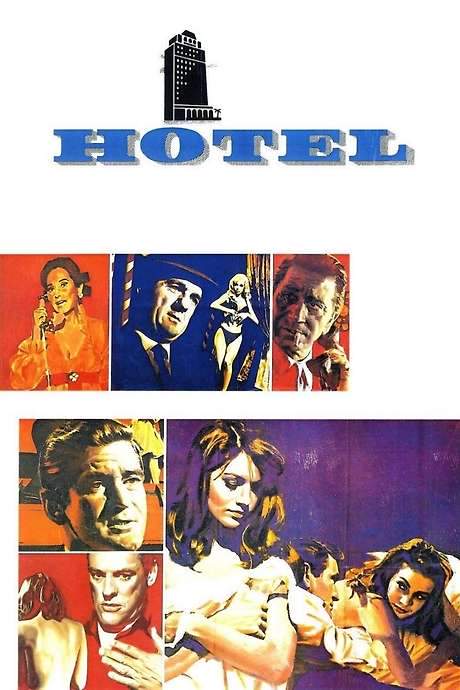
Hotel 1967

Directed by

Richard Quine
Made by

Warner Bros. Pictures
Hotel Plot Summary
Read the complete plot summary and ending explained for Hotel (1967). From turning points to emotional moments, uncover what really happened and why it matters.
Set in the fictional St. Gregory Hotel in New Orleans, the property is owned by Melvyn Douglas as Warren Trent, a man whose hotel is clearly financially strapped. The story follows the staff as they juggle three would‑be buyers while trying to keep the operation running, and it opens a window on the hotel’s routine problems—down to a stubborn elevator that keeps malfunctioning just when it’s most inconvenient.
Hotel manager Rod Taylor as Peter McDermott tries to balance the bidders’ interests with the personal chemistry blooming between him and Jeanne Rochefort, the beautiful French mistress of one of the bidders, whose portrait is painted with both charm and tension. He navigates the delicate web of loyalties and incentives, aware that every choice could tilt the fate of the St. Gregory.
One bidder, Curtis O’Keefe [Kevin McCarthy], envisions a high‑gloss, automated future for the hotel. His plan includes luggage conveyors that loop around the building as if it were a giant airport terminal, and a belated bill delivered on a conveyor belt. His broader renovation agenda would strip the lobby’s comfortable seating, convert the mezzanine into a string of shops, and subdivide the grand suites into smaller rooms. O’Keefe’s immediate ambitions, however, clash with the workers’ unions and the hotel’s existing traditions, setting up a tense power struggle over the property.
Among the guests are Geoffrey, Duke of Lanbourne [Michael Rennie] and his wife, the Duchess Caroline [Merle Oberon], who arrive with secrets after a fateful car accident. A hotel detective, Dupere [Richard Conte], tries to leverage the Duke and Duchess into paying him for information, but the couple pushes back in a dangerous game of bluff and counter‑bluff.
Keycase Milne [Karl Malden], a professional thief, works the hotel under a veil of suave confidence. He moves from pocketing small sums to chasing larger gains, aided by a network of accomplices, until the hotel’s shifting dynamics—now shaped by credit cards and changing guest behavior—force him to adapt once more.
Tension intensifies when Dr. Elmo Adams and his wife attempt to check in, only to be blocked by Trent who fears they might threaten the favorable bid. The Adamses disappear, only to be followed by a man with a camera. McDermott confronts Trent, accusing him of risking the hotel’s future and the union’s support for personal vendettas. After calling the NAACP, the couple reveals they hadn’t planned a major push for black guests, but the incident nonetheless becomes a public relations headache that jeopardizes both O’Keefe’s deal and the alternate one backed by the union.
O’Keefe makes a final offer, and Trent invites McDermott along to hear it. In the meeting, McDermott uncovers that “Dr.” Elmo Adams is not a doctor and actually works for an O’Keefe hotel in Philadelphia. He also reveals that O’Keefe offered him money to sway Trent in his favor, and suggests that Rochefort slept with him to keep him away during the critical arrival of the black guests. Faced with the audacity of the scheme, Trent rejects the bid and chooses to sell to the party whose plan would demolish the St. Gregory and build an office tower instead.
Keycase’s luck turns when he carelessly talks his way into trouble and grabs an ordinary‑looking attaché case, hoping it contains easy cash for payoffs to Dupere. He opens the case to count the money, only to find it is real and substantial. Heading for the elevator with the case, he finds himself sharing the ride with the Duke and other guests as the car’s control systems fail. McDermott and his assistant take the neighboring elevator, moving guests through the roof to safety. The last two in the failing car are Keycase and the Duke; Keycase refuses to relinquish the case, which contains the stolen funds. The Duke wrestles the case away and helps Keycase escape, but the brakes fail, sending the Duke to his death along with the briefcase.
The Duchess confesses that she was responsible for the car incident to protect her husband’s reputation and saves Dupere by corroborating his claim that he did not know the car had been involved in a hit‑and‑run. The police, not fooled by the ruse, decide not to press charges. With the elevator disaster triggering an exodus, McDermott rounds up the remaining guests—including Jeanne—for a final toast to the St. Gregory, a bittersweet closing moment that underscores the hotel’s long, complicated life.
Hotel Timeline
Follow the complete movie timeline of Hotel (1967) with every major event in chronological order. Great for understanding complex plots and story progression.
The St. Gregory's financial trouble and looming sale
The St. Gregory Hotel is in financial trouble, and owner Warren Trent contends with mounting pressure to sell. Manager Peter McDermott becomes deeply involved in evaluating proposals from three potential buyers. The tense atmosphere hints at the hotel’s uncertain future and the jockeying for control.
McDermott balances bids and romance with Jeanne
McDermott navigates the sale process while also pursuing a personal interest in Jeanne Rochefort, the French mistress of one bidder. His dual role places him at the center of competing interests as the bids intensify. The romance adds a layer of tension to the negotiations.
O'Keefe unveils a bold hotel-of-the-future vision
Curtis O'Keefe presents a bold vision for a hotel of the future, with ideas that feel more like an airport terminal than a traditional lodging house. He imagines conveyor belts moving luggage and even the bill being presented on a moving line. His project signals a radical disruption to the St. Gregory’s current operation.
O'Keefe's drastic plans for the hotel's layout
O'Keefe's immediate plans are even more drastic: remove the fountain, replace seating with paid areas, fill the mezzanine with shops, and divide the great suites into smaller rooms. He wants to push guests toward revenue-generating spaces. The changes showcase the clash between modernization and preserving the hotel’s historic character.
The Duke and Duchess arrive; Dupere hatches a blackmail scheme
The Duke and Duchess of Lanbourne arrive under mysterious circumstances, hiding from a previous accident. Hotel detective Dupere tries to blackmail them, adding another layer of intrigue. The atmosphere thickens with temptations and threats among the guests.
Keycase begins his theft operations
Keycase, a professional thief, begins stalking the hotel using a range of cunning techniques. He picks up a discarded key found in an ashtray at the airport and starts sneaking into rooms to steal cash. The shift to credit cards means he must adapt to fewer cash payouts.
The Adamses denied a room and pursued by a camera
Dr. Elmo Adams and his wife are denied a room by Trent, who is anxious about jeopardizing a sale. They disappear, followed by a man with a camera, fueling suspicions. McDermott berates Trent for obstructing the union-backed bid and risking the hotel’s future.
NAACP involvement alters the hotel’s prospects
The Adamses are tracked to another hotel before McDermott offers to return their room. The NAACP becomes involved and informs McDermott that there is no plan yet to push for black guests at the St. Gregory. The potential racial controversy threatens both O'Keefe’s deal and the union's preferences.
Final offer meeting reveals deception and motive
O'Keefe makes a final offer during a meeting with Trent and McDermott. A late phone call reveals that Adams is not a doctor, but an employee of an O'Keefe hotel in Philadelphia, and that Adams was paid to influence Trent. McDermott also reveals that Rochefort slept with him to smooth the arrangements, pushing Trent to reject the deal and preserve the hotel.
Keycase finds cash and heads to the elevator
Keycase’s luck shifts when he opens the attaché case to reveal the cash that will pay off Dupere. He heads for the elevator, pockets jangling with his prize. The stakes rise as the escape plan collides with the hotel’s mounting turmoil.
Elevator crisis traps guests and seals tragedy
In the elevator, the control relays fail and the brakes begin to give way. McDermott and his assistant transfer passengers through the roof to safety while the Duke and Keycase are trapped inside. The car plummets after the brakes fail, and the Duke dies, sealing Keycase’s fate.
The Duchess confesses; Dupere is spared
The Duchess admits she caused the car accident to protect her husband’s reputation and saves Dupere by confirming his ignorance. Police detectives decide not to press charges after seeing through the ruse. The hotel’s atmosphere shifts from danger to a tense aftermath as the situation stabilizes.
Keycase is arrested; the hotel edge toward closure
Keycase is arrested after his identity is revealed in the wake of the elevator incident. The elevator disaster contributes to an exodus as confidence in the hotel wanes, making its closure seem likely. The narrative threads tighten around the looming fate of the St. Gregory.
Final toast as guests depart, uncertain future ahead
With the guests leaving, McDermott rounds up the remaining occupants, including Jeanne, and buys drinks on the house for a final toast to the St. Gregory. The elevator disaster marks a turning point, sealing the hotel’s uncertain fate. The scene ends on a note of resilience mixed with impending change for the historic hotel.
Hotel Characters
Explore all characters from Hotel (1967). Get detailed profiles with their roles, arcs, and key relationships explained.
Peter McDermott (Rod Taylor)
The hotel manager who becomes entangled in the bidders’ plans and a romantic arc with Jeanne. He champions staff welfare and guests’ experience, while navigating pressure from Trent and O’Keefe. His integrity is tested as the elevator crises and political games unfold.
Keycase Milne (Karl Malden)
A professional thief quietly working the St. Gregory, using clever ruses to steal guests’ money as the world moves toward cashless transactions. He becomes bolder as luck shifts and the elevator sabotage threatens his escape. His briefcase full of cash becomes the catalyst for the finale.
Warren Trent (Melvyn Douglas)
Owner of the St. Gregory, protective of the hotel’s legacy and workforce. He balances business pressures, union concerns, and social optics while weighing offers that would reshape the property. Ultimately, he rejects unscrupulous deals to preserve the hotel’s fate.
Jeanne Rochefort (Catherine Spaak)
The French mistress of one bidder who becomes a focal point in the hotel’s melodrama and a romantic counterpoint to McDermott. Her involvement highlights cross-cultural intrigue and personal loyalties amid high-stakes deals.
Curtis O'Keefe (Kevin McCarthy)
The unscrupulous bidder who imagines a future hotel stripped of its charm and converted into a modern, profitable machine. He tries to bribe McDermott and manipulate Trent, embodying corporate greed at the expense of history.
Geoffrey, Duke of Lanbourne (Michael Rennie)
Wealthy nobleman hiding after a car accident, staging appearances while the Duchess is with him. He becomes a fixture in the hotel’s power dynamics and a tragic figure in the elevator climax.
Duchess Caroline Lanbourne (Merle Oberon)
The Duchess uses wit and social status to navigate the hotel’s crises, even as she relies on others for cover stories and escapes. Her actions complicate Dupere’s investigations and the hotel’s larger fate.
Detective Dupere (Richard Conte)
A hotel detective who attempts to blackmail the Duke and Duchess and becomes entangled in the casino of schemes at the St. Gregory. His past and present schemes collide with the honest effort to solve a crime.
Dr. Elmo Adams (Davis Roberts)
A Black physician and his wife seeking a room, whose denial reflects the film’s racial tensions and power dynamics within the hospitality industry. Their eventual disappearance and the NAACP intervention reveal institutional prejudices.
Hotel Settings
Learn where and when Hotel (1967) takes place. Explore the film’s settings, era, and how they shape the narrative.
Time period
1960s
The story unfolds in the late 1960s, a period marked by civil rights debates and urban redevelopment. The hotel drama mirrors broader tensions between old urban grandeur and modernizing schemes. Economic pressure and social change frame the decisions around the St. Gregory’s future.
Location
St. Gregory Hotel, New Orleans
The St. Gregory is a fictional, grand hotel in New Orleans' French Quarter. It serves as a microcosm of the city’s bustle, romance, and power plays, with a central lobby, a fountain, and an aging but storied charm. The hotel becomes a battleground as developers, thieves, and guests collide over its fate.
Hotel Themes
Discover the main themes in Hotel (1967). Analyze the deeper meanings, emotional layers, and social commentary behind the film.
🏨
Modernization
A plan to overhaul the St. Gregory replaces historic spaces with conveyor belts, newsstands, and smaller rooms. The proposal prioritizes efficiency and profit over atmosphere, threatening employees’ jobs and guests’ experience. The film uses this clash to explore how progress can erode tradition and community.
💰
Greed vs Integrity
O’Keefe’s bid is driven by money and control, offering bribes to McDermott and manipulating Trent, embodying corporate greed at the expense of history. Trent and McDermott wrestle with doing the right thing while protecting the hotel’s future. The narrative shows that integrity can override lucrative schemes, even at personal cost.
✊
Racial Tension
The denial of black guests and the NAACP intervention place civil rights concerns at the heart of the hotel drama. The story frames systemic prejudice as a factor in business decisions and public perception. Resisting discrimination becomes part of the hotel’s fate.

Coming soon on iOS and Android
The Plot Explained Mobile App
From blockbusters to hidden gems — dive into movie stories anytime, anywhere. Save your favorites, discover plots faster, and never miss a twist again.
Sign up to be the first to know when we launch. Your email stays private — always.
Explore the mobile appHotel Spoiler-Free Summary
Discover the spoiler-free summary of Hotel (1967). Get a concise overview without any spoilers.
In the heart of New Orleans, the St. Gregory Hotel rises like a living mosaic of old‑world charm and restless modernity. Its marble lobby and winding corridors host a constant parade of travelers, diplomats, and locals, each bringing a thread to the hotel’s ever‑shifting tapestry. The building itself feels like a character—its whispered histories echoing through stained‑glass windows, brass fixtures, and a faint jazz murmur that drifts from the street below. Amid this vibrant backdrop, the everyday drama of hospitality unfolds against the backdrop of the city’s own restless rhythm.
At the center of the hotel’s pulse is its manager, Peter McDermott, whose ambition is matched only by a deep loyalty to the establishment and its eclectic staff. He moves between the front desk and the back‑office with equal finesse, trying to keep the guest experience seamless while navigating the competing demands of owners, investors, and an increasingly demanding clientele. His personal charm and quiet determination make him both a steadying presence and a catalyst for change, as he strives to preserve the hotel’s soul amid mounting pressure.
Adding a darker edge to the scene is a daring thief known simply as Keycase Milne. With a reputation for slipping through hidden passages and a confidence that borders on flamboyance, he treats the hotel’s labyrinthine layout as his playground. His nightly forays intersect with the hotel’s other currents, creating a subtle undercurrent of tension that never fully erupts into open conflict. Meanwhile, a high‑profile diplomatic guest arrives, carrying a secret that promises to ripple through the delicate balance of power within the hotel’s walls.
The film thrives on a tone that blends sly humor, simmering intrigue, and the sultry atmosphere of a city that never sleeps. Every hallway, elevator shaft, and balcony view hints at stories waiting to unfold, while the characters—each with their own ambitions, loyalties, and hidden motives—navigate a world where hospitality and intrigue are inextricably linked. The stage is set for a delicate dance of negotiation, desire, and the ever‑present question of who truly controls the heart of the St. Gregory.
Movies with Similar Twists and Themes
Uncover films that echo the narrative beats, emotional arcs, or dramatic twists of the one you're exploring. These recommendations are handpicked based on story depth, thematic resonance, and spoiler-worthy moments — perfect for fans who crave more of the same intrigue.





Featured on this page

What's After the Movie?
Not sure whether to stay after the credits? Find out!
Check out our other apps:

SAT Sphere
Build confidence for the Digital SAT.

Mori Atlas
Discover wild places worth protecting.

Luntero
Search smarter for a home in Amsterdam.

Plot Explained
Unravel movie endings and hidden clues.

Pokechamp
Dive into Pokémon data and battle logic.

Driving Theory
Get ready for your European theory test.

Movie Dust
Plan your next cinema trip with ease.

Musemap
Find art and culture as you travel.

Selkobase
Compare credentials before committing.

Local Manual
Turn an unfamiliar country into practical next steps.

Lernavi
Compare school systems before your next move.

GymRoam
Find a workout stop wherever your plans take you.
Explore Our Movie Platform
New Movie Releases (2026)
Famous Movie Actors
Top Film Production Studios
Movie Plot Summaries & Endings
Major Movie Awards & Winners
Best Concert Films & Music Documentaries
Movie Collections and Curated Lists
© 2026 What's After the Movie. All rights reserved.
Privacy Policy