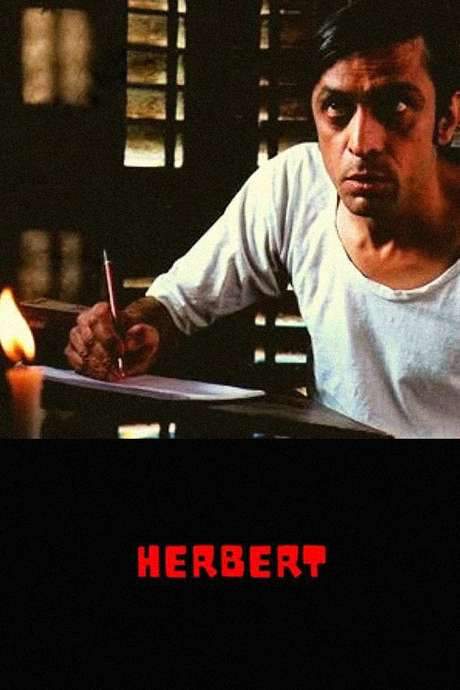
Herbert 2005
Directed by

Suman Mukhopadhyay
Made by

Ripples Productions
Herbert Plot Summary
Read the complete plot summary and ending explained for Herbert (2005). From turning points to emotional moments, uncover what really happened and why it matters.
Herbert Sarkar is introduced as a forty-year-old crank and a self-proclaimed mystic who claims he can speak with the dead to earn his living. After a night of heavy drinking with friends, he slits his wrists and dies. The very next day, the police shift their attention to him as a posthumous bomber, and the story unfolds through a non-linear, dreamlike structure that blends magical realism with a fragmented life story. Through these shifting perspectives, we witness the peculiar, sometimes comic, sometimes tragic rhythm of his existence.
Herbert is depicted as the son of a wealthy Bengali film director. His family includes his simple-minded mother, his director father, and the extended clan of his uncle, aunt, and their two sons, Dhanna and Krishna. Tragedy strikes early when his father dies during a birthday celebration on a shoot with his mistress, Miss Lily, and his mother dies soon after from an accidental electrocution. With the house and wealth eventually controlled by his uncle’s family, Herbert becomes the errand boy and a recurring butt of jokes from neighbors for his eccentricities. His world is complicated by family dynamics: his cousin Dhanna uses him to cheat on exams, while Krishna, the elder cousin, grows fond of Herbert and his son Binu, and exposes them to revolutionary ideas and cinema.
Krishna exposes Herbert and Binu to the world beyond their home, introducing them to Lenin, Mao, Stalin, Ho Chi Minh, and the cinematic portrayals of revolution. He later secures a professorship and moves away, leaving behind a copy of Ten Days That Shook the World and a set of books for Herbert to explore. A new family then moves into the neighborhood, and Herbert befriends Banalata (often called Buki in the tale); the two develop feelings for each other, but Buki’s life is disrupted when her father is transferred and she must move again. During this period, Herbert discovers a trunk full of occult books and a human skull in the house, and he begins to immerse himself in occult subjects, deepening his fascination with the unseen.
Time progresses to the 1970s, when Binu returns to Kolkata with his father to study at Presidency College. Binu joins the Naxalite movement against the Congress government, living a perilous life hiding from the police as the crackdown on rebels intensifies. One night, a visit from Binu ends with Herbert urging his friend to stay the night, but Binu departs and is shot by a police informer. On his deathbed, Binu reveals the diary’s location—hidden behind a Kali idol in the prayer room—and Herbert claims to have received this information in a dream, convincing others that he can communicate with the dead. This marks a turning point as Herbert becomes a local sensation, launching a thriving enterprise called Dialogues with the Dead and earning both money and respect for the first time in his life.
Yet success is fragile. The International Rationalist Society arrives, declaring Herbert a fraud and threatening legal action unless he closes shop. They confront him, and the scene signals the film’s framing—an investigative arc that hints at the very first moments of the movie. The authorities struggle to uncover any clear motive behind the earlier blast, leaving the case shrouded in mystery and suspicion.
In the film’s revelation, it is uncovered that Binu, during a late-night visit, had stashed hand grenades smuggled from Albania inside Herbert’s sleeping mattress. Binu planned to return to remove them, but he is shot before he can. After Herbert’s death, Dhanna arranges to cremate the mattress with the body, and the grenades ignite inside the cremation chamber, causing a deadly explosion that consumes bystanders and cements Herbert’s posthumous bomber status. The narrative closes on this tragic, ironic note, weaving together memory, guilt, and the unforeseen consequences of a life entangled with death and belief.
Herbert Timeline
Follow the complete movie timeline of Herbert (2005) with every major event in chronological order. Great for understanding complex plots and story progression.
Herbert's curse and suicide
The story opens with Herbert Sarkar cursing a group of people who have just left his house. He is a self-proclaimed mystic who speaks with the dead, and this talent defines his troubled life. Later that day, after a heavy drinking spree with friends, he slits his wrists and dies.
Investigation begins: posthumous bomber mystery
The next day, Herbert's death becomes the focus of a police investigation as a suspected posthumous bombing. The story is told non-linearly, with flashbacks revealing his eccentric life and the clues surrounding his death. The investigators struggle to connect his work with the blast.
Herbert's family background
Herbert is the son of a wealthy Bengali film director. His father dies during a shooting with his mistress, Miss Lily, an event that casts a shadow over his childhood.
Mother's death and social standing
Shortly after his father's death, his mother dies due to accidental electrocution, leaving Herbert to inherit a life of jokes at his expense. With the family property controlled by his uncle's clan, Herbert becomes the butt of every joke.
Herbert becomes an errand boy and is ridiculed
Herbert works as the errand boy for his uncle's family, facing ridicule from relatives and neighbors for his eccentric behavior. His cousin Dhanna even uses him to cheat on exams, highlighting his exploited position.
Krishna introduces him to revolutionism
Krishna, Herbert's elder cousin, introduces him to Lenin, Mao, Stalin, Ho Chi Minh, and the world of revolutionary ideas. He exposes Herbert to revolutionary screenings and hands him a copy of Ten Days That Shook the World.
Krishna moves on; the book left behind
Krishna leaves to take a college professorship, taking his family with him. Before leaving, he tells Herbert that his books remain in one room for him to read and becomes a mentor in absentia.
New neighbor and budding romance
A few days later a new family moves in and Herbert befriends Banalata, known as Buki, and they develop feelings for each other. When Buki's father transfers, she moves away, breaking the budding romance.
Herbert uncovers occult trunk
During this period, he discovers a trunk of occult books and a human skull in the house belonging to an ancestor. This discovery sparks his growing interest in occult subjects and the supernatural.
Binu returns and joins Naxalite movement
Years later, Binu returns to Kolkata with his father to enroll at Presidency College during the 70s and becomes involved in the Naxalite movement. He spends much of his time hiding from the police as the movement is cracked down on.
Binu's last visit; night of departure
On a last visit to Herbert with a friend, Binu is urged to stay the night but leaves because of an urgent engagement. He is shot by a police informer later that night.
Diary discovery and contact with the dead
On his deathbed, Binu tells Herbert where his diary is hidden behind a Kali statue in the prayer room. A dream sequence convinces Herbert that Binu revealed the diary to him, enabling him to claim the ability to communicate with the dead.
Dialogues with the Dead; new career
Herbert becomes a local sensation, launching a business called 'Dialogues with the Dead' and earning money and respect for three years. The public is fascinated by his alleged paranormal connection and the mystique he cultivates.
Challenge from rationalists
The International Rationalist Society declares him a fraud and threatens legal action unless he closes shop. They visit him, challenging his supposed contact with the dead and threatening to expose him.
The posthumous bomber revelation
It is revealed that Binu hid hand grenades inside Herbert's sleeping mattress during his last visit. When Herbert died, the accomplice's plan backfires as the mattress is cremated with him, the grenades exploding and killing many people. This turn of events makes Herbert a posthumous bomber.
Herbert Characters
Explore all characters from Herbert (2005). Get detailed profiles with their roles, arcs, and key relationships explained.
Herbert Sarkar (Subhasish Mukherjee)
A forty-year-old self-proclaimed mystic who can speak with the dead, Herbert is both entertainer and fraud. His suicide kicks off a posthumous media spectacle as the police investigate the ‘bomber’ mystery. He builds a profitable 'Dialogues with the Dead' enterprise, but his rise is built on illusion and fragile ties to family and pasts.
Dhanna (Bratya Basu)
Herbert’s cousin who uses him to cheat on exams. After Herbert’s death, Dhanna orchestrates the disposal of the evidence by sending the mattress with his body for cremation, contributing to the catastrophe that follows.
Herbert Settings
Learn where and when Herbert (2005) takes place. Explore the film’s settings, era, and how they shape the narrative.
Time period
1970s
The narrative centers on the 1970s, a turbulent period in West Bengal marked by political activism and social change. It follows Herbert’s rise and fall across decades through non-linear jumps that echo the era’s rapid shifts. The setting captures Kolkata during a time of student movements, ideological clashes, and local upheavals.
Location
Kolkata, West Bengal, India
Kolkata provides the vivid backdrop for Herbert's life, moving from family homes to Presidency College and the city’s crowded streets. The city’s cultural depth and political energy shape the characters’ beliefs and ambitions. It acts as a living canvas where tradition, superstition, and upheaval intersect.
Herbert Themes
Discover the main themes in Herbert (2005). Analyze the deeper meanings, emotional layers, and social commentary behind the film.
✨
Magical Realism
The story blends the supernatural with the everyday as Herbert claims to speak with the dead and earns a living from it. The thin line between reality and the occult is used to critique belief, fraud, and human gullibility. This magical layer frames tragedy and resilience as intertwined outcomes of a community’s faith and fear. It underscores how myth can become a commodity.
💀
Death & Fame
Herbert’s fame arises posthumously as people flock to dialogs with the dead and to his sensational legacy. The theme probes how society capitalizes on death for entertainment, worship, or profit. The twist of a real-life tragedy turning into spectacle asks what counts as truth and what sustains legacy. The bombing ending makes the arc of fame inseparable from violence.
🪧
Political Upheaval
References to Lenin, Mao, Stalin, Ho Chi Minh and the Naxalite movement anchor the narrative in Bengal’s revolutionary history. The characters are drawn into ideological experiments, student activism, and confrontations with authority. Political passion collides with personal pain, blurring lines between conviction and crime. The era’s turbulence shapes choices and destinies.
🎭
Identity & Society
Herbert’s status as an eccentric outsider exposes social judgment and ridicule that shape his self-image. Family dynamics, class expectations, and communal gossip drive his decisions and downfall. The film uses performance and perception to critique how society wears masks of belief and power. Tragedy emerges when the line between individuality and social derision breaks.

Coming soon on iOS and Android
The Plot Explained Mobile App
From blockbusters to hidden gems — dive into movie stories anytime, anywhere. Save your favorites, discover plots faster, and never miss a twist again.
Sign up to be the first to know when we launch. Your email stays private — always.
Explore the mobile appHerbert Spoiler-Free Summary
Discover the spoiler-free summary of Herbert (2005). Get a concise overview without any spoilers.
In the bustling lanes of Kolkata, Herbert drifts through life as a forty‑year‑old self‑styled mystic, earnestly claiming the ability to converse with those who have passed on. His days are a gentle choreography of odd jobs, bewildering conversations, and an ever‑present longing for validation. The film paints his world with a palette of magical realism, where the ordinary teeters on the edge of the uncanny, and humor mingles with a quiet, lingering melancholy. From the first frame, the audience senses a city that hums with possibilities, its streets echoing with stories waiting to be whispered back from the beyond.
Born to a celebrated Bengali film director and a gentle mother, Herbert inherited a legacy of artistic ambition that never quite aligned with his own, more eccentric temperament. The household is an extended tableau of relatives: a simple‑minded mother, a charismatic father, and an uncle’s clan that ultimately assumes control of the family’s wealth. Within this tapestry, Dhanna—the scheming cousin—uses him for favors, while Krishna, the elder cousin, becomes an unexpected mentor, introducing him to revolutionary ideas, cinema, and a trove of literature that expands his worldview. These relationships tether Herbert to both the mundane chores of neighborhood life and the broader currents of political and cultural thought, underscoring the film’s richly layered portrait of human connection.
Amid this intricate social web, Herbert forges a tender bond with the neighbor girl known as Buki, a friendship that flutters between playful affection and the bittersweet reality of fleeting encounters. His curiosity deepens as he discovers a chest of occult tomes and strange relics, sparking a fascination with the unseen forces that seem to thread through his existence. The narrative unfolds in a non‑linear, dreamlike rhythm, inviting viewers to linger on atmosphere and nuance rather than plot. As Herbert navigates the thin line between credulity and compassion, the film offers a heartfelt exploration of resilience, inviting us to wonder how far a solitary soul will go to be heard in a world that often whispers past him.
Movies with Similar Twists and Themes
Uncover films that echo the narrative beats, emotional arcs, or dramatic twists of the one you're exploring. These recommendations are handpicked based on story depth, thematic resonance, and spoiler-worthy moments — perfect for fans who crave more of the same intrigue.





Featured on this page

What's After the Movie?
Not sure whether to stay after the credits? Find out!
Check out our other apps:

SAT Sphere
Build confidence for the Digital SAT.

Mori Atlas
Discover wild places worth protecting.

Luntero
Search smarter for a home in Amsterdam.

Plot Explained
Unravel movie endings and hidden clues.

Pokechamp
Dive into Pokémon data and battle logic.

Driving Theory
Get ready for your European theory test.

Movie Dust
Plan your next cinema trip with ease.

Musemap
Find art and culture as you travel.

Selkobase
Compare credentials before committing.

Local Manual
Turn an unfamiliar country into practical next steps.

Lernavi
Compare school systems before your next move.

GymRoam
Find a workout stop wherever your plans take you.
Explore Our Movie Platform
New Movie Releases (2026)
Famous Movie Actors
Top Film Production Studios
Movie Plot Summaries & Endings
Major Movie Awards & Winners
Best Concert Films & Music Documentaries
Movie Collections and Curated Lists
© 2026 What's After the Movie. All rights reserved.
Privacy Policy