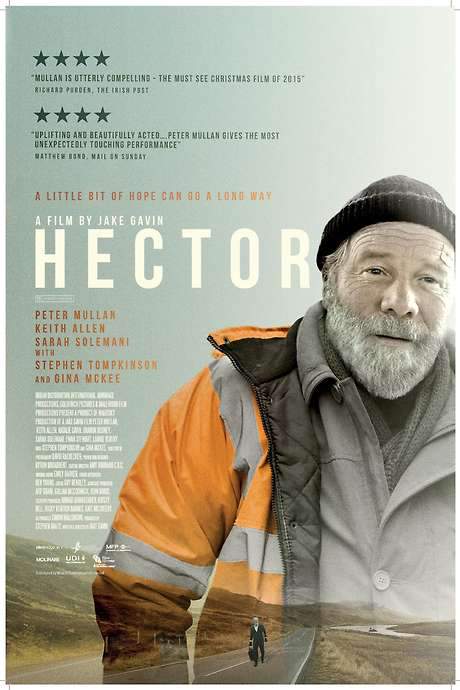
Hector 2015

Directed by

Peter Mullan
Made by

A Product of Malitsky
Where to Watch Hector
See current US streaming, rental, and purchase options for Hector (2015) via JustWatch.






Hector Plot Summary
Read the complete plot summary and ending explained for Hector (2015). From turning points to emotional moments, uncover what really happened and why it matters.
Hector McAdam is a warm-hearted, limping, homeless man whose rich inner life and painful history unfold across a season of cold streets and crowded shelters. The film traces how his past—a blend of gentle acts of kindness and the subtle, sometimes harsh, indifference of others—shapes the way he moves through the world. In the present day, he moves with a small circle of companions, his close-knit if improvised family: Dougie and Hazel, who share the road and the shelter with him after a stranger offers them jackets that spark a quiet sense of belonging.
A trip to Glasgow for a hospital appointment sets the tone for the ensuing odyssey. The appointment is scheduled for a few weeks later and is described as non-urgent, but the journey becomes urgent in its own way as the day’s events push Hector to confront his fragmented ties to the past. On the way back from the oncology department, an old acquaintance recognizes him and mentions his brother, Peter, who tried to locate him after he vanished years ago. Hector, wary and worn, chooses silence over conversation. The encounter is followed by a tense moment when he is attacked by youths seeking to steal his bag, only to be rescued by a shopkeeper who patches him up and repairs what the street has taken. He resists alcohol, and he doubles down on safeguarding the few letters that carry sentimental weight—little anchors in a life otherwise spent moving from one shelter to the next.
Driven by a sense of unfinished business, Hector resolves to reconnect with his siblings, a task that leads him north to Newcastle in search of his sister, Lizzie. The reunion is complicated: Lizzie’s husband, Derek, confronts him with old resentments and cold practicality, insisting that Lizzie will not meet him after fifteen years of silence. Derek’s hostility is matched by Hector’s stubborn vulnerability as he asks for Lizzie’s contact details and a place to stay, only to be turned away with a stern, practical refusal. He speaks of spending Christmas with friends in a London shelter, and the conversation touches on the deeper ache of family brokenness. When Hector asks about Peter, Derek hedges—London is the answer he offers, and the suggestion to return is met with a firm refusal.
The journey takes a stark, affecting turn at a service station where Hector seeks rest for a cold night. There he encounters Hazel and Dougie. The night brings tragedy: Dougie dies after a cruelly ordinary moment of hardship, and Hazel flees, leaving Hector to face the consequences and the police. The next leg of the trip lands him in Liverpool, where a church shelter offers him a warm space and a voucher for a café. Even there, the day’s small comforts are undercut by misread signals—the waitress accuses him of theft when he spills his tea and searches for a towel. The film refuses easy resolution, treating these moments as real, lived experiences in a life spent without a stable home base.
London becomes a pivotal arc in Hector’s story. The Christmas shelter there is initially full, but a perceptive volunteer, Sara, recognizes him from Christmases past and finds him a bed. She extends a lifeline by giving him internet access to contact his family and, importantly, help him search for Peter. As the shelter becomes a temporary ground, Hazel reappears, and Hector’s steadiness helps calm her, while Sara helps her find shelter with other women. The arrival of Peter at the shelter marks a bittersweet turning point: he has searched multiple shelters, called their sister to wish her a Merry Christmas, and learned from Derek about Hector’s plans. Peter asks Hector how he sustains himself, and Hector explains that a social worker helped him claim benefits while he moved from place to place. Peter offers to keep in touch, but Hector reminds him that his chosen family—his fellow shelter friends—has become his real family. He clarifies that “life” is what broke him, not a single rift with Peter.
In a quiet, intimate moment, Hector reveals a long-held memory: his wife and daughter were killed on Christmas Eve by a drunk driver. The revelation reframes the entire journey as less about reunion and more about coming to terms with loss, guilt, and forgiveness. The following day, he shares a Christmas dinner with his new circle, and Peter returns to introduce him to Lizzie and Derek near the shelter. Lizzie, who had previously rebuked him for not staying in touch, comes to terms with the weight of past choices as Hector explains that the blame lay not only with them but with life itself, the forces that pulled them apart. With the shelter gradually emptying, Sara expresses hope that they will meet again next year, while Hector prepares for a temporary return north to continue his operation. The final scenes frame a crucial decision: he will spend some time with his sister, but his long-term path remains the road he travels with his makeshift family, the people who have learned to look out for one another on the margins.
As the narrative closes, the film does not moralize or preach. It honestly presents resilience, memory, and the stubborn possibility of connection even when the odds seem insurmountable. The threads of kindness and cruelty, generosity and struggle, weave together into a portrait of a man who refuses to let his past define every moment of his future. Through Hector’s eyes, audiences are invited to witness not just the hardships of homelessness, but the enduring human impulse to reach out, to be found, and to find a way back to some sense of family and belonging, even if that family is built from shared shelter floors, kind strangers, and the stubborn warmth of the human heart.
Hector Timeline
Follow the complete movie timeline of Hector (2015) with every major event in chronological order. Great for understanding complex plots and story progression.
Stranger brings jackets to Hector and friends
In the present day, Hector and his homeless friends Dougie and Hazel receive jackets from a stranger, a small act of kindness that gives them hope. He decides to hitchhike to Glasgow for a hospital appointment, preparing for the journey. The appointment is set for a few weeks ahead for a non-urgent operation, signaling the medical odds he faces.
Old acquaintance recognises Hector after hospital visit
While returning from the Glasgow oncology department, Hector is recognised by an acquaintance who hasn't seen him in years. The man says his brother Peter has been looking for him since he disappeared. Hector refuses to engage, keeping his past hidden.
Youth attack and shopkeeper helps
Later that day, Hector is attacked by youths trying to steal his bag. A local shopkeeper intervenes, tends his wounds, and repairs the damaged bag. He checks his sentimental letters to ensure they are intact and turns away from alcohol, signaling his fragile safety on the streets.
Hector decides to search for his sister Lizzie
Hector resolves to find his siblings after 15 years apart, starting with his sister Lizzie in Newcastle. He travels north to search for her and asks around until he locates Lizzie's husband, Derek. Derek berates him for visiting after years without contact and refuses to share Lizzie's number.
Derek rejects contact and warns him off
In Newcastle, Derek's hostility and warnings set a cold tone for Hector's family search. He refuses Derek's offer to drive him to the station or give money, and Derek again tells him not to come back. Hector remains determined to reconnect with Lizzie despite the dismissal.
Hector plans Christmas in a London shelter
Derek mentions London as a possible destination, but Hector chooses to spend Christmas with friends in a London shelter. He keeps pursuing family links even as he relies on the shelter network for shelter and companionship. The journey south marks a shift from a purely personal quest to shared community support.
Cold night at a service station; Dougie dies
At a service station, Hazel and Dougie urge Hector to sleep in the disabled toilet because of the cold night. He agrees, but wakes to find Dougie dead, with Hazel fleeing and leaving Hector to face the arrival of the police. The night underscores how fragile his precarious situation remains.
Liverpool church shelter and breakfast scare
Upon arriving in Liverpool, Hector finds shelter in a church arranged by a sympathetic vicar who also offers a cafe voucher. He enjoys a free breakfast, but when he spills tea, a waitress accuses him of attempted theft. The incident deepens his sense of being mistreated on the margins.
Sara helps in London shelter and enables internet access
In London, a Christmas shelter initially fills up, but Sara recognizes Hector as a regular visitor and arranges a bed for him. She also provides internet access to help him trace his brother. The support from Sara marks a turning point in his ability to reach out to family.
Peter finds Hector at the shelter and chats about life
Peter tracks Hector down at the shelter and explains that he has visited several shelters while trying to find him after calling their sister to wish her Merry Christmas. He asks how Hector lives, and Hector explains that a social worker helped him claim benefits while traveling. Peter offers to see more of him, but Hector says his fellow homeless are his family now.
Past life surfaces; the halfway house confession
During a candid moment with Sara, Hector reveals that he never fell out with Peter, but fell out with life itself. He confesses that he was sectioned and left his old life behind after a stint in a halfway house. The revelation adds context to the years of separation from his family.
Christmas Eve tragedy recalled
After a day of shopping, Hector grows unwell and tells Sara that his wife and daughter were killed on Christmas Eve by a drunk driver. The confession adds a painful, defining wound to his memories of the past. He carries this grief as part of his present life on the streets.
Christmas Day meeting Lizzie and Derek
On Christmas Day, Hector enjoys a Christmas dinner with his friends. Peter returns and takes him to meet Lizzie and Derek nearby, where Lizzie rebukes him for the lack of contact. He tells her he blamed himself for their parents' deaths because they had left after an argument.
Sara's gifts and a plan for a family Christmas
As the shelter empties, Sara hopes to see Hector next year and gives him a pair of new shoes, urging him to look after himself. Hector decides to stay with his sister for a while and plans to have a proper family Christmas. The emotional ties begin to reframe his sense of family and belonging.
Hector heads north for his operation
Hector hitch-hikes back up north for the operation scheduled earlier, signaling a return to the path he began with but carrying a new sense of solidarity with the people he calls family. The journey is both medical and emotional, as he moves toward treatment while holding on to the ties formed on the street. The road back north foreshadows a fragile but hopeful future.
Hector Characters
Explore all characters from Hector (2015). Get detailed profiles with their roles, arcs, and key relationships explained.
Hector McAdam (Peter Mullan)
Warm-hearted but physically frail, Hector is homeless and traveling to seek medical help. The past comes back in memories that reveal kindness from some and the indifference of others, shaping his current worldview. He ends up forming a surrogate family among fellow shelter residents rather than returning to his old life.
Dougie (Laurie Ventry)
A loyal but rough-around-the-edges friend of Hector; he keeps spirits up with rough humor and camaraderie. He helps Hector through the streets and shelters, but dies after a moment that leaves Hector to face the consequences alone. His death marks a turning point in Hector’s journey and in the group he has come to rely on.
Hazel (Natalie Gavin)
A fellow homeless woman who travels with Hector and Dougie. She can be wary yet compassionate, and she faces the harsh realities of street life. She is present during key shelter moments, including a night where Dougie dies, and she ultimately seeks safety and stability with Hector.
Peter (Ewan Stewart)
Hector’s brother who has long been looking for him; he has visited several shelters and shows concern for Hector’s welfare. He offers to spend more time together during Christmas, and his pursuit represents a connection to a past life. His later appearances help illuminate Hector’s sense of responsibility and belonging.
Lizzie (Gina McKee)
Hector’s sister who rebukes him for long-standing absence and the lack of communication. She is initially hesitant to reconnect, reflecting the strain of family ties. Her reactions evolve as the story progresses, revealing the complexity of forgiveness and responsibility within a fractured family.
Derek (Stephen Tompkinson)
Lizzie’s husband who distrusts Hector and berates him for his absence. He offers money and stern warnings to stay away, embodying a hardened stance toward past estrangements. His attitude highlights the tension between family duty and personal boundaries.
Sara (Sarah Solemani)
A shelter volunteer who recognizes Hector as a regular and helps him navigate resources. She provides practical support, helps him access the internet to contact his brother, and assists with integrating Hazel into shelter systems. Her kindness offers a beacon of stability in the chaos.
Hector Settings
Learn where and when Hector (2015) takes place. Explore the film’s settings, era, and how they shape the narrative.
Time period
The film unfolds in contemporary Britain during a cold winter season, centered on homelessness, shelters, and charity. It follows Hector’s Christmas journey across cities as he navigates hospitals, shelters, and street life. The timeframe is modern, reflecting current social issues and welfare networks.
Location
Glasgow, Newcastle, London, Liverpool
Set across multiple UK cities, the film follows Hector’s winter journey. He goes to Glasgow for a hospital appointment, making the city the first stop in a trek through the social-safety net. The story then moves to Newcastle, London and Liverpool as he seeks family and shelter in urban spaces.
Hector Themes
Discover the main themes in Hector (2015). Analyze the deeper meanings, emotional layers, and social commentary behind the film.
🤝
Compassion
Kindness from strangers and the shelter network shapes Hector's survival. The film highlights acts of generosity—jackets from a stranger, volunteers at Christmas shelters, and social workers who help him. These moments underscore the power of community in times of need.
🏚️
Homelessness
Hector's homelessness frames the narrative, showing how people string together temporary safety: shelters, church meals, and public spaces. The story exposes hardships, stigma, and fragility of welfare systems. It shows both dangers on the street and the resilience found within a makeshift family.
💔
Family
Family ties are central to Hector’s past and present. The film contrasts a broken family history with the idea of chosen family among shelter companions. Reconciliations with Lizzie and Derek reveal guilt and responsibility, while Peter’s attempt to reconnect adds a glimmer of hope.

Coming soon on iOS and Android
The Plot Explained Mobile App
From blockbusters to hidden gems — dive into movie stories anytime, anywhere. Save your favorites, discover plots faster, and never miss a twist again.
Sign up to be the first to know when we launch. Your email stays private — always.
Explore the mobile appHector Spoiler-Free Summary
Discover the spoiler-free summary of Hector (2015). Get a concise overview without any spoilers.
In the stark chill of the British winter, a limping, warm‑hearted wanderer makes the motorways his home. Hector moves from one service station to the next, subsisting on the fleeting shelter of roadside cafes and the quiet camaraderie of fellow travelers. Each year he sets out from the wilds of Scotland on a pilgrimage toward a temporary Christmas refuge in London, a ritual that offers both a reprieve from the road’s endless gray and a glimmer of belonging amid the anonymity of the highway.
On his journey, Hector is not entirely alone. He shares the road with a small, improvised family—people who have slipped into his life as naturally as the fog rolls over the asphalt. Dougie and Hazel become his close companions, their simple gestures of generosity forming a fragile network of trust. When the miles bring him to the bustling heart of the city, a compassionate volunteer named Sara opens a door to a warm shelter, extending a lifeline that hints at the possibility of deeper connections beyond the road.
Beneath the practical concerns of meals and a place to sleep lies a quieter, more pressing quest: Hector is drawn northward by the faint pull of family he has long left behind. The names of his siblings—Peter and Lizzie—surface in whispered conversations, suggesting unresolved ties and a lingering desire to understand the circumstances that led him to this marginal existence. The film’s tone remains tender yet unflinching, portraying the delicate balance between hardship and humanity.
Visually, the story moves through rain‑slick highways, dimly lit service stations, and the soft glow of shelter rooms, each setting bathed in a melancholic yet hopeful light. The narrative unfolds with a gentle observational style, allowing moments of quiet humor and unexpected kindness to emerge amidst the cold. In the world of Hector, resilience is measured not by grand gestures but by the steady, stubborn warmth found in shared glances, brief conversations, and the ever‑present hope that even the most weathered traveler can find a place to call home.
Featured on this page

What's After the Movie?
Not sure whether to stay after the credits? Find out!
Check out our other apps:

SAT Sphere
Build confidence for the Digital SAT.

Mori Atlas
Discover wild places worth protecting.

Luntero
Search smarter for a home in Amsterdam.

Plot Explained
Unravel movie endings and hidden clues.

Pokechamp
Dive into Pokémon data and battle logic.

Driving Theory
Get ready for your European theory test.

Movie Dust
Plan your next cinema trip with ease.

Musemap
Find art and culture as you travel.

Selkobase
Compare credentials before committing.

Local Manual
Turn an unfamiliar country into practical next steps.

Lernavi
Compare school systems before your next move.

GymRoam
Find a workout stop wherever your plans take you.
Explore Our Movie Platform
New Movie Releases (2026)
Famous Movie Actors
Top Film Production Studios
Movie Plot Summaries & Endings
Major Movie Awards & Winners
Best Concert Films & Music Documentaries
Movie Collections and Curated Lists
© 2026 What's After the Movie. All rights reserved.
Privacy Policy