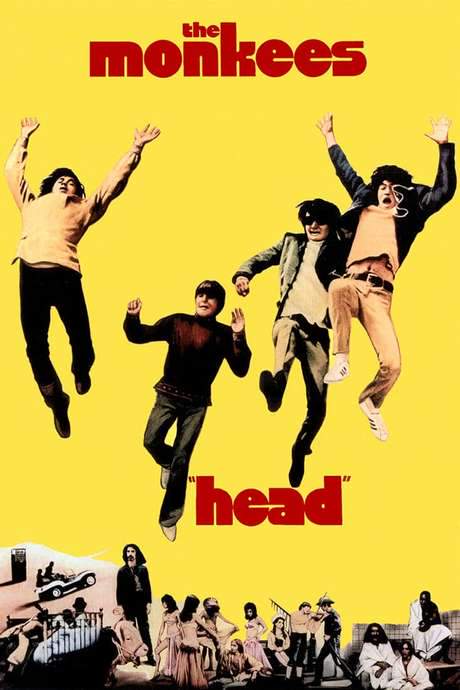
Head 1968


Directed by
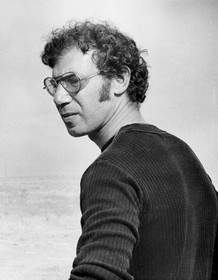
Bob Rafelson
Made by

Columbia Pictures
Where to Watch Head
See current US streaming, rental, and purchase options for Head (1968) via JustWatch.


Streaming availability powered by 
Head Plot Summary
Read the complete plot summary and ending explained for Head (1968). From turning points to emotional moments, uncover what really happened and why it matters.
Head opens with the dedication of a bridge, setting a tone that is at once ceremonial and mischievously subversive. As a local politician wrestles with his microphone during the speech, the scene erupts into a riot of sound and chaos: the wacky, fun-loving Monkees—Micky Dolenz, Davy Jones, Peter Tork, and Michael Nesmith—burst through the gathered officials, their entrance punctuated by horns, sirens, and the kind of carefree anarchy that would become the film’s signature gesture. This blistering opening action reframes the movie as a collage of moments rather than a single, straightforward narrative, signaling that we are about to ride through a series of loosely connected chapters rather than follow a conventional plot.
Earlier in the film, the four have just shared a kiss with the same groupie who quips that they’re indistinguishable, a line that slyly undercuts any sense of distinct personalities within a famous quartet. From there, the film unfolds as a kaleidoscopic procession of scenes, each one a different type of movie: a mystery, a war story, a western, a desert adventure, and more, all stitched together by the same live-wire energy that made the Monkees famous. In every segment, the four cope with the paradox of being four real people in a real band who also exist as scripted figures performing precisely what the director wants them to do.
They continually push against the boundaries of their own reality, trying to prove they can exercise genuine choice outside the frame. Yet the drumbeat of the script keeps guiding their words and actions, revealing a labyrinth where freedom appears perpetually out of reach. Their experiments are many: deliberately flubbing lines from the TV show, pointing out to other characters that they are really actors making a movie, voicing complaints to the producers—Jack Nicholson, on set but not part of the film, and Bob Rafelson, likewise present as a self-aware force behind the scenes—smashing through painted paper walls, walking off the set and into street scenes, and even physically lashing out at other actors. All of these acts are designed to test agency, and all of them underscore a larger truth: the screenplay and the director’s control shape every decision.
As pursuit and chaos mount, the Monkees discover a disturbing pattern: their every gesture, every quip, every collision with another character is scripted down to the finest detail. They are chased not only by the people they’ve disrupted but by the sense that they are trapped within a manufactured reality that won’t yield true autonomy. In their bid for escape, they surge onto a bridge, pushing others aside in a rush of desperate urgency. The moment of crisis reveals a grim twist: they leap and fall, seemingly choosing suicide as an ultimate break from manipulation.
But even that act is revealed to be another layer of the script. The camera lingers on their drenched, inert bodies, and the director—a controlling presence behind the entire production—drags them away into an enormous aquarium. There, their bodies float, glass enclosing them as they stare back with blank, almost clinical expressions. The director then wheels the aquarium into a studio warehouse, slotting it into place to be pulled out and reused for another project whenever the need arises. The film leaves us with a haunting final image: a chorus of puppets, the four on-screen selves, forever ready to be reassembled for another tale at the director’s whim, a stark meditation on creativity, consent, and the performative nature of cinema.
Head Timeline
Follow the complete movie timeline of Head (1968) with every major event in chronological order. Great for understanding complex plots and story progression.
Groupie kiss reveals indistinguishability
The Monkees share a kiss with the same groupie, who then reveals they may be indistinguishable from one another. The moment seeds doubt about their own identities and roles within the manufactured pop machine. It sets up the film's ongoing meta-question: who are these four men, really?
Entering the mystery vignette and questioning reality
The men enter a noir-styled mystery world as part of the film's mosaic of genres. They try to act natural and solve clues, but the set and story press back against them. The scene underscores their struggle with being both real people and scripted characters.
War movie segment tests their agency
In a battlefield scenario, the action feels staged and their choices are constrained by the script. They attempt to improvise, only to be guided by the director's invisible hand. The sequence highlights the tension between free action and predetermined lines.
Western detour challenges autonomy
A Western-style shootout and frontier oddities push the Monkees to act as if they control their fate. Yet quick cuts and the audience's gaze remind them they're in a movie's machinery. They struggle to assert individuality within a painted world.
Desert adventure wears them down
In a desert voyage, they improvise to escape the mirage of control. The sand and heat amplify their sense of entrapment inside a manufactured saga. They search for a sign of true choice, only to be redirected by the camera's purpose.
Confronting the filmmakers on set
The Monkees voice their complaints to producers Jack Nicholson and Bob Rafelson, who are on the set but not part of the film. They push back against the perceived limits of the director's authority. The moment blurs the line between within-film action and real-world control.
Smashing through painted walls
The quartet deliberately smashes through the painted paper walls that separate the fake movie world from reality. The breach is both a literal escape attempt and a metaphor for breaking the script's boundaries. The chaos signals their growing insistence on authentic agency.
Walking off the set into the street
They step off the set and walk into the street, drawing the ire of actors, crew, and onlookers. The action amplifies the sense that nothing in the film can confine them. Yet every move seems watched by an unseen director's eye.
Attacking other actors for no reason
In a moment of chaos, they physically attack other actors for no clear motive. The scene underscores how their attempts at autonomy spiral into disruptive, dangerous behavior. It also intensifies the pursuit by those who are offended or frightened.
Chased by everyone they've disrupted
From every vignette's fallout, crowds and crew close in, forcing the Monkees to flee. The pursuit becomes a literal chase through the film's messy, meta landscape. They realize the price of attempting to break free is ongoing surveillance and pursuit.
Approaching the bridge and shoving through crowds
The Monkees reach a bridge, shoving others out of the way as they rush forward. The structure becomes a symbol of crossing from one world to another—yet the crowd's reaction reveals the fragility of their rebel act. Tension peaks as they approach escape.
Realization that words are scripted
Under mounting pressure, they realize every word and deed was predetermined by the movie's script and the director's control. The intrusion of the script erodes any sense of genuine freedom they believed they had. The meta-awareness marks a turning point toward the film's ultimate reveal.
They jump off the bridge
In a desperate act, they leap from the bridge and plummet into the water far below. The moment looks like a final escape but is framed as another scripted beat. The fall underscores the tragedy of their attempted emancipation from the film's machinery.
Director hauls their bodies away in a giant aquarium
The director pulls the soaked bodies away in a huge aquarium, converting the tableau into a portable prop. The image emphasizes the film’s cynical metafiction, reclaiming them as assets for future projects. The men are left silent, staring through the glass into nothingness.
Aquarium rolled into the studio warehouse for reuse
The aquarium is wheeled into a slot at the studio warehouse, as if the Monkees can be used again whenever the director chooses. This ending cements the film’s bleak meditation on puppetry and control. The audience is left with a chilling sense that the Monkees’ identities exist only as long as a director desires.
Head Characters
Explore all characters from Head (1968). Get detailed profiles with their roles, arcs, and key relationships explained.
Micky Dolenz as Micky
Micky is the energetic frontman who embodies the Monkees' public persona while wrestling with the film's rigid script. He often pushes for spontaneous moments, only to be reminded that his actions must fit the director's plan. His humor masks a deeper desire for authentic expression within a manufactured world.
Davy Jones as Davy
Davy performs with wry charm and self-awareness, frequently challenging the premise that he is just a scripted character. He plays with incongruity and comic timing to test the system, while remaining part of the troupe. His resilience under the script's constraints highlights the tension between role and self.
Peter Tork as Peter
Peter brings a thoughtful, improvisational vibe, often acting as the voice of reason amid chaos. He questions the reality of the scenes and debates the nature of performance within a movie that controls them. His curiosity mirrors the audience's own wonder about fiction and fate.
Michael Nesmith as Mike
Mike is the laid-back skeptic who notices the borders between script and life. He leans into cool detachment but also probes for autonomy, challenging the idea that a film's structure defines who they are. His dry humor undercuts the illusion of total control.
Head Settings
Learn where and when Head (1968) takes place. Explore the film’s settings, era, and how they shape the narrative.
Time period
1968
Set in the late 1960s, a period known for experimental cinema and counterculture. The film mirrors the era's appetite for breaking traditional storytelling and playful self-awareness. Its structure and humor reflect the era's willingness to blur lines between reality and fiction.
Location
Film studio lot, painted sets, bridge
Head largely unfolds on a film studio lot, moving between painted sets and actual production space. The opening dedication on a bridge anchors the action, while the narrative shifts through various genre backdrops. The space is deliberately constructed to blur production constraints with storytelling, highlighting cinema as a controlled playground.
Head Themes
Discover the main themes in Head (1968). Analyze the deeper meanings, emotional layers, and social commentary behind the film.
🧭
Free Will
The Monkees seek genuine choice within a world where every move is scripted and directed. They try to diverge from planned lines and actions, only to discover the script bends to the director's will. This tension turns personal agency into a commentary on the illusion of spontaneity in mass media. The theme asks how much real freedom exists when entertainment is manufactured for an audience.
🎬
Metafiction
Head constantly draws attention to its own construction, with the director and actors discussing the 'production' on set. The characters smash through painted walls, walk off sets, and are introduced as both performers and puppets. The reveal that even escape attempts are pre-scripted highlights cinema as a manufactured experience. It’s a meditation on authorship, control, and the relationship between viewer, actor, and director.
🌀
Genre Mashup
The film moves through mystery, war, western, desert adventure, and more, all within a single piece. This collage-like approach parodies and honors multiple film genres, reflecting 1960s experimentation with form. The Monkees' identities shift with each vignette, underscoring artificiality and the pliability of cinematic storytelling. It showcases cinema's capacity to remix cultural tropes into new, playful mosaics.

Coming soon on iOS and Android
The Plot Explained Mobile App
From blockbusters to hidden gems — dive into movie stories anytime, anywhere. Save your favorites, discover plots faster, and never miss a twist again.
Sign up to be the first to know when we launch. Your email stays private — always.
Explore the mobile appHead Spoiler-Free Summary
Discover the spoiler-free summary of Head (1968). Get a concise overview without any spoilers.
In a wildly inventive follow‑up to their television antics, The Monkees—a quartet of pop‑culture icons—wander through a kaleidoscopic world where every street corner can become a concert stage, a battlefield, or a dusty frontier town. The film treats the band’s fame as a launchpad for a series of loosely connected musical set pieces, each one a playful riff on a different genre. Rather than telling a single, linear story, it unfolds like a vivid collage, inviting viewers to drift from one absurd tableau to the next while feeling the pulse of a rebellious spirit humming beneath the surface.
The tone crackles with a mischievous mix of humor and anti‑establishment commentary. Brightly colored set designs clash with surreal, off‑beat visuals, and the soundtrack leaps from jaunty pop hooks to eerie, experimental noises, reflecting the film’s desire to both celebrate and satirize the very machinery that made the band famous. Every scene feels deliberately over‑the‑top, blurring the line between performance and reality, and hinting at a deeper meditation on creative control without ever settling into conventional drama.
Michael Nesmith, Micky Dolenz, Peter Tork, and Davy Jones each bring their own swagger and wit, yet they move as a collective, constantly probing the limits of their scripted personas. Guided by a calm, off‑screen therapist who serves as a fleeting anchor amid the chaos, they toy with self‑awareness—occasionally breaking the fourth wall to question the nature of their own existence on screen. Their chemistry is equal parts camaraderie and gentle rivalry, a rhythm that fuels the film’s ever‑shifting tempo.
With its vibrant, free‑form structure and a soundtrack that never stops surprising, the movie creates a unique, immersive playground. It beckons the audience to join the band on a whimsical journey through pop‑culture’s bright, chaotic underbelly—where every wink, riff, and visual gag feels like a clue to a larger, tantalizing mystery about art, freedom, and the price of fame.
Movies with Similar Twists and Themes
Uncover films that echo the narrative beats, emotional arcs, or dramatic twists of the one you're exploring. These recommendations are handpicked based on story depth, thematic resonance, and spoiler-worthy moments — perfect for fans who crave more of the same intrigue.


Featured on this page

What's After the Movie?
Not sure whether to stay after the credits? Find out!
Check out our other apps:

SAT Sphere
Build confidence for the Digital SAT.

Mori Atlas
Discover wild places worth protecting.

Luntero
Search smarter for a home in Amsterdam.

Plot Explained
Unravel movie endings and hidden clues.

Pokechamp
Dive into Pokémon data and battle logic.

Driving Theory
Get ready for your European theory test.

Movie Dust
Plan your next cinema trip with ease.

Musemap
Find art and culture as you travel.

Selkobase
Compare credentials before committing.

Local Manual
Turn an unfamiliar country into practical next steps.

Lernavi
Compare school systems before your next move.

GymRoam
Find a workout stop wherever your plans take you.
Explore Our Movie Platform
New Movie Releases (2026)
Famous Movie Actors
Top Film Production Studios
Movie Plot Summaries & Endings
Major Movie Awards & Winners
Best Concert Films & Music Documentaries
Movie Collections and Curated Lists
© 2026 What's After the Movie. All rights reserved.
Privacy Policy