

Happiness Plot Summary
Read the complete plot summary and ending explained for Happiness (2016). From turning points to emotional moments, uncover what really happened and why it matters.
After the death of his mother, Chan Kai-yuk leaves Guangzhou for Hong Kong in search of his father, a man who abandoned the family and started anew elsewhere. Facing unemployment at a restaurant and an inability to pay his rent, Chan finds himself without a home and suddenly vulnerable to the city’s hard edges. While he sleeps on the streets, a kind gesture from Kam, a chef at the Beloved Community Centre that aims to support people in need, offers him a lifeline. Kam does not just offer shelter; he points Chan toward a possible chance at steady work, but there’s a catch: Chan must first present a proof of address to qualify for a job at the centre.
Desperate for stability, Chan reaches out to Tse Yuen-fan, a middle-aged, childless former singer who lives alone after her most recent tenant moved out. Trust does not come easily to her, and she is initially suspicious of the stranger who appears at her door. The turning point comes when Chan brings her a small, thoughtful gift—a dozen eggs—which convinces her to let him stay as a tenant. Tse’s life is methodical and contained, and she imposes a strict routine on Chan, who gradually learns to navigate the rhythm of her everyday existence. With a fixed address now secured, Chan can begin to build a legitimate life, and he is soon drawn into the Beloved Centre’s work.
At the centre, Chan meets Xiaoyue, a social work intern from Guangzhou, and Fong, a social worker. He becomes part of a food-sharing initiative and begins working under their guidance. Xiaoyue becomes the object of his quiet crush, though he learns that she has her own romantic circumstances. Their professional collaboration deepens as they coordinate efforts to support the community, even as Chan’s personal emotions complicate his focus.
Tse’s sharper wit and practical memory tests take a toll on her, and she undergoes a basic assessment that reveals mild cognitive disorder. At first Chan approaches the diagnosis with a certain detachment, but as Tse’s orientation falters—losing her way while returning home—his sense of responsibility grows. Fearful of how caregiving might upend his life, he temporarily withdraws, leaving Tse to navigate alone. Yet when he witnesses her anxious search for him in the surrounding streets, memories of his own late mother surge back, and he returns to her side. He becomes a steady presence as Tse begins a medical routine intended to slow the progression of her condition.
With Fat’s help, Chan uncovers the hidden thread that connects him to his father and his new family. In a moment of quiet courage, Chan secretly brings his younger stepbrother to an indoor playground and treats him to ice cream, not realizing the boy’s peanut allergy until it’s almost too late. The crisis triggers a harsh confrontation with his father, who, influenced by his new wife, orders Chan to sever ties with the family. Chan leaves the hospital bruised in more ways than one, yet his pain is tempered by Tse’s comforting presence and Xiaoyue’s steadfast support. Tse even asks Chan to call her mother, solidifying a sense of chosen family between them.
As Tse’s condition continues to worsen, she makes a compassionate and symbolic decision: she will name Chan as the inheritor of all her properties, including the flat she once owned, provided he agrees to care for her as if he were her son. The two of them begin to live together as a family unit, with Tse retreating into her long-held love of drawing and Chan taking a new step in his career by starting a job at a restaurant. Their days are now spent balancing care, work, and the fragile hope that comes with aging and memory.
A visit to Beloved reveals a change in Xiaoyue’s life—she has returned to Guangzhou. Her leaving note hints at a deeper backstory: she has admired Chan’s devotion to his mother since they first met in a Guangzhou hospital, though Chan had not recognized her at the time. Xiaoyue’s relationship with her own partner ultimately ends, but she treasures the bonds she built in Hong Kong, especially the warmth and resilience she found in Chan and Tse.
In the end, the story is less about dramatic upheaval and more about the quiet, steady creation of family amid uncertainty. Chan’s loyalty to Tse grows into a restorative form of care, while Tse’s steady presence gives him purpose. The film paints a compassionate portrait of urban life, where strangers become kin, memory shapes present choices, and hope survives through everyday acts of kindness and responsibility.
Happiness Timeline
Follow the complete movie timeline of Happiness (2016) with every major event in chronological order. Great for understanding complex plots and story progression.
Chan Kai-yuk relocates to Hong Kong after his mother's death
After his mother's death, Chan Kai-yuk leaves Guangzhou for Hong Kong in hopes of reuniting with his father. He soon learns his father abandoned the family and started a new marriage. The move sets him on a precarious path toward finding shelter and a foothold in the city.
Sacked from a restaurant and unable to pay rent
Chan loses his job at a restaurant and cannot afford the rent, forcing him to sleep on the streets. The hardship pushes him into a vulnerable, precarious existence in the city. This housing instability becomes the immediate obstacle he must overcome.
Kam offers help and a possible job at Beloved Community Centre
While living rough, Chan is helped by Kam, a chef at Beloved Community Centre dedicated to aiding the needy. Kam offers him a job at the centre, but Chan cannot accept without proof of address. This encounter marks the first significant support channel opening for him.
Chan seeks help from Tse Yuen-fan at the wet market
Chan seeks help from Tse Yuen-fan, whom he had randomly encountered and helped at a wet market. Tse, a middle-aged ex-singer living alone, is initially suspicious of him. Chan asks for assistance in obtaining an address and a place to stay.
Tse becomes Chan's landlady after an egg gift
Tse, cautious and childless, is initially wary of Chan. He wins her trust by giving her a dozen eggs, and she agrees to let him become her tenant. This begins a quiet, routine life within Tse's flat.
Chan joins Beloved and meets Xiaoyue and Fong
With a residential address secured, Chan starts working at Beloved, where he meets Xiaoyue, a social work intern from Guangzhou, and Fong, a social worker. They introduce him to the food-sharing scheme. This network begins to pull him into the community.
Teamwork with Xiaoyue and Chan's budding crush
Chan cooperates with Xiaoyue on the food-sharing project and develops a crush on her. He soon learns that she already has a relationship. The tension between his feelings and professional boundaries begins to complicate his days at Beloved.
Tse diagnosed with mild cognitive disorder
Fong administers a mini-mental state examination to Tse, and she scores below standard, leading to a diagnosis of mild cognitive disorder. Chan is initially indifferent but the diagnosis becomes urgent as Tse begins to lose direction. He flees the flat, then returns after seeing her search for him and remembering his late mother.
Chan locates his father and the hospital incident with his stepbrother
With Fat's help, Chan locates his father and his new family. He secretly takes his younger stepbrother to an indoor playground and treats him to ice cream, unaware of the boy's peanut allergy. At the hospital, the boy suffers an acute reaction and Chan's father, influenced by his new wife, cuts ties with him; Chan agrees not to disturb his father again, while Tse and Xiaoyue comfort him.
Tse secures Chan's future with a will
As Tse's condition worsens, she drafts a will naming Chan as the inheritor of all her properties, including the flat from her former boss. The condition is that Chan will take care of her in the capacity of a son. This legal arrangement cements a family bond beyond blood.
Living like family and Chan's new job
Chan and Tse live like a family, with Tse indulging in her drawing hobby. Chan also starts a new job at a restaurant, signaling growing stability and responsibility. Their bond deepens as they navigate daily life together.
Xiaoyue returns to Guangzhou and leaves a note
During a Beloved visit, Chan learns Xiaoyue has returned to Guangzhou. Her leaving note reveals she admired Chan's care for his terminally ill mother and that she did not recognise him before. She cherishes the Hong Kong connections and the bond between Chan and Tse.
Happiness Characters
Explore all characters from Happiness (2016). Get detailed profiles with their roles, arcs, and key relationships explained.
Chan Kai-yuk
A young man from Guangzhou who moves to Hong Kong after his mother's death. He struggles with housing and stability, and gradually discovers a sense of purpose: protecting Tse and building bonds with the people around him. He shows resilience and a capacity for care that grows as he confronts his past and his responsibilities.
Tse Yuen-fan
A middle-aged, childless ex-singer who lives alone but becomes a surrogate mother figure to Chan. She carries a gentle, routine-driven demeanor, yet exhibits memory lapses that reveal a fragile cognitive state. Her presence challenges Chan to consider unusual forms of kinship and care.
Xiaoyue
A social work intern from Guangzhou who befriends Chan and helps connect him to services. She balances professional duty with an affectionate interest, which motivates Chan to engage more deeply with the Beloved community and the people around him.
Fong
A social worker at Beloved who guides Chan through cognitive assessment and supports plans to slow Tse’s deterioration. He represents the practical, procedural side of urban care and service delivery.
Fat
Chan’s close friend who provides support during difficult times and helps him navigate family tensions. He offers pragmatic advice and loyal companionship, aiding Chan’s decisions about his future.
Chan Kai-yuk's father
A man who abandoned the family and started a new life with a new wife and child. His interactions reveal the emotional complexity of fractured families and the barriers to reconciliation, while his choices echo through Chan’s own path.
Kam
A chef at Beloved Community Centre who helps the needy and supports Chan as a friend, contributing to Chan's integration into the community.
Happiness Settings
Learn where and when Happiness (2016) takes place. Explore the film’s settings, era, and how they shape the narrative.
Time period
Present day
Set in contemporary times, the film unfolds within the bustling cityscape of Hong Kong and its surrounding areas. It addresses current social realities such as housing pressure, aging, and access to social services. The daily routines—working at a community center, hospital visits, and family reunions—anchor the narrative in a modern urban present.
Location
Guangzhou, Hong Kong
The story moves from Guangzhou to Hong Kong, highlighting a journey from a southern city to a densely populated metropolis. It centers on the Beloved Community Centre and the street-level life surrounding it, illustrating everyday struggles and acts of aid. The settings contrast family spaces with the harsh reality of housing instability in an urban environment.
Happiness Themes
Discover the main themes in Happiness (2016). Analyze the deeper meanings, emotional layers, and social commentary behind the film.
❤️
Family
Chan’s bond with Tse becomes the emotional core of the film, redefining family through care and responsibility. The narrative asks what it means to be a son or guardian when blood ties are complicated or distant. It traces Chan’s growth as he navigates memory of his mother, reconnection with his father, and the formation of chosen family with Tse and others.
🧠
Memory & Care
Tse’s mild cognitive disorder drives the plot and tests Chan’s willingness to assume caregiving duties. The story explores aging, diagnosis, and the emotional weight of memory loss on relationships. Through routine, medication, and gradual slowing of deterioration, the film examines how care can stabilize a fragile situation.
🤝
Community
Beloved Community Centre acts as a hub of mutual aid, where food sharing and supportive networks help the vulnerable survive daily life. The staff and residents embody practical compassion and solidarity in a crowded city. The film celebrates small acts of kindness and the resilience that emerges from collective effort.

Coming soon on iOS and Android
The Plot Explained Mobile App
From blockbusters to hidden gems — dive into movie stories anytime, anywhere. Save your favorites, discover plots faster, and never miss a twist again.
Sign up to be the first to know when we launch. Your email stays private — always.
Explore the mobile appHappiness Spoiler-Free Summary
Discover the spoiler-free summary of Happiness (2016). Get a concise overview without any spoilers.
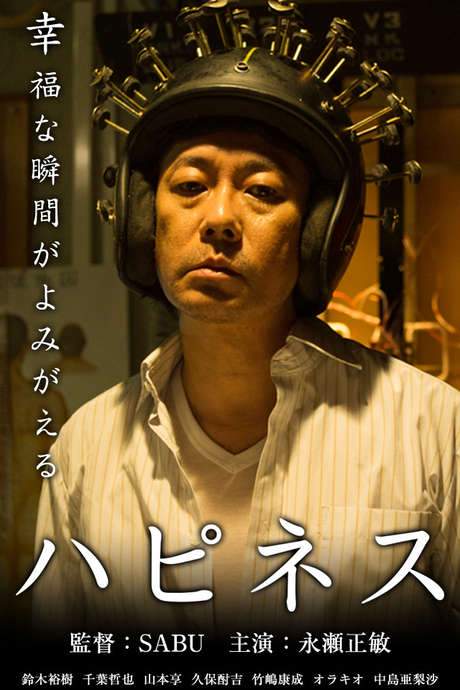
In a quiet Japanese village where the rhythm of daily life is marked by tranquil rice fields, seasonal festivals, and the soft murmur of communal chatter, a lone figure appears on the horizon. The stranger arrives carrying an odd, ornate helmet that seems out of place among the thatched roofs and humble homes. The helmet’s mysterious mechanism is said to replay a person’s happiest memory, a promise that instantly captures the curiosity of the close‑knit community. As the villagers gather beneath the shade of ancient cherry trees, the air is tinged with a hopeful anticipation that perhaps the device can illuminate moments of joy long forgotten.
The townspeople, each with their own quiet burdens and unspoken stories, begin to trust the stranger enough to share intimate fragments of their pasts. The helmet’s gentle glow and the soft echo of laughter it summons weave a delicate tapestry of collective happiness, offering fleeting glimpses of love, triumph, and simple pleasures. Yet, beneath this seemingly benevolent mission, the stranger’s own expression remains clouded with sorrow and unease, a stark contrast to the light he helps others rekindle. The villagers sense an undercurrent of melancholy in his eyes, prompting whispered questions about the true purpose of his journey and the weight he carries.
The film’s tone balances serene, almost poetic scenery with an undercurrent of gentle mystery. Warm, natural lighting bathes the countryside, while subtle musical motifs echo the bittersweet duality of joy and longing. As the helmet continues its quiet work, the village becomes a place of quiet introspection, where the act of remembering is both a gift and a mirror reflecting the stranger’s hidden grief. This tender juxtaposition invites the audience to wonder: what is the cost of reliving happiness, and what secrets linger behind the stranger’s solemn gaze?
Featured on this page

What's After the Movie?
Not sure whether to stay after the credits? Find out!
Check out our other apps:

SAT Sphere
Build confidence for the Digital SAT.

Mori Atlas
Discover wild places worth protecting.

Luntero
Search smarter for a home in Amsterdam.

Plot Explained
Unravel movie endings and hidden clues.

Pokechamp
Dive into Pokémon data and battle logic.

Driving Theory
Get ready for your European theory test.

Movie Dust
Plan your next cinema trip with ease.

Musemap
Find art and culture as you travel.

Selkobase
Compare credentials before committing.

Local Manual
Turn an unfamiliar country into practical next steps.

Lernavi
Compare school systems before your next move.

GymRoam
Find a workout stop wherever your plans take you.
Explore Our Movie Platform
New Movie Releases (2026)
Famous Movie Actors
Top Film Production Studios
Movie Plot Summaries & Endings
Major Movie Awards & Winners
Best Concert Films & Music Documentaries
Movie Collections and Curated Lists
© 2026 What's After the Movie. All rights reserved.
Privacy Policy