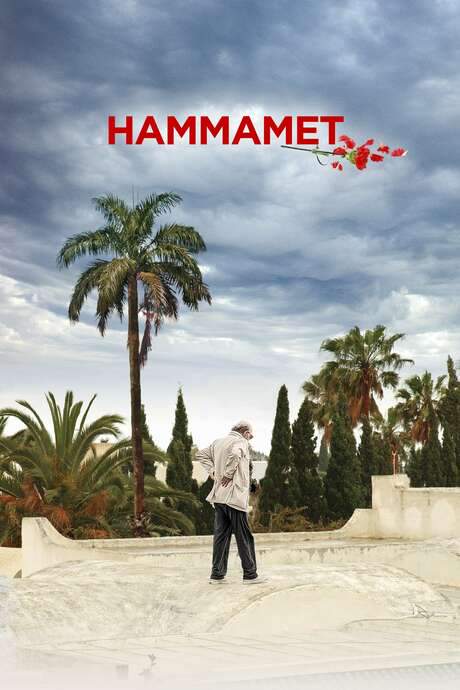
Hammamet 2020

Directed by

Gianni Amelio
Made by

Pepito Produzioni
Where to Watch Hammamet
See current US streaming, rental, and purchase options for Hammamet (2020) via JustWatch.

Amazon Video
SD
Google Play Movies
SD
YouTube
SD Streaming availability powered by 
Hammamet Plot Summary
Read the complete plot summary and ending explained for Hammamet (2020). From turning points to emotional moments, uncover what really happened and why it matters.
In 1989, during the 45th Congress of the Italian Socialist Party at the Ansaldo plant in Milan, the party treasurer Vincenzo Sartori Renato Carpentieri tries to voice serious concerns about the conduct of Bettino Craxi Pierfrancesco Favino. Sartori argues that Craxi has betrayed the core ideals of socialism in favor of illicit activities, and that the party is being dragged into an ongoing investigation. Although Sartori is keen to resign and step away from politics, the President—clearly Craxi—dismisses the gravity of the accusations and deflects responsibility, effectively blocking Sartori from leaving the party. The tension between loyalty and conscience hangs in the air as Sartori senses he is being watched, even as he clings to his integrity.
Four years later, Tangentopoli—the sweeping corruption inquiry that would upend Italian politics—has erased much of the party’s credibility. Craxi’s grip on power loosens, and Sartori’s life takes a tragic turn as he commits suicide by leaping from his office balcony. The era of political immunity gives way to public scrutiny, and the personal price of power becomes vividly clear.
Seven years pass, and Craxi lives in self-imposed exile in Hammamet, Tunisia, where his health has deteriorated due to diabetes. He spends his days in a villa surrounded by family but under constant watch. One night, a man dressed in guerrilla gear slips past the guards and is revealed to be Fausto Sartori [Luca Filippi], Vincenzo’s troubled son. Fausto has come to deliver a letter that his late father supposedly left behind, one that indicts Craxi for a lifetime of illicit deeds. Craxi dismisses the accusations, yet the encounter unsettles him enough to bring Fausto into his orbit. As Craxi contemplates his past, he allows Fausto to stay close, inviting the young man to document his life as a way to project his own perspective into the memoir Craxi is recording.
Anita, Craxi’s daughter, is also introduced into this intimate surveillance of a fallen statesman. Craxi begins to narrate his memoirs aloud on camera, a process that Fausto helps to capture. The dynamic between Craxi and his son shifts into a dangerous triangle, with Fausto secretly arming himself, harboring the intention to shoot Craxi, while the President’s wife Silvia Cohen and others around him react to the fragile balance of power and affection in a life that has become a public spectacle.
Craxi’s personal life grows even more intricate with the arrival of a former lover, the amante Claudia Gerini. She reappears in Hammamet, seeking a final moment with Craxi. Anita, initially resistant, grows to understand that her father still holds deep feelings for the woman, and she grants a private meeting in a hotel, reflecting the complex, sometimes chivalrous code of public figures who want to preserve dignity even as their reputations crumble. In parallel, a longtime Italian politician friend—an adversary yet a respectful comrade—visits, underscoring a landscape where personal honor and political rivalry coexist in a way that once felt possible but now seems almost foreign.
As his illness progresses, Craxi is diagnosed with a kidney tumor. The hospital infrastructure in Hammamet is outdated, making medical treatment challenging, and a return to Italy for surgery would risk immediate arrest. Anita mobilizes a private operation, and for a moment the former Prime Minister appears to be turning a corner, frail but mobilized, still capable of guiding and influencing those around him. Yet the frailty of his body becomes the most unforgiving narrator of his life’s arc. Shortly after resuming some level of autonomy, Craxi suffers a cardiac arrest. In his final moments, he experiences two visions: a childhood memory from boarding school and a second, surreal encounter with his father that leads him from the Milan Cathedral’s rooftop to a theater where a crude satirical show mercilessly mocks Craxi’s own corpse. By morning, Anita discovers him dead in the garden, the end of a political era written into his flesh.
Months pass, and Anita is summoned to a Milan psychiatric hospital, not as a patient herself but as someone meant to meet a visitor—the investigation continues in a new, more intimate framework. The visitor is Fausto, who has descended into severe mental distress and comes to the hospital convinced that Craxi’s memory belongs to a different order of reality. Fausto reveals the shocking claim that his father Vincenzo did not kill himself; rather, Fausto killed his father in a moment of furious indignation at his father’s support for Craxi. He hands Anita a tape containing the President’s most guarded confessions, asking her to protect it with her life. The film closes on a stark, morally fraught note: Anita leaves the hospital with the tape in her possession, and when asked by the director if she recognized the man she just met, she answers that she has never seen him before, leaving the truth of the past suspended in memory and doubt.
This sweeping portrait blends political history, family dynamics, and the psychological toll of power. It traces the arc from idealistic ambition to public downfall, while probing the cost of loyalty, the fragility of trust, and the way personal relationships can both shield and destroy those who live in the glare of the public eye. The film is anchored by a tense, understated performance that emphasizes the humanity behind a constellation of larger-than-life figures, inviting viewers to reflect on how a nation’s story is inseparable from the private stories of its leaders, their allies, and their families.
Hammamet Timeline
Follow the complete movie timeline of Hammamet (2020) with every major event in chronological order. Great for understanding complex plots and story progression.
1989: PSI Congress confrontation at Ansaldo
During the 45th Congress of the Italian Socialist Party at the Ansaldo plant in Milan, Vincenzo Sartori voices concerns about Craxi's conduct. He intends to resign, but Craxi downplays the risk and blocks the exit, deepening the rift within the party. This moment marks the first explicit fracture between Sartori and Craxi.
1993: Tangentopoli and Sartori's suicide
Four years after the congress, the PSI is engulfed by Tangentopoli and Craxi's grip weakens. Sartori, unable to reconcile with the new reality, commits suicide by leaping from the balcony of his Milan office. The tragedy underscores the personal costs of the political upheaval.
1996: Fausto Sartori arrives in Hammamet
Seven years after the congress, Craxi lives in exile in Hammamet, Tunisia. Fausto Sartori, Vincenzo's son, arrives with a letter that accuses Craxi of illicit acts and hints at a concealed motive. Craxi greets him, sensing a lethal undertone as Fausto harbors a pistol.
1996: Fausto begins filming Craxi's life
Fausto follows Craxi’s daily life, documenting his illnesses, his disdain for post-Tangentopoli Italy, and his fraught relationship with Anita. The footage doubles as surveillance and leverage, revealing the personal toll of political downfall. Craxi tolerates the young man’s presence, aware of the power dynamics at play.
1996: Craxi and Fausto strike a deal
Craxi reveals to Fausto that he suspects the ready-to-fire gun and is willing to bargain. He offers to share certain past secrets if Fausto spares his life. The arrangement shows how truth, fear, and survival intersect in exile.
1997: Anita faces Craxi's past with a former mistress
An attractive former mistress arrives in Hammamet seeking one last encounter with Craxi. Anita initially refuses but eventually agrees to a meeting, sensing her father's lingering warmth. The arrival heightens the family tension surrounding Craxi's legacy.
1997: A rival politician visits in friendship
A friend from a rival Italian party visits Craxi, highlighting a long-standing respect despite political rivalry. They reflect on how the era’s norms have shifted in the post-Mani Pulite world. The moment underscores Craxi’s isolation within modern Italian politics.
1997-1998: Kidney tumor diagnosed
Craxi is diagnosed with a kidney tumor, and Tunisia's medical facilities complicate treatment. To avoid risks, surgery in an Italian hospital is necessary, but returning could invite arrest. The illness marks a pivotal turn in his health and political vulnerability.
1998: Anita organises a private operation
Anita arranges a private operation to repatriate Craxi to Italy for treatment, seeking to shield him from immediate danger. The plan hinges on Craxi leaving his villa and facing potential arrest, a gamble given the political climate. The moment blends family loyalty with mounting peril.
1998: Craxi refuses departure at the airport
As departure seems possible, Craxi locks himself in the car and refuses to leave Hammamet. He undergoes surgery in Tunisia, and initial signs point toward a recovery. The stubborn choice reflects his desire for control amid looming political peril.
1999: Surgery succeeds, then fatal cardiac arrest
Craxi returns home frail and uses a wheelchair, but a few days after surgery he suffers a cardiac arrest. He experiences two visions on the cusp of death, including a childhood memory and a rooftop journey toward a theater where his corpse is mocked. The next morning, Anita discovers him dead in the garden.
1999-2000: Fausto's confession resurfaces
Months after Craxi's death, Fausto, now mentally unstable, is hospitalized in Milan and reveals that Vincenzo did not kill himself; Fausto killed his own father in a moment of indignation over Craxi's actions. He hands Anita a tape of Craxi’s confessions and asks her to protect it with her life. Anita learns the true chain of tragedies surrounding the two families.
2000: Anita safeguards the secret
Anita takes custody of the revealing tape and leaves the psychiatric hospital with it. She asserts that she has never seen Fausto before, preserving the secret for the sake of her life. The film closes with the tension between truth and the burden of protecting the past.
Hammamet Characters
Explore all characters from Hammamet (2020). Get detailed profiles with their roles, arcs, and key relationships explained.
Bettino Craxi (Pierfrancesco Favino)
Former Prime Minister and leader of the Italian Socialist Party, Craxi embodies a charismatic but increasingly threatened leadership. The role traces his decline, his battle with diabetes, and his reliance on private life and controlled narratives to navigate a rapidly changing political landscape. His willingness to barter secrets for survival reveals the cost of power and legacy.
Vincenzo Sartori (Renato Carpentieri)
PSI treasurer and a sharp political operator, Sartori confronts Craxi about betrayals while facing a looming fall from grace. His resignation attempt and sense of exposure highlight the personal risks that accompany public life. His later suicide marks the human toll of political ruin.
Anita Craxi (Livia Rossi)
Craxi's daughter, who navigates a delicate family situation while witnessing her father's grappling with illness and public scrutiny. She orchestrates and witnesses crucial moments, including the decision to relocate and document her father’s life. Anita's position as observer and participant frames the personal dimension of national scandal.
Fausto Sartori (Alberto Paradossi)
Vincenzo's troubled son, recently returned with psychological issues and a hidden gun. His presence exposes fissures in family loyalties and reveals a devastating secret about his father’s involvement with Craxi. Fausto’s arc culminates in a chilling revelation about who killed whom.
La amante (Claudia Gerini)
Craxi's mistress, a figure of desire and caution who embodies the personal life that runs parallel to public service. Her whereabouts and emotional attachments reveal the tensions between private longing and political duties. She represents the intimate consequences of a public life under strain.
La moglie (Silvia Cohen)
Craxi's wife, a constant presence in his exile and private world. Her role underscores the domestic impact of political scandal and the endurance of marital ties under strain. She acts as a stabilizing force amid upheaval and uncertainty.
Il Presidente da bambino (Diego Roselli)
A flashback figure that traces Craxi's origins and early environment, offering context to the man behind the public persona. Childhood memories illuminate the roots of his later ambitions and vulnerabilities. These scenes deepen the portrait of a political icon shaped by early experiences.
Il medico della clinica psichiatrica (Roberto De Francesco)
A physician representing the clinical side of Craxi's exile and Fausto's fragility. The medical setting underscores the film's themes of health, vulnerability, and the limits of care in a country undergoing upheaval. The doctor serves as a quiet observer to the era's human costs.
Hammamet Settings
Learn where and when Hammamet (2020) takes place. Explore the film’s settings, era, and how they shape the narrative.
Time period
1989–1994
The story begins in 1989 with the PSI congress in Milan, then moves through the early 1990s as Tangentopoli reshapes Italian politics. It chronicles Craxi's exile in Hammamet, his deteriorating health, and the private lives that intertwine with public power. The timeline culminates in the late 1990s aftermath, highlighting the lasting impact of this era on all characters.
Location
Milan, Hammamet (Tunisia)
The action centers on Milan, where the 45th Congress of the Italian Socialist Party takes place at the Ansaldo plant, illustrating the era's industrial-political power. The narrative then shifts to Hammamet, Tunisia, where Craxi lives in exile in a villa, surrounded by family and monitored scrutiny as his health declines. Scenes also touch on Milan's institutions, including a psychiatric hospital that frames memory, guilt, and the weight of the past.
Hammamet Themes
Discover the main themes in Hammamet (2020). Analyze the deeper meanings, emotional layers, and social commentary behind the film.
⚖️
Power
The film explores how political authority tests personal loyalties and ideological commitments. Craxi's defense of his actions contrasts with Sartori's sense of betrayal as the party’s integrity frays under scandal. The Tangentopoli era is depicted as a crucible where image, influence, and private deals clash with public accountability. Personal costs—exile, illness, and strained relationships—underscore the price of leadership.
🧭
Conscience
Fausto's fragile psyche and his secret mission to confront his father drive a core moral tension. The recordings and revelations blur truth with memory, forcing characters to confront what they owe to family and country. The film frames confession as a bargaining tool that can reshape history. Memory and guilt navigate the line between vengeance and justice.
⏳
Legacy
Exile and the end of an era cast a long shadow on the characters' lives, emphasizing how public memory survives private regrets. The narrative shows how legacies are negotiated through intimate acts—memoirs, tapes, and testimonies—that could destabilize a political order. Death, illness, and reconciliation punctuate the passing of an age in which power once seemed permanent. The film asks what remains of a political creed when those who lived it fade away.

Coming soon on iOS and Android
The Plot Explained Mobile App
From blockbusters to hidden gems — dive into movie stories anytime, anywhere. Save your favorites, discover plots faster, and never miss a twist again.
Sign up to be the first to know when we launch. Your email stays private — always.
Explore the mobile appHammamet Spoiler-Free Summary
Discover the spoiler-free summary of Hammamet (2020). Get a concise overview without any spoilers.
In the sun-drenched isolation of a villa in Hammamet, Tunisia, a once-powerful figure lives in the shadow of his own history. Bettino Craxi, the former Italian Prime Minister known for his magnetic presence and controversial legacy, finds himself far from the halls of power he once commanded. Now, gravely ill and living in self-imposed exile to evade Italian justice, his world has shrunk to the walls of a compound watched over by military guards. The “President” spends his days navigating the physical decline of his body and the relentless noise of a past that refuses to stay buried.
The quiet monotony of his retreat is disrupted when a mysterious young man in guerrilla gear breaches the villa’s perimeter. Identified as Fausto, the son of a former political ally, the intruder brings with him the heavy, unresolved tensions of a bygone era. While Craxi’s devoted daughter, Anita, views the newcomer with deep suspicion—sensing a threat to her father’s already fragile state—Craxi himself makes a puzzling choice. Rather than expelling the man, he brings him into the fold, initiating a relationship that is as enigmatic as it is tense.
As the two men interact, the villa transforms into a pressure cooker of political ghosts and personal demons. Craxi allows Fausto to film his daily life and memoirs, using the camera as a medium to look back on the highs and lows of his career. Yet, beneath the surface of these recollections lies a palpable sense of unease. The film weaves a psychological narrative that questions the nature of power and memory, observing a leader who remains defiant even as he faces the ultimate marginalization.
Through this intimate lens, the story explores the complex dynamics between a fallen titan and a generation shaped by the consequences of his actions. It is a character study defined by the stark contrast between the sunny, Mediterranean setting and the dark, turbulent currents of Italian political history. As the protagonists circle one another, the film invites the audience to witness a final chapter defined not by public speeches or votes, but by the quiet, intense scrutiny of a legacy hanging in the balance.
Movies with Similar Twists and Themes
Uncover films that echo the narrative beats, emotional arcs, or dramatic twists of the one you're exploring. These recommendations are handpicked based on story depth, thematic resonance, and spoiler-worthy moments — perfect for fans who crave more of the same intrigue.

Featured on this page

What's After the Movie?
Not sure whether to stay after the credits? Find out!
Check out our other apps:

SAT Sphere
Build confidence for the Digital SAT.

Mori Atlas
Discover wild places worth protecting.

Luntero
Search smarter for a home in Amsterdam.

Plot Explained
Unravel movie endings and hidden clues.

Pokechamp
Dive into Pokémon data and battle logic.

Driving Theory
Get ready for your European theory test.

Movie Dust
Plan your next cinema trip with ease.

Musemap
Find art and culture as you travel.

Selkobase
Compare credentials before committing.

Local Manual
Turn an unfamiliar country into practical next steps.

Lernavi
Compare school systems before your next move.

GymRoam
Find a workout stop wherever your plans take you.
Explore Our Movie Platform
New Movie Releases (2026)
Famous Movie Actors
Top Film Production Studios
Movie Plot Summaries & Endings
Major Movie Awards & Winners
Best Concert Films & Music Documentaries
Movie Collections and Curated Lists
© 2026 What's After the Movie. All rights reserved.
Privacy Policy