
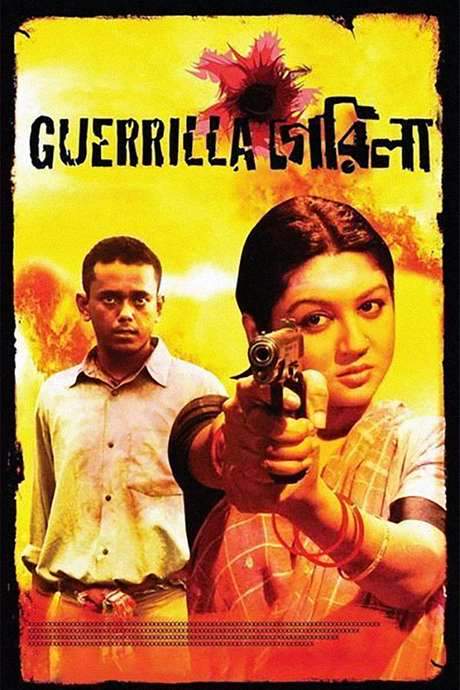
What Is Guerrilla About?
The premise of Guerrilla in 275 words, with nothing given away. The full story follows below.
In the turmoil of 1971, Bangladesh’s streets pulse with a restless mixture of fear and hope, the air thick with whispered resistance and the weight of an uncertain future. The city of Dhaka transforms into a labyrinth of covert meetings and hidden messages, where everyday life is overlaid with the urgency of a people on the brink of redefining themselves. The film’s palette, muted yet evocative, captures both the oppressive shadows of occupation and the stubborn glow of defiance that refuses to be dimmed.
At the heart of this volatile world stands Bilkis Banu, a young banking professional whose ordinary life is shattered when her husband, Hasan, disappears on a night that marks the beginning of the conflict. Rather than surrender to grief, she channels her resolve into the emerging guerrilla network that threads through the capital. There she encounters Altaf Mahmud, a celebrated musician whose songs become anthems of resistance, Shahadat, a determined fighter, and Mrs. Khan, a steadfast comrade. Together they weave a fragile tapestry of solidarity—publishing underground bulletins, sharing covert routes, and nurturing a collective belief that even the smallest act can tip the scales of history.
Yet the very network that sustains them is shadowed by informants and the ever‑present threat of the Razakars, whose presence turns everyday movements into dangerous gambles. As the pressure mounts, Bilkis finds herself forced to flee, racing toward her distant village with the weight of unfinished business and unanswered questions pressing on her shoulders. The film’s tone remains one of gritty perseverance, a portrait of ordinary courage amid extraordinary turmoil, inviting the audience to feel the relentless pulse of a nation fighting for its voice.
What Happens in Guerrilla?
The complete story of Guerrilla, from the first scene to the last, in 621 words (about 3 minutes). Spoilers throughout. Names in the text link to 4 cast member pages.
Spoilers ahead
On the ominous night of 25 March 1971, Operation Searchlight was unleashed by the Pakistan Army, a planned assault aimed at annihilating democracy-loving millions. Hasan Ahmed, Ferdous Ahmed, a veteran journalist and Bilkis Banu’s husband, vanishes while making his way to the newspaper office, and he remains untraceable to this day.
Bilkis Banu, Jaya Ahsan, a banking professional, begins a desperate search for her missing husband. Undeterred by personal loss and pain, she joins the growing guerrilla movement, taking on dangerous roles alongside Dhaka’s freedom fighters. Among them are fighters like Shahadat, Alam, Maya, Kazi Kamal, Fateh Ali and others, and Bilkis soon becomes deeply entwined in their perilous missions and the fight for liberation. She stays in constant contact with Altaf Mahmud, Ahmed Rubel, the legendary Bengali musician whose revolutionary songs fuel the spirit of resistance. Bilkis rises to a central position in the movement, and she becomes a direct target for the enemy forces.
As the resistance grows, Bilkis, along with Shahin and other comrades, begins publishing a secret English-language bulletin called The Guerrilla, an underground voice that keeps the world informed while the violence rages. The struggle is not only fought in the streets and forests but carried through covert networks and brave acts that keep the flame of resistance alive. The danger escalates when Taslim Ali Sardar, a traditional chief of old Dhaka’s subsector, shelters Bilkis and pays a brutal price for it; he is killed by the Pakistani Army and their Rajakar collaborators. A.T.M. Shamsuzzaman embodies this figure of courage in the film, a reminder of the costs paid by those who chose to stand with the people.
Altaf Mahmud’s name, along with Rumi, Bodi and other freedom fighters, recurs as a mournful thread through the narrative, as many of them are captured and never return. The film recalls these losses with a stark honesty that never shies away from the pain of betrayal and sacrifice.
Bilkis manages a perilous escape from the encirclement and boards a train bound for Joleswari in Rangpur. The metallic carriage becomes more than transportation; it turns into a character of its own, a moving symbol of a catastrophic journey toward freedom. Her path is illuminated by memory and resolve, even as the danger grows more acute.
Her tale is also a personal odyssey. Bilkis’ parents were killed in the communal riots of January 1971, and she longs to reunite with her brother Khokon, a commander among the local freedom fighters. Khokon’s unit blows up a vital railway bridge near Joleswari, cutting off key lines of attack and transform the landscape of their struggle. Bilkis presses on, guided by the hope of seeing Khokon and the burning clarity of a cause that refuses to bow.
On the road, she finds companionship in Siraj, a young fighter linked to Khokon’s group. Yet the price of courage remains high: Khokon is captured and slaughtered along with other freedom fighters by the Army and its Rajakar allies. Bilkis dares the most dangerous journeys to glimpse her fallen brother’s warmth and memory, but the path remains perilous and heartbreaking.
In the end, Bilkis refuses to yield to the oppressors. She moves through the brutal killing fields with resolve, ensuring that neither her body nor Bangladesh’s budding liberty be defiled by the occupiers. In a final, devastating act of sacrifice, she detonates explosives to destroy the surrounding enemies, choosing to become a beacon of resilience for a nation’s fight for independence.
This story, anchored by Bilkis Banu’s unyielding courage and the network of people who stand with her, paints a portrait of a people’s struggle under siege. It is a chronicle of loss, resilience, and a steadfast commitment to freedom that continues to echo through history.
Guerrilla Timeline: Every Key Event in Order
12 key events in the order they happen, from “Operation Searchlight erupts in Dhaka” to “The train as a moving symbol of the journey”. 12 events name a place, across 10 locations.
- 1
Operation Searchlight erupts in Dhaka
On the ominous night of 25 March 1971, the Pakistan Army launches Operation Searchlight to kill indiscriminately. Hasan Ahmed, a veteran journalist, vanishes on his way to the newspaper office. Bilkis begins a desperate search for him as the crackdown tightens around the city.
When:25 March 1971 Where:Dhaka
- 2
Bilkis joins guerrilla resistance
Bilkis turns to the guerrilla fighters in Dhaka, choosing resistance over despair. She stays in touch with Altaf Mahmud and helps coordinate underground efforts, including the publication of a secret bulletin called The Guerrilla. Her evolution into a central figure heightens the danger she faces.
When:early 1971 Where:Dhaka
- 3
Taslim Ali Sardar shelters Bilkis; pays with his life
Taslim Ali Sardar, a traditional Moholla chief, shelters Bilkis from the pursuing army. He is brutally killed by Pakistani forces and their Rajakar allies, illustrating the personal costs of aiding the resistance. Bilkis witnesses the violence and steels herself for the dangerous path ahead.
When:early 1971 Where:Old Dhaka (Moholla)
- 4
Altaf Mahmud and comrades captured
Altaf Mahmud, along with Rumi, Bodi and others, is captured by the occupiers. Some never return, their fates left unknown to the resistance and the people. The loss deepens Bilkis's resolve as the crackdown tightens around Dhaka.
When:mid-1971 Where:Dhaka
- 5
Escape and train toward Rangpur
Evading the labyrinth of occupation, Bilkis slips into a train bound for Joleswari, Rangpur. The train becomes a moving symbol of a catastrophic journey and of home and freedom pursued against the odds. The journey foreshadows the brutal path the resistance will follow through the countryside.
When:mid-1971 Where:Dhaka to Rangpur
- 6
Longing to meet her brother Khokon
Bilkis reaches toward her brother Khokon, a commander of local freedom fighters, hoping for a reunion that would renew the fight from within. Her longing gives the mission a deeply personal stake amid a wider struggle. She presses toward Joleswari where his unit operates.
When:mid-1971 Where:Joleswari
- 7
Khokon dynamites a vital railway bridge
Khokon leads the sabotage of a vital railway bridge near Joleswari, interrupting train movements and hindering the occupiers. The act demonstrates continuing local resistance despite the danger. Bilkis witnesses the consequences as she moves closer to her brother.
When:mid-1971 Where:Near Joleswari
- 8
Khokon captured and killed
Pakistan Army and Rajakars capture Khokon during the intensified crackdown. He and other fighters are slaughtered, a brutal reminder of the costs of resistance. Bilkis's hope for a reunion is crushed as the violence closes in.
When:mid-1971 Where:Khokon's area
- 9
Bilkis is captured but refuses to surrender
Bilkis is captured by the occupying forces, but she refuses to surrender. She endures interrogation and brutality, embodying the unwavering spirit of resistance. Her defiance keeps the flame of freedom alive in the face of overwhelming odds.
When:mid-1971 Where:Dhaka region
- 10
Self-sacrificial act: Bilkis blows herself up
In a climactic act of defiance, Bilkis detonates explosives to destroy the surrounding enemy forces. She sacrifices herself to protect others and advance the liberation cause. Her death seals her transformation from journalist to freedom fighter.
When:late 1971 Where:Killing fields / battlefield near Dhaka
- 11
The Guerrilla underground press
Bilkis and her circle publish The Guerrilla, an underground English bulletin that informs, inspires, and endangers those involved. The publication helps coordinate actions and spread the resistance's message beyond Dhaka. It highlights information as a weapon in a war of survival.
When:1971 Where:Dhaka (underground)
- 12
The train as a moving symbol of the journey
The metallic train Bilkis rides becomes a living metaphor for a catastrophic journey—carrying hope, danger, and the fight for a homeland. It weaves through danger as a constant companion to the freedom fighters. The sequence reinforces the fusion of ordinary life and extraordinary sacrifice.
When:mid-1971 Where:Dhaka to Rangpur railway
Who Are the Main Characters in Guerrilla?
6 characters, among them Hasan Ahmed (Ferdous Ahmed), Bilkis Banu (Jaya Ahsan) and Altaf Mahmud (Ahmed Rubel): who each one is and the part they play in the story. Every profile links to the actor’s page.
- HA
Hasan Ahmed (Ferdous Ahmed)
Played by Ferdous Ahmed
A veteran journalist and Bilkis's husband, Hasan vanishes on his way to the newspaper office during the initial night's chaos. His disappearance becomes a personal trigger for Bilkis to confront the danger around Dhaka. Hasan embodies the costly toll of war on truth-tellers and families, and his absence fuels the drive for resistance.
- 🗞️ Journalist
- 🕊️ Loss
- 🎗️ Courage
- BB
Bilkis Banu (Jaya Ahsan)
Played by Jaya Ahsan
A bank employee who turns into the central figure of the resistance after her husband’s disappearance. She partners with guerrilla fighters, works on the underground publication The Guerrilla, and becomes a symbol of resilience. Bilkis navigates danger and personal grief to fight for liberation, ultimately taking a perilous stand for her country.
- 💼 Bank Worker
- 🧭 Determination
- 🛡️ Resistance
- AM
Altaf Mahmud (Ahmed Rubel)
Played by Ahmed Rubel
A legendary Bengali musician and a noted composer of revolutionary songs, he embodies the cultural heartbeat of the liberation movement. His connections with Bilkis and the fighters illustrate how art and patriotism fuel resistance. He is captured by the enemy, highlighting the risks faced by cultural figures who support the cause.
- 🎶 Musician
- 🕊️ Resistance
- TS
Taslim Sardar (A.T.M. Shamsuzzaman)
Played by A.T.M. Shamsuzzaman
A traditional Dhaka protector who shelters Bilkis in the early chaos. He embodies communal defiance and protective leadership, providing sanctuary at great personal risk. Taslim Sardar is killed by Pakistani Army and their collaborators, underscoring the brutal stakes of aiding the resistance.
- 🛡️ Protector
- ⚔️ Refuge
- FA
Fateh Ali (Mostafa Monwar)
Played by Mostafa Monwar
A guerrilla fighter allied with Bilkis's group, Fateh Ali participates in dangerous operations against the occupying forces. He represents the collective bravery of the freedom fighters who operate in perilous conditions. Fateh Ali's actions contribute to the momentum of the liberation efforts depicted in the film.
- 🎯 Fighter
- 🗡️ Guerrilla
- CS
Captain Shamsad / Major Sarfaraj (Shatabdi Wadud)
Played by Shatabdi Wadud
A military figure encountered amid Operation Searchlight, representing the occupying force’s authority and brutality. His presence heightens the tension as Bilkis and her allies navigate dangers posed by the Pakistani Army. The character illustrates the coercive power structures at the heart of the conflict.
- 🎖️ Officer
- 🔥 Occupation
Where and When Is Guerrilla Set?
Guerrilla is set in Dhaka, Joleswari and Rangpur (1971). Here is why the time and place matter to the story.
When
1971
Set in March 1971, the film captures the onset of the Bangladesh Liberation War. Operation Searchlight marks a brutal turning point, igniting a mass resistance across Dhaka and beyond. The period is defined by violence, displacement, and the emergence of underground efforts to fight for liberation.
Where
Dhaka, Joleswari, Rangpur
Dhaka, the capital, serves as a tense backdrop during the crackdown. The story also follows Bilkis's perilous journey to Joleswari, a village in Rangpur, highlighting the rural front of the liberation struggle. The film contrasts crowded urban spaces with remote hideouts, showing how resistance spreads beyond the city.
- 🏙️ Dhaka
- 🗺️ Joleswari
- 🗺️ Rangpur
What Are the Themes of Guerrilla?
3 ideas the story keeps returning to, among them Resistance, Sacrifice and Courage.
-
01
Resistance
The narrative centers on Bilkis and the guerrilla fighters as they organize to resist the occupation. It shows how civilians connect with underground networks, including the secret English bulletin The Guerrilla, to sustain the fight. The story emphasizes courage under threat and the willingness to risk life for collective freedom. Through clandestine operations and constant danger, the film portrays a society united in defiance.
-
02
Sacrifice
Sacrifice is a throughline as friends and family are lost to the conflict, and key figures like Taslim Sardar risk everything to shelter Bilkis. The characters endure brutal oppression, with some paying the ultimate price for the cause. The culmination centers on Bilkis's radical act of self-sacrifice to protect the movement. The narrative foregrounds personal cost in the pursuit of national liberation.
-
03
Courage
Courage is shown through Bilkis's unwavering determination to find her husband and keep fighting. The film highlights moments of resolve, such as joining guerrilla operations and maintaining contact with freedom fighters. Ordinary civilians seize exceptional roles in the struggle, demonstrating resilience in the face of brutal violence. It presents bravery as a moral choice that sustains the liberation movement.
What Kind of Film Is Guerrilla?
Dark in tone, with fast pacing and a straightforward story, going by the plot summary.
- Tone
- Dark
- Pacing
- Fast
- Story
- Straightforward
- Intensity
- High
- Ending
- Bittersweet
An intensely gripping and emotionally devastating war film that plunges the viewer into a relentless atmosphere of oppression and loss, fueled by desperate acts of courage and immense personal sacrifice.
- gripping
- oppressive
- intense
- melancholic
- desperate
- courageous
- liberation war
- resistance movement
- grief and loss
- political oppression
Content notes: war violence, mass killing, torture, brutal death, betrayal.
Quiz
How well do you remember Guerrilla? Test yourself on the story.
