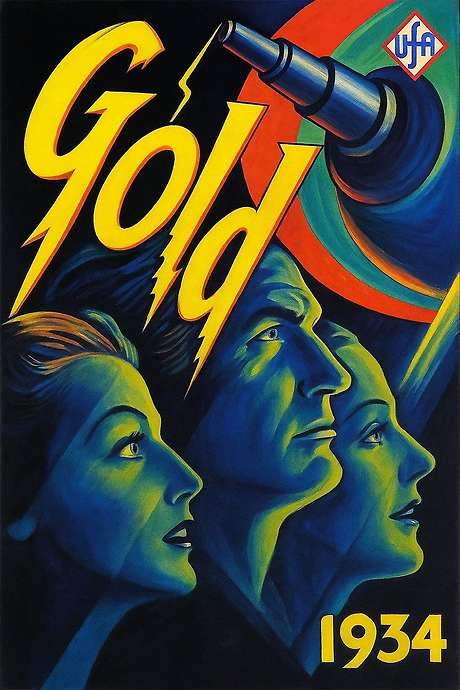



Gold Plot Summary
Read the complete plot summary and ending explained for Gold (1934). From turning points to emotional moments, uncover what really happened and why it matters.
A German science thriller centers on the brilliant but tormented mind of Prof. Achenbach Friedrich Kayssler, who claims to have unlocked a theoretical method to transform lead into gold through a breakthrough called atomic fracture. He works side by side with the determined engineer Werner Holk Hans Albers, and the two are on the cusp of proving their theory when disaster strikes: a saboteur, bribed by the British industrialist John Wills Michael Bohnen, detonates their lab. The blast is brutal and swift, and Achenbach is killed in the chaos, while Holk survives by a narrow margin thanks to a blood transfusion from his fiancée Margit Möller Lien Deyers. The incident casts a long shadow over the project and sets the plot in motion toward a collision of ambition, revenge, and global consequences.
Holk’s fate takes a sharp turn when he is recruited by Wills, drawn into a high-stakes plan to replicate the experiment on a colossal scale. He travels to Scotland, where a hidden laboratory buried beneath the North Sea houses the machinery that could render the theory into a tangible, market-shaking reality. The atmosphere is charged with secrecy and danger as Holk uses the device to conjure a small sample of gold, a vindication of Achenbach’s radical idea. This small victory earns him the trust of the workers who keep the machine running and, crucially, the estranged daughter of the millionaire, Florence Wills Brigitte Helm. Florence’s tentative romance with Holk adds a personal layer to a story already fraught with political and economic peril, and she becomes a key figure in the delicate balance between loyalty to her father and the lure of a man who might challenge the status quo.
As Holk’s confidence grows, so does his awareness of the dangers that such a power brings. He begins to formulate a plan not only to profit from the discovery but to prevent its potentially devastating effects on world markets—an upheaval that could reshape nations and economies as easily as it could line pockets. The tension tightens around the ethical questions of scientific power: does the capability to create gold justify the risks of destabilizing global finance, or should the technology be destroyed before it can do harm? Holk’s inner struggle deepens as he transcends personal grievances to consider the greater good, aided by the loyalty he earns from the workers and his growing bond with Florence Brigitte Helm. The story threads loyalty, romance, and a quiet, unwavering sense of duty through a cast of characters who each have something at stake in the fate of the machine.
In an electrifying turn, Holk delivers a speech to the workers that shifts their allegiance away from Wills and toward a cooler, more strategic objective: to stop the machine before the artificial gold can wreak havoc on the economy. The moment of choice culminates in a cinematic crescendo: the operation is aborted, the lab erupts in a spectacular sequence of explosions and strobe lighting, and the facility is blown apart. Holk’s escape is narrow and dramatic, a narrow escape that underscores the film’s themes of danger and moral resolve. The trauma of the destruction is tempered by a personal return—Holk makes his way back to Germany to reunite with his fiancée, Margit Lien Deyers, whose presence serves as a grounding beacon after the chaos.
Throughout the narrative, the cast threads a web of relationships and loyalties that give the film its human texture. The fate of the machine becomes a barometer for trust, ambition, and accountability, as each character weighs their own interests against the broader stakes. The tension sits not only in the looming possibility of a world-capital crisis but in the intimate drama of those who stand to gain or lose from the discovery. The technical spectacle is vivid, with the North Sea setting amplifying the sense of danger, while the human stories—conflicted loyalties, love tested by crisis, and a scientist’s responsibility—offer a grounding center to the film’s explosive mood.
In the end, the decisive act belongs to Holk, whose choice to thwart catastrophic consequences preserves more than his own life; it preserves a fragile order while allowing room for personal reconciliation. The movie closes on a note of cautious hope, suggesting that science and humanity can coexist, even when the thirst for discovery collides with the hunger for wealth.
Gold Timeline
Follow the complete movie timeline of Gold (1934) with every major event in chronological order. Great for understanding complex plots and story progression.
Achenbach's breakthrough in atomic fracture
German scientist Achenbach detects a theoretical method to turn lead into gold using atomic fracture. He and engineer Werner Holk are moments from proving it when their lab is sabotaged, cutting short the experiment. The breakthrough promises a revolution in chemistry and industry.
Sabotage and death in the lab
An anonymous saboteur bribed by John Wills blows up the lab, killing Achenbach. Holk survives thanks to a blood transfusion from his fiancée Margit. The catastrophe instantly alters the course of their lives.
Holk is hired and travels to Scotland
Holk is hired by John Wills and travels to Scotland to oversee a replica of the work in a secret lab beneath the North Sea. This relocation puts him at the center of a high-stakes project and sets the stage for the moral conflict to come.
Holk's plan for revenge and gold
Bent on revenge, Holk agrees to help Wills and uses the machine to produce a small sample of gold. The demonstration vindicates Achenbach's theory and earns Wills' confidence in the project.
Gold sample proves the theory
The tiny batch of gold vindicates the theory and demonstrates the potential impact of the invention. Wills is reassured and begins to rely on Holk's expertise.
Holk gains trust of workers and Florence
Holk earns the trust of the lab workers, and Florence, Wills' estranged daughter, is drawn to him. This growing bond helps him maneuver within the secret project.
Planning to destroy the machine
Holk develops a plan to destroy the machine before the artificial gold could wreak havoc on the world economy. He works toward stopping the project as the operation approaches.
Speech to workers turns them against Wills
Holk delivers a speech that sways the workers away from Wills, framing the project as a safeguard against economic chaos. The workers' support strengthens his resolve to stop the launch.
Machine set to self-destruct
With the workers behind him, Holk triggers the self-destruct sequence on the machine. The countdown heightens the tension as the facility races toward destruction.
Explosions destroy the lab
Wills' lab and the machine explode in a spectacular sequence of explosions and strobe lighting. The dramatic destruction marks the end of Wills' scheme.
Holk escapes and returns to Margit
Holk escapes by the skin of his teeth and returns to his fiancée Margit in Germany. The ending focuses on their reunion and the promise of a safer future.
Gold Characters
Explore all characters from Gold (1934). Get detailed profiles with their roles, arcs, and key relationships explained.
Florence Wills (Brigitte Helm)
The estranged daughter of John Wills who becomes romantically drawn to Holk. Her presence complicates the power dynamics at the heart of the Wills empire and adds a personal stake to the conflict.
Werner Holk (Hans Albers)
A German engineer drawn into a web of corporate intrigue after surviving the lab explosion. He navigates a path of revenge while covertly thwarting the plans of those seeking to misuse the discovery.
Prof. Achenbach (Friedrich Kayssler)
The German scientist who first conceives the theoretical means of turning lead into gold. His death in the lab explosion sets the plot in motion and anchors the ethical stakes of the scientific breakthrough.
Margit Möller (Lien Deyers)
Holk’s fiancée whose blood transfusion saves him after the lab explosion. Her presence adds emotional complexity and a personal tether to Holk’s fate.
John Wills (Michael Bohnen)
A British industrialist who secretly hires Holk and dominates the financial and political landscape surrounding the invention. His pursuit of power drives much of the conflict and the ultimate plan to weaponize the discovery.
Willi Luders – alias Charlie Jenkins (Ernst Karchow)
A worker whose allegiance and true role appear murky, reflecting the shadowy nature of sabotage and loyalty within the secretive lab environment.
Harris – a Technician (Eberhard Leithoff)
A specialist who provides the technical expertise necessary for the experiments and the operation of the machine. Harris represents the skilled workforce caught in the crossfire of corporate ambitions.
Becker – the Murderer (Hans-Joachim Büttner)
The figure involved in the sabotage that destroys the initial laboratory setup. His actions set the path for Holk’s controversial mission and the ensuing chaos.
Secretary (Erich Haumann)
A figure within the organizational machinery surrounding the project, providing procedural functions that help shape the flow of events.
Vesitsch (Heinz Wemper)
A member of the lab staff involved in the technical operations and the daily grind of maintaining the secret facility.
Gold Settings
Learn where and when Gold (1934) takes place. Explore the film’s settings, era, and how they shape the narrative.
Time period
The story unfolds in a pre-war era marked by rapid scientific advancement and dramatic industrial ambition. It depicts a world where breakthrough physics and secret laboratories collide with corporate power plays. The tension between progress and its potential to destabilize economies underpins the plot, driving the characters toward drastic actions.
Location
Scotland, Germany, North Sea
The action shifts between a hidden laboratory in Scotland and a foothold of the Wills empire back in Germany, with key sequences set beneath the North Sea. The North Sea location houses the secret facility where the breakthrough experiments occur, surrounded by a backdrop of industrial intrigue. The settings combine coastal Europe with a high-stakes corporate environment, highlighting the contrast between scientific pursuit and its exploitative use.
Gold Themes
Discover the main themes in Gold (1934). Analyze the deeper meanings, emotional layers, and social commentary behind the film.
🔬
Science vs Power
The central premise revolves around transforming lead into gold through atomic fracture, illustrating the immense potential of scientific discovery. However, the plot shows how such knowledge can be weaponized by a powerful industrialist to manipulate markets and control others. The narrative questions whether scientific breakthroughs should be left free or bound to those who control economic power. The climactic destruction of the lab underscores the weight of responsibility that accompanies knowledge.
💔
Revenge and Redemption
Holk’s path is driven by a desire for revenge against those who ruined his work and nearly cost him his life. Yet his choices blur the line between vengeance and the greater good as he cooperates with Wills only to undermine him from within. The tension between personal vendetta and moral duty propels the plot toward a self-destructive finale aimed at preventing catastrophic misuse of the discovery. In the end, Holk seeks a form of redemption through safeguarding those he cares about.
❤️
Romance and Trust
Florence Wills is drawn to Holk, creating a tension between allegiance to her father’s empire and genuine affection for Holk. The romance complicates loyalties and adds emotional stakes to the political and scientific conflict. Holk’s ability to win Florence’s trust becomes a pivotal factor in the plan to outsmart the antagonist. The relationship highlights how love can influence decisions amid dangerous, high-stakes circumstances.

Coming soon on iOS and Android
The Plot Explained Mobile App
From blockbusters to hidden gems — dive into movie stories anytime, anywhere. Save your favorites, discover plots faster, and never miss a twist again.
Sign up to be the first to know when we launch. Your email stays private — always.
Explore the mobile appGold Spoiler-Free Summary
Discover the spoiler-free summary of Gold (1934). Get a concise overview without any spoilers.
In the realm of German science thrillers, few premises carry as much weight as the ancient dream of transmutation. Professor Achenbach, a brilliant but tormented mind, believes he has unlocked the secret to transforming lead into gold through a revolutionary process called atomic fracture. Working alongside him is the determined engineer Werner Holk, and together they stand at the threshold of a discovery that could reshape not just science, but the very foundations of global economy and power.
The atmosphere surrounding their work is thick with tension, ambition, and the weight of responsibility. The laboratory hums with potential—both miraculous and dangerous—as the two men pursue a goal that has captivated humanity for centuries. Holk’s personal life anchors him to reality through his fiancée Margit Möller, whose presence serves as a reminder that even the most extraordinary scientific pursuits are tethered to human relationships and fragile loyalties.
Yet the pursuit of such power inevitably draws the attention of those who would wield it for their own ends. As the boundaries between scientific curiosity and unchecked ambition blur, questions emerge about the true cost of creation. The film weaves together themes of responsibility, greed, and the ethical obligations of those who dare to unlock nature’s deepest secrets, setting the stage for a collision between human aspiration and its potentially devastating consequences.
Movies with Similar Twists and Themes
Uncover films that echo the narrative beats, emotional arcs, or dramatic twists of the one you're exploring. These recommendations are handpicked based on story depth, thematic resonance, and spoiler-worthy moments — perfect for fans who crave more of the same intrigue.







Featured on this page

What's After the Movie?
Not sure whether to stay after the credits? Find out!
Check out our other apps:

SAT Sphere
Build confidence for the Digital SAT.

Mori Atlas
Discover wild places worth protecting.

Luntero
Search smarter for a home in Amsterdam.

Plot Explained
Unravel movie endings and hidden clues.

Pokechamp
Dive into Pokémon data and battle logic.

Driving Theory
Get ready for your European theory test.

Movie Dust
Plan your next cinema trip with ease.

Musemap
Find art and culture as you travel.

Selkobase
Compare credentials before committing.

Local Manual
Turn an unfamiliar country into practical next steps.

Lernavi
Compare school systems before your next move.

GymRoam
Find a workout stop wherever your plans take you.
Explore Our Movie Platform
New Movie Releases (2026)
Famous Movie Actors
Top Film Production Studios
Movie Plot Summaries & Endings
Major Movie Awards & Winners
Best Concert Films & Music Documentaries
Movie Collections and Curated Lists
© 2026 What's After the Movie. All rights reserved.
Privacy Policy