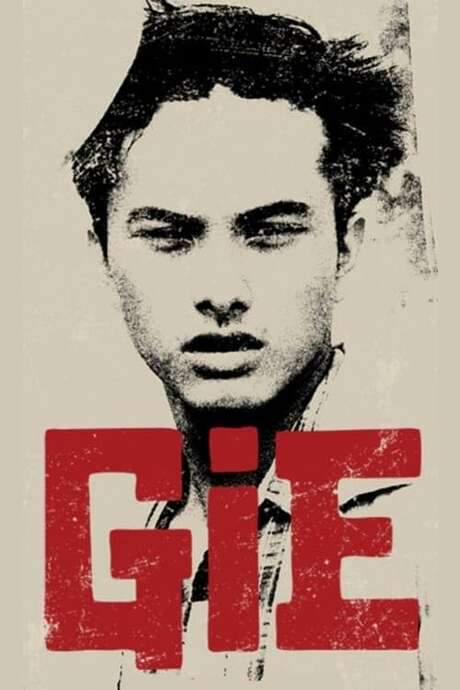
Gie 2005

Directed by

Riri Riza
Made by

Miles Films
Gie Plot Summary
Read the complete plot summary and ending explained for Gie (2005). From turning points to emotional moments, uncover what really happened and why it matters.
Soe Hok Gie grew up in a lower-middle class Chinese Indonesian family in Jakarta. In his early teens, Soe Hok Gie developed a fascination with the ideas and ideals put forth by world-class intellectuals. This curiosity, paired with a fighter’s spirit, fierce loyalty to friends, and a heart that genuinely cared for others and for his country, pushed him toward a blunt intolerance of injustice. He dreamed of an Indonesia founded on justice, equality, and righteousness, a vision that often puzzled those around him. Even his closest friends—Tan Tjin Han and Herman Lantang—would sometimes ask, “What is all this fighting for?” Soe would answer with steady conviction, reminding them that freedom carries a price and must be paid.
Soe’s teen and early college years unfolded under the regime of Indonesia’s founding father, Sukarno. The period was marked by clashes between the military and the Indonesian Communist Party (PKI), yet Soe and his peers insisted on political neutrality. While he respected Sukarno as a national founder, he detested the dictatorship that left the poor and oppressed to suffer. Soe was acutely aware of social inequality, power abuses, and corruption, and he spoke out through discussion groups, student unions, and sharp criticisms in the media. He also grew wary of movements that appeared to advocate change but were really advancing personal gain. This stance earned him both sympathy and enemies, as various interest groups sought his support while others sought to intimidate him.
In this turbulent climate, Tan Tjin Han, Soe’s childhood friend, admired his prudence and courage but lacked a fighter’s drive. By their twenties, the two were reunited for a time, only to find that Tan had become entangled with the PKI in a way that he couldn’t fully grasp. Soe urged him to sever ties with the PKI and to lay low, but Tan did not listen to this warning.
Beyond politics, Soe and his circle found respite in shared passions. They spent leisure time hiking and soaking in nature with the Nature-Loving Students of the University of Indonesia (Mapala UI). They also enjoyed watching and analyzing films, appreciating traditional Indonesian performing arts, and socializing at parties. This blend of intellectual inquiry, moral conscience, and simple joy anchored Soe’s life as he continued to navigate the era’s complexities and his own evolving sense of responsibility. The journey is told with a thoughtful, often measured tone that respects both his ideals and the human costs of pursuing them.
Gie Timeline
Follow the complete movie timeline of Gie (2005) with every major event in chronological order. Great for understanding complex plots and story progression.
Childhood in Jakarta sparks early curiosity
Soe Hok Gie grows up in a lower-middle class Chinese Indonesian family in Jakarta, where the world of ideas first captures his imagination. In his early teens he seeks out knowledge from literary and intellectual sources and begins to shape his own sense of justice. These formative years sow the seeds of a fighter's spirit and a lifelong concern for his country.
Formation of fighter’s spirit and idealism for Indonesia
He develops a fighter's spirit, loyalty to friends, and a blunt intolerance of injustice. He envisions an Indonesia founded on justice, equality, and righteousness, even when others doubt his convictions. This period frames his lifelong mission and moral compass.
Friendship and questions about the struggle
Even with close friends Tan Tjin Han and Herman Lantang, he hears the recurring question: 'What is all this fighting for?' Soe answers with steady conviction about freedom's price and duty to the oppressed. The trio's dynamic reveals both camaraderie and growing ideological tensions.
UI days, nature hikes, Mapala UI bonds
During university years, Soe and his circle find respite in hiking and nature with the Nature-Loving Students of UI. They bond over films, traditional arts, and social gatherings, balancing study with shared passions. These moments anchor his life amid turbulent politics.
Neutral stance amid Sukarno-era clashes
The era’s clashes between the military and PKI unfold as Soe and peers insist on political neutrality. He respects Sukarno but detests the dictatorship that harms the poor and oppressed. He watches the power struggle from the sidelines while formulating principled positions.
Activism through discussion, unions, media
Soe speaks out through discussion groups, student unions, and media criticisms, turning ethical concerns into public discourse. He remains wary of movements that seem to champion change but serve personal gain. This activism earns him both sympathy and formidable enemies.
Sympathy and enemies from various interests
The rising political volatility attracts both supporters and intimidators who seek his endorsement. He manages pressure from diverse interest groups and faces covert threats. The environment tests his resolve and commitment to neutrality and justice.
Tan's PKI entanglement and Soe's warning
Tan Tjin Han becomes entangled with PKI in a way Soe cannot fully grasp. Soe warns him to sever ties and lay low, underscoring the dangers of political complicity in a volatile climate. Tan refuses to heed the warning, foreshadowing a growing rift between them.
Reunion with Tan and growing tension
By their twenties, Soe and Tan reunite for a time, but the old camaraderie is strained by Tan’s PKI ties and Soe’s insistence on staying neutral. Their conversations reflect a clash between loyalty and political principle. The moment captures the personal costs of ideological divergence.
Leisure and shared passions as anchoring life
Amid political upheaval, Soe and his circle continue hiking, watching films, and enjoying performing arts, using these pleasures to sustain hope and solidarity. These activities provide relief from fear and intimidation while reinforcing their shared humanity. They remind him that life’s beauty coexists with demanding moral commitments.
The price of freedom and moral stance
Soe’s conviction that freedom carries a price becomes a guiding principle as personal costs mount. He embraces a steadfast, measured approach to justice, recognizing that principled stands can provoke danger and isolation. The narrative treats this price as essential to his character.
Legacy: a thoughtful, principled life
The journey portrays Soe as someone who balanced intellect, courage, and compassion with a respect for the human costs of activism. His life embodies the idea that justice requires not only bold ideas but also humility and perseverance. The story closes on a note of lasting moral influence and quiet resolve.
Gie Characters
Explore all characters from Gie (2005). Get detailed profiles with their roles, arcs, and key relationships explained.
Soe Hok Gie (Nicholas Saputra)
An idealistic thinker who grows into a principled activist, Soe embodies a fighter’s spirit and a robust loyalty to his friends. He dreams of an Indonesia founded on justice, equality, and righteousness, and speaks out against social inequality and abuses of power. His steady conviction anchors the group as they navigate a turbulent political landscape.
Tan Tjin Han
Soe’s childhood friend who admires his prudence and courage. By their twenties, he becomes entangled with the PKI in a way he struggles to fully grasp. Soe urges him to sever ties and stay low, highlighting the tension between loyalty and political risk.
Herman Lantang
One of Soe’s closest friends, described as a fighter who shares Soe’s concerns and worldview. He participates in the same social circles, supports Soe’s ideals, and embodies the camaraderie that sustains them through intellectual debate and political pressure.
Gie Settings
Learn where and when Gie (2005) takes place. Explore the film’s settings, era, and how they shape the narrative.
Time period
1960s
The story unfolds during Sukarno's presidency, a period of political tension between the military and the PKI. It is a time of social inequality and upheaval, where student circles and discussions become tools for moral judgment and civic engagement. Soe and his peers navigate these currents through activism, debates, and classroom discussions, while seeking neutrality amid shifting power.
Location
Jakarta, Indonesia
Jakarta serves as the bustling urban backdrop where Soe Hok Gie grows up. The city’s crowded streets, markets, universities, and student circles frame the social and political conversations of the era. It is the setting where power and inequality intertwine, shaping the activist spirit of its young thinkers, including the Mapala UI adventures that color their downtime.
Gie Themes
Discover the main themes in Gie (2005). Analyze the deeper meanings, emotional layers, and social commentary behind the film.
⚖️
Justice
The film centers on a clear intolerance for injustice and a commitment to equality. Soe questions abuses of power and uses discussion groups and media to challenge corruption. The narrative treats justice as a practical, sometimes costly pursuit that requires courage and steadfast principles.
🤝
Friendship
Friendship anchors Soe’s life, with loyalties to Tan Tjin Han and Herman Lantang guiding his choices. The trio shares intellectual curiosity, moral debates, and mutual support in the face of political risk. Their bond is portrayed as a steadying force amid turmoil and conflicting loyalties.
🎓
Ideals & Knowledge
Education and intellectual exploration drive Soe’s worldview. Through university circles, film analysis, and engagement with world ideas, he refines his stance on justice and national duty. The film depicts learning as a catalyst for action, not spectatorship, urging young people to think deeply and act with responsibility.

Coming soon on iOS and Android
The Plot Explained Mobile App
From blockbusters to hidden gems — dive into movie stories anytime, anywhere. Save your favorites, discover plots faster, and never miss a twist again.
Sign up to be the first to know when we launch. Your email stays private — always.
Explore the mobile appGie Spoiler-Free Summary
Discover the spoiler-free summary of Gie (2005). Get a concise overview without any spoilers.
In a restless Jakarta of the 1960s, Soe Hok Gie grows up in a modest Chinese‑Indonesian household, already keen on the ideas of world‑renowned intellectuals. His fierce sense of justice and loyalty to friends shape a young man who refuses to accept injustice as inevitable. As the nation sways between the charismatic yet increasingly authoritarian rule of Sukarno and the looming shadow of the forthcoming New Order, Soe’s inner fire drives him toward a vision of an Indonesia built on equality, righteousness, and true freedom.
The film paints a vivid portrait of a country caught in the throes of political turbulence—clashes between the military and the Communist Party, rampant corruption, and stark social inequality form a backdrop that is both oppressive and oddly exhilarating for a generation of students. Within university halls and coffee‑filled cafés, debates crackle like static, and the air hums with the promise and danger of change. The tone remains thoughtful and measured, allowing the viewer to feel the weight of history while savoring the quiet moments of contemplation that define this era.
Surrounding Soe are companions who both anchor and challenge him. Tan Tjin Han, his childhood friend, admires Soe’s prudence yet lacks the same combative spirit, while Herman Lantang shares his fervor for discussion and activism. Their bond is forged not only in politics but also in shared escapes: trekking through the verdant hills with the Nature‑Loving Students of the University of Indonesia, dissecting films, and reveling in traditional performances. These interludes of nature and art provide a gentle counterpoint to the surrounding unrest, highlighting the characters’ humanity amid the storm.
As the story unfolds, the audience is invited to contemplate how a single conscience can navigate a nation’s chaotic transformation. The film’s atmosphere is one of restless curiosity, where each conversation and sunrise hints at deeper questions about courage, responsibility, and the cost of pursuing an ideal—leaving viewers eager to see how Soe’s unwavering spirit will confront the inevitable challenges ahead.
Movies with Similar Twists and Themes
Uncover films that echo the narrative beats, emotional arcs, or dramatic twists of the one you're exploring. These recommendations are handpicked based on story depth, thematic resonance, and spoiler-worthy moments — perfect for fans who crave more of the same intrigue.

Featured on this page

What's After the Movie?
Not sure whether to stay after the credits? Find out!
Check out our other apps:

SAT Sphere
Build confidence for the Digital SAT.

Mori Atlas
Discover wild places worth protecting.

Luntero
Search smarter for a home in Amsterdam.

Plot Explained
Unravel movie endings and hidden clues.

Pokechamp
Dive into Pokémon data and battle logic.

Driving Theory
Get ready for your European theory test.

Movie Dust
Plan your next cinema trip with ease.

Musemap
Find art and culture as you travel.

Selkobase
Compare credentials before committing.

Local Manual
Turn an unfamiliar country into practical next steps.

Lernavi
Compare school systems before your next move.

GymRoam
Find a workout stop wherever your plans take you.
Explore Our Movie Platform
New Movie Releases (2026)
Famous Movie Actors
Top Film Production Studios
Movie Plot Summaries & Endings
Major Movie Awards & Winners
Best Concert Films & Music Documentaries
Movie Collections and Curated Lists
© 2026 What's After the Movie. All rights reserved.
Privacy Policy