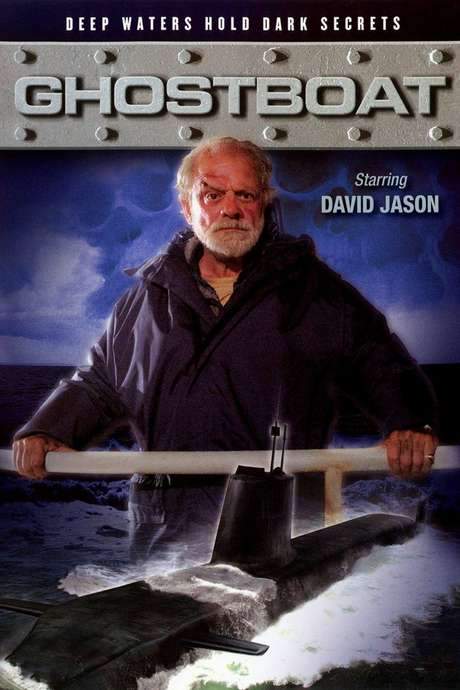
What Is Ghostboat About?
The premise of Ghostboat in 292 words, with nothing given away. The full story follows below.
In the cold, restless waters of the Baltic Sea, a ghost from the past resurfaces—Jack Hardy, the lone survivor of a World War II submarine disaster, is called back to duty in 1981. The enigmatic HMS Scorpion, thought lost for four decades, emerges intact, its steel hull a perfect relic frozen in time. Naval Intelligence sees a rare opportunity to uncover the hidden purpose of a vessel that vanished within the notorious “Devil’s Triangle” of the north, but the ocean’s depths whisper of a danger that eclipses even the fiercest of Cold‑War rivalries.
Alan Cassidy, one of the original designers, joins Jack alongside a tight‑knit Royal Navy team led by Commander Travis and overseen by Captain Byrnes. The crew brings a blend of seasoned authority and technical curiosity, each drawn by the promise of solving a mystery that has haunted both history and their own lives. The tension between duty and the uncanny atmosphere of the submerged relic creates a palpable sense of unease, as the submarine’s pristine interior seems to hold a latent memory of the men who once called it home.
The film balances the stark, procedural world of military intelligence with an atmospheric, almost supernatural dread. The Baltic’s icy expanse, the silence inside the steel corridors, and the ever‑present hum of hidden technology combine to craft a mood that is both claustrophobic and expansive. As the team prepares to chart the Scorpion’s original mission, they confront the unsettling notion that the vessel may be more than a simple artifact—perhaps a conduit for forces far older and more potent than any geopolitical threat of the era. The story invites viewers to wonder what lies beneath the surface, both in the ocean and in the lingering shadows of a lost war.
What Happens in Ghostboat?
The complete story of Ghostboat, from the first scene to the last, in 594 words (about 3 minutes). Spoilers throughout. Names in the text link to 4 cast member pages.
Spoilers ahead
HMS Scorpion, a British submarine that had vanished in the Baltic Sea during the Second World War, unexpectedly surfaces in 1981, cutting across the path of a Soviet freighter. Captain Byrnes, Julian Wadham, returns the submarine to British custody, and Naval Intelligence grows curious about the anomaly — perhaps the first vessel to emerge from the so‑called Devil’s Triangle of the North. The submarine opens her own hatch to admit an investigating team; inside, the hull appears perfectly preserved, yet there is no sign of the crew. The scene is clinical and eerie, a puzzle that begs for careful, methodical unraveling as investigators step aboard and begin to map the inexplicable.
Jack Hardy, David Jason, is the sole survivor of the original crew, rescued in 1943 by the German Kriegsmarine with no memory of the last days of the mission. He joins with Alan Cassidy, Tony Haygarth, one of the vessel’s designers, to accompany a Royal Navy crew on a mission to retrace Scorpion’s final days before she vanished. The team is led by Commander Travis, Ian Puleston-Davies, while Captain Byrnes maintains command of the submarine itself. The plan is practical: slip into the Baltic, reach Soviet waters, and coax answers from a history that refuses to stay buried. Accompanying the operation is HMS Oakland, a protecting escort whose presence underscores the tension between tradition and the unknown that now surrounds the Scorpion.
As the mission unfolds, the Scorpion begins to take on the personalities and identities of the dead crew. The boat seems to gain a will of her own, and the investigators feel that the past is pressing forward through the vessel. Communication with Oakland is suddenly lost, heightening the sense of being drawn into a force older than memory. The crew detects a Soviet submarine on radar, and through a confusing exchange of signals, the Scorpion fires and sinks the other vessel. When she surfaces to search for survivors, there is no debris and no trace of the foe, as if the event never left a mark on the surface world. Hardy is struck by a chilling realization: the past is leaking into the present in dangerous, tangible ways.
Cassidy, who supervised the fitting of practice torpedoes on the Scorpion, discovers that those inert munitions have become live weapons. Captain Byrnes attempts to abort the mission, but Travis pushes to continue, convinced that the key to understanding lies in following where the ship’s enigmatic pull is leading. Hardy learns that the true objective isn’t simply to learn what happened but to uncover and potentially exploit the power that preserved and delivered the Scorpion across decades of time. The tension between duty and the lure of a power beyond comprehension intensifies with each passing hour aboard the submarine.
In a desperate bid to prevent catastrophe, Hardy rewires the torpedo control system, forcing the weapons to explode inside their tubes. The explosion destroys Travis and sends the Scorpion spiraling toward the deep, taking Hardy with it as he clutches a photo of his wife in a final, solitary vigil. The sub sinks, and the scene closes on a quiet, haunting note of sacrifice and ambiguity.
Six months later, Soviet authorities locate the sunken Scorpion, her hull patched and decayed as if four decades had passed in a single night. Neither Hardy’s nor Travis’s bodies are found, and both sides of the Cold War tense up around the mystery. British intelligence intercepts the Soviet report, and a formal conclusion is reached: there was no Kaliningrad incident; it never happened. The Scorpion sank in 1943.
Ghostboat Timeline: Every Key Event in Order
13 key events in the order they happen, from “1943: Scorpion vanishes in the Baltic” to “Official verdict: no Kaliningrad incident”. 13 events name a place, across 9 locations.
- 1
1943: Scorpion vanishes in the Baltic
During WWII, the Scorpion disappears in the Baltic Sea. Jack Hardy is the sole survivor, rescued in 1943 by the German Kriegsmarine with no memory of the last days of the mission. The fate of the rest remains unknown.
When:1943 Where:Baltic Sea
- 2
1981: Scorpion surfaces and custody changes hands
In 1981, the Scorpion unexpectedly surfaces, cutting across the path of a Soviet freighter. Captain Byrnes returns the submarine to British custody, prompting naval intelligence to wonder about the anomaly. They suspect this could be the first vessel to emerge from the so‑called Devil's Triangle of the North.
When:1981 Where:Baltic Sea
- 3
Investigating team welcomed aboard
The submarine opens its hatch to admit an investigating team; inside, the hull appears perfectly preserved yet there is no sign of the crew. The scene is clinical and eerie, a puzzle for careful unraveling as investigators map the inexplicable hull. Captain Byrnes maintains command from the outside as the team begins their assessment.
When:1981 Where:Scorpion interior
- 4
Hardy and Cassidy join the mission
Jack Hardy, the sole survivor from 1943, teams with Alan Cassidy, one of the vessel’s designers, to retrace Scorpion’s final days. They join a Royal Navy crew led by Commander Travis to accompany the mission. Captain Byrnes remains aboard the Scorpion to oversee the operation and its risky return to history.
When:1981 Where:Scorpion and nearby Baltic waters
- 5
HMS Oakland provides escort
An escort ship, HMS Oakland, accompanies the operation, underscoring the tension between tradition and the unknown. The escort's presence signals the high stakes of venturing into a history that may resist orderly explanation. The mission proceeds with guarded caution.
When:1981 Where:Baltic Sea
- 6
The Scorpion takes on the dead’s identities
As the mission unfolds, the Scorpion begins to take on the personalities and identities of the dead crew. The submarine seems to gain a will of its own, and investigators feel the past pressing forward through the vessel. Communication with Oakland is suddenly lost, heightening the sense of being drawn into a force older than memory.
When:1981 Where:Scorpion interior
- 7
Soviet sub sighted and sunk
The crew detects a Soviet submarine on radar, and through a confusing exchange of signals, the Scorpion fires and sinks the other vessel. When she surfaces to search, there is no debris or trace on the surface world. Hardy realizes the past is leaking into the present in dangerous, tangible ways.
When:1981 Where:Baltic Sea / surface
- 8
Live torpedoes raise the stakes
Cassidy discovers that inert practice torpedoes have become live weapons. The discovery reveals that the past’s power may be real and dangerous. The crew debates whether to abort the mission or press on in search of answers.
When:1981 Where:Scorpion torpedo room
- 9
Abort or push forward becomes the crisis
Captain Byrnes attempts to abort the mission, but Travis pushes to continue, convinced that the key to understanding lies in following where the ship’s pull is leading. The tension between duty and the lure of the unknown intensifies aboard the submarine. Hardy watches the conflict with growing apprehension.
When:1981 Where:Scorpion interior
- 10
Hardy seeks to harness the power; torpedo control is rewired
Hardy realizes the true objective may be to uncover and potentially exploit the power that preserved the Scorpion across decades. He secretly rewires the torpedo controls, forcing the weapons to explode inside their tubes. The act sets a course toward catastrophe as loyalties and memory collide.
When:1981 Where:Control room
Show the other 3 events of Ghostboat Hide the last 3 events
- 11
Travis dies; the Scorpion sinks
The explosion destroys Travis and sends the Scorpion spiraling toward the deep. Hardy clutches a photo of his wife in a final, solitary vigil as the submarine sinks, leaving a haunting note of sacrifice and ambiguity. The surface world remains unaware of the true cost of unraveling the past.
When:1981 Where:Deep ocean
- 12
Six months later: the sunken Scorpion is found
Six months after the sinking, Soviet authorities locate the sunken Scorpion, its hull patched and decayed as if four decades passed in a single night. Neither Hardy’s nor Travis’s bodies are found, and Cold War tensions tighten around the mystery. The past remains a chilling, unresolved echo.
When:circa 1982 Where:Baltic Sea floor
- 13
Official verdict: no Kaliningrad incident
British intelligence intercepts the Soviet report and issues a formal conclusion: there was no Kaliningrad incident and the Scorpion sank in 1943. The events are treated as a historical anomaly rather than a Cold War crisis. The mystery lingers just beyond the reach of official history.
When:1982 Where:London / British intelligence
Who Are the Main Characters in Ghostboat?
4 characters, among them Captain Byrnes (Julian Wadham), Jack Hardy (David Jason) and Alan Cassidy (Tony Haygarth): who each one is and the part they play in the story. Every profile links to the actor’s page.
- CB
Captain Byrnes (Julian Wadham)
Played by Julian Wadham
A steady, authoritative commander who keeps the Scorpion under command while weighing risk against the mission’s goals. He navigates the tension between protocol and the unsettling pull of the unknown that surfaces aboard the submarine.
- ⚓ Leader
- 🧭 Duty
- 🧨 Resolve
- JH
Jack Hardy (David Jason)
Played by David Jason
The sole survivor of the original voyage, Hardy returns as a cautious, memory-fragile witness. He senses the past intruding into the present and becomes a crucial link between the crew’s history and their effort to understand what happened.
- 🛡️ Survivor
- 🧠 Memory
- 🧭 Investigation
- AC
Alan Cassidy (Tony Haygarth)
Played by Tony Haygarth
One of the vessel’s designers, Cassidy pushes for continuing the mission and testing the Scorpion’s limits. He blends technical pragmatism with a belief that memory and legacy can unlock the present’s answers.
- 🧰 Engineer
- 🧪 Curious
- 🧠 Strategist
- CT
Commander Travis (Ian Puleston-Davies)
Played by Ian Puleston-Davies
The mission’s driving force, Travis coaxes the crew to press deeper into Soviet waters. His ambition and willingness to take risks contrast with Byrnes’s caution, fueling the core tension of the expedition.
- 🎯 Leader
- 🧭 Ambition
- 🔥 Risk-taker
Where and When Is Ghostboat Set?
Ghostboat is set in Baltic Sea and Kaliningrad Oblast (Soviet Union) (1981–1982). Here is why the time and place matter to the story.
When
1981–1982
The story alternates between 1981, when the Scorpion reappears and is studied by naval forces, and 1943, the year of the submarine’s disappearance. Flashbacks depict the last days of the mission, while later events show six months after resurfacing, around 1982, when Soviet authorities locate the sunken hull. The timeline emphasizes how memory, technology, and Cold War politics collide across decades.
Where
Baltic Sea, Kaliningrad Oblast (Soviet Union)
The primary setting is the Baltic Sea region around Kaliningrad, where the HMS Scorpion surfaces and the investigation unfolds. The area represents a Cold War maritime frontier, with tension between British and Soviet forces under a watchful, wary atmosphere. The legend of the Devil's Triangle of the North adds a mythic layer to the location, underscoring the sense that the past still disrupts the present.
- ❄️ Cold War
- 🚢 Naval
- 🗺️ Mystery
What Are the Themes of Ghostboat?
3 ideas the story keeps returning to, among them Time and Memory, Duty vs Curiosity and Power and Consequences.
-
01
Time and Memory
The film treats time as a porous boundary: the dead crew’s personalities inhabit the living submarine, forcing characters to confront past choices. Memory haunts present actions, blurring lines between duty and nostalgia. The mystery hinges on how history can leak into the here-and-now with tangible consequences.
-
02
Duty vs Curiosity
The investigators wrestle with whether to shrink from danger or press on to uncover hidden knowledge. Cassidy’s practical projections clash with Travis’s push to probe the unknown, testing loyalty to mission versus moral responsibility. The tension highlights the cost of chasing answers in a world still shaped by war.
-
03
Power and Consequences
The Scorpion’s preserved power suggests a force beyond comprehension that the characters can possibly control. The plan to exploit this power clashes with warnings about safety and ethics, culminating in a devastating miscalculation. The ending emphasizes ambiguity: sacrifice and unresolved questions linger after the explosion.
What Kind of Film Is Ghostboat?
Tense in tone, with steady pacing and a moderate story, going by the plot summary.
- Tone
- Tense
- Pacing
- Steady
- Story
- Moderate
- Intensity
- High
- Ending
- Bleak
A tense and claustrophobic supernatural thriller set aboard a haunted submarine, where a sense of impending doom and psychological dread builds steadily towards a bleak and tragic resolution.
- eerie
- claustrophobic
- paranoid
- mysterious
- melancholic
- tense
- supernatural haunting
- cold war
- survival horror
- psychological thriller
Content notes: war violence, psychological trauma, supernatural possession, implied death.
Quiz
How well do you remember Ghostboat? Test yourself on the story.