
Ghost in the Shell: Stand Alone Complex - Solid State Society 3D 2011

Directed by
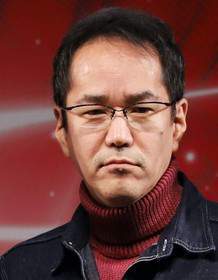
Kenji Kamiyama
Made by
Production I.G.
Where to Watch Ghost in the Shell: Stand Alone Complex - Solid State Society 3D
See current US streaming, rental, and purchase options for Ghost in the Shell: Stand Alone Complex - Solid State Society 3D (2011) via JustWatch.






Test your knowledge of Ghost in the Shell: Stand Alone Complex - Solid State Society 3D with our quiz!
Ghost in the Shell: Stand Alone Complex - Solid State Society 3D Plot Summary
Read the complete plot summary and ending explained for Ghost in the Shell: Stand Alone Complex - Solid State Society 3D (2011). From turning points to emotional moments, uncover what really happened and why it matters.
In 2034, two years after the events of 2nd GIG, Public Security Section 9 investigates a string of mysterious suicides among refugees from the Siak Republic. Chief Aramaki leads a raid to arrest the refugee dictator, only to discover that the man is already dead. In response, a Siak operative plans a terrorist attack using a micromachine virus, and Batou is dispatched to intercept him. During the confrontation, the operative dies, striking a uneasy chord between pursuit and foregone conclusions. Motoko Kusanagi is pursuing her own line of inquiry, and when their paths cross, a tense encounter unfolds with mutual caution. Before they can apprehend the operative, he dies while attacking them, leaving behind a trail of clues in the form of virus ampules that Kusanagi later retrieves. She warns Batou to steer clear of the enigmatic Solid State Society as she departs, her resolve as cool as it is purposeful.
Section 9 operatives begin to piece together a theory about a hacker known as the Puppeteer, a shadowy figure whose fingerprints are tied to the Siak suicides. Meanwhile, Togusa learns of sixteen kidnapped children who were meant to carry the virus, all listed as offspring of the so-called Noble Rot Senior Citizens. The investigation expands as the team suspects a wider conspiracy, hinting at a colossal network that could involve as many as 20,000 children. The Puppeteer’s influence seems to ripple through the system itself, a digital echo that binds disparate acts into a single, ominous design.
Soon the Puppeteer orchestrates the disappearance of the sixteen children, and Batou reveals to Togusa his growing suspicion that Kusanagi may herself be the Puppeteer, a suggestion that rattles the already fragile balance within Section 9. As they close in on the mastermind behind Ka Rum’s assassination, a Siak sniper is intercepted, and the captured informant reveals a shocking truth: the Puppeteer is a mechanism embedded within the Solid State, and cannot be simply killed.
Togusa tracks down one of the missing children, now assigned to an elderly man in the Noble Rot program. When he tries to take the child, the man wakes and asserts that the child is his sole heir, preferring to leave his assets to a child from the streets rather than handing them over to the government at his death. The warning is blunt and final, and the man dies soon after, reinforcing the notion that meddling with the Solid State’s plans carries a deadly cost.
A dramatic turn comes when Togusa receives a call from the Puppeteer, who hacks his brain and drives him to a cyberbrain implant hospital with his daughter. In a tense exchange, Togusa is given a grim choice: lose his daughter to the Solid State or commit suicide. He votes for the latter, but Kusanagi intervenes in time to save him. She follows the Puppeteer’s trail and identifies him as a rhizome formed by the collective consciousness of the Noble Rot Senior Citizens housed in a welfare center, a revelation that reframes the entire mystery.
Kusanagi briefly rejoins Section 9 and confirms that Ito Munei, a powerful politician, was behind the assassination of General Ka Rum. She uncovers that Munei and his allies use a brainwashing facility as a front to cultivate an elite, pure-blooded Japanese ruling class, envisioning a new Golden Age for the country. The Solid State moves to eliminate Munei for dangerous interference, yet Munei remains ignorant of the full extent of the abduction infrastructure.
A designer named Tateaki Koshiki briefly steps forward, claiming responsibility for developing the Solid State before taking his own life. Kusanagi probes into his cyberbrain and plunges into Koshiki’s trap, allowing the Puppeteer to hijack her own cybernetics. The Puppeteer reveals a rupture of identity, having spread across multiple egos until a collective consciousness coalesced into the Solid State, a force that can move through the wider society as a vanishing mediator.
Batou later shares with a recovering Kusanagi that the real Tateaki Koshiki used a prosthetic body and had built the Solid State under Munei’s hire. The revelation shifts the lens on who truly wields power, and Kusanagi chooses to keep the Puppeteer’s origins private, a truth that Batou had already sensed from their shared dive. He concludes that the Puppeteer’s ultimate identity may remain unknowable, and that the incident will likely be dismissed as a scandal. With a renewed sense of purpose, Kusanagi hints that she will eventually rejoin Section 9 after years of roaming the net on her own, stepping back into the fold when the moment is right.
Ghost in the Shell: Stand Alone Complex - Solid State Society 3D Timeline
Follow the complete movie timeline of Ghost in the Shell: Stand Alone Complex - Solid State Society 3D (2011) with every major event in chronological order. Great for understanding complex plots and story progression.
Raid on the refugee dictator
Public Security Section 9, led by Chief Aramaki, raids the refugee dictator in the Siak Republic in 2034. They intend to arrest him, but discover the target is already dead, removing the capture from their hands. The raid unsettles the team and pushes the investigation toward the Siak suicides and the emerging threat.
Siak operative’s terrorist plan and Batou’s interception
In response to the dictator's death, a Siak operative schemes to unleash a terrorist attack using a micromachine virus. Batou is dispatched to intercept the operative and halt the plan. The confrontation ends with the operative dying, leaving behind virus ampules as crucial clues for investigators.
Crossing paths and the virus clues
Motoko Kusanagi pursues her own line of inquiry, crossing paths with Batou's team during the widening case. The encounter is tense and cautious, reflecting mutual distrust. After the operative's death, Kusanagi retrieves the virus ampules and warns Batou to steer clear of the enigmatic Solid State Society.
Puppeteer emerges as a theory for Section 9
Section 9 operatives begin to piece together a theory about a hacker known as the Puppeteer, whose fingerprints tie to the Siak suicides. The investigation expands to hint at a colossal network that could involve up to 20,000 missing children. The Puppeteer's influence seems to ripple through the system itself, binding disparate acts into a single ominous design.
Sixteen kidnapped children and Noble Rot
Togusa learns of sixteen kidnapped children meant to carry the virus, all listed as offspring of the Noble Rot Senior Citizens. The scope of the case widens into a possible network involving countless missing youths. The moral and political implications of such an abduction program weigh heavily on Section 9.
Disappearance of the children and Batou’s suspicions
Soon the Puppeteer orchestrates the disappearance of the sixteen children, intensifying the sense of a hidden system at work. Batou reveals growing suspicions that Kusanagi herself may be the Puppeteer, a suggestion that destabilizes the already fragile balance within Section 9. The pursuit tightens as more clues surface.
Puppeteer hacks Togusa; hospital ultimatum
Togusa receives a call from the Puppeteer that hacks his brain and drives him to a cyberbrain implant hospital with his daughter. He faces a grim choice: lose his daughter to the Solid State or commit suicide. Kusanagi intervenes in time to save him and continue tracing the Puppeteer's trail.
Puppeteer revealed as rhizome of Noble Rot
Kusanagi follows the Puppeteer's trail and identifies the mastermind as a rhizome formed by the collective consciousness of the Noble Rot Senior Citizens housed in a welfare center. The revelation reframes the entire mystery, turning the Puppeteer from a single hacker into a distributed, emergent power. The Puppeteer becomes a force that operates through the connected system rather than a lone operator.
Ito Munei and the brainwashing front
Kusanagi confirms Ito Munei, a powerful politician, was behind the assassination of General Ka Rum. She uncovers that Munei and allies use a brainwashing facility as a front to cultivate an elite, pure-blooded Japanese ruling class. The plan envisions a new Golden Age, though Munei remains ignorant of the full extent of the abduction network.
Tateaki Koshiki and the Puppeteer’s trap
Designer Tateaki Koshiki briefly steps forward, claiming responsibility for developing the Solid State before taking his own life. Kusanagi probes into his cyberbrain and is trapped by a trap that allows the Puppeteer to hijack her cybernetics. The exchange demonstrates the Puppeteer's reach inside individual minds.
Puppeteer hijacks Kusanagi and reveals origins
The Puppeteer hijacks Kusanagi's cybernetics, revealing that the Puppeteer is a rupture of identity spread across multiple egos and coalesced into the Solid State. This entity can move through wider society as a vanishing mediator, not easily defeated by standard means. The revelation reframes who wields power in the system.
Batou and the unknowable Puppeteer; future plans
Batou informs a recovering Kusanagi that the real Tateaki Koshiki used a prosthetic body and built the Solid State under Munei's hire. The Puppeteer's identity remains tantalizingly unknowable, reinforcing the sense that this is a system-level threat rather than a single mastermind. Kusanagi hints she will rejoin Section 9 when the moment is right, planning her next move.
Ghost in the Shell: Stand Alone Complex - Solid State Society 3D Characters
Explore all characters from Ghost in the Shell: Stand Alone Complex - Solid State Society 3D (2011). Get detailed profiles with their roles, arcs, and key relationships explained.
Daisuke Aramaki (Osamu Saka)
Daisuke Aramaki is Public Security Section 9’s seasoned leader, guiding operations with a calm, strategic hand. He unites the team, balancing duty with caution as he pursues the refugee dictator and navigates ambiguous threats. His experience and authority anchor the squad amid political intrigue and dangerous revelations.
Motoko Kusanagi (Atsuko Tanaka)
Motoko Kusanagi is a brilliant, calculating major who pursues her own lines of inquiry. She remains cool under pressure, capable of reading both people and digital landscapes. Her clash with the Puppeteer tests her sense of self and professional duty.
Tachikoma (Sakiko Tamagawa)
Tachikoma is an inquisitive, childlike AI linked to the team’s operations. It shows curiosity about human motives and a protective streak toward its human teammates. Its presence adds warmth and philosophical musing to the mission.
Saito (Toru Okawa)
Saito is a member of Public Security Section 9 who contributes to field operations with steady, practical support. He complements the team’s dynamic and helps drive the investigation forward, even when lines blur between duty and doubt.
Batou (Akio Otsuka)
Batou is a tough, loyal operative who remains instinctively protective of his teammates. He often questions the ethical boundaries of their pursuit, especially when Kusanagi’s involvement raises suspicions. His presence grounds the team with grit and humanity.
Togusa (Koichi Yamadera)
Togusa is the more human, morally centered investigator who follows the trail of missing children. He embodies empathy and persistence, balancing technical savvy with a grounded sense of justice. His trust in human beings anchors the investigation amid digital upheaval.
Borma (Taro Yamaguchi)
Borma is a laid-back but capable Section 9 operative who provides practical support and street-level perspective. He completes the team’s dynamic with dry wit and dependable competence, aiding in the long hunt for the Puppeteer.
Ghost in the Shell: Stand Alone Complex - Solid State Society 3D Settings
Learn where and when Ghost in the Shell: Stand Alone Complex - Solid State Society 3D (2011) takes place. Explore the film’s settings, era, and how they shape the narrative.
Time period
2034
Set in the year 2034, two years after the events of the Second GIG. The era features pervasive cybernetics, brain-computer interfaces, and a fragile balance of power within Public Security Section 9. The plot unfolds across refugee crises and covert programs that manipulate individuals and society through digital means.
Location
Siak Republic, Noble Rot Senior Citizens welfare center, cyberbrain implant hospital
The Siak Republic provides the refugee backdrop that drives the investigation and political tension. The story also visits the Noble Rot Senior Citizens welfare center and a cyberbrain implant hospital, locations where clues emerge and power plays unfold. These places anchor a near-future world where technology, governance, and human lives intersect.
Ghost in the Shell: Stand Alone Complex - Solid State Society 3D Themes
Discover the main themes in Ghost in the Shell: Stand Alone Complex - Solid State Society 3D (2011). Analyze the deeper meanings, emotional layers, and social commentary behind the film.
🧬
Identity
The Puppeteer’s distributed consciousness raises questions about what it means to be oneself when a mind can exist across many bodies. Motoko Kusanagi’s own sense of agency is tested as her cybernetics are hijacked and a layered ego emerges. The story explores how identity can be fragmented and shared through technology and social networks.
🏛️
Control
Power structures are revealed to manipulate citizens through brainwashing facilities and an elite ruling class. The Solid State functions as a hidden mediator, shaping events beyond the reach of direct action. The Puppeteer’s influence shows that control can permeate a society, not just individual fate.
⚙️
Technology
Cyberenets, micromachine viruses, and a collective digital consciousness drive the narrative. The Puppeteer’s manipulation of implants and networks raises ethical questions about autonomy and vulnerability. The story frames technology as both a tool for defense and a potential means of domination.

Coming soon on iOS and Android
The Plot Explained Mobile App
From blockbusters to hidden gems — dive into movie stories anytime, anywhere. Save your favorites, discover plots faster, and never miss a twist again.
Sign up to be the first to know when we launch. Your email stays private — always.
Explore the mobile appGhost in the Shell: Stand Alone Complex - Solid State Society 3D Spoiler-Free Summary
Discover the spoiler-free summary of Ghost in the Shell: Stand Alone Complex - Solid State Society 3D (2011). Get a concise overview without any spoilers.
In the neon‑lit sprawl of a near‑future Japan, society is stitched together by cybernetic implants, pervasive networks, and a fragile peace that hums beneath ever‑present surveillance. The year is 2034, and the world of Public Security Section 9 balances cutting‑edge technology with the lingering shadows of political upheaval and displaced peoples. The city pulses with a quiet tension, where every street corner could hide a digital echo and every conversation might be recorded in the ether.
At the heart of this landscape stands Chief Aramaki, the seasoned strategist who guides the elite unit with measured authority, and Batou, the battle‑hardened veteran whose calm confidence masks a deep sense of duty. Motoko Kusanagi arrives as the enigmatic leader of Section 9’s investigations, her reputation for cool precision matched only by her willingness to venture into the darkest corners of the net. Alongside them, Togusa brings a more human perspective, his empathy often clashing with the cold logic of a world run by code.
The team finds itself drawn into a subtle, pervasive mystery—a series of unsettling events that hint at a hidden hand manipulating the flow of information and lives. As they navigate layers of corporate intrigue, refugee tensions, and the ever‑evolving digital frontier, the operatives must rely on their unique skills and the uneasy trust they place in one another. The atmosphere remains taut, a blend of sleek cyber‑noir aesthetics and philosophical questions about identity, autonomy, and the cost of progress.
Against this backdrop, Section 9 operates as both guardian and detective, probing the seams of a society where humanity and machinery intertwine. Their pursuit is less about a single villain and more about uncovering the deeper currents that threaten to reshape the world’s fragile equilibrium, setting the stage for a tense, immersive journey through the shadows of the Solid State.
Featured on this page

What's After the Movie?
Not sure whether to stay after the credits? Find out!
Check out our other apps:

SAT Sphere
Build confidence for the Digital SAT.

Mori Atlas
Discover wild places worth protecting.

Luntero
Search smarter for a home in Amsterdam.

Plot Explained
Unravel movie endings and hidden clues.

Pokechamp
Dive into Pokémon data and battle logic.

Driving Theory
Get ready for your European theory test.

Movie Dust
Plan your next cinema trip with ease.

Musemap
Find art and culture as you travel.

Selkobase
Compare credentials before committing.

Local Manual
Turn an unfamiliar country into practical next steps.

Lernavi
Compare school systems before your next move.

GymRoam
Find a workout stop wherever your plans take you.
Explore Our Movie Platform
New Movie Releases (2026)
Famous Movie Actors
Top Film Production Studios
Movie Plot Summaries & Endings
Major Movie Awards & Winners
Best Concert Films & Music Documentaries
Movie Collections and Curated Lists
© 2026 What's After the Movie. All rights reserved.
Privacy Policy