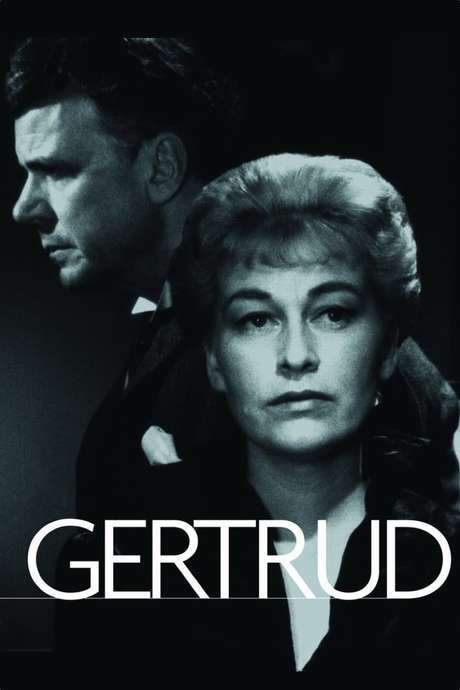
What Is Gertrud About?
The premise of Gertrud in 302 words, with nothing given away. The full story follows below.
In the elegant but restless streets of early‑20th‑century Stockholm, the world hums with cafés full of poets, salons alive with music, and a society that prizes status as much as artistry. Within this cultured crucible lives Gertrud, a former opera singer whose refined upbringing now collides with a restless inner yearning. The film’s tone is both wistful and sharply observant, casting the city’s glittering façades against the quieter, unresolved longings that pulse beneath them.
Caught in a marriage to the ambitious lawyer and politician Gustav Kanning, Gertrud confronts a partnership that has grown more about reputation than affection. She perceives his devotion to career as a widening distance, prompting her to question whether love can truly survive beneath the weight of public expectation. In this delicate balance, she encounters the youthful pianist Erland Jansson, whose devotion seems to embody the passionate ideal she has been chasing, offering a stark contrast to the measured life she knows.
Around them, an artistic circle swirls: the charismatic poet Gabriel Lidman, whose own past intertwines with Gertrud’s, and the steady friend Axel Nygren, who observes the unfolding tensions with quiet empathy. Their gatherings become more than social events; they are stages where personal ambitions, creative impulses, and unspoken desires play out. The presence of an old lover resurfacing adds another layer of intrigue, hinting at the complex web of past and present that Gertrud must navigate.
At its heart, the story follows Gertrud’s relentless pursuit of an ideal love that remains perpetually out of reach. It is a meditation on the cost of longing, the clash between art and intimacy, and the courage it takes to confront the inevitable gap between dreams and reality. The film invites viewers to linger in the melancholic beauty of a world where every whispered promise carries the weight of possibility.
What Happens in Gertrud?
The complete story of Gertrud, from the first scene to the last, in 396 words (about 2 minutes). Spoilers throughout. Names in the text link to 5 cast member pages.
Spoilers ahead
Gertrud Nina Pens Rode is a former opera singer living in Stockholm in the early 20th century, married to the lawyer and politician Gustav Kanning Bendt Rothe. She openly tells him that he has grown more in love with his career and status than with her, and that she has found a man who loves her more than anyone else. She reveals that she intends to divorce and start anew. In the same breath, she introduces the man who has captured her heart, the young pianist Erland Jansson Baard Owe, whose devotion she says surpasses anything she has known.
In a park, Gertrud and Jansson deepen their bond, and she declares an unwavering commitment to him. Later, Gustav goes to collect his wife after she had promised to be at the opera, only to discover she is missing. The Kannings attend a dinner that same evening hosted by the poet Gabriel Lidman Ebbe Rode, whose own past with Gertrud hints at a complicated web of loyalties. Gertrud greets a friend at the gathering, Axel Nygren Axel Strøbye, and the tensions around love, art, and ambition begin to twist the evening.
Gabriel Lidman reveals a revealing detail: he had heard Jansson boast at a party about Gertrud as his latest conquest, a reminder that Gertrud’s passion has drawn scrutiny from multiple sides. When Gertrud and Jansson meet again the next day, she confesses that she wishes to run away with him and leave everything else behind. Yet Jansson confesses that he cannot, because he is expecting a child with another woman. Lidman, who once valued his own career over love, tries to persuade Gertrud to leave with him instead, offering a vision of a life beyond compromise.
Gustav makes one final, measured attempt to persuade Gertrud to stay with him, even suggesting she could keep her lover as part of the arrangement. But this plan fails, and Gertrud chooses independence over convenience, moving alone to Paris to study psychology and search for meaning on her own terms.
Three decades pass, and Gertrud, now joined by Nygren, reflects on the arc of her life. She articulates a singular belief: love is the only thing that truly matters in life. Though she is left alone by circumstance and choice, she does not express regret for the path she chose, standing by a hard-won conviction that shaped her entire existence.
Gertrud Timeline: Every Key Event in Order
14 key events in the order they happen, from “Gertrud confesses to Gustav” to “Love is the only thing that matters; no regrets”. 12 events name a place, across 9 locations.
- 1
Gertrud confesses to Gustav
In a frank confrontation, Gertrud tells her husband that he has become more in love with his career and status than with her. She reveals that she has met a man who loves her more than anything and that she wants a divorce to pursue that love. The moment sets the direction of the story and shows her willingness to break with convention.
When:early 20th century Where:Stockholm
- 2
Gertrud meets Erland Jansson in a park
Gertrud encounters the young pianist Erland Jansson in a park and they share a powerful, immediate affinity. They talk about devotion and the possibility of a life together. The meeting marks the start of a new romantic path for Gertrud.
When:same day, afternoon Where:Stockholm Park
- 3
Gertrud and Jansson go to his house
The two lovers depart the park and go to Jansson's house, where Gertrud expresses unwavering devotion to him. She envisions a life defined by love rather than social standing. This visit solidifies her commitment to leaving her husband behind.
When:evening Where:Jansson's house
- 4
Gustav searches for Gertrud at the opera
Gustav goes to the opera to fetch Gertrud, but she has vanished and he cannot locate her. The inability to find her heightens the sense of an impending separation. The moment foreshadows the long estrangement to come.
When:the following evening Where:Stockholm Opera
- 5
Dinner party at Lidman's house
Gustav and Gertrud attend a dinner hosted by the poet Gabriel Lidman, where past relationships and social ambitions surface beneath polite conversation. The party becomes a backdrop for exposing Gertrud's exit from marriage. Tensions simmer as old loyalties clash with new desires.
When:the next evening Where:Gabriel Lidman's house
- 6
Gustav confronts Gertrud and demands one last night
At the gathering, Gustav confronts Gertrud about the opera and insists on spending one final night with her before their separation. He clings to the possibility of reconciliation despite mounting cultural and personal obstacles. The moment intensifies their emotional stake in the impending split.
When:that night Where:Lidman's house
- 7
Lidman reveals he bragged about Gertrud to Jansson
Lidman recounts that he once met Jansson at a party and boasted about Gertrud as his latest conquest. The admission exposes cynical undercurrents in their social circle. It underscores how Gertrud's choices are weighed within old power dynamics.
When:that night Where:Lidman's house
- 8
Gertrud decides to go away with Jansson
The next day, Gertrud meets with Jansson again and tells him she wants to leave everything behind and run away with him. Her resolve is clear despite the obstacles ahead. The plan signals a radical break from marriage and societal expectations.
When:the next day Where:Jansson's home
- 9
Jansson cannot join because he expects a child
Jansson explains that he cannot leave because he is expecting a child with another woman. The revelation ends Gertrud's immediate escape plan and forces her to reconsider her future. It marks a pivotal turn toward solitary independence.
When:the next day Where:Jansson's home
- 10
Lidman makes another offer: leave but keep the lover
Lidman makes a final attempt to persuade Gertrud to leave with him, suggesting she could keep her lover as part of the arrangement. The idea reveals the compromises of the era and Gertrud's refusal to settle for a convenient compromise. The moment deepens the sense of personal integrity in her choice.
When:days after Where:Lidman's house
Show the other 4 events of Gertrud Hide the last 4 events
- 11
Kanning makes a final plea to stay
Kanning makes a last plea for Gertrud to remain with him, even indicating that he would tolerate her relationship with Jansson. Gertrud's stance remains firm, and she refuses to compromise on love. The tension builds toward her ultimate departure.
When:days after Where:Kanning's home
- 12
Gertrud moves to Paris to study psychology
After the failed attempts to reconcile, Gertrud leaves Stockholm and moves alone to Paris to study psychology. The relocation marks a new chapter focused on self-discovery rather than romance. The distance signals both loss and independence as she chooses her own path.
When:shortly after Where:Paris
- 13
Thirty years later: Gertrud reflects on life with Nygren
Three decades later, Gertrud, now with Nygren, looks back on her life and the outcomes of her choices. The reflection reframes the story as a meditation on the primacy of love. The pairing with Nygren provides companionship in contrast to earlier isolation.
When:thirty years later
- 14
Love is the only thing that matters; no regrets
In her final moment of reflection, Gertrud states that love is the only thing that means anything in life. She acknowledges being alone as a consequence of her refusal to compromise, but she does not regret her path. The film ends with a quiet affirmation of personal fidelity to love as the ultimate measure of a life well lived.
When:thirty years later
Who Are the Main Characters in Gertrud?
6 characters, among them Gertrud (Nina Pens Rode), Erland Jansson (Baard Owe) and Gustav Kanning (Bendt Rothe): who each one is and the part they play in the story. Every profile links to the actor’s page.
- G(
Gertrud (Nina Pens Rode)
Played by Nina Pens Rode
Gertrud is a former opera singer who believes love is the ultimate meaning of life and refuses to settle for a loveless marriage. She asserts her independence by declaring she will divorce and pursue a relationship that fulfills her emotionally. Her actions awaken conflict with her husband and others who value social status. In the end, she travels to Paris and looks back on her life, maintaining that love is supreme, even at the cost of loneliness.
- 💃 Opera singer
- 🎭 Artistic temperament
- 🗽 Independent spirit
-
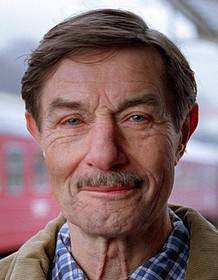
Erland Jansson (Baard Owe)
Played by Baard Owe
Erland Jansson is a talented young pianist who becomes Gertrud's lover. He is devoted and idealistic, promising to love her above all else. However, his plans are constrained by impending fatherhood and his own career, preventing him from leaving his life behind. His relationship with Gertrud exposes the tension between personal happiness and social responsibilities.
- 🎹 Music
- 💔 Romance
- 🚧 External pressures
- GK
Gustav Kanning (Bendt Rothe)
Played by Bendt Rothe
Gustav Kanning is a lawyer and politician who prioritizes career and social status over love. He tries to keep his marriage intact by offering a last night with Gertrud and even allowing her to keep her lover temporarily, revealing his struggle between ambition and affection. He is pragmatic, calculating, and desperate to preserve appearances. His inability to understand Gertrud's need for authentic love underscores the film's critique of bourgeois values.
- 💼 Career
- 🎭 Bourgeois values
- 🗝️ Control
- GL
Gabriel Lidman (Ebbe Rode)
Played by Ebbe Rode
Lidman is a poet who previously had a relationship with Gertrud; He now intersects with her life and tries to persuade her to join him for love and a new life. He embodies the old literary circle that once venerated career and fame, mirroring Kanning's attitudes. He reveals that Gertrud's decisions are shaped by a history of relationships that sacrificed personal happiness for status. His conversation with Gertrud adds depth to the theme of choosing love over career.
- 🎭 Poetry
- 🗣️ Intellectual life
- 🕊️ Love and freedom
- AN
Axel Nygen (Axel Strøbye)
Played by Axel Strøbye
Axel Nygen is a friend in the social circle who interacts with Gertrud and serves as a witness to the drama surrounding her life. He embodies the social world that both Gertrud and her husband navigate; He too is part of the bourgeois network that values appearances.
- 🎭 Social circles
- 🗣️ Social expectations
- 🧭 Perspective
- KM
Kanning's mother (Anna Malberg)
Played by Anna Malberg
Kanning's mother represents the older generation's concerns and domestic sensibilities, providing a view into the family dynamics that frame Gertrud's choices.
- 👵 Family
- 🧭 Tradition
- 🗝️ Roots
Where and When Is Gertrud Set?
Gertrud is set in Stockholm and Paris (Early 20th century; mid-20th century (around thirty years…). Here is why the time and place matter to the story.
When
Early 20th century; mid-20th century (around thirty years later)
The story unfolds in the early decades of the 20th century, among opera houses, salons, and the rising bourgeois class. It then jumps forward roughly thirty years, showing a matured Gertrud looking back on her life. The time frame highlights changing social norms and the lasting impact of personal choices.
Where
Stockholm, Paris
Stockholm in the early 1900s is the nerve center of Gertrud's social world, with opera houses and salons shaping prestige. The city blends bourgeois propriety with artistic ambitions, foreshadowing the choices Gertrud makes. Paris later becomes her escape, a city of study and new possibilities. The settings juxtapose public performance with private longing.
- 🏙️ Historical cities
- 🎭 Opera and theater culture
- 🕰️ Early 20th century backdrop
What Are the Themes of Gertrud?
3 ideas the story keeps returning to, among them Love vs Independence, Autonomy and Societal norms.
-
01
Love vs Independence
Gertrud is a former opera singer who believes love is the ultimate meaning of life and refuses to settle for a loveless marriage. She asserts her independence by declaring she will divorce and pursue a relationship that fulfills her emotionally. Her actions awaken conflict with her husband and others who value social status. In the end, she travels to Paris and looks back on her life, maintaining that love is supreme, even at the cost of loneliness.
-
02
Autonomy
The film centers on a woman who refuses to compromise her personal happiness for the sake of appearances. She chooses to leave behind conventional security for a relationship she deems authentic. Her stance is tested by others who equate worth with career or social standing. The narrative treats autonomy as a costly but essential pursuit.
-
03
Societal norms
Gertrud's choices unfold within a society that prizes reputation, status, and professional success. The film contrasts private longing with public performance, showing how social expectations shape intimate decisions. The men in her life—husband, poet, and lover—each embody a different facet of bourgeois values. The result is a meditation on whether love can triumph over societal pressures.
What Kind of Film Is Gertrud?
Melancholic in tone, with slow pacing and a moderate story, going by the plot summary.
- Tone
- Melancholic
- Pacing
- Slow
- Story
- Moderate
- Intensity
- Medium
- Ending
- Bittersweet
A slow, melancholic drama that follows a woman's lifelong, solitary search for an ideal love, characterized by deep disappointment, reflective pacing, and a resigned but unregretful atmosphere.
- reflective
- melancholic
- lonely
- resigned
- introspective
- quiet
- romantic disillusionment
- free will
- existential search
- marital breakdown
Quiz
How well do you remember Gertrud? Test yourself on the story.
Where to Watch Gertrud
Stream it on Criterion Channel. US availability and prices from JustWatch.
Stream 1
 Criterion Channel
 Streaming availability in the US, powered by