What Is Amour Fou About?
The premise of Amour Fou in 352 words, with nothing given away. The full story follows below.
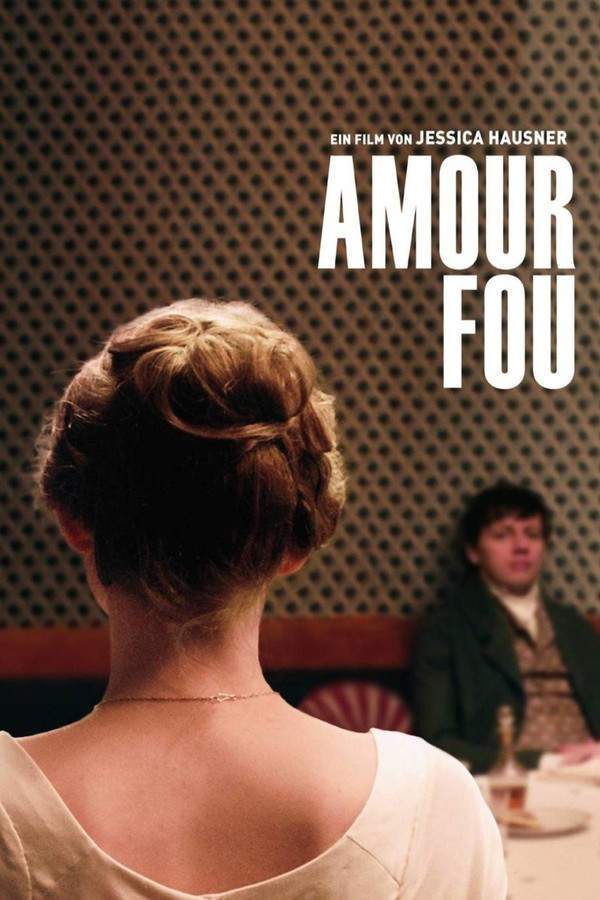
In 19th-century Berlin, the salons of the city’s intellectual elite hum with poetry, philosophy, and the restless anxieties of a society caught between Romantic ideals and encroaching modernity. It is within one such refined gathering that the brooding poet Heinrich von Kleist finds himself grappling with a deepening despair over the meaning of existence and the inevitability of death. Consumed by an aching need to transcend his isolation, he turns his attention toward an intense, consuming form of love — one that promises permanence in a world he finds unbearably fleeting.
Driven by his desire to share his fate with someone who understands his torment, Heinrich first approaches his close friend and cousin Marie, confessing that life has grown unbearable and asking her to consider a profound and intimate bond with him. Marie, however, gently refuses, leaving Heinrich adrift in his grief and his longing for a kindred soul. His rejection sends ripples through his emotional world, intensifying the ache that has come to define his days and shaping his search for a connection that matches the depth of his convictions.
It is around this time that Heinrich encounters Henriette, the elegant and captivating wife of a business partner, whose quiet grace at the soiree belies a private struggle of her own. Afflicted by a terminal illness, Henriette carries within her a fatalistic acceptance of her condition, and her intimate understanding of mortality draws Heinrich toward her with an almost magnetic intensity. Their conversations unfold with a tender, melancholy weight, as two outsiders find in each other the recognition they have long been denied — a meeting of minds and hearts steeped in the poetry of despair and the promise of an extraordinary devotion.
As their connection deepens, the film paints an immersive portrait of yearning, doomed romance, exploring how two people haunted by the boundaries of life and love might find solace in one another. Set against the elegant backdrop of a society that prizes propriety, Amour Fou weaves a hypnotic tale of longing and fatal attraction, where the lines between passion and surrender blur beneath the weight of shared darkness.
What Happens in Amour Fou?
The complete story of Amour Fou, from the first scene to the last, in 701 words (about 3 minutes). Spoilers throughout.
Spoilers ahead
In the heart of Berlin, a lavish soiree hosted by the affluent Henriette Vogel sets the stage for a profound exploration of love, despair, and the human condition. During this gathering, the troubled poet Heinrich von Kleist approaches his close friend and cousin, Marie, sharing the deep pain he feels about life. Overwhelmed by his emotions, he proposes a haunting idea: a murder-suicide pact, which Marie staunchly declines.
Disheartened but undeterred, Heinrich then turns to Henriette. He confides in her that since Marie has refused his darkest wish, his affection for her has grown, even as he expresses his sorrow that she feels like an unloved outsider, much like himself. Henriette, shocked by his perspective on her life, asserts that she has a strong connection with her husband and daughter, promptly rejecting his proposal. However, shortly after this unsettling conversation, she begins to suffer from mysterious spasms and fainting episodes.
As Heinrich continues to visit Henriette during her illness, he observes her life as one filled with mediocrity, noting her unwillingness to spend time alone with him to prevent gossip. With her doctor at a loss initially, he assures her that her condition is likely not serious. Yet, the situation takes a grave turn when further medical advice reveals a fatal tumor that could soon claim her life. In a moment of vulnerability, Henriette invites Heinrich to her home, where she admits her impending death and the profound loneliness she now experiences, in line with what he had previously expressed. She now willingly considers the suicide pact he proposed.
However, Heinrich is taken aback, expressing a hope that he would encounter someone who desired death for reasons beyond her circumstances. With great reluctance, both venture into the countryside, aiming to fulfill their tragic pact. Their plans face an unexpected disruption when Heinrich encounters an acquaintance at the inn, resulting in an uncomfortable dinner where misunderstandings abound. This trip consequently fails to achieve the intended outcome, prompting them to return to Berlin.
Desperation leads Heinrich back to Marie, who has just returned from Paris, recently engaged. He again requests her participation in his dark plan, only to hear her reject him once more, advocating instead for the pursuit of life’s good despite its inherent absurdity. Discouraged by Marie’s unwavering rejection, Heinrich hurries back to Henriette, confessing that she has occupied his thoughts extensively and pleading for her to reaffirm their pact. Henriette agrees, though uncertainty lingers.
Meanwhile, Henriette’s husband, Vogel, returns from Paris bearing news that may change everything: an alternative doctor believes there may not be a tumor after all. He invites her to accompany him to Paris for further treatment and recognizes the growing closeness between Henriette and Heinrich, stating he would respect her decision if she chose to leave him. Henriette brushes off this suggestion, labeling Heinrich as selfish.
The story takes a pivotal turn when Heinrich arrives at the Vogel residence, eager to whisk Henriette away to fulfill their grim agreement. Though hesitant, Vogel insists that some fresh air and exercise could benefit her, emphasizing the potential for her survival as plans for Paris commence.
As Heinrich and Henriette spend a night at an inn, he reads poetry to her and expresses remorse for doubting her commitment. Their bond deepens as they venture into the woods the next day. Just as Henriette tries to articulate her thoughts about their impending action, Heinrich’s despair reaches a dramatic climax as he tragically shoots her. Attempting to follow suit, he finds his weapon falters twice, underscoring the chaos of the moment.
In the aftermath, Vogel is left to reckon with the death of his wife. Upon inspecting his desk, he uncovers a hidden note Henriette had penned before her initial suicide attempt, shedding light on her tumultuous emotional state. Venturing into the woods, he finds the lifeless forms of both Henriette and Heinrich sprawled in a tragic tableau. The unsettling conclusion unravels further when Vogel learns from Henriette’s physician that her autopsy revealed she had been in good health, devoid of any tumor or ulcer. It dawns upon him that her demise was an act of love for Heinrich, illuminating the depths of sacrifice and sorrow woven into this harrowing narrative.
Amour Fou Timeline: Every Key Event in Order
15 key events in the order they happen, from “Henriette's Soiree” to “The Bitter Truth”. 5 events name a place, across 4 locations.
- 1
Henriette's Soiree
In Berlin, the affluent Henriette Vogel hosts a lavish soiree attended by various guests, including the troubled poet Heinrich von Kleist. During this gathering, Heinrich's emotional turmoil becomes evident as he openly discusses his despair with his close friend and cousin, Marie.
Where:Berlin
- 2
Murder-Suicide Proposal
Heinrich approaches Marie with a dark proposition to enter into a murder-suicide pact, seeking solace in their shared suffering. However, Marie, finding the idea unacceptable, declines his offer, leaving Heinrich feeling even more isolated.
- 3
Henriette's Revelation
After being rejected by Marie, Heinrich turns his affections towards Henriette, expressing his feelings for her and proposing a similar death pact. Henriette is horrified at the suggestion, insisting that she feels loved by her family and refuses to partake in his fatal plan.
- 4
Henriette's Illness
Henriette begins experiencing troubling symptoms, including spasms and fainting fits. Despite her doctor initially ruling it as non-severe, further tests reveal the grim news that she has a fatal tumor, leading Henriette to confront her mortality.
- 5
The Confession
Upon learning about her terminal condition, Henriette invites Heinrich for a private meeting, revealing her diagnosis. Feeling a connection to her suffering, she expresses her willingness to join him in their death pact, although Heinrich reacts with indifference, wanting her to want to die for her own reasons.
- 6
Failed Escape
Reluctantly, Heinrich and Henriette depart for the countryside, hoping to fulfill their pact. However, their plans become complicated when they are joined by an acquaintance of Heinrich's during an awkward dinner that turns out to be a disaster, prompting them to return home.
Where:Country Inn
- 7
Marie’s Rejection
After returning to Berlin, Heinrich seeks out Marie, who is now engaged. He again proposes the murder-suicide pact, but she adamantly refuses, emphasizing the importance of finding joy even in a seemingly purposeless life.
- 8
Renewed Pact
Feeling hopeless, Heinrich goes back to Henriette to express his undying thoughts of her and propose renewing their suicide pact. This time, Henriette, having reevaluated her situation, agrees to join him, revealing the deep emotional bond that has developed between them.
- 9
Medical Hope
Henriette's husband, Vogel, returns from Paris with promising news about her health. After seeking a second opinion, the doctor suggests that Henriette might not have a tumor after all, offering a glimmer of hope amidst the despair.
- 10
Final Decision
Despite Vogel's best intentions to support Henriette, her bond with Heinrich grows stronger. As plans are made for her to get advanced treatment in Paris, Heinrich insists that they must leave together, igniting further tension and confusion.
Show the other 5 events of Amour Fou Hide the last 5 events
- 11
Night at the Inn
Heinrich and Henriette stay overnight at an inn during their escape. Heinrich attempts to rekindle their connection by reading poetry, and both face the heaviness of their choices as they prepare to embark on their final journey.
Where:Inn
- 12
Tragic Climax
As Heinrich and Henriette venture into the woods, she begins to share her true feelings, but before she can finish, Heinrich makes a shocking choice. In a moment of madness, he shoots her, leading to an irreversible tragedy.
Where:Woods
- 13
Heinrich’s Failure
Following Henriette's death, Heinrich attempts to end his own life but faces an insurmountable failure when his gun misfires. In a desperate moment, he realizes the finality of his actions and grapples with the horror of what has transpired.
- 14
Vogel's Discovery
In the aftermath of the tragedy, Vogel discovers a hidden letter from Henriette that reveals her intentions and struggle with love. Confronted by the truth of her emotional turmoil, he finds their bodies in the woods and is left devastated.
Where:Woods
- 15
The Bitter Truth
In a final twist, an autopsy reveals Henriette was healthy with no tumor, leaving Vogel to grapple with the realization that she chose to end her life for love of Heinrich. This discovery leads him to confront the complexities of love and loss.
Who Are the Main Characters in Amour Fou?
4 characters, among them Henriette Vogel, Heinrich von Kleist and Vogel: who each one is and the part they play in the story.
- HV
Henriette Vogel
Henriette is a complex character faced with the struggle of societal expectations and her emotional needs. As a woman of status, she seeks love and connection but ultimately feels isolated. Her journey towards contemplating suicide reflects her profound sense of despair and longing for companionship.
- 👩🎤 Romantic
- 🤝 Isolation
- 💔 Despair
- HV
Heinrich von Kleist
Heinrich is portrayed as a troubled poet consumed by loneliness and existential thoughts. His character embodies the despair of unrequited love and the longing for an emotional bond. Heinrich's tragic pursuit of the suicide pact underscores his deep-seated fears and the search for meaning in life.
- ✍️ Poet
- 💔 Tragic
- 🔍 Existential
- V
Vogel
Henriette's husband, Vogel, represents the conventional man caught between societal duty and personal emotions. His character evolves as he confronts the repercussions of Henriette's choices and ultimately realizes the depth of her despair. Vogel's arc highlights the themes of love, betrayal, and understanding.
- 👨⚕️ Husband
- 🤔 Conflicted
- 💔 Betrayal
- M
Marie
Marie, Heinrich's cousin, embodies a voice of reason in the narrative. Her refusal to engage in Heinrich's morbid thoughts reflects an inherent belief in finding joy amid life's absurdities. Though she dismisses Heinrich's requests, her character illustrates the importance of embracing life despite its hardships.
- 👩❤️👨 Supportive
- 💭 Reason
- 🌸 Life
Where and When Is Amour Fou Set?
Amour Fou is set in Berlin, Country Inn and Paris (Early 19th Century). Here is why the time and place matter to the story.
When
Early 19th Century
The story is set in the early 19th century, a period characterized by romanticism and existential despair. This era saw a rise in literary exploration of themes like love, death, and societal conventions. The struggles faced by the characters resonate with the emotional and philosophical currents of the time.
Where
Berlin, Country Inn, Paris
The film primarily takes place in Berlin, a city known for its rich history and cultural significance. A key moment also unfolds at a country inn, symbolizing isolation and contemplation. Paris is mentioned as a destination for medical treatment, representing hope and a search for better possibilities.
- 🏙️ City
- 🏨 Inn
- 🇫🇷 France
What Are the Themes of Amour Fou?
3 ideas the story keeps returning to, among them Love and Despair, Mortality and Rejection.
-
01
Love and Despair
The film grapples with the intense emotions of love intertwined with despair. Heinrich's longing for connection drives him to contemplate suicide, showcasing a tragic view of love. Henriette's eventual agreement to the pact reflects a profound sense of loneliness and the struggles of emotional isolation.
-
02
Mortality
Mortality is a central theme, explored through the characters' discussions of life and death. Heinrich and Henriette's pact serves as a grim reflection on their attitudes toward existence. The film poses existential questions about the value of life and the lengths individuals go to escape their suffering.
-
03
Rejection
Rejection plays a vital role, particularly in Heinrich's interactions with both Henriette and Marie. His persistence in seeking death with them highlights his emotional turmoil and societal rejection. The theme suggests that rejection can lead to despair, yet also illustrates the struggle to find meaning in relationships.
What Kind of Film Is Amour Fou?
Bleak in tone, with slow pacing and a moderate story, going by the plot summary.
- Tone
- Bleak
- Pacing
- Slow
- Story
- Moderate
- Intensity
- High
- Ending
- Bleak
A slow, melancholic period drama steeped in existential dread, where a poet's fatalistic quest for a death companion unfolds through awkward dinners, quiet longing, and ultimately a tragic murder-suicide in the woods.
- melancholy
- existential
- dark humor
- slow burn
- bleak
- somber
- existential crisis
- suicide pact
- mortality
- love and death
Content notes: suicide, murder, gun violence, death, misdiagnosed illness, existential depression.
Quiz
How well do you remember Amour Fou? Test yourself on the story.