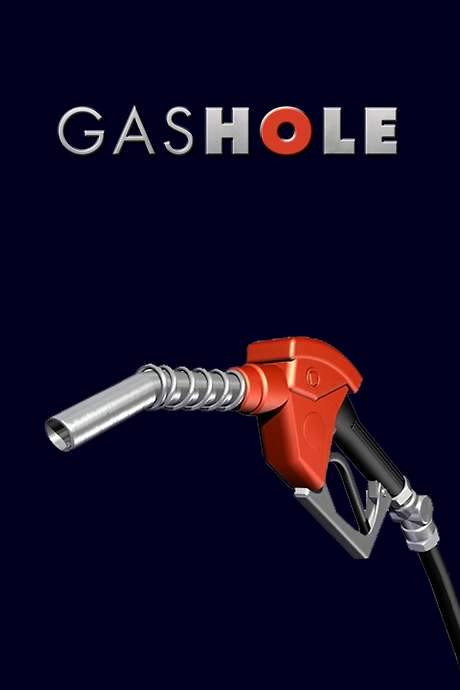



Where to Watch GasHole
See current US streaming, rental, and purchase options for GasHole (2010) via JustWatch.

Fawesome
HD
Hoopla
SD
YOW.tv
HD
Cineverse
HD
Pluto TV
SD
Tubi TV
SD
Amazon Video
SD Streaming availability powered by 
GasHole Plot Summary
Read the complete plot summary and ending explained for GasHole (2010). From turning points to emotional moments, uncover what really happened and why it matters.
The film opens with a series of archival clips featuring U.S. presidents discussing the need to reduce dependence on foreign oil, tracing a long-running national debate from the Nixon era to the presidency of George W. Bush. Narration guides these moments with a steady, documentary tone courtesy of Peter Gallagher, establishing a calm but pointed frame for the stories that follow. The screen moves between speeches and quiet analysis, painting energy policy as a battleground where political power, corporate interests, and public concern continually collide.
A notable early thread centers on a controversial, almost mythical-sounding claim: a “water-injected” 1946 Buick Roadmaster that allegedly reached 100 miles per gallon. The film describes the technique as humidifying the gasoline and increasing pressure to squeeze extra mileage, then notes that Shell Oil reportedly kept questions about the idea buried. It extends the discussion with reference to a 1977 Shell scientists’ book, Fuel Economy of the Gas Engine, which supposedly records 150 miles per gallon in a 1947 Studebaker. The narrative also recalls a May 1, 1977 El Paso Times front-page story entitled “200 Miles on 2 Gallons of Gas,” centered on Tom Ogle, who was later found dead in the desert and whose car disappeared. Throughout this thread, the documentary makes no effort to verify the authenticity of the water-injected engine or the other asserted facts, leaving the veracity of these claims unresolved and open to interpretation.
In the wake of Hurricane Katrina, the film moves to the intensive energy hearings that followed, where both the Senate and the House examined the sudden rise in gasoline prices, the first time they had topped three dollars a gallon. A congressman questions whether oil companies might be taking advantage of the situation, and a committee chairman is shown deciding not to compel the CEOs of those companies to testify under oath. Senator Gordon H. Smith observes that Gulf crude isn’t used on the West Coast, even as prices spike there. The documentary cites a November 10, 2005 Chevron statement warning that if refining capacity does not rise, substantial gains in refining margins will remain unlikely. Representative Nancy Pelosi argues that Shell’s claims about a California refinery—one that Shell says has no buyers—are misleading, pointing to the refinery’s profitability and its importance to state supply. The film thus situates the price surge within a web of industry strategy and political rhetoric.
As the narrative unfolds into 2006, the House Energy Committee meeting on May 11 reveals further tension between the oil industry and public policy. Representative Anna Eshoo asks why ExxonMobil would pursue new investment profits if the U.S. isn’t building more domestically, and Joe Barton, then the committee’s chairman, counters that it would be a low blow to weaponize what ExxonMobil has said against them. He adds a blunt stance about priorities, signaling that on his watch, some issues—like global warming—are no longer on the table. Throughout these exchanges, the film reminds viewers of the political calculus at play, including the broader pattern of industry donations: since 1990, oil companies have contributed roughly $49 million to Democrats and about $150 million to Republicans, while prices climbed steadily—rising from about $1.47 per gallon in 2001 to around $3.12 by mid-2007. The documentary notes the orbit of influence surrounding the debate and raises questions about the alignment between presidential power, congressional action, and the oil industry’s interests.
The documentary also foregrounds the presence of contemporary figures through archive footage, including Joshua Jackson and Barbara Boxer, while continuing to weave in commentary from various actors and policymakers whose voices punctuate the larger narrative about energy, policy, and accountability. The film’s portraits of these individuals—along with the repeated reference points to presidential statements and industry assertions—build a portrait of a complex system in which data, rhetoric, and power continually interact.
Overall, the film presents a thoughtful, sometimes provocative investigation into how the U.S. navigates energy security, corporate influence, and political decision-making. It situates the rise in gasoline prices within a broader conversation about refining capacity, profitability, and public trust, inviting viewers to consider how history, industry claims, and political maneuvers shape the country’s relationship with oil. The result is a long, carefully structured exploration that remains faithful to the core events and tensions it chronicles, without overreaching beyond what the documentary presents.
GasHole Timeline
Follow the complete movie timeline of GasHole (2010) with every major event in chronological order. Great for understanding complex plots and story progression.
Opening archival energy policy debate
The film opens with a sequence of archival clips of U.S. presidents discussing the need to reduce dependence on foreign oil. Narration maintains a calm, documentary tone as it frames energy policy as a constant, national battleground. The events span from the Nixon era into the George W. Bush years, underscoring the long-running tension between power, policy, and public concern.
Water-injected engine claim introduced
A controversial, almost mythical claim appears: a water-injected 1946 Buick Roadmaster allegedly reached 100 mpg. The documentary describes the supposed technique of humidifying gasoline and increasing pressure to squeeze extra mileage, and it notes that Shell Oil reportedly did not address or verify the idea.
Shell book reference to extreme fuel economy
The film cites a 1977 Shell scientists' book, Fuel Economy of the Gas Engine, which allegedly records 150 mpg in a 1947 Studebaker. The reference is presented as part of a broader pattern of extraordinary fuel economy claims that remain unverified in the narrative.
El Paso Times Tom Ogle story
A May 1, 1977 El Paso Times front-page story titled '200 Miles on 2 Gallons of Gas' centers on Tom Ogle, who was later found dead in the desert and whose car disappeared. The segment connects the sensational story to larger questions about fuel efficiency and industry interest, leaving the veracity of the claims unresolved.
Post-Katrina energy hearings begin
In the wake of Hurricane Katrina, energy hearings intensify as the Senate and House examine the sudden rise in gasoline prices. Lawmakers probe potential industry leverage, while early decisions set the tone for how much testimony would be compelled and how accountability would be framed.
Inquiry into testimony from oil executives
A congressman questions whether oil companies might be profiting from the price surge, while a committee chairman ultimately decides not to compel the CEOs to testify under oath. The exchange highlights tensions between policy objectives and industry power.
Gulf crude supply noted as prices spike
Senator Gordon H. Smith observes that Gulf crude is not used on the West Coast, even as prices rise elsewhere. The remark illustrates regional supply complexities and the way politics shapes perceptions of availability.
Chevron warns on refining capacity
A November 10, 2005 Chevron statement warns that without rising refining capacity, substantial gains in refining margins will remain unlikely. The claim ties profitability to physical capacity expansion and frames policy debates around infrastructure limits.
Pelosi challenges Shell's refinery claim
Representative Nancy Pelosi argues that Shell's claims about a California refinery with no buyers are misleading, pointing to its profitability and importance to state supply. The segment frames the refinery discussion as part of the broader narrative on transparency and market power.
May 11, 2006 House Energy Committee hearing
In the 2006 hearing, Representative Anna Eshoo questions why ExxonMobil would pursue new investment profits if the United States is not building more domestically, and Joe Barton counters that it would be a low blow to weaponize what Exxon has said against them. The exchange underscores partisan and strategic tensions over energy investment and policy priorities.
Oil industry donations linked to policy
The film recalls the political influence surrounding energy policy: since 1990, oil companies have donated roughly $49 million to Democrats and about $150 million to Republicans, a pattern the documentary uses to illustrate how money shapes decision-making as prices rise.
Gas price trajectory from 2001 to 2007
The documentary notes a steep price rise from about $1.47 per gallon in 2001 to around $3.12 by mid-2007, highlighting the economic stakes of energy policy and industry actions. The trend is presented as a barometer of market forces shaping consumer experience and policy responses.
Archive footage and contemporary voices
Throughout the film, archive footage introduces contemporary figures such as Joshua Jackson and Barbara Boxer, weaving a chorus of voices into the larger discourse on energy, policy, and accountability. Their appearances help to illustrate how politics and public figures intersect with energy debates.
GasHole Characters
Explore all characters from GasHole (2010). Get detailed profiles with their roles, arcs, and key relationships explained.
Peter Gallagher as Narrator
The film’s steady, documentary narrator guides the audience through a layered exploration of energy policy. His calm, pointed tone underscores how truth, fear, and power intertwine in public debates. He ties together archival footage and contemporary commentary to frame the issues.
George W. Bush as Self (archive footage)
Former president whose statements frame the national energy debate across decades. The archival clips place him within the policy dialogue that the film scrutinizes.
Joshua Jackson as Self
A contemporary figure in the film who provides commentary, illustrating public interest and media engagement with energy policy.
Barbara Boxer as Self (archive footage)
Senator who appears via archival footage, representing congressional scrutiny and public policy concerns about energy and transparency.
Joe Barton as Self (archive footage)
Representative who frames the congressional discussions and energy committee dynamics during hearings, reflecting political positioning on energy policy.
GasHole Settings
Learn where and when GasHole (2010) takes place. Explore the film’s settings, era, and how they shape the narrative.
Time period
1960s–2000s
The film traces several decades, beginning in the late 1960s with the early debates over energy independence and national policy. It then moves through the Katrina era and into the mid-2000s, linking price spikes to congressional hearings and refinery capacity concerns. The timeline shows how policy, politics, and industry narratives interact across these years.
Location
El Paso, Washington D.C., Gulf Coast, California
The film threads events across El Paso, Washington D.C., Gulf Coast, and California, weaving local incidents into a national energy narrative. It opens with an El Paso Times piece about a mythical mileage claim, illustrating how sensational stories feed policy debates. In Washington D.C., congressional hearings frame the discussion on refining capacity, prices, and corporate influence. The Gulf Coast and California are shown as critical regions for crude supply and refinery capacity, shaping the broader debate.
GasHole Themes
Discover the main themes in GasHole (2010). Analyze the deeper meanings, emotional layers, and social commentary behind the film.
⚖️
Policy Power
The film frames energy policy as a battleground where political power, corporate interests, and public concern collide. Archival speeches and committee footage illustrate how leverage and rhetoric shape policy outcomes. The narrative shows a pattern where donations and lobbying influence decisions more than straightforward technical solutions. It highlights how governance, money, and messaging intertwine to steer energy strategy.
🔎
Myth
The water-injected engine legends and other mileage claims are presented as tantalizing rumors rather than verified facts. The documentary records these claims without firm verification, inviting interpretation and skepticism. It demonstrates how media amplification can elevate anecdotal stories into quasi-facts that sway public opinion. By leaving truth unsettled, it challenges viewers to scrutinize sources and seek corroboration.
🛢️
Oil Politics
The documentary highlights how oil industry profits intersect with public policy, creating a cycle of influence. It notes the substantial political donations from oil companies and how that money can color legislative priorities. Refining capacity, price fluctuations, and corporate messaging are shown as intertwined with policy outcomes. The narrative suggests energy security depends on balancing profitability with public needs, not just technical fixes.
👀
Public Scrutiny
Katrina-era hearings reveal how the public is invited to scrutinize pricing, refineries, and access to information. The film shows lawmakers demanding accountability, while the interplay between policy decisions and industry narratives is laid bare. It emphasizes corporate transparency and the watchdog role of the media and public. Ultimately, public trust hinges on credible data, clear rhetoric, and responsible leadership.

Coming soon on iOS and Android
The Plot Explained Mobile App
From blockbusters to hidden gems — dive into movie stories anytime, anywhere. Save your favorites, discover plots faster, and never miss a twist again.
Sign up to be the first to know when we launch. Your email stays private — always.
Explore the mobile appGasHole Spoiler-Free Summary
Discover the spoiler-free summary of GasHole (2010). Get a concise overview without any spoilers.
In a sweeping documentary that treats the nation’s relationship with oil as a living history, the film opens on a tapestry of archival footage—from Nixon’s uneasy pronouncements to George W. Bush’s calls for energy independence. The premise is simple yet expansive: trace the arc that turned the United States from a leading exporter into the world’s biggest importer, while hinting at the promise of alternative fuels. The tone is methodical and reflective, inviting viewers to sit at the intersection of policy, economics, and public concern without ever rushing to a conclusion.
Guiding the experience is a steady, resonant narration by Peter Gallagher, whose calm delivery frames each era like a thoughtful lecture. His voice weaves together presidential speeches, congressional hearings, and industry statements, creating a rhythm that feels both scholarly and urgent. The documentary’s style relies on juxtaposing official rhetoric with whispered doubts, letting the audience sense the tension between declared goals and the underlying forces that shape them.
Interspersed throughout are glimpses of contemporary figures who animate the debate. Archival clips feature Joshua Jackson and Barbara Boxer, while policymakers such as Joe Barton, Anna Eshoo, Nancy Pelosi, and Gordon H. Smith appear in moments that underscore the partisan and corporate dimensions of the energy conversation. Their presence is less about individual drama and more about illustrating the broad coalition of voices that have, over decades, vied to steer the nation’s fuel strategy.
The film’s atmosphere is investigative yet restrained, blending sober analysis with a quiet provocation that asks viewers to question how history, money, and power converge around the humble gasoline pump. By focusing on the systemic patterns rather than isolated incidents, it creates a space for curiosity—leaving the audience eager to explore the deeper currents that continue to shape America’s energy future.
Featured on this page

What's After the Movie?
Not sure whether to stay after the credits? Find out!
Check out our other apps:

SAT Sphere
Build confidence for the Digital SAT.

Mori Atlas
Discover wild places worth protecting.

Luntero
Search smarter for a home in Amsterdam.

Plot Explained
Unravel movie endings and hidden clues.

Pokechamp
Dive into Pokémon data and battle logic.

Driving Theory
Get ready for your European theory test.

Movie Dust
Plan your next cinema trip with ease.

Musemap
Find art and culture as you travel.

Selkobase
Compare credentials before committing.

Local Manual
Turn an unfamiliar country into practical next steps.

Lernavi
Compare school systems before your next move.

GymRoam
Find a workout stop wherever your plans take you.
Explore Our Movie Platform
New Movie Releases (2026)
Famous Movie Actors
Top Film Production Studios
Movie Plot Summaries & Endings
Major Movie Awards & Winners
Best Concert Films & Music Documentaries
Movie Collections and Curated Lists
© 2026 What's After the Movie. All rights reserved.
Privacy Policy