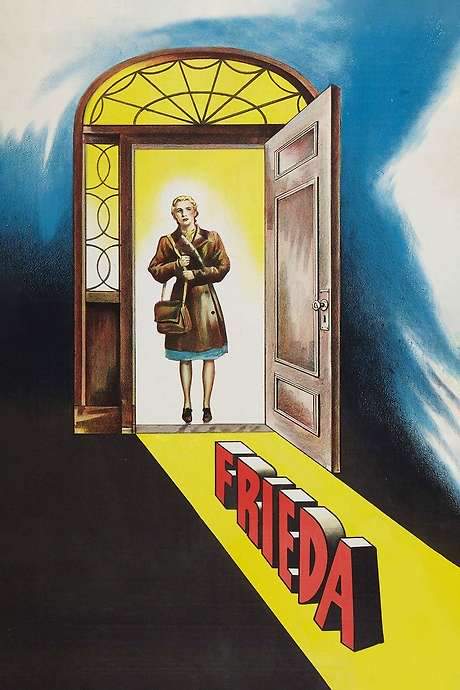
Frieda 1947

Directed by
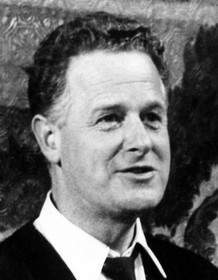
Basil Dearden
Made by

Ealing Studios
Frieda Plot Summary
Read the complete plot summary and ending explained for Frieda (1947). From turning points to emotional moments, uncover what really happened and why it matters.
Frieda is a German woman who helps English airman Robert Dawson escape from a German prisoner-of-war camp as the Second World War nears its end. She loves him; he is grateful to her. In a fragile moment forged by danger and hope, a church that sits right on the line between the Russian and German territories becomes the unlikely setting for a grimly practical union: he marries her so she can obtain a British passport. The act is not born of romance alone, but of necessity, a bid to secure a future together in a world still torn by conflict and shifting loyalties. They then travel to his Oxfordshire home, stepping into a quiet, sun-dappled countryside that will soon test the very meaning of home, loyalty, and belonging.
There, Frieda enters a tense, intimate crucible of family life. She meets Nell Dawson, the mother figure in the household, along with a lively mix of relatives and neighbors who populate the town’s daily rhythms: his small stepbrother Tony, the even-tempered beauty Judy Dawson who is also the widow of Robert’s brother, and Aunt Eleanor, a sharp, outspoken voice in local politics whose anti-German stance runs deep. The initial welcome is far from warm. The townspeople are suspicious, and the simple, ordinary routines of life—teaching, farming, and community gatherings—become uneasy stages for fear, misunderstanding, and whispered judgments. Robert, for his part, feels the weight of his past as a teacher slip away as he adjusts to a farming life with Frieda, trading classroom certainty for a different kind of labor and a new rhythm of days.
Over time, the ice in the town begins to melt. Frieda’s presence is slowly accepted, even as Aunt Eleanor remains wary and distant. The bond between Frieda and Judy grows in a way that neither Robert nor anyone else fully anticipates; Judy, though she keeps her own hidden feelings for Robert, offers a quiet, steadfast friendship that becomes a counterpoint to the town’s frayed nerves. With the farm becoming their shared space, the couple discovers a measure of peace and a renewed sense of purpose. Robert starts to shed the heaviness of his wartime memories as he looks at Frieda not through the lens of her country of origin but through the everyday human choices that bind people together—food, work, care, and companionship. Yet the shadow of the war and its brutal history never полностью disappears from view, and a screening of a film about the Bergen-Belsen horrors unsettles Frieda deeply, reminding them all of the cruelty that once defined her homeland and forcing them to confront the fear that history could fracture what they have built.
Into this fragile equilibrium arrives Richard, Frieda’s brother, a man who has lived away from his sister’s world and who appears with a complex, unsettling history. Richard is, at first, welcomed with cautious relief, because his return seems like a sign of family healing. However, the truth begins to surface: he has remained a Nazi at heart, and his outward show of brotherly affection is undercut by a chilling gift—the swastika on a chain that he gives Frieda as a wedding present. The revelation lands like a physical blow, and in a crowded pub the atmosphere sharpens as the crowd—considered voices of conscience—denounces him as one of the guards at a concentration camp. In private, he admits to Robert the harsh truth of his past and asserts that Frieda had known and approved of his actions, an accusation that wounds both Frieda and the bond they have struggled to protect.
The confrontation marks a turning point. A rift opens between Robert and the specter of German brutality, and he begins to recoil from everything he once associated with as German or German-influenced. Frieda feels the tremor of fear that their marriage might crumble under the weight of these revelations, but she also clings to the connection they have forged through shared labor, mutual care, and a stubborn, stubborn hope. The couple’s crisis is not merely about past loyalties; it is a test of their capacity to redefine humanity in the face of inherited hatred.
When Frieda’s fear intensifies, she makes a desperate bid to escape pain through self-harm. She survives the act, and the moment of crisis becomes the catalyst for a deeper awakening in Robert. He rushes to her side, and in the shock of seeing how close he came to losing her, he experiences a reinvigorated sense of what he has built with her and what it would mean to lose it. This near-tragic moment helps him understand that his faith in Frieda—despite the suspicion and the prejudice she has faced—was justified. The bonds of trust deepen as he confronts the ugliness of intolerance that has haunted their world.
In the emotional aftermath, Aunt Eleanor’s own long-held prejudices begin to loosen, and she recognizes that treating people as if they were less than human erodes not only others’ humanity but one’s own. The film closes on a quiet, hard-won note of reconciliation and resilience—an acknowledgment that compassion and perseverance can translate into a more humane understanding of others, even when history has left scars that seem too deep to heal. As the community slowly redefines what it means to belong, the story lingers on the enduring truth that love and empathy can bridge divides that once felt insurmountable.
You cannot treat human beings as though they were less than human—without becoming less than human yourself.
Frieda Timeline
Follow the complete movie timeline of Frieda (1947) with every major event in chronological order. Great for understanding complex plots and story progression.
Frieda helps Robert escape from the POW camp
Frieda, a German woman, helps English airman Robert escape from a German prisoner-of-war camp as the war nears its end. The escape is dangerous and fraught with risk, but Frieda's courage allows them to slip away. Robert remains grateful, setting the stage for a complicated bond that grows beyond mere gratitude.
The marriage in a church to secure a British passport
In a church skirting the front lines between Russia and Germany, Frieda and Robert marry so she can obtain a British passport. The ceremony is practical, binding them together beyond the immediate danger of the war. They embark on a future as husband and wife, despite the shadows of recent events.
Arrival in Oxfordshire and meeting the family
The couple arrives at Robert's Oxfordshire home and is introduced to his family, including his mother, his small stepbrother Tony, Judy, and Aunt Eleanor. The locals greet Frieda with hostility as memories of war linger. Robert begins adjusting his life to a quieter, domestic rhythm.
Hostility from the townspeople and Robert's job loss
Initially, the townspeople treat Frieda with bitter suspicion and Robert is forced to give up his job as a schoolteacher. The couple faces discrimination from neighbors who still judge people by their wartime origins. Over time, patient effort and small acts of openness begin to change minds.
Judy's friendship and hidden love
Judy befriends Frieda, unknowingly complicating matters because she is secretly in love with Robert. Frieda values the friendship while navigating a growing emotional tension around Robert. The love triangle adds tension but also depth to their new life.
Life on the farm and growing closeness
As Robert settles into farm work with Frieda, the heaviness of his POW years begins to lift. He begins to see Frieda in a new, fuller light and their partnership deepens beyond dependency. The couple builds a routine that slowly steadies them against lingering prejudices.
Bergen-Belsen film and tested loyalty
They watch a film dealing with the horror of Bergen-Belsen, and Frieda fears the revelation could ruin their marriage. Robert struggles to reconcile the film's truths with his feelings for Frieda. The experience tests their trust, but they cling to what they have built.
Richard returns and reveals loyalty to Nazism
Frieda's brother Richard, long presumed dead, reappears as an ex-German soldier who has joined the Polish Army. He gives Frieda a swastika on a chain as a wedding present, signaling that his loyalty to Nazism remains unbroken. In a local town pub, he is denounced as a concentration camp guard.
Private confrontation and hardened beliefs
In private, Richard admits the truth of his actions and claims Frieda had known and approved. Robert's moral revolt against everything German grows; he begins to distance himself from Frieda's world. The couple's trust is strained as accusations fly.
Frieda's suicide attempt and Robert's rescue
Frieda, fearing she has lost Robert, attempts suicide. Robert arrives just in time, and the shock restores his faith in her. The crisis forces both to confront what they truly mean to each other.
Robert's renewed commitment
Robert's near-tragedy leads him to reaffirm his faith in Frieda and their relationship. He chooses to stand by her despite the prejudice that nearly overwhelmed them. The couple renews their commitment and moves forward with new understanding.
Aunt Eleanor's transformation
Aunt Eleanor, once vehemently anti-German, acknowledges that you cannot treat people as less than human without becoming less than human yourself. Her transformation signals a broader shift in the community's attitudes.
Frieda Characters
Explore all characters from Frieda (1947). Get detailed profiles with their roles, arcs, and key relationships explained.
Robert Dawson (David Farrar)
An English airman who helps Frieda escape from a German POW camp and later marries her to secure a British passport. He carries wartime hardness but gradually warms to Frieda and civilian life in Oxfordshire, learning to see her as a person rather than an enemy. His journey is a struggle between duty and compassion, culminating in a renewed sense of hope.
Frieda (Mai Zetterling)
A German woman who risks everything to aid Robert and build a life in England. She faces hostility from the community yet gradually earns acceptance as she grapples with her past and the horrors she and her countrymen have endured. Her love for Robert drives the narrative and tests the limits of loyalty and memory.
Nell Dawson (Flora Robson)
Robert’s mother, who initially faces Frieda with suspicion but grows to support her integration into the family. Her warmth and resilience help soften the town’s hostility and provide a stabilizing voice in the household. She represents a generational bridge toward acceptance.
Judy Dawson (Glynis Johns)
The widow of Robert’s brother, Judy befriends Frieda and secretly develops feelings for Robert. Her presence adds complexity to the household dynamics and highlights competing loyalties within a close-knit family. She becomes a conduit for Frieda’s acceptance into the local circle.
Richard (Albert Lieven)
Frieda’s brother, a Nazi at heart who attempts to assert his loyalty through a swastika as a wedding gift. His admission of Nazi actions triggers a crisis of trust and a confrontation that tests Frieda’s sense of self and Robert’s commitment to her. His presence intensifies the film’s meditation on guilt and atonement.
Tony Dawson (Ray Jackson)
Robert’s small stepbrother, a child whose innocence represents the future hopes of the family and community. His presence underscores the stakes of reconciliation and a peaceful postwar life for which Frieda and the others yearn. He serves as a symbol of renewal amid the scars of war.
Mrs Dawson (Barbara Everest)
Robert’s mother, a figure of family protection who navigates the tension between preserving tradition and embracing change. Her stance helps frame Frieda’s acceptance within the domestic sphere and reflects broader generational attitudes toward the war’s conclusion. She embodies a pragmatic, protective love for her son and his future.
Frieda Settings
Learn where and when Frieda (1947) takes place. Explore the film’s settings, era, and how they shape the narrative.
Time period
Late World War II (1944-1945)
The story unfolds in the final stages of World War II, when danger, loyalties, and survival dominate daily life. Personal lives are molded by occupation, escape, and the search for a safer future beyond the front lines. The narrative culminates in the immediate postwar period, as a small town confronts its biases and memories.
Location
German prisoner-of-war camp, church between the Russian-German front lines, Oxfordshire, England
The action moves from a German POW camp at the war’s end to a church set on the tense front between Russian and German lines, then to a quiet English town in Oxfordshire. These locations anchor Frieda’s peril, her clandestine marriage, and her gradual integration into a wary rural community. The English countryside becomes a backdrop for healing and the slow acceptance of a German woman by locals.
Frieda Themes
Discover the main themes in Frieda (1947). Analyze the deeper meanings, emotional layers, and social commentary behind the film.
❤️
Forbidden Love
Two people from enemy backgrounds pursue affection despite wartime hostility. Their bond challenges inherited prejudices and forces them to confront how love can transcend national enmities. The relationship is tested by suspicion, fear, and the shadow of war crimes. Ultimately, it offers a message of hope that humanity can survive even in divided times.
🕊️
Prejudice
The town’s initial hostility toward Frieda exposes how collective bias can poison communities. As Frieda and Robert build a life together, small acts of acceptance reveal the possibility of change. Aunt Eleanor’s attitudes illustrate lingering anti-German sentiment, while the story argues that empathy is crucial for reconciliation. Prejudice is shown both as a toxin and something that can be overcome.
⚔️
War Brutality
The film directly confronts the cruelty of Nazi actions and the moral scars of combat. Frieda’s brother Richard embodies fanatic loyalty, and his revelations trigger a confrontation that tests Frieda’s identity and Robert’s loyalties. The Bergen-Belsen imagery in the film within the film starkly exposes wartime horrors. Characters react differently, revealing the spectrum of responses to brutality.
🤝
Forgiveness
The story centers on choosing trust across cultural divides and the possibility of healing after trauma. Robert’s renewed faith in Frieda, despite accusations from her brother, signals a deeper human connection. Grandma-like wisdom from Eleanor underscores that empathy can triumph over prejudice. The arc culminates in a shared commitment to a future built on understanding rather than fear.

Coming soon on iOS and Android
The Plot Explained Mobile App
From blockbusters to hidden gems — dive into movie stories anytime, anywhere. Save your favorites, discover plots faster, and never miss a twist again.
Sign up to be the first to know when we launch. Your email stays private — always.
Explore the mobile appFrieda Spoiler-Free Summary
Discover the spoiler-free summary of Frieda (1947). Get a concise overview without any spoilers.
In the waning months of World II, an RAF pilot whose aircraft is downed over Germany is rescued by a courageous local woman. Years later, having survived the war’s chaos, he returns to the quiet English countryside of his childhood, bringing the woman—now his bride—back with him. The film opens on a landscape still marked by rationing, rebuilt farms, and the lingering echo of distant air raids, setting a tone that balances the tenderness of homecoming with the uneasy undercurrents of a world still trying to forget.
Robert Dawson arrives in his Oxfordshire village carrying the weight of his wartime experiences, having shifted from a classroom to the rhythms of farm life. His wife, Frieda, is a resourceful and resilient German who has learned the language of English fields and hearths, yet she carries the quiet intensity of someone who has walked the line between danger and hope. Around them, the household is populated by Nell Dawson, the matriarch whose steady presence anchors the family; Judy Dawson, a widowed sister‑in‑law whose subtle bond with Frieda adds a layer of complexity; and Aunt Eleanor, a vocal local figure whose deep‑seated distrust of Germany colors much of the village’s chatter. Their interactions hint at the fragile negotiations required when personal histories collide with communal memory.
The village itself is rendered with a soft, almost pastoral aesthetic, but beneath the sun‑dappled fields runs a current of suspicion and curiosity. Small gatherings, church services, and the everyday work of tilling and tending become stages where unspoken judgments linger, and where the simple act of sharing a meal can feel like a tentative truce. The film’s tone is contemplative, allowing moments of quiet humor and tenderness to surface amid the broader questions of belonging, loyalty, and the possibility of redemption after conflict.
As the newlyweds settle into this close‑knit community, the story explores how love and empathy can begin to bridge the divides forged by war. The audience is invited to feel the tension between hope and doubt, watching the characters navigate the delicate balance between honoring the past and forging a shared future, all while the countryside itself seems to breathe with both old scars and new possibilities.
Movies with Similar Twists and Themes
Uncover films that echo the narrative beats, emotional arcs, or dramatic twists of the one you're exploring. These recommendations are handpicked based on story depth, thematic resonance, and spoiler-worthy moments — perfect for fans who crave more of the same intrigue.






Featured on this page

What's After the Movie?
Not sure whether to stay after the credits? Find out!
Check out our other apps:

SAT Sphere
Build confidence for the Digital SAT.

Mori Atlas
Discover wild places worth protecting.

Luntero
Search smarter for a home in Amsterdam.

Plot Explained
Unravel movie endings and hidden clues.

Pokechamp
Dive into Pokémon data and battle logic.

Driving Theory
Get ready for your European theory test.

Movie Dust
Plan your next cinema trip with ease.

Musemap
Find art and culture as you travel.

Selkobase
Compare credentials before committing.

Local Manual
Turn an unfamiliar country into practical next steps.

Lernavi
Compare school systems before your next move.

GymRoam
Find a workout stop wherever your plans take you.
Explore Our Movie Platform
New Movie Releases (2026)
Famous Movie Actors
Top Film Production Studios
Movie Plot Summaries & Endings
Major Movie Awards & Winners
Best Concert Films & Music Documentaries
Movie Collections and Curated Lists
© 2026 What's After the Movie. All rights reserved.
Privacy Policy