What Is Free Solo About?
The premise of Free Solo in 362 words, with nothing given away. The full story follows below.
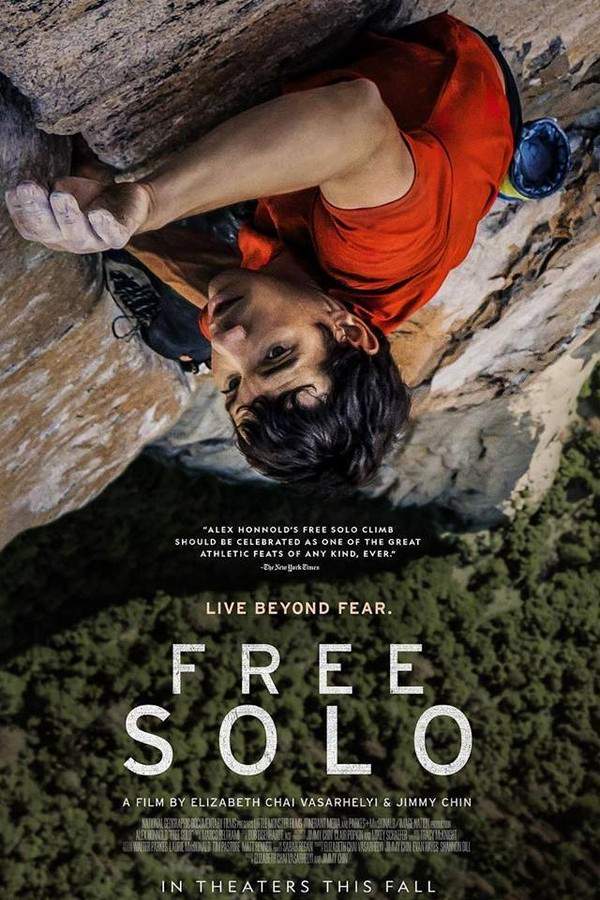
In the stark, sun‑drenched expanse of Yosemite National Park, a towering monolith of granite looms over the valley, its sheer faces both a playground and a crucible for the world’s most daring climbers. The documentary opens on this timeless landscape, inviting viewers to feel the hum of wind through the cliffs and the quiet tension that settles when a single human decides to confront the wall without rope or harness. The tone is simultaneously reverent and uneasy, capturing the raw beauty of the environment while hinting at the razor‑thin line between mastery and mortality.
At the heart of the film is Alex Honnold, a quiet, intensely focused athlete whose reputation for precision and fearlessness has already reshaped the climbing world. He lives a largely solitary life, moving between the solitude of his van and the vast open sky above the rock. The camera lingers on his meticulous routines, his meditative moments, and the almost clinical way he studies the route, offering a portrait of a mind that seems tuned out of ordinary panic. His inner world—marked by an unusual relationship with risk—drives the narrative forward, raising the question of how far a single individual can push personal limits.
Supporting Alex are the people who orbit his ambition. Sanni McCandless, his partner, shares quiet evenings and subtle encouragement, while seasoned climber Tommy Caldwell provides guidance and camaraderie forged on countless ascents. The film crew, led by Jimmy Chin, wrestles with an ethical tightrope: they are there to capture an historic moment, yet each camera angle feels like a silent witness to a potential tragedy. Their presence adds a layer of reflective tension, as the act of documentation becomes part of the psychological tapestry.
The documentary’s style is immersive, using sweeping aerial shots and intimate close‑ups to match the grandeur of El Capitan with the personal stakes of the climb. Its mood oscillates between awe‑inspiring wonder and breath‑held anticipation, inviting the audience to contemplate why someone would willingly step into such peril. By focusing on the preparation, the environment, and the internal drive of its central figure, the film becomes a meditation on ambition, vulnerability, and the thin veil that separates triumph from disaster.
What Happens in Free Solo?
The complete story of Free Solo, from the first scene to the last, in 704 words (about 3 minutes). Spoilers throughout. Names in the text link to 1 cast member page.
Spoilers ahead
In this intimate portrait, Alex Honnold pursues a dream that has no historical precedent in the world of rock climbing: free-soloing the 3,000-foot granite face of El Capitan in Yosemite National Park. The target route, Freerider, was carved by Alexander Huber in 1998 and stands as a legendary big-wall challenge. Although Honnold has completed Freerider before with protection, the idea of tackling it completely unprotected becomes the film’s central heartbeat, a test of nerve, discipline, and faith in one’s own body and mind.
A shy loner by nature who has often traveled in a van and kept mostly to himself, he is occasionally joined by his girlfriend, Sanni McCandless. Their relationship adds a fragile human layer to the story, especially when a climbing ascent goes awry: while McCandless feeds his rope through a belay device on a descent, a mistake sends him tumbling and he sustains vertebral compression fractures. The incident strains their bond, and Honnold contemplates breaking up, yet they choose to stay together and keep moving forward.
Summer 2016 takes the pair beyond the usual limits as they travel to Morocco with climber Tommy Caldwell to train for the El Cap free solo. The film crew also travels along, weighing how to place cameras to capture the climb without becoming a distracting presence or inviting tragedy on screen. The ethical tension of filming a potential death becomes part of theodyssey, alongside the physical and mental demands of the ascent. In a bid to understand fear at its core, Honnold agrees to an MRI scan to study how his brain responds to danger, and the results reveal remarkably low activity in his amygdala when faced with intense stimuli.
Back home later that year, he suffers a setback on El Capitan during traditional climbing—an ankle sprain on the first section of Freerider, a massive slab known as Freeblast. Despite a swollen foot, he resumes training with determined focus, unwilling to miss his chance to make the free climb that year. Around Halloween, Honnold and McCandless join Caldwell and his family for pumpkin carving, a moment that hints at a more ordinary, domestic life still continuing alongside his extraordinary pursuit. In an interview, Honnold speaks about his upbringing, noting that his family did not hug or openly express love, and that his father struggled with forming emotional bonds.
As the team descends Freerider, Honnold walks the climb in detail, outlining the sections that scare him. He acknowledges two sections that offer distinct challenges: The Teflon Corner and The Boulder Problem, each representing tricky, high-stakes choices that could determine whether the attempt succeeds or ends badly. The crew and McCandless push for caution, while Honnold insists on not letting fear or the presence of friends watching dictate his pace or his fate. News of Swiss climber Ueli Steck’s death adds another layer of gravity, prompting reflection on risk and mortality, yet Caldwell notes that it does not substantially alter Honnold’s mindset.
Ultimately, he abandons the plan to free solo El Capitan that season, a decision underscored by concern from the film crew that the act of filming is adding pressure. Afterward, Honnold and McCandless buy a house in Las Vegas, trying to reframe life off the rock even as the dream lingers.
But the dream endures, and on June 3, 2017, he makes a renewed attempt at Freerider. McCandless leaves just before he begins, expressing her own fears in an interview, while the crew watches with nerves stretched taut. One cameraman even looks away at moments, unable to bear the spectacle. Against the odds, the climb is completed in an astonishing time of three hours and fifty-six minutes, a testament to his focus, preparation, and tolerance for danger.
In the wake of his achievement, the film closes with Honnold reflecting on what lies ahead for him personally and for the future of free solo climbing. The pursuit is not merely a physical feat but a study in risk, restraint, and the quiet, unwavering drive that propels a person to test the limits of what a human can endure. Alex Honnold stands as a singular figure whose life on the edge invites both awe and contemplation about what it means to chase a dream without a harness.
Free Solo Timeline: Every Key Event in Order
12 key events in the order they happen, from “Dream of free-soloing El Capitan” to “Post-climb reflection on future”. 9 events name a place, across 6 locations.
- 1
Dream of free-soloing El Capitan
Alex Honnold pursues the bold goal of free-soloing El Capitan's Freerider, a project that would push the limits of rock climbing since no one had attempted such a feat on a big wall without protection. Freerider is a 5.13a (7c+) route created by Alexander Huber in 1998, underscoring the extraordinary difficulty of the goal. The film establishes his solitary lifestyle and his determination to attempt the climb.
Where:Yosemite, El Capitan
- 2
Accident on descent with Sanni McCandless
During a climb with Sanni McCandless, she feeds his rope through a gri gri and makes a mistake that leads to Honnold's fall. He suffers vertebral compression fractures but survives the incident. He contemplates breaking up with McCandless, but they decide to stay together.
Where:El Capitan, Yosemite
- 3
Morocco training with Caldwell and camera setup begins
In the summer of 2016, Honnold travels to Morocco with Tommy Caldwell to train on big wall techniques ahead of El Capitan. The film crew also discusses camera placements and the ethical dilemma of documenting a potentially fatal climb. The preparation underscores the scale of the challenge and the tension around being filmed.
When:Summer 2016 Where:Morocco
- 4
MRI reveals low brain fear response
Honnold agrees to an MRI scan to study his fear response, requesting insights into how his brain handles danger. The results show minimal activity in the amygdala when faced with intense stimuli, suggesting an unusual tolerance for fear. The scientists and filmmakers react with curiosity about what this means for his climbing.
When:Summer 2016
- 5
Fall 2016 ankle sprain on Freeblast
In the fall of 2016, Honnold sprains his ankle while traditional climbing on the Freerider section Freeblast, a giant multi pitch slab. He takes only a brief break and continues training with a swollen foot to avoid missing the chance to attempt the free climb that year. The setback adds tension to the already risky plan.
When:Fall 2016 Where:El Capitan, Yosemite
- 6
Halloween with Caldwell; family dynamics
Around Halloween, Honnold, McCandless, Caldwell and Caldwell's family carve pumpkins together, a moment of ordinary life amid the climb's intense focus. In an interview, Honnold explains that his family did not hug and that love was not expressed in his childhood, because his father struggled with emotional bonds. This context sheds light on his emotional landscape.
When:Halloween 2016 Where:El Capitan area, Yosemite
- 7
Rappelling Freerider; The Teflon Corner and The Boulder Problem
Back on Freerider, Honnold and Caldwell rappel down the route and discuss two particularly tricky sections, The Teflon Corner and The Boulder Problem. Both the crew and McCandless urge abandoning the plan, while Honnold says he does not want his friends to witness him dying if he falls. The tension highlights the moral and practical dilemma of attempting such a climb while being filmed.
When:Fall 2016 Where:Freerider, El Capitan
- 8
Ueli Steck death prompts reflection
News arrives that Swiss climber Ueli Steck has died on a climb, prompting Honnold to reflect on risk and mortality. Caldwell comments that the event does not seem to affect him as much, underscoring his unusual relationship with fear. The moment adds a somber counterpoint to the mounting pressure of the solo attempt.
When:Fall 2016
- 9
Decides to attempt but aborts Freerider for the season
Ultimately, Honnold decides to attempt to free solo but abandons the effort after the slab section of Freeblast. Filmmaker Jimmy Chin worries that the filming is adding pressure and distracting him. The decision marks a temporary halt to the project for the season.
When:Fall 2016 Where:Freerider, El Capitan
- 10
Move to Las Vegas and house purchase
After shelving the solo plan, Honnold and McCandless purchase a house in Las Vegas, signaling a shift away from life on the road and the climbing-centric lifestyle. The move foreshadows a different pace while the couple continues to navigate their relationship.
When:Post-Fall 2016 Where:Las Vegas
- 11
June 3, 2017 free solo attempt resumes
On June 3, 2017, Honnold returns to attempt Freerider again. McCandless leaves just before the climb, expressing apprehension, while the film crew watches with growing nerves. He navigates the hardest parts of the route and completes the free solo climb in 3 hours and 56 minutes.
When:June 3, 2017 Where:El Capitan, Yosemite
- 12
Post-climb reflection on future
In a post climb interview, Honnold contemplates his future and the future of free solo climbing, weighing the personal costs against the pursuit of ultimate risk-taking. The film ends by situating his achievement within a broader question about fear, risk, and human limits.
When:Post-Climb 2017
Who Are the Main Characters in Free Solo?
Alex Honnold (Self): who they are and the part they play in the story. The profile links to the actor’s page.
-

Alex Honnold (Self)
Played by Alex Honnold
A shy, introspective climber dedicated to free soloing El Capitan's Freerider route. The film follows his meticulous preparation, solitary van-living lifestyle, and evolving relationship with Sanni McCandless. Despite his quiet demeanor, he confronts fear head-on, testing human limits while wrestling with the possibility of death. His brain’s muted fear response, revealed by MRI, underpins a unique mix of calm and focus during ascent.
- 🧭 Introverted
- 🧗 Risk-taker
- 🧠 Analytical
Where and When Is Free Solo Set?
Free Solo is set in Yosemite National Park, Morocco and Las Vegas (2016–2017). Here is why the time and place matter to the story.
When
2016–2017
The events span the mid-2010s, beginning in the summer of 2016 and culminating in 2017. The setting moves from remote cliffs to urban domestic life, reflecting a period of modern documentary filmmaking around extreme sport. The timeline emphasizes the preparation, risk, and eventual record-breaking free solo on El Capitan.
Where
Yosemite National Park, Morocco, Las Vegas
The film centers on El Capitan's granite walls in Yosemite National Park, a legendary arena for big-wall climbing. It also follows training climbs and travel in Morocco, which provide diverse terrain and a proving ground for Honnold's techniques. After climber life intensifies, the narrative shifts to Las Vegas as he settles into a domestic home life before the final ascent.
- 🏔️ Yosemite National Park
- 🗺️ Morocco
- 🏙️ Las Vegas
What Are the Themes of Free Solo?
4 ideas the story keeps returning to, among them Risk, Relationships and Neuroscience.
-
01
Risk
Free solo climbing embodies the pursuit of impossible feats and the boundaries of human nerve. The film calibrates fear through Honnold's calm, analytical approach and the crew's anxious vigilance. It also poses questions about what risks are worth taking when life is on the line.
-
02
Relationships
Honnold's relationship with Sanni McCandless anchors the story against the lure of danger. The couple navigates trust, worry, and distance as risk intensifies, revealing how love can both support and challenge a fearless pursuit. Family dynamics and past emotional walls also color his decisions.
-
03
Neuroscience
The MRI study of Honnold's brain suggests a diminished amygdala response to fear, highlighting a rare neurological profile. The film uses science to frame his risk tolerance as something calculable rather than reckless. This scientific lens invites viewers to rethink what drives extreme behavior.
-
04
Ethics
Documentarian presence raises questions about filming someone at risk of death. The crew contends with whether capturing a possible tragedy serves the story or amplifies danger. The tension between storytelling and safety contributes to the film's uneasy atmosphere.
What Kind of Film Is Free Solo?
Tense in tone, with steady pacing and a straightforward story, going by the plot summary.
- Tone
- Tense
- Pacing
- Steady
- Story
- Straightforward
- Intensity
- High
- Ending
- Happy
A consistently tense and awe-inspiring documentary that follows a climber's dangerous quest, creating an experience of high-stakes suspense and immense psychological pressure.
- suspenseful
- anxious
- focused
- awe-inspiring
- dangerous
- lonely
- extreme sports
- documentary
- personal achievement
- risk and reward
Content notes: extreme sports danger, risk of death.
Quiz
How well do you remember Free Solo? Test yourself on the story.