What Is Fitna About?
The premise of Fitna in 261 words, with nothing given away. The full story follows below.
Fitna is a short, confrontational documentary-style film that opens with a stark and provocative premise: to place verses from the Qur’an alongside images drawn from global unrest and violence. Created by Dutch politician Geert Wilders, the work positions itself as a cultural intervention rather than a traditional narrative, adopting the cadence of a visual essay aimed at shaking its viewer out of complacency.
The film’s tone is deliberately unsettling, built through the steady layering of religious quotations, media footage, and political rhetoric. Its visual language relies on juxtaposition, cutting between spoken sermons, newspaper headlines, and scenes from contemporary life, all bound together by a haunting musical underscore. This rhythm creates an atmosphere of mounting tension, suggesting that the issues examined extend far beyond the screen and into the everyday world of the viewer.
At its core, the film functions as a call to awareness, framing its subject matter as an ideological challenge to Western democratic values. Wilders emerges as both narrator and provocateur, urging the audience to confront what he presents as a growing cultural and political tension. Rather than offering a balanced documentary, the work embraces an unmistakable point of view, treating its viewer as someone being recruited to a particular way of seeing.
By the time its closing moments arrive, Fitna leaves little room for neutrality, insisting that the viewer reckon with the stark images and words it has assembled. The overall mood is one of urgency and warning — a polemical piece designed not to entertain, but to provoke reflection, debate, and action long after the credits roll.
What Happens in Fitna?
The complete story of Fitna, from the first scene to the last, in 1,593 words (about 7 minutes). Spoilers throughout.
Spoilers ahead
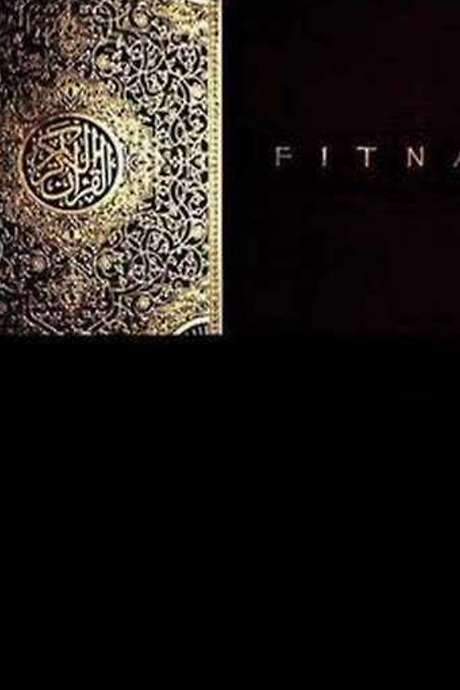
The film shows a selection of Suras from the Qur’an, interspersed with newspaper clippings and media clips with The Arabian Dance and Åses død as an underscore.
Wilders described the film as a push for a leidcultuur, a culture that “draws on Christian, Jewish, humanistic traditions and that poses a challenge to the Islamic problem”.
Suras are juxtaposed to video clips of imams stating Islamic teaching, and videos of violent atrocities committed in the name of Islam, including major terrorist attacks.
The first Sura of the film, Al-Anfal verse 60, is translated as:
Prepare for them whatever force and cavalry ye are able of gathering, to strike terror, to strike terror into the hearts of the enemies, of Allah and your enemies.
Footage of the September 11 attacks is shown, followed by the Madrid train bombings. Imam Abu Hamza al-Masri rises above the smoke and declares “Allah is happy when non-Muslims get killed.” Stills taken from the 7 July 2005 London bombings show an exploded bus and the underground train.
The next Sura, An-Nisa verse 56, is shown as a justification for Islamic antisemitism. Sheikh Bakr Al-Samarai is shown raising a sword while declaring: “If Allah permits us, O nation of Mohammed, even the stone will say O Muslim. A Jew is hiding behind me, come and cut off his head. And we shall cut off his head! By Allah, we shall cut it off! O Jews! Allahu Akbar! Jihad for the sake of Allah!” An auditorium of several hundred people respond with approving chants and fist shaking.
Following this, a three-year-old Muslim girl, says that Jews are “apes and pigs” in an interview on Iqraa TV.
Sura 47, verse 4 is shown in relation to the murder of Dutch film director Theo Van Gogh, committed by Mohammed Bouyeri. Bouyeri is reported as saying: “If I had the opportunity to get out of prison, and I had the opportunity to do it again, what I did on November 2nd, Allah I would have done exactly the same”. Protesters are shown supporting Van Gogh’s murder, warning others to heed the lesson or “pay with your blood”.
Dutch newspaper headlines are reproduced, outlining intimidating threats of murder to prominent critics of Islam, followed by footage of Eugene Armstrong’s beheading. Armstrong’s disembodied head is shown held up by Al-Qaeda terrorists.
The final Sura used in the film is Quran 8:39:
Fight them until there is no dissension, and the religion is entirely Allah’s.
President Mahmoud Ahmadinejad of Iran is quoted as saying:
The message of the [Iranian] Revolution is global, and is not restricted to a specific place or time. Have no doubt… Allah willing, Islam will conquer what? It will conquer all the mountain tops of the world.
Ibrahim Mudeiris is seen speaking to a congregation. He says: “We have ruled the world before, and by Allah, the day will come when we will rule the entire world again! The day will come when we will rule America. The day will come when we rule Britain and the entire world!” Abdul Rahman Saleem speaks in English: “You will take over the USA! You will take over the UK! You will take over Europe! You will defeat them all! You will get victory! You will take over Egypt! We trust in Allah!” Demonstrators outside the Danish embassy to Britain are shown holding signs that read: “Islam will dominate the world” and “Freedom go to hell”.
The final segment of the film deals with issues related to Islam in the Netherlands, under the heading: “The Netherlands under the spell of Islam”. These issues include opposition to democracy, Islamic views on homosexuality and women’s treatment in Islam.
An unidentified person claims that “The mosque will be part of the system of the government of Holland”, in an apparent refusal to accept liberal democracy. Wilders juxtaposes a newspaper headline “Cabinet: no ban on burqa” against a Muslim woman fully covered up. A graph illustrating the number of Muslims in the Netherlands since 1909 is shown against a background of Muslim women. Dutch police are shown removing their shoes before entering a mosque. A Dutch Muslim expresses his desire to enact an honour killing, if his mother or sister commits zina, the Islamic concept of extramarital sex. Another condemns homosexuality, saying “Islam considers something like that a crime”.
A postcard is shown, ostensibly from the Netherlands, with pictures of mosques in place of visitor attractions, with the words “Groeten uit Nederland” (“Greetings from the Netherlands”) superimposed.
Audio recordings that are said to have been taken from mosques in the Netherlands show Imams denouncing political parties, “worldly concepts like liberalism [and] democracy”. Another states that female adulterers must be “stoned” to death, even when the man commits the adultery. A graphic image of gays being hanged, under Sharia law is a depiction of a possible future dystopian Netherlands. A series of clips show female genital cutting, a woman’s disembodied head lying on a floor, and a burqa-clad woman being shot through the head by a man.
Finally, a succession of newspaper headlines are shown, containing stories related to Islam in the Netherlands, their views, actions, ambitions and politics. Some verified headlines are:
The film ends with a hand seen gripping a page of the Qur’an and a call to action from Wilders to defeat “Islamic ideology”, likening it to Communism and Nazism.
The following Suras are mentioned in Fitna in order of appearance. The translation is from Pickthall’s The Meaning of the Glorious Koran. Only the passages marked as bold are included in the quotations in the film, while the related passages are omitted.
Al-Anfal (The Spoils of War) Q8:60–61
Make ready for them all thou canst of (armed) force and of horses tethered, that thereby ye may dismay the enemy of Allah and your enemy, and others beside them whom ye know not. Allah knoweth them. Whatsoever ye spend in the way of Allah it will be repaid to you in full, and ye will not be wronged. And if they incline to peace, incline thou also to it, and trust in Allah. Lo! He, even He, is the Hearer, the Knower.
An-Nisa (The Women) Q4:56–57
Lo! Those who disbelieve Our revelations, We shall expose them to the Fire. As often as their skins are consumed We shall exchange them for fresh skins that they may taste the torment. Lo! Allah is ever Mighty, Wise.
And as for those who believe and do good works, We shall make them enter Gardens underneath which rivers flow – to dwell therein for ever; there for them are pure companions—and We shall make them enter plenteous shade.
Muhammad (Muhammad) Q47:4
Now when ye meet in battle those who disbelieve, then it is smiting of the necks until, when ye have routed them, then making fast of bonds; and afterward either grace or ransom till the war lay down its burdens. That (is the ordinance). And if Allah willed He could have punished them (without you) but (thus it is ordained) that He may try some of you by means of others. And those who are slain in the way of Allah, He rendereth not their actions vain.
An-Nisa (The Women) Q4:89–90
They long that ye should disbelieve even as they disbelieve, that ye may be upon a level (with them). So choose not friends from them till they forsake their homes in the way of Allah; if they turn back (to enmity) then take them and kill them wherever ye find them, and choose no friend nor helper from among them,
Except those who seek refuge with a people between whom and you there is a covenant, or (those who) come unto you because their hearts forbid them to make war on you or make war on their own folk. Had Allah willed He could have given them power over you so that assuredly they would have fought you. So, if they hold aloof from you and wage not war against you and offer you peace, Allah alloweth you no way against them.
Al-Anfal (The Spoils of War) Q8:38–39
Tell those who disbelieve that if they cease (from persecution of believers) that which is past will be forgiven them; but if they return (thereto) then the example of the men of old hath already gone (before them, for a warning).
And fight them until persecution is no more, and religion is all for Allah. But if they cease, then lo! Allah is Seer of what they do
The first edition used copyrighted Jyllands-Posten Muhammad cartoons without permission. These were removed from the second edition.
Also in the first edition of the film, and removed from the second edition, when referring to the murder of Theo van Gogh a picture of the Dutch rapper Salah Edin is displayed instead of the murderer Mohammed Bouyeri. The picture was shot for the rapper’s album ‘Nederlands Grootste Nachtmerrie’ (Netherlands’ Worst Nightmare), which according to the singer’s website, was shot to be ‘exactly like the mugshot of convicted killer Mohamed B’. A 2007 article by Dutch tabloid newspaper DAG had illustrated an article about the killer with the photograph. On that occasion, Salah Edin’s received an out-of-court libel settlement for the publication. The photo was said by the rapper to be intended to depict “the way the average white Dutch citizen sees me, as a young Moroccan Muslim radical. That’s why I chose to do this picture and use it for the front cover of my album. It is in no way supporting the deeds of Mohamed B.”