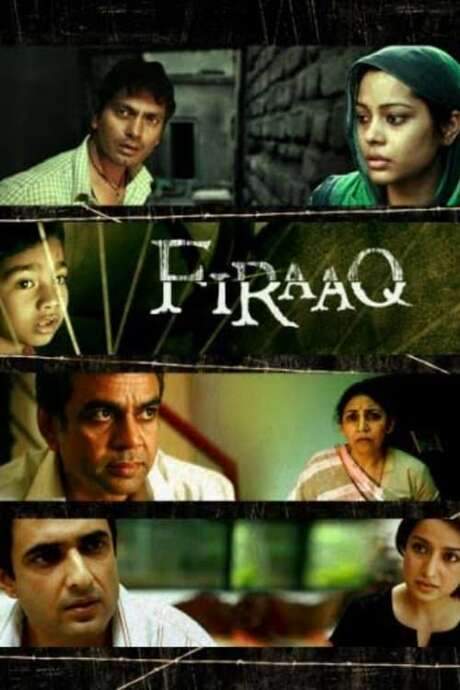
What Is Firaaq About?
The premise of Firaaq in 290 words, with nothing given away. The full story follows below.
In a city still trembling from the echoes of a recent communal storm, the film unfolds over a single, relentless day. The streets are lined with shattered shrines and whispered rumors, a backdrop that turns ordinary routines into fragile acts of survival. Within this charged atmosphere, the narrative follows a tapestry of everyday people whose lives intersect in quiet, often uneasy ways, each confronting the lingering weight of a night that has reshaped their world.
Khan Saheb, an elderly Muslim classical vocalist, clings to his music as a lantern of optimism amid the gloom, while his loyal servant Karim Mian watches the rising tension with a protective concern that challenges the old man’s gentle faith. Across town, Aarti, a middle‑aged Hindu housewife, carries a personal sting of guilt that drives her toward an uneasy path of redemption, a journey that briefly entwines with Mohsin, a young Muslim orphan searching for lost roots. Meanwhile, Muneera and her husband Hanif return to a home scarred by vandalism, navigating a neighborhood where suspicion hangs heavy and the line between neighbor and stranger blurs, a tension felt keenly by Jyoti, the Hindu resident next door.
The film also traces the quiet resolve of Sameer Shaikh, a wealthy Muslim man, and his interreligious wife Anuradha Desai, whose shared life and business have been rattled by the upheaval, prompting them to contemplate a move that could redefine their sense of belonging. Together, these characters illuminate a world where fear and compassion coexist, where ordinary choices become fraught with meaning, and where the soft notes of hope linger despite the surrounding turbulence. The tone remains intimate and observant, inviting the viewer to feel the subtle tremors of a community striving to mend the invisible fractures left behind.
What Happens in Firaaq?
The complete story of Firaaq, from the first scene to the last, in 504 words (about 2 minutes). Spoilers throughout. Names in the text link to 10 cast member pages.
Spoilers ahead
Khan Saheb is an elderly Muslim classical vocalist who clings to a quiet optimism as the city reels from the aftermath of the 2002 violence in Gujarat. His worldview is gently challenged by the harsh realities surrounding him, and the sight of a shattered shrine to the Sufi saint Wali Gujarati becomes a stark reminder of the trauma that has taken root in the community. Nearby, Karim Mian, his loyal servant, watches the tension rise and tries to warn him, yet the old man’s faith in everyday goodness holds firm even as the world around him falters.
Across the city, a middle-aged Hindu housewife, Aarti, carries the weight of guilt after a moment she perceives as a moral failing: she did not intervene when a Muslim woman was chased by a mob. Her path toward atonement unfolds as she encounters Mohsin, a Muslim orphan wandering in search of his family, crystallizing the personal shadows cast by communal violence. Aarti’s husband, Sanjay, and his brother Deven find themselves entangled in a desperate bid to shield Deven from arrest for a grave crime, attempting to bribe police to avert consequences that could fracture their fragile lives.
In a different thread, Muneera and her husband Hanif confront the aftermath of looting and arson that has left their home vandalized and their sense of safety shattered. The couple’s struggle to reassemble a sense of belonging is complicated by the neighbors’ suspicions, especially when Muneera’s perception of who to trust begins to blur. The tension between communities edges into the personal as Jyoti, a Hindu neighbor, finds it difficult to reconcile her humanity with the fear that drives her society during these days of unrest.
Another thread follows Sameer Shaikh, a wealthy Muslim man, and Anuradha Desai, his interreligious wife, whose store has been ruined by the carnage. Their decision to relocate to Delhi becomes a study in navigating identity, belonging, and safety under the weight of a world suddenly unmoored from its norms. Their story juxtaposes private affection against the public backlash that accompanies upheaval, shedding light on how personal choices can feel perilously political in times of crisis.
Through these intersecting journeys, the film lays bare the wide-reaching consequences of violence: the fractures in trust, the guilt that lingers, the instinct to protect one’s own, and the fragile glimmers of humanity that survive even when communities splinter. The characters’ inner lives—doubts, longings, regrets, and occasional sparks of hope—are laid bare with quiet, unflinching honesty. Violence touches everyone, reshaping routines, relationships, and futures in irrevocable ways, yet the story also honors the small acts of courage, compassion, and resilience that keep alive the possibility of better times.
In the end, Firaaq invites viewers to witness not a simple tale of binary good and evil, but a mosaic of ordinary people making difficult choices under extraordinary pressure. It underscores a universal truth: in a world fractured by fear and revenge, songs of hope can still be found, carried forward by those who refuse to let despair erase their humanity.
Firaaq Timeline: Every Key Event in Order
12 key events in the order they happen, from “Morning after the carnage settles over the city” to “Songs of hope cut through the chaos”. 12 events name a place, across 12 locations.
- 1
Morning after the carnage settles over the city
The city wakes to the echoes of violence from last month's riot. Streets are tense, houses damaged, and people move with caution as the day begins. The mood is heavy with fear, grief, and a fragile sense of safety.
When:Morning Where:Ahmedabad city streets
- 2
Karim Mian warns Khan Saheb
Karim Mian, the loyal servant, tries to alert Khan Saheb to the rising danger faced by the Muslim community. The elderly vocalist clings to optimism, insisting that art and faith will endure despite the chaos around them. The warning signals a clash between idealism and harsh reality.
When:Morning Where:Khan Saheb's residence
- 3
The shrine's destruction opens his eyes
Khan Saheb finally confronts the tangible consequences of the violence when he sees the ruined shrine of Sufi saint Wali Gujarati. The sight shatters his complacency and reveals the depth of communal trauma. His world begins to tilt from hopeful serenity toward uneasy concern.
When:Late morning Where:Ruins of Wali Gujarati shrine
- 4
Aarti's guilt and quest for atonement
Aarti, a middle-aged Hindu housewife, is haunted by her inaction when she did not help a Muslim woman chased by a mob. She contemplates how to atone for her sin and searches for a way to mend the broken trust. Her personal journey becomes a thread linking strangers across religious lines.
When:Morning Where:Aarti's home and nearby streets
- 5
Mohsin appears, a symbol of the wandering child
Mohsin, a Muslim orphan, wanders the city in search of his family and safety. Aarti finds him and decides to take responsibility for his welfare, initiating a fragile bond across communal divides. The encounter tests both their fears and hopes for humanity.
When:Late morning Where:City streets
- 6
Sanjay and Deven seek covert protection
Sanjay and his brother Deven attempt to bribe police officers to prevent Deven's arrest for alleged gang rape, highlighting how fear drives desperate attempts to control outcomes. The scheme underscores the erosion of law, order, and moral choices in a landscape of violence. These actions reveal how individuals improvise ethics under pressure.
When:Afternoon Where:Police station and nearby home
- 7
Muneera and Hanif return to ruin
Muneera and her husband Hanif return home only to discover their house looted and burned, their life upturned by the violence. They wrestle with loss, anger, and a sense of being unwelcome in their own city. The scene marks a turning point in their perception of safety and belonging.
When:Afternoon Where:Muslim neighborhood home
- 8
A plan for retaliation takes shape
Hanif, along with several other Muslim men, begins to search for a gun to retaliate against the violence and their own helplessness. The mood is tense and volatile as they weigh vengeance against restraint. The pursuit exposes the perilous pull of revenge in a fractured community.
When:Afternoon Where:Streets and homes
- 9
Muneera and Jyoti's wary dynamic
Muneera struggles to relate to her Hindu neighbour Jyoti in the days following the riots, suspecting Jyoti of complicity in the looting. Jyoti remains calm and tries to bridge the gap, but mutual suspicion dominates. Their uneasy interaction highlights how fear reshapes neighborly relationships.
When:Afternoon Where:Neighbourhood street
- 10
Sameer and Anuradha confront identity and exile
Sameer Shaikh and Anuradha Desai, a wealthy interreligious couple, decide to move to Delhi to escape the violence. They face conflict with Anuradha's family over expressing his Muslim identity in India. The decision exposes the fragility of belonging when kinship and faith collide.
When:Evening Where:Sameer's home and family residence
- 11
Internal conflict over belonging within the family
Sameer's dilemma about his Muslim identity stirs tension with his wife's family, who fear social repercussions. The scene shows how even within loving relationships, religious and cultural pressures can drive wedges between people. Despite the strain, love and trust persist as they navigate an impossible choice.
When:Evening Where:Home, family gathering
- 12
Songs of hope cut through the chaos
Amid the chaos, some characters find solace by singing hopeful songs about better times and peace. The music acts as a quiet beacon that reminds everyone of humanity's resilience. The closing mood suggests that hope can persist even when violence lingers.
When:Night Where:Public space or community gathering
Who Are the Main Characters in Firaaq?
11 characters, among them Khan Saheb (Naseeruddin Shah), Karim Mian (Raghubir Yadav) and Aarti (Deepti Naval): who each one is and the part they play in the story. Every profile links to the actor’s page.
-

Khan Saheb (Naseeruddin Shah)
Played by Naseeruddin Shah
An elderly Muslim classical vocalist whose quiet optimism is tested by the devastation around him. He grapples with the trauma of communal vulnerability and maintains a gentle, humane outlook as he witnesses the violence's consequences in his city.
- 🎭 Drama
- 🕌 Spiritual
- KM
Karim Mian (Raghubir Yadav)
Played by Raghubir Yadav
Khan Saheb's loyal servant who tries to warn him about rising tensions and street danger. He embodies practicality and caution, offering a grounded counterpoint to the poet's idealism as fear tightens its grip on daily life.
- 🗺️ City
- 🧭 Caution
- A(
Aarti (Deepti Naval)
Played by Deepti Naval
A Hindu housewife haunted by guilt for not helping a Muslim woman in danger. She seeks moral atonement and connection through acts of kindness to Mohsin, highlighting conscience and the possibility of redemption.
- 🧭 Guilt
- 🕊️ Hope
- M(
Mohsin (Mohammad Samad)
Played by Mohammad Samad
A Muslim orphan wandering the city in search of his family. His vulnerability underscores the human cost of violence and the longing for belonging amid chaos.
- 🧒 Innocence
- 🕊️ Hope
-

Jyoti (Amruta Subhash)
Played by Amruta Subhash
A Hindu neighbor whose trust is strained by suspicion after the carnage. Her interactions with Muneera challenge stereotypes and illustrate the fragility and potential renewal of neighborly ties.
- 👩🦰 Neighbor
- 🤝 Understanding
-

Muneera (Shahana Goswami)
Played by Shahana Goswami
A young Muslim woman who returns home to find it looted and burnt. She faces loss, resilience, and the burden of navigating communal hatred while seeking connection with her husband and husband’s circle.
- 💔 Trauma
- 🕊️ Hope
- H(
Hanif (Nawazuddin Siddiqui)
Played by Nawazuddin Siddiqui
Muneera's husband who contemplates retaliation with other men. His arc reveals how anger and fear can push towards vengeance, yet also the possibility of restraint and critical choices.
- 🔥 Anger
- 🧭 Vengeance
- SS
Sameer Shaikh (Sanjay Suri)
Played by Sanjay Suri
A wealthy Muslim whose store is burnt; he and his wife contemplate a move to Delhi to escape the violence. His struggle reflects the impact of identity and safety on personal decisions.
- 🏢 Identity
- 🗺️ Migration
- AD
Anuradha Desai (Tisca Chopra)
Played by Tisca Chopra
Sameer's Hindu wife, whose experiences of loss and cross-faith love deepen the film's exploration of belonging and acceptance. She weighs leaving Gujarat behind while confronting ingrained prejudices and expectations.
- 💔 Relationship
- 🧭 Migration
- S(
Sanjay (Paresh Rawal)
Played by Paresh Rawal
Sanjay, who tries to bribe police to shield his brother Deven from arrest for gang rape. His actions expose moral compromise and fear-driven choices under pressure.
- 💬 Corruption
- ⚖️ Justice
- D(
Deven (Dilip Joshi)
Played by Dilip Joshi
Sanjay's brother, involved in the attempted cover-up of the gang-rape, whose arrest signifies the consequences of violence and the complexities of culpability.
- 💥 Violence
- 🕊️ Regret
Where and When Is Firaaq Set?
Firaaq is set in Gujarat, India, Delhi and India (2002). Here is why the time and place matter to the story.
When
2002
The story takes place one month after the Gujarat riots, within a fragile, tense atmosphere of rebuilding and mistrust. The events unfold over a single 24-hour period, capturing fear, anger, and efforts at reconciliation among neighbors. The slice of time highlights how small acts of humanity persist amid ongoing violence.
Where
Gujarat, India, Delhi, India
Set in the aftermath of the 2002 communal violence in Gujarat, the film unfolds in a city scarred by riots. The narrative traces ordinary people navigating fear, loss, and rumors one month after the carnage. The destruction of a shrine to the Sufi saint Wali Gujarati anchors the setting, symbolizing shattered faith and resilient communities.
- 🕌 Gujarat
- 🗺️ Delhi
What Are the Themes of Firaaq?
3 ideas the story keeps returning to, among them Trauma & Healing, Interfaith Relations and Moral Dilemmas.
-
01
Trauma & Healing
The film traces how violence leaves lasting marks on individuals and communities. Characters cope with guilt, grief, and the slow process of forgiveness as memories resurface in everyday life. Music, conversations, and small gestures offer a glimmer of hope and resilience amid despair.
-
02
Interfaith Relations
Interreligious relationships and neighborly ties are tested as suspicion rises after the carnage. The film presents moments of empathy across lines of faith, alongside misunderstandings and fear. It shows how trust can be rebuilt through dialogue, shared burdens, and acts of mercy.
-
03
Moral Dilemmas
Characters confront choices under pressure that reveal their ethics and loyalties. Bribery, denial, and the impulse for revenge clash with compassion and accountability. The narrative probes how personal decisions influence communal violence and possible reconciliation.
What Kind of Film Is Firaaq?
Tense in tone, with steady pacing and a complex story, going by the plot summary.
- Tone
- Tense
- Pacing
- Steady
- Story
- Complex
- Intensity
- High
- Ending
- Ambiguous
A tense and somber drama that immerses the viewer in the oppressive aftermath of communal violence, following an ensemble of characters grappling with guilt, fear, and fragile glimmers of humanity.
- tense
- oppressive
- somber
- anxious
- grim
- hopeful
- religious violence
- communal riots
- survivor guilt
- moral conflict
Content notes: religious violence, genocide, mass graves, looting and arson, police corruption, implied rape.
Quiz
How well do you remember Firaaq? Test yourself on the story.
Where to Watch Firaaq
Stream it on Brew and Hoopla, or rent or buy it from Google Play Movies and YouTube. US availability and prices from JustWatch.
 Brew
Brew  Hoopla
  Plex
Plex  Plex Channel
  Tubi TV
  Xumo Play

Streaming availability in the US, powered by