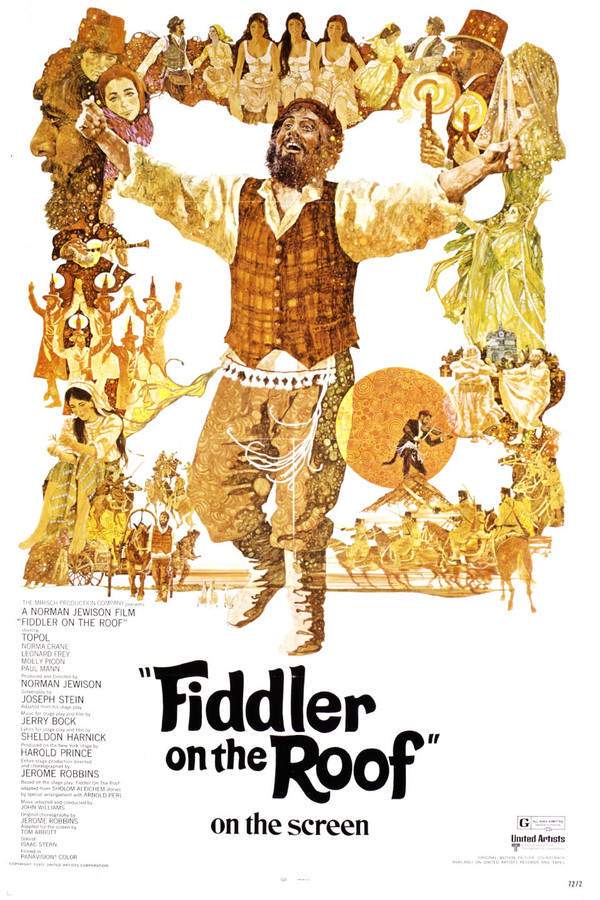
Fiddler on the Roof 1971


Directed by

Norman Jewison
Made by

United Artists
Where to Watch Fiddler on the Roof
See current US streaming, rental, and purchase options for Fiddler on the Roof (1971) via JustWatch.

fuboTV
HD
MGM Plus
HD
MGM Plus Roku Premium Channel
HD
MGM+ Amazon Channel
HD
Philo
HD
Fawesome
HD
Hoopla
SD
Kanopy
HD
Pluto TV
SD
The Roku Channel
HD
Tubi TV
SD
YouTube Free
HD
Amazon Video
HD
Apple TV Store
HD
Fandango At Home
HD
Google Play Movies
SD
YouTube
SD Streaming availability powered by 
Fiddler on the Roof Plot Summary
Read the complete plot summary and ending explained for Fiddler on the Roof (1971). From turning points to emotional moments, uncover what really happened and why it matters.
The story unfolds around Tevye, a Jewish milkman living in the quaint village of Anatevka during the oppressive reign of Tsarist Russia. Throughout the film, Tevye engages in heartfelt conversations with the audience and the heavens, sharing his thoughts and struggles. Despite his relentless labor, Tevye remains impoverished, much like the rest of the Jewish community in Anatevka, and he grapples with the daunting task of providing dowries for his five daughters.
Life in Anatevka is marked by adversity, and Tevye articulates not only the stark realities of poverty but also the pervasive dread the Jewish population experiences under the watchful eye of their non-Jewish neighbors. He eloquently conveys that Jewish existence in Russia is as fragile as a fiddler on a roof, striving to maintain a sweet melody while delicately balancing the threat of disaster. The fiddler serves as a poignant symbol throughout the film, epitomizing the constant fears and dangers facing the Jewish community.
During a visit to town, Tevye encounters Perchik, a progressive student filled with modern ideas. Tevye invites him to stay with his family in exchange for tutoring his daughters. Through Yente, the matchmaker, Tevye attempts to arrange a marriage between his eldest daughter, Tzeitel, and the wealthy butcher Lazar Wolf. However, Tzeitel’s heart belongs to Motel, the tailor, leading her to plead with Tevye to reconsider. In a sympathetic turn, Tevye swallows his pride and allows Tzeitel and Motel to wed, especially after spinning a fantastical tale about a prophetic dream warning against the marriage to Lazar.
At the wedding, spirited debates erupt among the guests regarding a woman’s right to choose her partner. In a bold move, Perchik captivates the crowd by asserting that marriage should be a choice left to the couple. His actions, including inviting Tevye’s daughter Hodel to dance, challenge societal norms, and the festivities continue with bliss until a violent mob arrives, launching a brutal pogrom against the Jewish residents.
As circumstances evolve, Perchik prepares to depart Anatevka in pursuit of revolutionary opportunities, confessing his love for Hodel and proposing marriage. Initially enraged by their decision to wed without his consent, Tevye ultimately gives in, recognizing their love. Tragically, Perchik’s fate is sealed when he is arrested in Kiev and sent to Siberia, prompting Hodel to follow him.
Meanwhile, tension rises as Tevye’s third daughter, Chava, falls for Fyedka, a young Russian. Summoning her courage, she approaches Tevye to request permission to marry him. Yet, Tevye’s adherence to tradition leads him to reject Chava’s choice, believing she would renounce her faith in marrying outside their community. Heartbroken, Chava and Fyedka elope, tying the knot in a Russian Orthodox Church, which results in Tevye disowning her when she seeks forgiveness.
In a harrowing culmination, the Jewish community is informed that the government has decreed their expulsion from Anatevka, offering only three days to vacate. Tevye, alongside his family and friends, gathers their belongings, setting sights on unfamiliar destinations like New York, Chicago, and Jerusalem. As the film draws to a close, Tevye catches sight of the fiddler once more and gestures for him to join, symbolically inviting the lingering traditions to accompany them on their uncertain journey ahead.
Fiddler on the Roof Timeline
Follow the complete movie timeline of Fiddler on the Roof (1971) with every major event in chronological order. Great for understanding complex plots and story progression.
Introduction to Tevye
Tevye, a Jewish milkman, introduces himself and his simple life in the village of Anatevka. He expresses his struggles and responsibilities towards his five daughters amid the demanding realities of life in Tsarist Russia.
Tevye's Conversations
Throughout the film, Tevye engages in thoughtful and heartfelt dialogues with the audience and the heavens. These conversations reveal his inner conflict and the weight of his duties as a father while living under oppressive circumstances.
Meeting Perchik
Tevye encounters Perchik, a progressive student who brings new ideas to Anatevka. Tevye offers him a place to stay, hoping he can tutor his daughters in exchange for room and board, marking the beginning of a significant friendship.
Tzeitel's Dilemma
Tevye attempts to arrange a traditional marriage between his eldest daughter, Tzeitel, and the wealthy butcher Lazar Wolf. However, Tzeitel reveals her love for Motel, the tailor, challenging Tevye's expectations and beliefs about marriage and love.
The Wedding and Debates
At Tzeitel and Motel's wedding, the guests engage in spirited discussions about the right to choose one's partner in marriage. Perchik boldly voices that marriage should be a mutual decision, defying societal norms and highlighting the changing landscape of relationships.
Pogrom Erupts
During the wedding celebrations, a violent mob arrives in Anatevka, leading a brutal pogrom against the Jewish community. The joyous occasion turns into chaos as guests flee in panic, marking a dark turning point for Tevye and his community.
Perchik’s Departure
After the turmoil, Perchik reveals his plans to leave Anatevka for revolutionary opportunities. He confesses his love for Hodel and proposes marriage, prompting a heated discussion with Tevye over the nature of love and parental consent.
Chava Falls in Love
Tevye's third daughter, Chava, confesses her love for Fyedka, a young Russian. She bravely asks her father's permission to marry him, but Tevye's strong adherence to tradition leads him to reject her request, causing a rift between them.
Chava's Elopement
Despite Tevye's disapproval, Chava and Fyedka elope, marrying in a Russian Orthodox Church. Tevye, feeling betrayed and heartbroken, disowns her upon her return to seek forgiveness, illustrating the harsh divide between faith and love.
Expulsion from Anatevka
The Jewish community is informed they must leave Anatevka, given only three days to vacate their homes. This decree forces Tevye and his family to confront their uncertain future, gathering their belongings in despair.
Setting off for New Destinations
As Tevye prepares to leave Anatevka, aspirations for new lives surface, with discussions of moving to New York, Chicago, or Jerusalem. This represents a painful yet hopeful transition toward new beginnings for the Jewish community.
The Fiddler's Symbolism
As the story concludes, Tevye notices the fiddler on the roof, serving as a symbol of the fragility of life and traditions. He gestures for the fiddler to join him, signifying a desire to carry these traditions forward despite the impending changes.
Fiddler on the Roof Characters
Explore all characters from Fiddler on the Roof (1971). Get detailed profiles with their roles, arcs, and key relationships explained.
Tevye
Tevye is a hardworking Jewish milkman who embodies the struggle of maintaining family and tradition amidst societal constraints. His conversations with the audience reveal his inner thoughts and dilemmas, often highlighting his humor and deep love for his family. Despite his adherence to tradition, he faces emotional challenges as his daughters seek autonomy in their choices.
Tzeitel
Tzeitel is Tevye's eldest daughter, who dreams of marrying for love rather than convenience. Her character represents the younger generation's struggle against traditional matchmaking. Her determination to pursue a life with the tailor Motel showcases her courage and desire for independence, challenging her father's beliefs.
Hodel
Hodel is Tevye's second daughter, who embodies the theme of love and sacrifice. Her relationship with Perchik, characterized by revolutionary ideals, challenges the norms of her time. Hodel's willingness to follow Perchik to Siberia illustrates her profound commitment to love, even at great personal risk.
Chava
Chava, Tevye's third daughter, represents a heart-wrenching conflict between love and tradition. Her love for Fyedka, a Russian, leads her to defy her father's expectations, highlighting the struggle of cultural identity. Chava’s choice to elope signifies her boldness, but it also results in her being disowned, emphasizing the heavy price of personal freedom.
Perchik
Perchik is a progressive student who challenges social norms, advocating for love and freedom in marriage. His character brings a modern perspective into Tevye's traditional world, representing the clash between old customs and new ideas. His fate serves as a poignant reminder of the risks associated with revolutionary beliefs.
Fiddler on the Roof Settings
Learn where and when Fiddler on the Roof (1971) takes place. Explore the film’s settings, era, and how they shape the narrative.
Time period
Tsarist Russia
The story is set during Tsarist Russia, a time marked by social unrest and oppressive regimes. Jewish communities faced severe discrimination and persecution, which often forced them into precarious living situations. This period reflects the struggles of individuals trying to preserve their culture and traditions amidst the threat of violence and dislocation.
Location
Anatevka, Kiev, New York, Chicago, Jerusalem
Anatevka is a small Jewish village in Tsarist Russia, characterized by its struggles against poverty and oppressive societal norms. It's a place where traditions linger amid fear and longing for a better life. Kiev becomes significant as the location where Perchik faces dire consequences for his revolutionary beliefs, while cities like New York, Chicago, and Jerusalem symbolize hope and new beginnings for the displaced community.
Fiddler on the Roof Themes
Discover the main themes in Fiddler on the Roof (1971). Analyze the deeper meanings, emotional layers, and social commentary behind the film.
🎻
Tradition vs Change
The theme of tradition versus change is central to Tevye's struggles as he navigates the challenges posed by modern ideas while trying to maintain his cultural heritage. Tevye's conversations with the audience and the heavens illustrate his conflict in balancing adherence to tradition with the evolving desires of his daughters. As his family faces societal shifts, the question of what it means to forge one's path becomes increasingly poignant.
💔
Love and Sacrifice
Love and sacrifice manifest through the relationships Tevye's daughters form, highlighting the difficult choices between love and familial loyalty. Characters such as Tzeitel and Hodel showcase the personal cost of following one’s heart against traditional expectations. The heart-wrenching decisions made by Chava further underscore the sacrifices faced when love confronts cultural barriers.
🕊️
Exile and Identity
Exile and identity are prominent themes as the Jewish community confronts the harsh realities of leaving Anatevka. Tevye and his family must grapple with their identity as they are forced to abandon their home and traditions. Their journey towards new destinations like New York and Jerusalem symbolizes the hope for survival and the pursuit of belonging in a new world.

Coming soon on iOS and Android
The Plot Explained Mobile App
From blockbusters to hidden gems — dive into movie stories anytime, anywhere. Save your favorites, discover plots faster, and never miss a twist again.
Sign up to be the first to know when we launch. Your email stays private — always.
Explore the mobile appFiddler on the Roof Spoiler-Free Summary
Discover the spoiler-free summary of Fiddler on the Roof (1971). Get a concise overview without any spoilers.
In the quiet, snow‑capped village of Anatevka, life revolves around the rhythms of tradition, faith, and community. The film opens with Tevye, a humble milkman whose daily toil sustains his large family while his heart wrestles with the inevitable changes sweeping his world. The setting—a close‑knit Jewish shtetl under the looming authority of Tsarist Russia—creates a backdrop where the gentle hum of everyday chores is constantly tinged with the uncertainty of an uncertain future.
Tevye’s conversations with the heavens and the audience frame the story as a lyrical meditation on the balance between preserving heritage and embracing new ideas. The tone blends the warmth of folk song with an undercurrent of melancholy, suggesting that joy and struggle coexist like a fiddle’s melody on a precarious roof. The village itself feels both intimate and fragile, a place where customs are cherished yet the winds of modernity begin to stir.
The family’s five daughters each embody a different facet of the generational shift. The eldest, Tzeitel, nurtures a quiet longing for love that challenges the expectations of arranged marriage, while the spirited Hodel watches the world beyond the village with hopeful eyes. The youngest, Chava, entertains thoughts that could bridge the gap between cultures, hinting at the possibility of stepping outside the community’s long‑held boundaries. Adding to the mix is Perchik, an educated outsider whose progressive ideas ripple through the household, and Yente, the matchmaker whose presence reminds everyone of the old ways.
Together, these characters set the stage for a story that is as much about the music of daily life as it is about the tremors that threaten to upend it. The film invites the audience to feel the pulse of a world perched on the edge of transformation, where every smile, song, and silent prayer carries the weight of both tradition and the promise of something new.
Movies with Similar Twists and Themes
Uncover films that echo the narrative beats, emotional arcs, or dramatic twists of the one you're exploring. These recommendations are handpicked based on story depth, thematic resonance, and spoiler-worthy moments — perfect for fans who crave more of the same intrigue.




Featured on this page

What's After the Movie?
Not sure whether to stay after the credits? Find out!
Check out our other apps:

SAT Sphere
Build confidence for the Digital SAT.

Mori Atlas
Discover wild places worth protecting.

Luntero
Search smarter for a home in Amsterdam.

Plot Explained
Unravel movie endings and hidden clues.

Pokechamp
Dive into Pokémon data and battle logic.

Driving Theory
Get ready for your European theory test.

Movie Dust
Plan your next cinema trip with ease.

Musemap
Find art and culture as you travel.

Selkobase
Compare credentials before committing.

Local Manual
Turn an unfamiliar country into practical next steps.

Lernavi
Compare school systems before your next move.

GymRoam
Find a workout stop wherever your plans take you.
Explore Our Movie Platform
New Movie Releases (2026)
Famous Movie Actors
Top Film Production Studios
Movie Plot Summaries & Endings
Major Movie Awards & Winners
Best Concert Films & Music Documentaries
Movie Collections and Curated Lists
© 2026 What's After the Movie. All rights reserved.
Privacy Policy