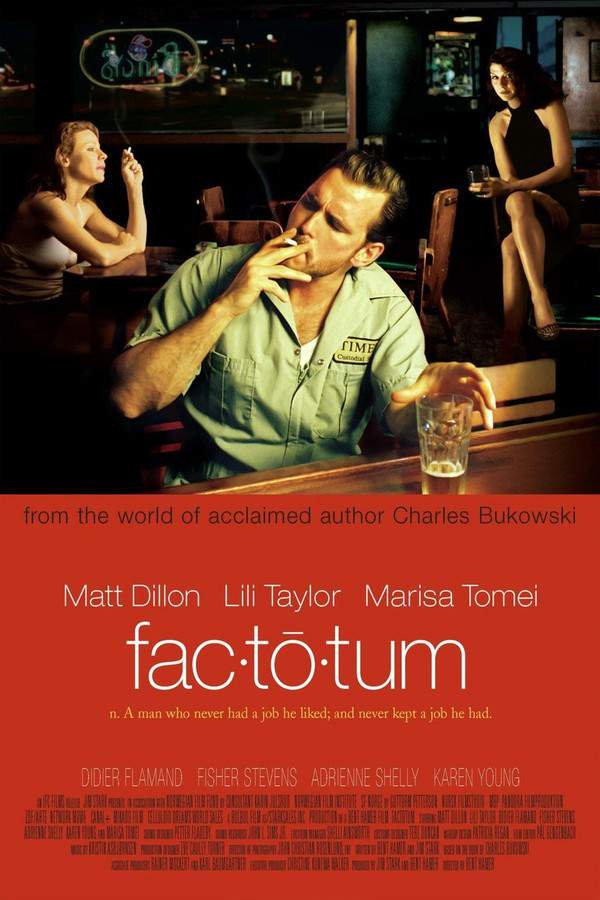
What Is Factotum About?
The premise of Factotum in 286 words, with nothing given away. The full story follows below.
In the underbelly of a restless American city, a drifter named Henry Chinaski wanders through a carousel of dead‑end jobs, each as fleeting as the next. The world he inhabits hums with the clatter of factories, the chill of warehouses, and the low‑key glow of neighborhood bars, where the line between work and escape blurs into a single, unsteady rhythm. Driven more by a yearning for purpose than by any clear direction, Chinaski leans on simple pleasures—cheap coffee, a good cigarette, and the occasional burst of creative impulse—to keep the numbness at bay, making his journey feel both gritty and oddly poetic.
Among the scattered souls he meets, Jan stands out as a kindred spirit, a fellow wanderer whose own battles with addiction mirror his own. Their connection crackles with a blend of raw honesty and volatile tenderness, offering a glimpse of intimacy that feels both fragile and fiercely alive. Later, a bar‑room encounter introduces Laura, a sympathetic presence whose own life is tangled in similar vices. Through her, Chinaski catches a brief, warm glimpse of camaraderie that contrasts with the harsher edges of his world, hinting at the complex tapestry of relationships that tether him, however tenuously, to humanity.
The film’s tone balances sardonic wit with melancholy, painting a candid portrait of a man caught between the desire to create and the pull of self‑destructive habits. Its style lingers on ordinary moments—cleaning a massive sculpture, delivering ice, sharing a drink—elevating them into meditations on freedom, failure, and the stubborn persistence of an artist’s heart. In this restless landscape, Chinaski’s voice resonates as a quiet rebellion against conformity, inviting the audience to wonder what lies beyond the next odd job and another glass of cheap whiskey.
What Happens in Factotum?
The complete story of Factotum, from the first scene to the last, in 478 words (about 2 minutes). Spoilers throughout. Names in the text link to 3 cast member pages.
Spoilers ahead
Henry “Hank” Chinaski is a writer-in-progress who grapples with alcoholism while drifting through a string of dead-end jobs. The film follows his day-to-day grind as he hops between gigs—cleaning a colossal sculpture, delivering ice, toiling in a pickle factory, and working at a bicycle supply warehouse—all the while navigating a revolving door of asocial, often volatile companions who orbit his restless life. Through these erratic shifts, Chinaski encounters a cast of eccentric, frequently alcoholic characters who illuminate the messy beauty and stubborn persistence of his creative impulse.
The first bar encounter introduces a figure who will become his most constant partner in crime: Jan. Like him, she wrestles with addiction, and their connection quickly becomes a deep, turbulent romance built on shared bottles and a wary tenderness. They move together through a haze of languid squalor, savoring moments of cheap intimacy and rough honesty. The relationship hits a jarring rupture after a volatile scene at the racetrack, when Chinaski—nurtured by Jan’s challenge to rude privilege—lands a wounding blow on a wealthy man who refuses to relinquish his seat. The act marks a turning point, and CHINASKI, bruised and emboldened, walks away from Jan.
Unemployed again, Chinaski treks for his next drink until he crosses paths with Laura, a sympathetic barfly who sees him clearly and uses her influence—through her wealthy “sugar daddy” Pierre, an unusual older man with a gilded air—to help him secure alcohol and a fleeting sense of warmth. A strange misadventure aboard Pierre’s boat adds another layer to his wandering escapades. After this episode, he briefly returns to [Jan], who has become a hotel chambermaid, a reminder that affiliation is unstable and often transactional in his world. A pivotal moment arrives when Chinaski discovers he has caught a case of the crabs from Jan, a small but sharp symbol of the costs of their lifestyle. He finds a new job soon after, yet his old habit of choosing drink over duty causes him to abandon the cleaning of a massive statue, costing him that line of work.
The pair’s cycle of breaking up resumes as they both recognize their relationship has grown predictable and hollow, a pattern they no longer rely on to define themselves. Jan ultimately moves in with the very man Chinaski once attacked, a fitting, ironic coda to their volatile dynamic. In the final moments, Chinaski sits alone with his alcohol and his writing as his true companions, a solitary affirmation of the life he’s chosen. The closing voiceover crystallizes his philosophy and the toll it exacts:
If you’re going to try, go all the way. Otherwise, don’t even start. This could mean losing girlfriends, wives, relatives, and maybe even your mind … You will be alone with the gods, and the nights will flame with fire. You will ride life straight to perfect laughter. It’s the only good fight there is.
Factotum Timeline: Every Key Event in Order
12 key events in the order they happen, from “Hank's writer dream amid a life of short-lived jobs” to “Resolution: writing and solitude endure”. 12 events name a place, across 11 locations.
- 1
Hank's writer dream amid a life of short-lived jobs
Hank Chinaski is determined to become a writer, even as he drifts through unstable, low-wage gigs and battles his alcohol addiction. The film sketches a restless quest for a vocation while he bounces from one job to the next. His days are a mix of scribbles, waiting, and the lure of the next drink.
Where:city/work sites
- 2
Bar encounter and a lasting companion: Jan
In a bar Hank meets Jan, a fellow drinker who becomes his most constant companion. They spark a rough, affectionate partnership built on alcohol and shared neglect of responsibility. The bar becomes their orbit as Hank searches for both chemistry and distraction.
Where:bar
- 3
A languid, stormy relationship with Jan
Hank and Jan fall into a settled but unstable life together, existing in languid squalor as they swap drinks and affection. They drift through a string of short jobs and nights out, never quite changing the pattern that binds them. The relationship stabilizes only in its volatility.
Where:city apartment and bars
- 4
The racing track fight that ends a chapter
During a confrontation at a racing track, Hank assaults a wealthy man after Jan challenges his behavior. The scene demonstrates his quick temper and willingness to risk consequences for pride or protection of Jan. After the incident, Hank withdraws from Jan and begins a new period of independence.
Where:racing track
- 5
Alcohol help from Laura and Pierre; a boat misadventure
Unemployed again, Hank meets Laura, who coaxes him toward more drinking with her wealthy sugar daddy Pierre. Laura and Pierre prop him up with cash and access to alcohol, pulling Hank into a bizarre ride that includes a strange boat excursion. The encounter widens Hank's circle while deepening his sense of instability.
Where:bar, Pierre's boat
- 6
Jan returns briefly as a hotel chambermaid and a health scare
Chinaski briefly reconnects with Jan, who is now working as a hotel chambermaid. He discovers he has contracted a case of crabs from her, a humiliating reminder of their tangled past. The moment tests both their boundaries and Hank's readiness to reengage.
When:brief return Where:hotel
- 7
A statue job begins and ends in failure
Hank lands another steady job but chooses drink over duty, failing to finish cleaning a massive statue. The spectacle of his defiance costs him the job and underscores a recurring pattern of work interrupted by alcohol. The incident reinforces his grim view of secure employment.
Where:statue site
- 8
Jan leaves Hank; she moves in with Pierre
Hank and Jan realize their relationship has become predictable, prompting a breakup. Jan moves in with the wealthy Pierre, the same man who previously featured in the circle of Hank's misadventures. Hank remains alone, drifting toward self-reliance and his writing.
Where:apartment and Pierre's circle
- 9
Solitary life shapes his writing ambitions
With Jan out of the picture, Hank lends into solitude as the primary content of his days. He chases moments of inspiration and writes in fits, drinking as a steady companion. The absence of a stable relationship deepens his fixation on the craft.
When:late Where:city apartment
- 10
Closing monologue on sacrifice and craft
In the final scenes Hank stands at the bar and delivers a long meditation on the costs and rewards of writing. He asserts that if you decide to pursue something, you must go all the way, even if it costs relationships. The monologue frames his commitment to the solitary, gods-haunted life of a writer.
When:final scene Where:bar
- 11
The gods, the nights, and the fight
The narrative voiceover reinforces a creed of endurance and courage, painting a life where loneliness accompanies artistic pursuit. Hank defines creativity as a fierce, uncompromising fight against dilution. The text serves as the film’s philosophical capstone.
When:end Where:voiceover
- 12
Resolution: writing and solitude endure
The film closes with Hank reconciled to a solitary existence, sustained by his writing and by alcohol as a constant companion. He accepts the costs of his chosen path while holding on to the possibility of a perfect, albeit lonely, laughter.
When:end Where:apartment
Who Are the Main Characters in Factotum?
3 characters, among them Henry 'Hank' Chinaski (Matt Dillon), Jan (Lili Taylor) and Laura (Marisa Tomei): who each one is and the part they play in the story. Every profile links to the actor’s page.
-
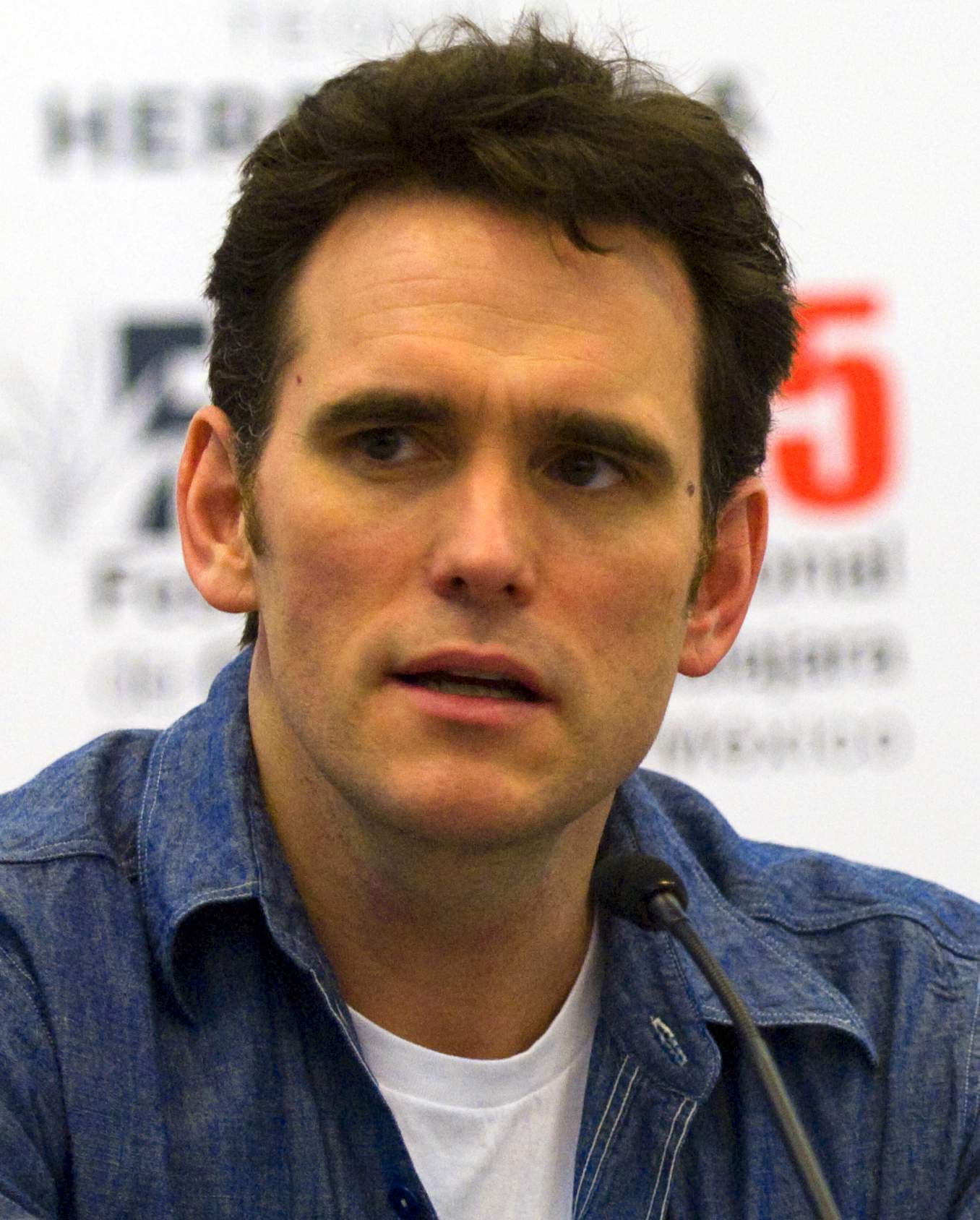
Henry 'Hank' Chinaski (Matt Dillon)
Played by Matt Dillon
A rough-edged, self-lunding aspiring writer who drifts through a string of menial jobs while battling alcoholism. He oscillates between cynical humor and measurable volatility, a man who seeks meaning in writing yet sabotages himself with drinking and impulsive violence. His relationships are transactional and fraught, revealing a core wish for connection that repeatedly falters under his addictions. Ultimately, he chooses solitude with his writing as his only stable companion.
- 🍷 Alcoholism
- 📝 Writer in progress
- 💔 Self-destructive
-
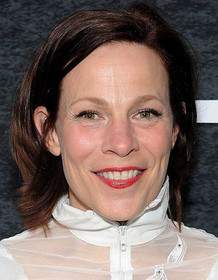
Jan (Lili Taylor)
Played by Lili Taylor
An alcoholic barfly who becomes Hank’s longest-running companion and lover. Her presence anchors Hank’s life at times, yet the relationship grows stale as both drift into predictable patterns. She embodies the cyclical nature of dependency and the lure of escapism through substances and shared misery. Her arc reflects how fragile connections dissolve when life becomes too habitual.
- 🍷 Alcoholic
- 💘 Relationship
- 🎭 Complicated
-

Laura (Marisa Tomei)
Played by Marisa Tomei
A sympathetic bar companion who helps Hank access alcohol with the aid of a wealthy, eccentric man. She represents a gentler form of companionship and a glimpse of care within a world of cynicism. Her dynamics with Hank emphasize the ambiguous boundaries between generosity and opportunism in the urban underbelly. Her presence adds a softer counterpoint to Hank’s more volatile relationships.
- 💖 Compassion
- 🍸 Bar culture
- 🤝 Ambiguity
Where and When Is Factotum Set?
Factotum is set in United States. Here is why the place matters to the story.
Where
United States
Set against an American urban backdrop, the film moves through bars, factories, hotels, and docks as Hank drifts between jobs. The locations reflect a rough, working-class landscape where a writer-to-be struggles to find stability. The settings feel intimate and transient, underscoring a life defined by routine, booze, and fleeting connections.
- 🏙️ Urban life
- 🍺 Bar culture
- 🗽 American setting
What Are the Themes of Factotum?
3 ideas the story keeps returning to, among them Alcoholism, Loneliness and Art & Ambition.
-
01
Alcoholism
Alcoholism drives the narrative and binge-driven cycles of employment and failure. Hank’s life is shaped by drinking, which sabotages opportunities and deepens his detachment from others. The film uses barroom scenes and intoxicated episodes to reveal how addiction both fuels and erodes his ambition. The struggle with sobriety (or lack thereof) becomes a lens on personal responsibility and self-destruction.
-
02
Loneliness
Beneath the social chaos, the story dwells on isolation and the ache for meaningful connection. Hank drifts from one relationship to another, turning companionship into a temporary refuge from emptiness. The recurring pattern with Jan and Laura highlights how intimacy can be paradoxically comforting and hollow. In the end, solitude appears as the only constant, even as art beckons.
-
03
Art & Ambition
The pursuit of writing stands alongside the chaotic lifestyle as the central tension. Hank clings to the idea that art could redeem his existence, even as he sabotages himself with every drink and misstep. The narrative frames writing as a demanding, solitary fight against circumstance. The climactic voiceover frames writing as the ultimate, albeit costly, vocation worth pursuing.
What Kind of Film Is Factotum?
Melancholic in tone, with steady pacing and a straightforward story, going by the plot summary.
- Tone
- Melancholic
- Pacing
- Steady
- Story
- Straightforward
- Intensity
- Medium
- Ending
- Ambiguous
A melancholic and gritty character study that follows a writer's aimless journey through dead-end jobs and unstable relationships, capturing a sense of resigned loneliness and the stubborn persistence of the creative spirit amidst squalid circumstances.
- gritty
- apathetic
- reflective
- lonely
- squalid
- wandering
- alcoholism
- creative struggle
- dead-end jobs
- turbulent romance
Content notes: alcohol abuse.
Quiz
How well do you remember Factotum? Test yourself on the story.