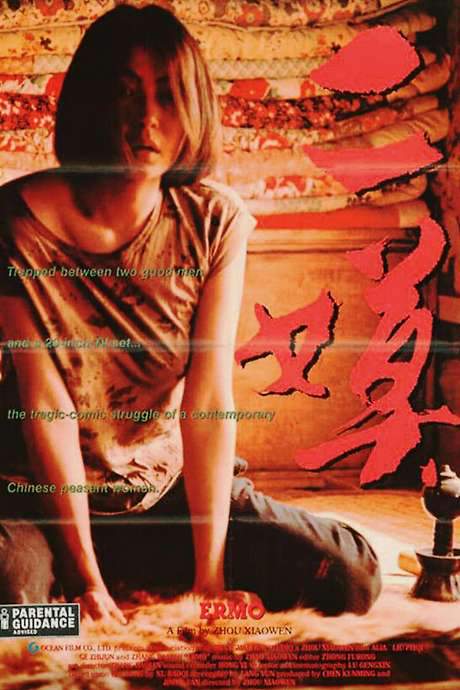
What Is Ermo About?
The premise of Ermo in 292 words, with nothing given away. The full story follows below.
In a quiet, wind‑swept village tucked into the hills of Hebei, daily life moves to the rhythm of simple trades and age‑old customs. The modest homes and open fields bear witness to a China in transition, where the promise of prosperity flickers on the edge of every conversation. A sturdy, 29‑inch television glints in a neighbor’s window, its glow hinting at a world beyond the market stalls and the distant hum of the tractor.
_ Ermo_, a diligent noodle‑maker, spends her days twisting dough into golden strands that sustain her husband and child. Though her work is steady, the quiet admiration she craves from family and friends feels just out of reach. The sight of that sleek screen ignites a fierce resolve: she will bring home the largest television the district can offer, believing that the object itself might validate her worth and place her squarely in the modern tide sweeping the countryside.
Across the lane, Xiazi, a neighbor whose entrepreneurial spirit already brushes against the new capitalist sensibility, embodies the alluring edge of ambition. His casual confidence and business‑oriented outlook contrast sharply with her husband’s more traditional, medicine‑laced ways, setting up a subtle tension that ripples through every shared glance and whispered comment. The village therefore becomes a microcosm of a broader cultural shift, where old hierarchies and emerging desires intersect in quiet, sometimes uneasy, ways.
The film’s tone is observational yet intimate, capturing the hushed murmurs of a community on the cusp of change while letting the audience feel the weight of Ermo’s quiet determination. Through careful framing and a restrained palette, the story invites viewers to contemplate how material longing can both illuminate and obscure the simple dignity of everyday labor, leaving a lingering sense of both hope and unease.
What Happens in Ermo?
The complete story of Ermo, from the first scene to the last, in 542 words (about 2 minutes). Spoilers throughout. Names in the text link to 4 cast member pages.
Spoilers ahead
Ermo, Ai Liya, is a hardworking village woman in the northern Hebei province who makes twisty noodles and sells them to support her husband and child. When her neighbor Xiazi, Liu Peiqi, buys a brand-new television, she is struck by dreams of owning one herself and feeling the pull of a life beyond her modest routine. Desperate to own the largest television in the village, she becomes increasingly obsessed with earning money, ultimately leaving the village to work in the town and even resorting to selling blood. These choices take a toll on her health and put a strain on family ties, testing patience, trust, and endurance on all sides.
The film uses Ermo’s arc to reflect sweeping changes in Chinese society during the reform era, marking a shift between those who dive headlong into a capitalist race and those who stay behind. Ermo evolves into a shrewd, business-minded figure—a capable merchant even if her enterprise is as humble as selling dry noodles—and she transforms into a consumer with big aspirations. Meanwhile, her elder husband, Chief, Ge Zhijun, clings to memories of the Mao era, drinking traditional medicine and asserting a status that once mattered in village hierarchies. The dynamic is further complicated by Xiazi’s Wife, Zhang Haiyan, who observes these shifts with a nuanced mix of concern and pragmatism. As Ermo gravitates toward Xiazi, the neighbor who embodies a lifestyle and a social circle she once believed unattainable, the story probes how ambition can sharpen focus even as it erodes intimate bonds. The film suggests that the same modern aspirations that empower one person can also render others marginal, highlighting a society in flux where participation in the “race” does not guarantee happiness or security.
Throughout the narrative, the tension between ambition and sustenance—between profit and family—drives every decision. Ermo’s pursuit of material reward is set against a backdrop of changing gender roles, shifting community loyalties, and the tension between old village authority and new economic realities. The vigor of the new marketplace is mirrored in her growing confidence and efficiency as she negotiates, saves, and plans for a future that looks brighter on the surface but demands new kinds of resilience. Yet the film is careful to show that the most confident, commercially minded characters do not automatically find lasting satisfaction; success in the new order does not come with a guarantee of fulfillment, and those who resist joining the race can feel erased or rendered invisible in a rapidly changing world.
As the story moves toward its conclusion, Ermo achieves her ultimate goal by purchasing the largest television in the district and bringing it back to the village. The act is meant to symbolize more than a mere gadget: it stands for conquest, recognition, and the culmination of years of hard work. But the triumph is tempered by the moment of reckoning that comes with such achievement. After the purchase, she is shown to be physically exhausted and emotionally drained, carrying the weight of the labor, risk, and emotional costs that led to this point. The ending leaves viewers to ponder the price of progress, the cost of aspiration, and the delicate balance between personal ambition and family welfare in a society caught between tradition and modern economic reality.
Ermo Timeline: Every Key Event in Order
12 key events in the order they happen, from “Ermo's early life and family duty” to “The toll of the journey”. 12 events name a place, across 10 locations.
- 1
Ermo's early life and family duty
Ermo, a hardworking village woman in northern Hebei, makes twisty noodles to sustain her husband and child. She keeps up long hours of labor to ensure there is always food on the table. Her world is stable yet constrained by village life.
When:early in the reform era (late 1970s) Where:Ermo's village, Hebei
- 2
Neighbor's TV sparks a dream
When a neighbor buys a brand new television, Ermo becomes consumed by the possibility of owning one herself. The shiny screen symbolizes modern aspirations beyond village life. This moment marks a shift from routine work to a personal dream.
When:early in the film Where:Neighbor's house in the village
- 3
Deciding to earn money for a bigger TV
Driven by aspiration, Ermo resolves to earn enough money for the largest TV in the district. She contemplates leaving the village to work in the town and begins planning her path. Her determination marks the start of a profound transformation.
When:mid-reform era Where:village and nearby town
- 4
Selling blood to fund the dream
To fund her ambition, Ermo leaves the village to work in the town and takes the drastic step of selling her blood. The physical toll is immediate and visible, reminding her of the price of modern dreams. The decision pushes her away from family and previous ways.
When:early in her town work Where:Town
- 5
Health and family strain
Her intense work schedule drains her health and strains her relationships with family members. The husband clings to traditional roles and grows distant as Ermo pursues money. The child watches the changes with worry as the household frays.
When:mid-reform era Where:Home village
- 6
Becoming a savvy merchant and consumer
As funds accumulate, Ermo gains confidence and becomes a shrewd merchant, while also embracing consumer culture. She admires Xiazi and the lifestyle represented by her neighbor, embracing a new economic mindset. The transformation marks a departure from her initial nurture role in the household.
When:mid-reform era Where:Town market
- 7
Husband's traditional role and village authority
Her elder husband remains rooted in the Mao-era mindset, drinking traditional medicine and clinging to his status as village head. He resents the changes and sees himself sidelined by the new world. This dynamic highlights the widening gap between old values and modern capitalism.
When:mid to late reform era Where:Village
- 8
Attraction to Xiazi and capitalist lifestyle grows
Ermo's attraction to Xiazi deepens as she witnesses a life powered by business acumen and consumer goods. The lure of capital and modern comforts competes with family obligations. This tension becomes a central emotional thread.
When:mid to late reform era Where:Town market
- 9
Satisfaction proves elusive in the race
The film suggests that even the most capable capitalists do not find lasting satisfaction. Ermo's success cannot fill deeper needs for connection and meaning. The pursuit reveals the emptiness behind rapid modernization.
When:late reform era Where:Various locations (village and town)
- 10
Approaching the big purchase
Ermo persists, culminating in the plan to buy the largest television in the district. Her persistence shapes village dynamics and signals a triumph of consumer aspiration. Yet the journey leaves her body and spirit exhausted.
When:late reform era Where:District town
- 11
Return to the village with the prize
With the massive television in hand, Ermo returns to the village, presenting the symbol of modern success. The act gleams with pride, but also shows how far she has traveled from her original life. The village witnesses the sea change in her.
When:end of film Where:Ermo's village
- 12
The toll of the journey
Despite the triumph, Ermo is mentally and physically drained by the effort she poured into the quest. The film closes on a quiet note: progress comes at a personal cost. Her family and village are left to confront the new reality of modernization.
When:end Where:Village
Who Are the Main Characters in Ermo?
5 characters, among them Ermo (Ai Liya), Xiazi (Liu Peiqi) and Chief (Ge Zhijun): who each one is and the part they play in the story. 4 of them link to the actor’s page.
- E(
Ermo (Ai Liya)
Played by Ai Liya
A hardworking village woman who runs a noodles business and becomes intensely focussed on wealth and a brand-new television. Her journey from diligent caregiver to money-driven entrepreneur drives the story and tests her health and family ties.
- 💼 Ambition
- 🧭 Change
- 🍜 Noodle trade
- X(
Xiazi (Liu Peiqi)
Played by Liu Peiqi
Ermo’s business-minded neighbor who embodies the lure of the capitalist race. His presence and lifestyle influence Ermo’s aspirations and highlight the social shifts of the reform era.
- 💼 Capitalism
- 🧭 Change
- 🧠 Ambition
- C(
Chief (Ge Zhijun)
Played by Ge Zhijun
The elder village authority figure who represents the Mao-era order and traditional leadership. His worldview contrasts with the new entrepreneurial spirit and underscores the transition happening in the village.
- 👔 Authority
- 🕰️ Tradition
- XW
Xiazi's Wife (Zhang Haiyan)
Played by Zhang Haiyan
A figure in the village social circle who embodies the new lifestyle and the social dynamics surrounding Xiazi’s influence and the changing values of the community.
- 💬 Influence
- 🧭 Social change
- EH
Ermo's Husband
Ermo’s elder husband, a symbol of the old guard who drinks traditional Chinese medicine and sees himself as a former village head. He represents resistance to reform and the personal costs of the changing times.
- 🧓 Tradition
- 🧪 Health
Where and When Is Ermo Set?
Ermo is set in Hebei Province rural village and Northern China (1980s-1990s). Here is why the time and place matter to the story.
When
1980s-1990s
Set during China's reform era, following the Mao era, roughly spanning the 1980s and 1990s. The film portrays a society transitioning from collective norms to individual entrepreneurship. It shows how fast-changing economic attitudes reshape daily life, family dynamics, and local power structures.
Where
Hebei Province rural village, Northern China
The story unfolds in a traditional rural village in Hebei Province, where Ermo runs a home-based noodle business. The village atmosphere is tight-knit and represents a fading pre-reform way of life, even as new goods and ideas begin to seep in. The arrival of consumer culture and buying power acts as a catalyst for change within this close community.
- ❄️ Rural
- 🗺️ Reform-era
- 🧭 Village Life
What Are the Themes of Ermo?
4 ideas the story keeps returning to, among them Consumerism, Change & Tension and Family Strain.
-
01
Consumerism
Ermo’s fixation on owning the largest television becomes a driving force in her life. The pursuit of material goods pushes her into risky, draining decisions, including leaving the village to work in town and even selling her blood. The TV functions as a symbol of modern status and personal identity in a changing society. Ultimately, the heavy price of consumption weighs on her health and family bonds.
-
02
Change & Tension
The film contrasts the new, money-driven mindset with the traditional village order. Capitalist-minded neighbors like Xiazi embody the allure of rapid wealth and modern lifestyles, challenging old hierarchies. As wealth becomes a yardstick for success, personal relationships and communal bonds strain under the weight of ambition. The reform era’s promises reveal both opportunity and disillusionment.
-
03
Family Strain
Ermo’s obsession disrupts her relationship with her husband and child, highlighting the costs of relentless pursuit. Her elder husband clings to traditional remedies and views himself as a former village leader, illustrating the clash between old authority and new aspirations. The family’s cohesion frays as economic ambition takes center stage, revealing the limits of love under pressure.
-
04
Reality vs Illusion
Even characters who join the capitalist race do not find lasting satisfaction, exposing a gap between dream and reality. Those who resist change can feel sidelined or irrelevant in a modernizing society. The film reinforces that material success does not guarantee inner fulfillment, as Ermo ends up exhausted despite achieving a symbolic victory.
What Kind of Film Is Ermo?
Bittersweet in tone, with steady pacing and a moderate story, going by the plot summary.
- Tone
- Bittersweet
- Pacing
- Steady
- Story
- Moderate
- Intensity
- Medium
- Ending
- Bittersweet
A steady-paced, melancholic drama that follows a woman's obsessive pursuit of status through consumerism, leaving her physically drained and emotionally conflicted despite achieving her goal.
- obsessive
- tiring
- conflicted
- melancholic
- driven
- dissatisfied
- ambition
- rural life
- consumerism
- marital strife
Content notes: self harm through overwork, extramarital affair, selling blood, impotence.