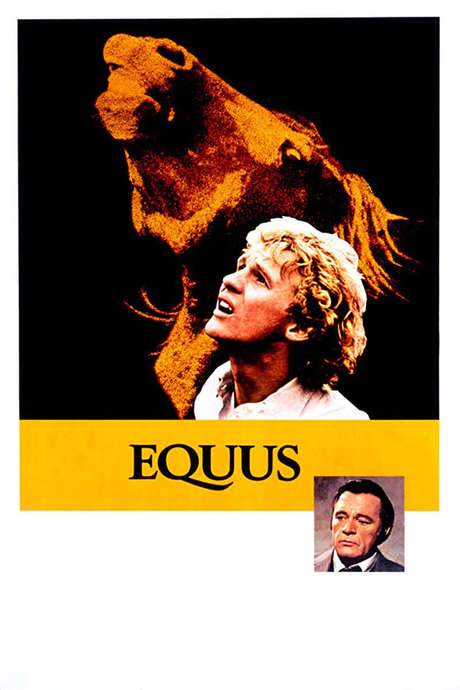
Equus 1977

Directed by
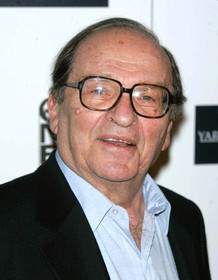
Sidney Lumet
Made by

United Artists
Equus Plot Summary
Read the complete plot summary and ending explained for Equus (1977). From turning points to emotional moments, uncover what really happened and why it matters.
Hesther Salomon, Eileen Atkins a magistrate, asks her platonic friend Martin Dysart, Richard Burton a disillusioned psychiatrist who works with disturbed teenagers at a hospital in Hampshire, England, to treat a 17-year-old stable boy named Alan Strang, Peter Firth after he blinded six horses with a sickle.
With Alan only singing TV commercial jingles, Martin goes to see the boy’s parents, Frank Strang, Colin Blakely and Dora Strang, Joan Plowright, the non-religious father and his Christian fundamentalist wife. Dora had taught her son the basics of sex and that God sees all, but the withdrawn Alan replaced his mother’s deity with a god he called Equus, incarnated in horses.
Frank Strang discloses to Martin that he witnessed Alan late at night in his room, haltered and flagellating himself, as he chanted a series of names in Biblical genealogy-fashion which culminated in the name Equus as he climaxed.
Martin begins winning the respect and confidence of Alan, who shares his earliest memory of a horse from when he was six and a man approached him on a horse named Trojan. The man took Alan up on Trojan, which the boy found thrilling, but his parents reacted negatively and injured him taking him off the horse. Martin also meets the stable manager, who reveals Alan secured his job through another employee, Jill. Devastated at the horses’ injuries she indirectly caused, Jill has taken medical leave.
Eventually, Alan admits to Martin that he would secretly take horses away from the stables at night to ride them nude, chanting prayers to Equus until he reached orgasm, after which he caressed them lovingly.
Martin envies the boy’s passionate paganism, in comparison to his own empty life, where he has ceased intimacies with his wife and is plagued by nightmares of ritualistically slaughtering children in Homer’s Greece, wearing the Mask of Agamemnon.
Given an aspirin serving as a placebo “truth drug”, Alan further reveals that one evening Jill tempted him to go to a pornographic film at a local cinema, where he was shocked to see his father, who forced him to leave. After Alan went back with Jill to the stables, she stripped and offered him sex but he was unable to perform and, although she was sympathetic, told her to leave. Naked, and tormented that Equus sees all and is a jealous god, he blinded the horses.
Martin is left troubled by the fact that he can treat Alan to take away his pain but in the process will deprive the boy of his passion, leaving him as emotionally neutered as Martin himself.
Equus Timeline
Follow the complete movie timeline of Equus (1977) with every major event in chronological order. Great for understanding complex plots and story progression.
Alan blinds six horses; Dysart is summoned to treat him
Alan Strang blinds six horses with a sickle, shocking spectators and the hospital staff. Magistrate Hesther Salomon then asks her platonic friend Martin Dysart to treat the troubled boy. Dysart accepts, sensing a chance to understand the price of healing.
Dysart meets Frank and Dora Strang
Dysart visits the Strang family home to meet Frank and Dora and to glean the family dynamics behind Alan's actions. He begins to understand how religious and secular forces shape the boy's worldview. The meeting launches the therapy process that will follow.
Dora explains her beliefs and discipline
Dora describes her Christian fundamentalist upbringing and her view that God watches all. She taught Alan basics about sex and morality, but he later replaces her with his own deity, Equus. The clash between her teachings and Alan's inner god becomes a central theme in Dysart's sessions.
Frank reveals his late night observation and ritual
Frank tells Dysart that he saw Alan late at night in his room haltered and flagellating himself while chanting a chain of Biblical names that ends with Equus. He remarks on the disturbing ritual and the impact on his son. The confession deepens Dysart's sense that Alan's passion has become dangerous.
Alan's earliest memory of Trojan
Alan recounts his earliest memory of a horse named Trojan when he was six. He recalls a man approaching on horseback and the horse speaking to him, declaring that Equus is the true name of all horses. The memory blends thrill with fear and foreshadows the boy's fixation.
Stable manager explains Jill's influence
The stable manager explains that Alan secured his job through another employee named Jill, who is currently on medical leave due to injuries she indirectly caused. The revelation hints at Jill's influence over Alan and the unstable context of the stables. Dysart begins to map the web of relationships around the boy.
Alan confesses nocturnal horse riding and Equus worship
Alan admits to secretly riding horses at night nude, chanting prayers to Equus until he reaches orgasm and then caressing them. Dysart senses a fierce pagan passion behind the boy's actions, contrasting with his own sterile life. The confession marks a turning point in the therapist's view of Alan's humanity and danger.
Dysart's envy and nightmare sequences
Dysart confesses that he envies Alan's passionate paganism and that his own life feels emotionally numb. He experiences troubling dreams of ritual slaughter in Homeric Greece while wearing the Mask of Agamemnon. The dreams blur the line between clinical distance and personal fantasy.
Cinema visit and the forbidden encounter
One evening Jill persuades Alan to attend a pornographic film at a local cinema, where he unexpectedly encounters his father and is forced to leave. The encounter exposes the collision of family authority with forbidden desire. The incident deepens Alan's sense of exposure and guilt.
Jill's sexual advance and Alan's refusal
Back at the stables, Jill removes her clothing and offers Alan sex, but he cannot perform. She is compassionate but ultimately tells him to leave, leaving him naked and humiliated. The scene crystallizes the conflict between burgeoning sexual longing and strict moral codes.
The equine act of blinding
Tormented by Equus and his own inner turmoil, Alan blinds the horses in the stable yard. The act is the culmination of his indulgence and fear, and it triggers Dysart's crisis about what healing really costs. The community is left to confront the consequences.
Dysart's dilemma about healing
Dysart is left unsettled by the possibility that curing Alan might strip away his painful passion, potentially leaving the boy—and himself—emotionally neutered. He weighs the moral cost of therapy against the harm of not healing. The film closes with a quiet meditation on what it means to truly heal.
Equus Characters
Explore all characters from Equus (1977). Get detailed profiles with their roles, arcs, and key relationships explained.
Alan Strang (Peter Firth)
A 17-year-old stable boy whose life centers on horses and a personal god named Equus. He is withdrawn and intensely imaginative, capable of deep attachment and ritualized behavior tied to his equine world. His secret devotion spills into actions that shock his family and hospital staff, revealing a conflicted, passionate interior.
Martin Dysart (Richard Burton)
A disillusioned psychiatrist working with troubled teens at a Hampshire hospital. He is drawn to Alan's fierce passion but fears therapy may strip away the boy's humanity and vitality. His own dreams of ritual haunt him, mirroring his professional detachment and longing.
Frank Strang (Colin Blakely)
Alan's father, a non-religious man who witnesses troubling events and tries to understand his son. He offers pragmatic support and reveals his own experiences behind the scenes, embodying secular paternal care.
Dora Strang (Joan Plowright)
Alan's mother, a Christian fundamentalist who taught him that sex is governed by moral boundaries and that God sees all. She embodies strict religious authority and a rigid worldview that shapes Alan's inner life.
Jill Mason (Jenny Agutter)
A stable worker who becomes a catalyst in Alan's life, opening him to adult experiences and new stimuli. She tempts him toward cinema and broader sensations, influencing the course of events.
Hesther Salomon (Eileen Atkins)
A magistrate who asks Dysart to treat Alan, framing the medical intervention within legal and ethical dimensions. Her role underscores the external pressures of responsibility and accountability in the case.
Equus Settings
Learn where and when Equus (1977) takes place. Explore the film’s settings, era, and how they shape the narrative.
Time period
Set in a contemporary late 20th-century England, the events reflect a modern medical and social landscape. Television jingles, public cinema, and hospital life ground the drama in recognizable, everyday spaces. The intimate dynamic among doctor, patient, and family unfolds against this modern backdrop.
Location
Hampshire, England, local cinema, stables
Set primarily in Hampshire, England, the narrative centers on a hospital where Dysart works and the nearby rural stables where Alan tends horses. The story moves between the institutional world of care and the intimate environments of the Strang family and the horses’ realm. A local cinema also features in Alan’s experiences, anchoring the drama in a provincial, everyday setting.
Equus Themes
Discover the main themes in Equus (1977). Analyze the deeper meanings, emotional layers, and social commentary behind the film.
🕯️
Religion
A central tension comes from Dora's strict Christian upbringing clashing with Alan's personal Equus devotion. The mother’s belief in an all-seeing God shapes Alan’s inner world and sense of morality. The Equus worship emerges as a compelling alternative to conventional faith, highlighting how belief systems can sculpt identity. The theme asks how faith, control, and guilt influence action and alienation.
💗
Sexuality
Alan's sexual awakening is depicted as powerful and destabilizing, driving his secret acts and intense bonds with horses. The story uses clandestine experiences and exposure to adult stimuli as catalysts, raising questions about innocence, desire, and societal boundaries. Dysart questions whether suppressing sexuality in the name of morality protects individuals or merely stifles them. The narrative examines how sexuality can become a source of meaning as well as conflict.
🧠
Therapy
Dysart's approach to healing clashes with the fear of eroding Alan's humanity and passion. The use of a truth drug scene underscores the ethical cost of therapy—revealing painful truths while risking a loss of vitality. The psychiatrist contends with his own emptiness and nightmares, blurring the line between healer and observer. The theme explores whether relief from pain is worth the price of emotional sterilization.
👪
Family
Frank's secular pragmatism contrasts with Dora's fundamentalist devotion, shaping Alan's world from home. The parents' dynamic imposes moral boundaries and expectations that influence his behavior and identity. The tension between care, control, and fear fuels Alan's fixation with Equus, showing how family beliefs can nurture or constrain a volatile psyche. The drama reframes personal acts within the broader pressures of family life.

Coming soon on iOS and Android
The Plot Explained Mobile App
From blockbusters to hidden gems — dive into movie stories anytime, anywhere. Save your favorites, discover plots faster, and never miss a twist again.
Sign up to be the first to know when we launch. Your email stays private — always.
Explore the mobile appEquus Spoiler-Free Summary
Discover the spoiler-free summary of Equus (1977). Get a concise overview without any spoilers.
In a quiet corner of Hampshire, a magistrate summons a disillusioned psychiatrist to confront a disturbance that rattles the town’s uneasy calm. Martin Dysart, a doctor accustomed to treating troubled youths, is asked to step beyond the sterile walls of the hospital and into the shadowed world of a rural stable where something has gone terribly wrong. The request pulls him into a case that promises both professional challenge and a glimpse of the raw, uncharted impulses that lie beneath everyday life.
The focus of his investigation is a seventeen‑year‑old stable‑hand whose outward composure masks a volatile inner landscape. Alan Strang lives under the watchful eyes of a domineering yet timid father and a devout mother, each shaping his perceptions of duty, morality, and desire. Early hints of a personal mythology tethered to the horses he tends suggest a deep, almost reverent connection that blurs the line between worship and obsession. The boy’s upbringing, steeped in religious strictness and restrained affection, leaves him navigating a labyrinth of expectations that he can barely articulate.
As Martin gains the boy’s tentative trust, he encounters the broader web of relationships that sustain the stable’s fragile equilibrium. The non‑religious father, Frank Strang, and the pious mother, Dora Strang, embody the conflicting forces that have shaped Alan’s psyche. A stable manager named Jill, whose own sorrow lingers on the periphery, adds another layer of emotional complexity, hinting at hidden currents that flow beneath the routine of daily work. The atmosphere is thick with tension, a psychological chess game set against the muted backdrop of the English countryside.
The case becomes a mirror for Martin himself, forcing him to reckon with his own stifled passions, a faltering marriage, and the stark limits of his clinical expertise. In the stark, dimly lit corridors of the mind, the film probes whether healing must come at the price of extinguishing the very fire that gives life its intensity. The tone is brooding and introspective, blending clinical observation with a haunting, almost mythic reverence for the primal forces that drive both patients and doctors alike.
Movies with Similar Twists and Themes
Uncover films that echo the narrative beats, emotional arcs, or dramatic twists of the one you're exploring. These recommendations are handpicked based on story depth, thematic resonance, and spoiler-worthy moments — perfect for fans who crave more of the same intrigue.


Featured on this page

What's After the Movie?
Not sure whether to stay after the credits? Find out!
Check out our other apps:

SAT Sphere
Build confidence for the Digital SAT.

Mori Atlas
Discover wild places worth protecting.

Luntero
Search smarter for a home in Amsterdam.

Plot Explained
Unravel movie endings and hidden clues.

Pokechamp
Dive into Pokémon data and battle logic.

Driving Theory
Get ready for your European theory test.

Movie Dust
Plan your next cinema trip with ease.

Musemap
Find art and culture as you travel.

Selkobase
Compare credentials before committing.

Local Manual
Turn an unfamiliar country into practical next steps.

Lernavi
Compare school systems before your next move.

GymRoam
Find a workout stop wherever your plans take you.
Explore Our Movie Platform
New Movie Releases (2026)
Famous Movie Actors
Top Film Production Studios
Movie Plot Summaries & Endings
Major Movie Awards & Winners
Best Concert Films & Music Documentaries
Movie Collections and Curated Lists
© 2026 What's After the Movie. All rights reserved.
Privacy Policy