What Is Elizabeth: The Golden Age About?
The premise of Elizabeth: The Golden Age in 265 words, with nothing given away. The full story follows below.
In the late‑sixteenth‑century court of England, a kingdom both splendid and precarious stands at the edge of a storm. The glitter of tapestries and the sharp clang of swords mask a Europe bruised by religious divide, while a formidable foreign power gathers its might across the sea. The atmosphere hums with whispered strategies, opulent ceremonies, and the ever‑present sense that history itself is waiting to be written—or erased.
At the heart of this turbulent tableau sits Elizabeth, the sovereign who has forged a nation’s identity without a king beside her. Her throne is a throne of iron will, yet beneath the crown lies a private yearning for companionship and a relentless pressure to secure an heir. Into this world arrives Walter Raleigh, a charismatic explorer whose tales of distant lands and exotic treasures stir both admiration and forbidden desire. Guiding the monarch’s hand from the shadows is Francis Walsingham, a shrewd confidant whose loyalty is as unyielding as the secrets he protects, adding a layer of intrigue to every council meeting.
The film unfolds with a lush visual palette—lavish courts, storm‑tossed seas, and the stark contrast between regal ceremony and the raw edge of impending conflict. Its tone blends the grandeur of empire‑building with the intimate turbulence of a ruler torn between duty and heart. As diplomatic overtures turn to silent threats and the horizon darkens with the promise of a formidable fleet, the audience is drawn into a world where personal sacrifice and national survival are inexorably bound, leaving a lingering question of how far one will go to protect both crown and self.
What Happens in Elizabeth: The Golden Age?
The complete story of Elizabeth: The Golden Age, from the first scene to the last, in 613 words (about 3 minutes). Spoilers throughout. Names in the text link to 3 cast member pages.
Spoilers ahead
In the year 1585, Spain, under the rule of King Philip II (Jordi Molla), stands as Europe’s most formidable power. Viewing Protestant England as a daunting threat, Philip seeks to retaliate against the English for their piracy, culminating in his ambition to conquer England and place his daughter Isabella on the throne, thereby replacing Elizabeth (Cate Blanchett).
In England, Queen Elizabeth faces immense pressure to marry, particularly from her advisor Sir Francis Walsingham (Geoffrey Rush). As time passes and without an heir, the throne risks passing to her cousin, Mary, Queen of Scots (Samantha Morton). Presented with portraits of suitable suitors, Elizabeth, however, remains steadfast in her refusal, even dismissing the advances of the infatuated Archduke Charles of Austria (Christian Brassington).
The narrative changes with the arrival of Walter Raleigh (Clive Owen), who returns from his exploits in the New World. He brings gifts of potatoes, tobacco, and gold from Spanish ships—claiming they were lost at sea. Although the Spanish ambassador raises objections, Elizabeth insists that the Native Americans be treated honorably, disregarding the gold entirely.
Awed by Raleigh’s tales of adventure, Elizabeth finds herself attracted to him, subsequently entrusting her lady-in-waiting, Elizabeth Throckmorton (Abbie Cornish), affectionately known as Bess, to observe him closely. Bess is similarly captivated and secretly enters into a romance with Raleigh. Seeking counsel, Elizabeth consults her astrologer, Dr. John Dee (David Threlfall), who ominously predicts an impending war between empires without revealing the victor.
Simultaneously, Jesuits in London conspire with Philip to eliminate Elizabeth in what is deemed “The English Enterprise”—historically recognized as the Babington Plot. As Walsingham uncovers this treachery, Elizabeth grapples with the stark reality of being targeted. Despite the growing threat and the fact that half of her subjects remain loyal to Catholicism, she consciously chooses not to impose her beliefs upon them.
The conspiracy escalates as Walsingham sheds light on the plots and the fate of those involved, exemplified tragically by the murder of Bess’s cousin. Seeking solace, Bess turns to Raleigh, which complicates their relationships and stirs jealousy, prompting Raleigh’s yearning for the New World.
Walsingham, harboring his own secrets, clarifies that the threat looms larger than anticipated. Elizabeth confronts the Spanish diplomats, who deflect accusations against them, leading to a near brawl at court. Meanwhile, Philip mobilizes efforts to assemble the Spanish Armada.
Mary’s correspondence, supportive of the assassination plot, ignites further tension. In a dramatic confrontation, Anthony Babington (Eddie Redmayne) attempts to kill Elizabeth but, to everyone’s shock, he only fires a blank. Anger mounts as Walsingham insists on executing Mary to immobilize potential insurgence, and despite her reluctance, Elizabeth consents to the execution as Mary ascends the block in a martyr’s crimson attire.
Mary’s death sparks a fervent call for war from Philip, who manipulates the event for papal justification. In England, Raleigh, eager for adventure, seeks to voyage to the New World, yet Elizabeth, instead, knights him. Bess learns of her pregnancy with Raleigh’s child, leading to their secret marriage while Elizabeth grapples with her dreams that portend betrayal.
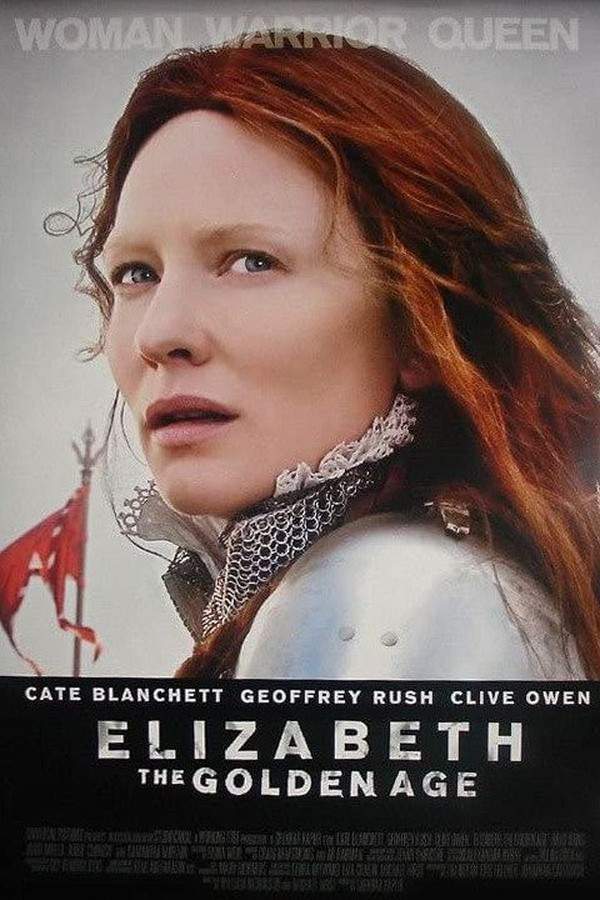
When the inevitable confrontation with the Armada burgeons, Elizabeth publicly forgives Bess and frees Raleigh to join in the battle. Clad in armor, she delivers her iconic Speech to the Troops at Tilbury, rallying her subjects against the external threat. Despite overwhelming odds, divine intervention strikes; a tempest ravages the Armada, rendering them defenseless as Elizabeth witnesses the destruction unfold from the cliffs.
In the aftermath, she pays her respects to a dying Walsingham, expressing her gratitude, ultimately finding a moment of peace with Raleigh and Bess to bless their child. Though victorious, Elizabeth emerges resolute in her identity as the Virgin Queen and the nurturing mother of her nation.
Elizabeth: The Golden Age Timeline: Every Key Event in Order
15 key events in the order they happen, from “King Philip II's Ambition” to “The Virgin Queen”. 15 events name a place, across 5 locations.
- 1
King Philip II's Ambition
In 1585, King Philip II of Spain views Protestant England as a major threat to his kingdom. With ambitions to conquer England, he aims to place his daughter Isabella on the throne in place of Queen Elizabeth.
When:1585 Where:Spain
- 2
Queen Elizabeth's Pressure
In England, Queen Elizabeth faces immense pressure from her advisor, Sir Francis Walsingham, to marry and produce an heir. With the risk of the throne passing to her cousin Mary, Queen of Scots, the stakes become even higher.
Where:England
- 3
Elizabeth's Refusal
Despite being presented with portraits of various suitors, including the infatuated Archduke Charles of Austria, Elizabeth remains steadfast in her refusal to marry. Her determination highlights her commitment to her position as queen.
Where:England
- 4
Arrival of Walter Raleigh
Walter Raleigh returns from his adventures in the New World, bringing gifts of potatoes, tobacco, and gold from supposed Spanish shipwrecks. His tales of exploration captivate both Elizabeth and her lady-in-waiting, Bess.
Where:England
- 5
Elizabeth's Attraction
Elizabeth becomes enamored with Raleigh’s adventurous spirit and entrusts Bess to observe him closely. This sets off a chain of events as Bess also falls for Raleigh, complicating their relationships.
Where:England
- 6
Dr. John Dee's Prediction
Elizabeth consults her astrologer, Dr. John Dee, who ominously warns her of impending war but does not reveal the outcome. This only heightens the sense of foreboding as tensions grow between England and Spain.
Where:England
- 7
The Babington Plot
Jesuit conspirators in London collaborate with King Philip to assassinate Elizabeth, a plan that becomes known as the Babington Plot. As Walsingham uncovers this treachery, the queen faces the grim reality of being targeted.
Where:London
- 8
Escalating Tensions
As conspiracies continue to unravel, Elizabeth grapples with betrayal and the execution of Mary, Queen of Scots, whom she reluctantly consents to execute in order to eliminate the threat. Mary’s martyrdom spikes animosities.
Where:England
- 9
Mobilization of the Armada
In response to Mary's execution, King Philip rallies efforts to assemble the Spanish Armada. This decision further heightens tensions and establishes the ground for an inevitable confrontation.
Where:Spain
- 10
Babington's Attempt
During a dramatic confrontation, Anthony Babington attempts to kill Elizabeth but shockingly only fires a blank. This underlines the escalating risk she faces, prompting Walsingham to take decisive action against potential insurgence.
Where:England
Show the other 5 events of Elizabeth: The Golden Age Hide the last 5 events
- 11
Raleigh's Knighting
Eager for adventure, Raleigh seeks to embark on a voyage to the New World. Instead, Elizabeth knights him, acknowledging his contributions while inadvertently intertwined in the struggles of romance and loyalty.
Where:England
- 12
The Armada Confrontation
As the confrontation with the Spanish Armada looms, Elizabeth publicly forgives Bess and permits Raleigh to join the fight. Her iconic Speech to the Troops at Tilbury galvanizes her subjects for the impending battle.
Where:Tilbury
- 13
Victory Against the Armada
Against overwhelming odds, a divine storm strikes the Spanish Armada, leaving it vulnerable. Elizabeth watches from the cliffs as their defeat unfolds, marking a significant victory for England.
Where:Cliffs of England
- 14
Walsingham's Last Moments
Following the victory, Elizabeth visits a dying Walsingham to express her gratitude for his loyalty and service. This moment allows Elizabeth a brief reflection amidst the turmoil and struggles of her reign.
Where:England
- 15
The Virgin Queen
In the aftermath, Elizabeth solidifies her identity as the Virgin Queen, dedicating herself to her nation. She finds peace with Raleigh and Bess, blessing their child as she embraces her role as the nurturing mother of England.
Where:England
Who Are the Main Characters in Elizabeth: The Golden Age?
3 characters, among them Queen Elizabeth I (Cate Blanchett), Walter Raleigh (Clive Owen) and Sir Francis Walsingham (Geoffrey Rush): who each one is and the part they play in the story. Every profile links to the actor’s page.
-

Queen Elizabeth I (Cate Blanchett)
Played by Cate Blanchett
Queen Elizabeth I is depicted as a strong and determined ruler who prioritizes her country over personal desires. Faced with mounting pressures to marry and produce an heir, she resolutely maintains her independence, embodying the duality of being both a sovereign and a woman. Elizabeth navigates complexities of love and duty while contending with plots against her life, showcasing her resilience and strategic acumen.
- 👑 Monarch
- ✊ Independence
-

Walter Raleigh (Clive Owen)
Played by Clive Owen
Walter Raleigh is portrayed as a charismatic and adventurous figure who captures Elizabeth's attention with tales of exploration and treasure from the New World. His arrival sparks not only Elizabeth's interest but also a secret romance with her lady-in-waiting, Bess. Raleigh's ambition and desire for adventure illustrate his complex character, torn between love and the call of the unknown.
- 🌊 Explorer
- ♥️ Lover
-

Sir Francis Walsingham (Geoffrey Rush)
Played by Geoffrey Rush
Sir Francis Walsingham serves as Queen Elizabeth's loyal advisor, constantly navigating the treacherous waters of court politics and conspiracies. He is deeply devoted to protecting the Queen, revealing the enormous pressures that come with his role. Despite his earnest intentions, Walsingham's secrets and strategies demonstrate the intricate dynamics of loyalty and political maneuvering within the court.
- 📜 Advisor
- 🕵️♂️ Strategist
Where and When Is Elizabeth: The Golden Age Set?
Elizabeth: The Golden Age is set in Spain, England, London and New World (1585). Here is why the time and place matter to the story.
When
1585
The film is set in the year 1585, a period marked by the height of Elizabethan England's power and cultural achievement. This era witnessed significant tensions between Protestant England and Catholic Spain, culminating in events such as the Spanish Armada. It was also a time of exploration, where figures like Walter Raleigh ventured into the New World, introducing new commodities and cultural exchanges.
Where
Spain, England, London, New World
The movie traverses key locations in 16th century Europe, primarily focusing on England and Spain during a time of political tension. Spain, the powerhouse under King Philip II, seeks to dominate Protestant England. In England, the court of Queen Elizabeth I becomes the epicenter of intrigue, romance, and power struggles amidst the backdrop of exploration and conquest in the New World.
- 🏰 Kingdom
- 🌍 Exploration
What Are the Themes of Elizabeth: The Golden Age?
3 ideas the story keeps returning to, among them Power Struggle, Love and Betrayal and Divine Intervention.
-
01
Power Struggle
The theme of power struggle is pervasive throughout the film, depicting Queen Elizabeth's battle for her throne against external threats and internal conspiracies. Her refusal to conform socially by marrying to produce an heir illustrates her commitment to her sovereignty. The unfolding plots against her life underscore the dangers of leadership and the sacrifices involved in maintaining power.
-
02
Love and Betrayal
Love and betrayal intertwine in the film, particularly through the romantic tension between Elizabeth, Raleigh, and Bess. Elizabeth's emotional struggles with her role as a leader versus her personal desires bring depth to her character. The secret romance between Bess and Raleigh further complicates relationships and personal loyalties, leading to moments of emotional turmoil and betrayal.
-
03
Divine Intervention
The theme of divine intervention plays a critical role, particularly during the climactic battle with the Spanish Armada. Nature is depicted as a powerful force working in favor of Elizabeth, symbolizing hope and favor from a higher power. This theme reinforces the idea that despite the tumultuous political landscape, there is a belief in providence guiding the destiny of nations and their leaders.
What Kind of Film Is Elizabeth: The Golden Age?
Tense in tone, with steady pacing and a moderate story, going by the plot summary.
- Tone
- Tense
- Pacing
- Steady
- Story
- Moderate
- Intensity
- High
- Ending
- Bittersweet
A grand and tense historical drama that charts the immense pressure on a queen balancing personal desires against mortal threats to her throne and nation, culminating in a bittersweet victory of duty over love.
- solemn
- tense
- grand
- melancholic
- regal
- oppressive
- political intrigue
- royal duty
- religious conflict
- war and empire
Content notes: execution, assassination attempt, war violence.
Quiz
How well do you remember Elizabeth: The Golden Age? Test yourself on the story.