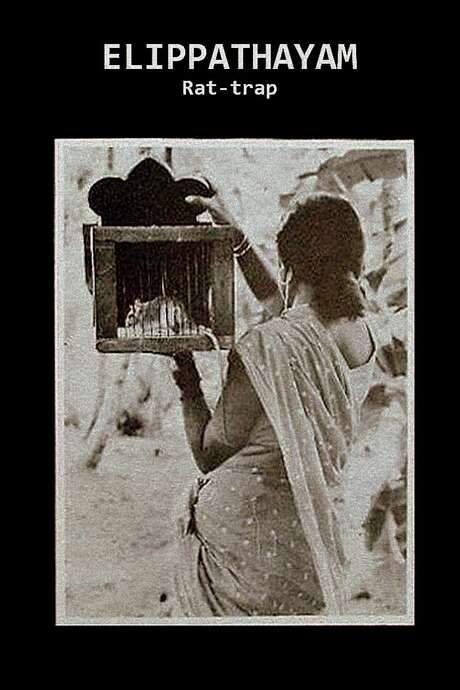


Where to Watch Elippathayam
See current US streaming, rental, and purchase options for Elippathayam (1982) via JustWatch.

Streaming availability powered by 
Elippathayam Plot Summary
Read the complete plot summary and ending explained for Elippathayam (1982). From turning points to emotional moments, uncover what really happened and why it matters.
In Kerala, a middle-aged man Unni and his two sisters live in an aging tharavadu, a once-grand manor that has clearly seen better days, as the old feudal order quietly unravels around them.
The film opens with a small but telling crisis: a rat problem that highlights the house’s stubborn logic and the people who try to manage it. Sreedevi takes the initiative to catch and drown the rats, a practical act that stands in contrast to the larger sense of helplessness that pervades the household. Unni, the patriarch, remains largely idle—even as thieves raid the crops—relying on his sisters and a neighbor caretaker to keep the estate afloat. His days are spent reading the newspaper, oiling his body, and accepting the status quo, while Scaria Mappila tends to the agricultural affairs and the family’s finances in a manner that clings to old feudal habits. He shows little interest in marriage prospects for his sisters and seems to fear any disruption to the fragile support system that still keeps him insulated from the outside world.
Rajamma, the middle sister, is deeply distressed by her brother’s silence and inaction when proposals for marriage come her way. Her distress grows as he refuses options deemed beneath the family’s prestige, and he remains unmoved even when she herself falls ill. This lack of intervention contributes to a slow, inexorable decline. Meanwhile, the youngest sister makes a bold break from tradition by eloping with a lover, a decision that the elder sister tries to formalize by pursuing her share of the property through court summons. The unresolved tensions within the family widen into a chasm that Unni cannot bridge, leaving him increasingly isolated in the mansion’s dark corners.
As the family frays, Unni’s grip on reality loosens—paranoia and delusions intensify, and he withdraws from any real support, feeling abandoned and misunderstood by the world outside. He becomes a solitary figure, haunted by the sense that he must defend a fading privilege against a changing society. The final act tightens the focus on his fragility: a group of people enters the house, and he bolts in fear, sustaining a blow that leaves him unconscious. They carry him toward the pond—an echo of Sreedevi’s earlier act of drowning rats—and toss him in, only for him to emerge from the water pale and chilled. Whether these intruders are real, imagined threats, robbers, or rivals seeking to seize the estate, remains ambiguous, and the ending leans into the ambiguity that suffuses his mind.
The film uses the metaphor of a “rat trap” to mirror a mind trapped in oblivion to the transforming world outside the manor walls. As the house decays, so too does the old order that Unni clings to, trapping him in a cycle of denial, fear, and isolation. The final image is not just of a man sinking or surviving a cold pond, but of a fading social structure that is unable to adapt, leaving behind a haunting question about who truly controls the fate of a family and its land.
Elippathayam Timeline
Follow the complete movie timeline of Elippathayam (1982) with every major event in chronological order. Great for understanding complex plots and story progression.
Opening rat problem and its symbolism
The film opens with a rat infestation inside the derelict Kerala manor, setting a grim mood. Sridevi takes the initiative to trap and drown the rats, signaling that danger and decay are already inside the house. The scene uses vermin to mirror the rot within the feudal household.
Unni's stagnant patriarchate
Unni, the aging patriarch, remains proud and unmoving as the world changes around him. He spends days idling, sleeping, and reading, while his sisters and Scaria Mappila manage the estate. The arrangement underscores a fading feudal order that cannot adapt to the times.
Crops stolen; Unni's passivity
Thieves steal crops from the fields, and Unni responds with fear rather than action. He avoids confrontation and shows little willingness to defend the family's material base. The incident reveals his impotence and the crumbling authority of the landowners.
Younger sister defies tradition
The younger sister elopes with a lover, disregarding tradition and without informing anyone. This act highlights a shift in social norms and the sisters' growing agency. Unni remains passive, unable to respond to the new reality.
Rajamma's plea and illness
Rajamma, the middle sister, is devastated by her brother's silence when marriage proposals arrive. She pleads for support and protection, but Unni's indecision worsens her condition. She falls ill and eventually dies, a casualty of his inability to act.
Rajamma's death
The elder sister mourns as Rajamma dies, underscoring the emotional cost of Unni's neglect and disorganized thinking. The family loses its emotional anchor as the decline accelerates. The death widens the fracture within the household.
Eldest sister asserts property rights
The eldest sister claims her share of the property but leaves with none, sending summons through the courts. The estate fractures as legal disputes replace family mediation. Unni's world shrinks further as trust erodes.
Unni's paranoia deepens
Unni becomes increasingly paranoid, retreating to the dark corners of his room. His delusions intensify and he shows reluctance to seek help or admit trouble. The household, once a unit, deteriorates under his gaze.
Scaria Mappila's dwindling control
Scaria Mappila continues to manage finances with old feudal methods, keeping the estate afloat but unable to resolve the underlying collapse. His role as caretaker becomes more about placating the family than restoring order. The tension between tradition and change persists as the family splinters.
Intruders enter the house
A group of people enters Unni's house, triggering a panic and a frantic escape. He runs out in fear and is knocked unconscious in the chaos. The nature of the visitors remains ambiguous, hinting at robbers, hallucinations, or rivals.
The pond and the final collapse
They carry him to the pond where Sridevi used to drown rats and throw him in. He surfaces frightened and cold, his mind and body broken by fear. This scene marks the culmination of his descent and the ultimate unreliability of reality for him.
Elippathayam Characters
Explore all characters from Elippathayam (1982). Get detailed profiles with their roles, arcs, and key relationships explained.
Unni
The middle-aged patriarch of the tharavadu, Unni embodies a stagnant feudal mindset. He spends his days idly, reading the newspaper and oiling his body, while the estate is managed by others. His prideful detachment leads him to resist marrying off his sisters and addressing threats to the family’s fortune, leaving him isolated and increasingly unable to respond to change.
Rajamma
The elder sister, Rajamma, bears the weight of unfulfilled expectations as she watches opportunities for marriage and security slip away. Her illness and the cold, dismissive stance of her brother expose the fragility of family bonds under social and economic strain. Her eventual death highlights the consequences of inaction within a decaying system.
Sreedevi
The younger sister who disregards tradition and runs away with a lover, Sreedevi embodies a spark of agency in a collapsing world. Her act challenges the rigid expectations placed on women in a feudal setting and reveals how personal choices collide with collective norms. Her defiance contrasts with Unni’s paralysis and contributes to the family’s unraveling.
Scaria Mappila
The caretaker neighbor who tends to the agricultural affairs, Scaria Mappila remains a practical presence within the estate. He represents the maintenance of old structures and the pragmatic response to the manor’s decline, providing a counterpoint to Unni’s impractical inertia. He is a quiet figure who manages day-to-day affairs as the world around them shifts.
Elippathayam Settings
Learn where and when Elippathayam (1982) takes place. Explore the film’s settings, era, and how they shape the narrative.
Location
Kerala, India; ancient tharavadu (manor)
The story unfolds in a derelict ancient tharavadu, a sprawling manor that serves as a relic of a once-prosperous aristocratic family in Kerala. The house and its grounds, once bustling with activity, are now decaying and dark, reflecting the fortunes of the family. A rat-infested, solitary residence, it becomes a visual metaphor for the stagnation of old power structures as external changes erode their world.
Elippathayam Themes
Discover the main themes in Elippathayam (1982). Analyze the deeper meanings, emotional layers, and social commentary behind the film.
🕰️
Change vs Tradition
The film centers on a clash between a decaying feudal order and the encroaching modern world. Unni clings to old rituals and patriarchal prerogatives, resisting any shift that would threaten his authority. External pressures, such as economic decline and social transformations, threaten the stability of the manor. The narrative uses the manor as a stage where the old ways fight to survive against the inevitable.
🏚️
Decay of Privilege
Feudal privilege dissolves as wealth and influence wane, exposing the fragility of the family’s status. The sisters’ lives and the property become battlegrounds for control over a fading legacy. Proposals, legal summons, and the elder sister’s death illustrate how privilege collapses when support and resources evaporate. The film portrays a world where status is no longer safeguarded by tradition.
🧠
Isolation and Madness
Unni’s paranoia and inability to act push him toward a mental trap, illustrating how isolation compounds the fall of a patriarch. The film blurs reality and perception, with threats—real or imagined—shadowing his daily life. The rat motif and the final pond sequence imply a descent into a distorted mindset where external threats mirror internal collapse. The ending suggests that his world may have been a product of delusion as much as danger.

Coming soon on iOS and Android
The Plot Explained Mobile App
From blockbusters to hidden gems — dive into movie stories anytime, anywhere. Save your favorites, discover plots faster, and never miss a twist again.
Sign up to be the first to know when we launch. Your email stays private — always.
Explore the mobile appElippathayam Spoiler-Free Summary
Discover the spoiler-free summary of Elippathayam (1982). Get a concise overview without any spoilers.
In a remote corner of Kerala, a once‑grand tharavadu stands as a silent witness to a world slipping away. The manor’s crumbling walls and overgrown courtyards echo the fading prestige of a feudal order that now borders on myth. Around it, villages buzz with the restless energy of a society eager to embrace modernity, while the house itself seems caught in a slow, almost reverent pause, its every creak reminding visitors of a bygone era.
At the heart of this still‑breathing relic is Unni, the final male heir tasked with upholding traditions that feel increasingly foreign. He spends his days in quiet ritual—reading the newspaper, tending to his own body, and relying on the familiar cadence of his sisters and the caretaker to keep the estate’s affairs afloat. His inertia is less a lack of desire than a deep‑seated fear of disruption; each suggestion of change feels like a threat to the fragile scaffolding that protects his sense of identity.
His two sisters, each navigating the expectations of marriage and independence, illuminate the household’s internal friction. Sreedevi steps forward with a practical resolve, attempting to quell a persistent rat problem that gnaws at the house’s already fragile logic. Rajamma, the middle sister, wrestles with the weight of familial duty and the sting of her brother’s silence as prospects for marriage hover on the horizon. Their differing responses to the same environment highlight a growing chasm between duty and desire, while an undercurrent of unease begins to stir in Unni’s mind.
The film unfolds with a measured, almost meditative pace, letting the decaying architecture and the muted conversations convey a mood of melancholy and suspense. A lingering sense of entrapment—mirrored by the ever‑present rats—permeates the air, hinting at a psychological maze as intricate as the manor’s corridors. As tradition confronts inevitable change, the story invites viewers to feel the quiet tension of a world held hostage by its own nostalgia.
Movies with Similar Twists and Themes
Uncover films that echo the narrative beats, emotional arcs, or dramatic twists of the one you're exploring. These recommendations are handpicked based on story depth, thematic resonance, and spoiler-worthy moments — perfect for fans who crave more of the same intrigue.





Featured on this page

What's After the Movie?
Not sure whether to stay after the credits? Find out!
Check out our other apps:

SAT Sphere
Build confidence for the Digital SAT.

Mori Atlas
Discover wild places worth protecting.

Luntero
Search smarter for a home in Amsterdam.

Plot Explained
Unravel movie endings and hidden clues.

Pokechamp
Dive into Pokémon data and battle logic.

Driving Theory
Get ready for your European theory test.

Movie Dust
Plan your next cinema trip with ease.

Musemap
Find art and culture as you travel.

Selkobase
Compare credentials before committing.

Local Manual
Turn an unfamiliar country into practical next steps.

Lernavi
Compare school systems before your next move.

GymRoam
Find a workout stop wherever your plans take you.
Explore Our Movie Platform
New Movie Releases (2026)
Famous Movie Actors
Top Film Production Studios
Movie Plot Summaries & Endings
Major Movie Awards & Winners
Best Concert Films & Music Documentaries
Movie Collections and Curated Lists
© 2026 What's After the Movie. All rights reserved.
Privacy Policy