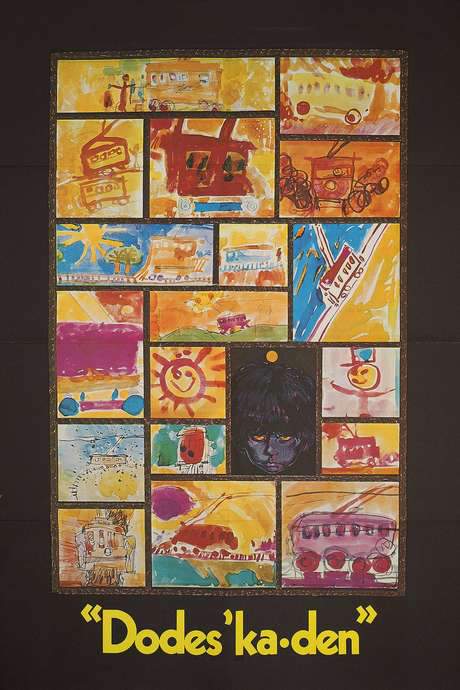
Dodes’ka-den 1970


Directed by
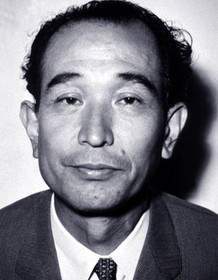
Akira Kurosawa
Made by

Yonki-no-Kai Productions
Where to Watch Dodes’ka-den
See current US streaming, rental, and purchase options for Dodes’ka-den (1970) via JustWatch.



Streaming availability powered by 
Dodes’ka-den Plot Summary
Read the complete plot summary and ending explained for Dodes’ka-den (1970). From turning points to emotional moments, uncover what really happened and why it matters.
The film unfolds as an anthology of overlapping vignettes, set in a cramped suburban shantytown perched atop a sprawling rubbish dump. At its strange, quiet center is Roku-chan, a boy who lives inside a vividly imagined world where he steers a trolley along a fixed route, faithfully reciting the rhythm of his journey with the refrain dodeska-den. The image of the trolley and its never-breaking schedule becomes a ritual that others recognize as both charm and a sign of something deeper, and Roku-chan’s devotion to this fantasy earns him the label of “trolley freak” from locals and visiting children alike. His mother watches with concern, worried that the boy’s fantasy might mask a genuine mental struggle. Tatsuo Matsumura anchors this strand with a quiet, patient presence as Roku-chan’s world collides with the real one around him.
Beyond Roku-chan’s corridor of make-believe, the film broadens to the lives of a wider set of residents, each rendered with the same attention to small, aching detail. Ryotaro Sawagami, a hairbrush maker, bears the heavy load of supporting many children conceived through Misao Sawagami’s serial infidelities, yet his loyalty to his clan shines through in every ordinary moment. The burden is never melodramatic, but it is undeniable, and the film follows his stubborn, steadfast care as a counterpoint to the town’s harsher edges. Shinsuke Minami gives Ryotaro a gravity that keeps the town’s fragility from tipping into despair.
Misao Sawagami, whose infidelities have shaped so much of Ryotaro’s burden, is portrayed with a fragile mix of guilt and longing. The film does not condemn her outright; instead, it presents the complicated knots of desire and consequence that bind this family, inviting empathy even as it acknowledges the damage done. Yūko Kusunoki lends Misao a wit that flickers beneath her impermanence, revealing a character who is both part of the village’s machinery and poignantly separate from it.
Two day laborers drift through a parallel thread—Masuo Masuda and Hatsutaro Kawaguchi—whose rough, drunken bravado leads to a moment of wife-swapping, only to retreat back to their own spouses as if nothing has changed. The episode peels back to reveal tenderness and routine beneath the surface, a reminder that desire can slice through the everyday and leave humanity intact. Hisashi Igawa embodies Masuda’s earthbound stubbornness, while Kunie Tanaka channels Kawaguchi’s rough humor and fleeting remorse.
In another circle, Hei remains a stoic presence, his life defined by cold routine as Ochô, who appears to be his ex-wife, drifts in and out to do the domestic labor of their shared past. The dynamic between Hei and Ochô is understated but electric, with the weight of what was felt in each look and gesture rather than in loud confession. Hiroshi Akutagawa and Tomoko Naraoka carry this thread with restrained dignity, letting silence carry the truth that words cannot.
The film also follows Shima, a man whose tic and outward bluntness mask a fierce, protective loyalty to his wife. His defense of her becomes a kind of survival strategy within the town’s rough social texture, and the tension between tenderness and volatility threads through every interaction. Junzaburō Ban embodies this paradox with a measured, wary humanity.
Another thread centers on Katsuko, a mute girl who endures deep harm after being assaulted by an alcoholic uncle and becoming pregnant. Her emotional storm erupts in a violent act against a boy who once carried a tender interest in her, Okabe, who manages to respond with warmth and forgiveness after the incident, a response that anchors the film’s moral center in moments of grace. Katsuko is brought to life by Tomoko Yamazaki, while Okabe’s quiet decency is portrayed by Masahiko Kametani.
Tanba, a chasework silversmith, appears as a sage figure whose kindness touches even those on the town’s fringes. He speaks with calm authority, disarming danger and offering practical, humane help to those who need it—whether a youth with a sword or a burglar seeking shelter. Atsushi Watanabe lends Tanba a timeless dignity, a reminder that wisdom can look like ordinary generosity.
The film’s world is rich with a gallery of other figures who drift through the community’s life—Kichi the Carpenter Bee, a quirky figure imagined in the town’s folklore, and his wife, Kichi’s Wife, among many others. The cast stretches from the quiet shopkeepers to the artists and the dreamers, each detail sketched with a patient, observant eye that refuses sensationalism in favor of truth.
As the stories interweave, the sense of a shared, struggling dream remains constant: the characters cling to fragile hopes of escape, better living, or simple happiness within their restricted environment. The film refuses to offer easy resolutions or grand judgments; instead it treats each life as a fragile, ongoing work in progress, a series of small, stubborn acts of care, memory, and longing.
In the end, the narrative circles back to Roku-chan. He returns home, removes his imaginary tram conductor hat, and quietly hangs it up, a small, solemn ritual that signals acceptance of reality while preserving the glow of his fantasy as a vital escape hatch for the heart. The closing image affirms that, even in a world defined by hardship, the power of imagination and the tenderness of ordinary human connections can endure, shaping a life that remains human, hopeful, and deeply observed.
Dodes’ka-den Timeline
Follow the complete movie timeline of Dodes’ka-den (1970) with every major event in chronological order. Great for understanding complex plots and story progression.
Roku-chan's trolley fantasy begins
Roku-chan imagines himself as the driver of a fixed-route trolley through the dump. He repeats the refrain dodeska-den and treats the journey as a sacred mission. His obsession frames his daily life in the shantytown, blurring fantasy with reality.
Trolley freak stigma emerges
Roku-chan is labeled the trolley freak by locals and outsiders, a tag that follows him through the community. His mother worries that the fixation might signal genuine mental disturbance. The tension between fantasy and social judgment colors life in the town.
Ryotaro supports many children
Ryotaro, a hairbrush maker, shoulders the burden of supporting numerous children conceived through Misao's affairs. He remains wholeheartedly devoted to them, despite the strain on his resources. His tenderness sits at odds with the town's harsh conditions.
Wife-swapping among day laborers
Two drunken day laborers, Masuda and Kawaguchi, engage in a reckless cycle of wife swapping. The next day they return to their wives as if nothing happened, illustrating a pattern of routine infidelity. The episode exposes the fragility of relationships under poverty.
Hei and Ocho's uneasy routine
Hei is stoic and emotionally distant, while Ocho appears as his ex-wife who helps with domestic chores. It is revealed that she cheated and returned, wracked with guilt, and Hei does not forgive her. The dynamic reveals lingering resentments beneath everyday life.
Shima defends his wife amid criticisms
Shima, a man with a tic, defensively shields his outwardly unpleasant wife when friends criticize her. He insists she has always been there for him, revealing a stubborn loyalty that circles the town’s moral judgments. The moment underlines complex bonds in a tough environment.
Beggar and son in a derelict car
A beggar and his son live in a derelict Citroën 2CV, with the father dreaming of a grand home. The boy dies from food poisoning, and the father buries the cremated remains with Tanba's help, clinging to the fantasy that the grave is a swimming pool for his son. The scene blends sorrow with stubborn hope.
Katsuko's trauma and act of violence
Katsuko, a mute girl, is raped by her alcoholic uncle and becomes pregnant. In a moment of emotional turmoil, she stabs Okabe, a boy who cares for her, though he later forgives her. The uncle flees when confronted, leaving the town to reckon with violence and guilt.
Okabe offers forgiveness and warmth
Okabe recovers from the stabbing and forgives Katsuko when she apologizes, his warmth undiminished. The scene emphasizes compassion amid a landscape of hardship and misfortune. His reaction stands in contrast to the town's cynicism.
Tanba disarms with kindness
Tanba, the chasework silversmith, appears as a sage figure who shows kindness to the town's residents. He disarms a youth with a sword using understanding words and helps a burglar by giving money, later denying to the police that any robbery occurred. His actions model humane restraint in a harsh world.
Roku-chan returns home
The narrative returns to Roku-chan as he comes back from his imagined tram ride, removes his conductor hat, and hangs it up. The act signals a quiet retreat from fantasy and a re-entry into ordinary life. The closing beat frames the cycle of dreams within the town.
A mosaic of hardship and dream
Across the town, characters endure setbacks while clutching small dreams of escape and better days. The film traces how routines and fantasies coexist to keep people moving forward. It ends by reaffirming the fragile humanity that persists amid deprivation.
Closing image of cyclical hope
The final images emphasize the cyclical nature of life in the dump, where hope and despair continually alternate. The characters' lingering humanity survives the day-to-day grind, suggesting that escape may be possible only within the boundaries of their world. The film closes on a note of quiet resilience.
Dodes’ka-den Characters
Explore all characters from Dodes’ka-den (1970). Get detailed profiles with their roles, arcs, and key relationships explained.
Roku-Chan (Yoshitaka Zushi)
A boy who lives in a fantasy world where he drives a trolley along a fixed route, chanting dodeska-den. His obsession with the trolley earns him the label 'trolley freak' from locals, while his mother worries he might be mentally challenged. The character embodies the collision between imagination and a brutal social reality.
Ryotaro Sawagami (Shinsuke Minami)
A devoted hairbrush maker who shoulders the burden of supporting many children from his wife Misao’s affairs. He remains remarkably steadfast and loving, illustrating quiet resilience amid infidelity and hardship.
Mr. Tanba (Atsushi Watanabe)
A sage-like chasework silversmith who helps people in need and speaks with calm, understanding words. He disarms danger and offers guidance, serving as a moral anchor within the town.
Yukichi Shima (Junzaburō Ban)
A man with a tic who defends his outwardly unpleasant wife. His stubborn loyalty masks a capacity for care, showing complexity in a relationship tested by hardship and social judgment.
Ochô (Tomoko Naraoka)
A resident whose presence highlights the tangled relationships and unspoken histories within the shantytown, contributing to the film’s intricate social web of obligation and desire.
Katsuko Watanaka (Tomoko Yamazaki)
A mute girl who is raped by her alcoholic uncle, becomes pregnant, and triggers a cascade of turmoil. Her act and its consequences reveal the vulnerability and peril faced by individuals in the dump.
Okabe (Masahiko Kametani)
A warm-hearted shopworker whose tenderness toward Katsuko offers a rare, humane counterpoint to the town’s brutality. He embodies a glimmer of decency amid chaos.
Dodes’ka-den Settings
Learn where and when Dodes’ka-den (1970) takes place. Explore the film’s settings, era, and how they shape the narrative.
Location
Suburban shantytown atop a rubbish dump
The setting centers on a gritty suburban shantytown perched atop a vast rubbish dump outside a city. Makeshift homes and narrow lanes form a fragile community where scavenging defines daily life. The dump’s harsh environment mirrors the residents’ struggles and fragile hopes for a better future.
Dodes’ka-den Themes
Discover the main themes in Dodes’ka-den (1970). Analyze the deeper meanings, emotional layers, and social commentary behind the film.
🗑️
Poverty
Poverty is the backdrop against which every character negotiates dignity and despair. The shantytown’s precarious dwellings and scarcity force makeshift routines and fragile dreams. The film confronts social neglect while highlighting moments of resilience that emerge from hardship.
🌀
Fantasy
Roku-Chan’s fantasy world of a trolley driver offers a counterpoint to harsh reality. His imagined routine gives structure and meaning to his days, even as it isolates him from others. The fantasy serves as a coping mechanism, revealing the limits of escape in a constrained environment.
🤝
Compassion
Across the stories, small acts of kindness illuminate the human capacity to care. Characters like Tanba offer guidance and warmth, while others show forgiveness amid fault lines of betrayal and neglect. Compassion acts as a brief balm in an otherwise harsh world.
🚶
Escape
Many residents dream of leaving the dump, seeking a different life through work, relationships, or new beginnings. These dreams drive decisions and tensions within families and between friends. Yet the pull of the environment continually tests the feasibility of escape.

Coming soon on iOS and Android
The Plot Explained Mobile App
From blockbusters to hidden gems — dive into movie stories anytime, anywhere. Save your favorites, discover plots faster, and never miss a twist again.
Sign up to be the first to know when we launch. Your email stays private — always.
Explore the mobile appDodes’ka-den Spoiler-Free Summary
Discover the spoiler-free summary of Dodes’ka-den (1970). Get a concise overview without any spoilers.
In a cramped shantytown perched on the edge of Tokyo, a community of outcasts clings to life amid piles of rubbish and the constant hum of desperation. The film opens on this gritty landscape, painted with a compassionate eye that captures both the squalor and the quiet dignity of its residents. Light filters through tarps and broken windows, while the ever‑present smell of decay blends with the faint perfume of hope that each character carries like a secret talisman. The tone is unflinching yet gentle, inviting the viewer to linger on the texture of daily survival rather than the spectacle of tragedy.
At the heart of the tapestry is a young boy, Roku‑chan, whose imagination transforms the narrow alleyways into the endless tracks of a trolley, complete with a steady chant that becomes his personal mantra. His reverie offers a fragile escape from the harshness that surrounds him, hinting at the power of fantasy to sustain the human spirit. Nearby, a homeless father and his son dream of building a house of their own, sketching futures on the walls of their makeshift shelter. Their quiet determination is mirrored by a young woman who endures abuse within the same cramped confines, seeking solace in small acts of resistance.
The ensemble also introduces Ryotaro Sawagami, a modest craftsman burdened with caring for many children, and his partner Misao, whose restless longing adds a layer of complexity to their shared existence. Laborers, widows, mute girls, and eccentric townsfolk drift through the narrative, each portrayed with an observant patience that refuses sensationalism. Their interactions are underscored by a rhythm of ordinary kindness and unspoken solidarity, creating a mosaic where every glance and whispered conversation hints at deeper currents of longing.
Together, these lives form a portrait of a community that, despite poverty and hardship, clings to fragile hopes and quiet dreams. The film’s style—slow, immersive, and richly detailed—draws the audience into a world where imagination and human connection become the most vital forms of survival.
Movies with Similar Twists and Themes
Uncover films that echo the narrative beats, emotional arcs, or dramatic twists of the one you're exploring. These recommendations are handpicked based on story depth, thematic resonance, and spoiler-worthy moments — perfect for fans who crave more of the same intrigue.







Featured on this page

What's After the Movie?
Not sure whether to stay after the credits? Find out!
Check out our other apps:

SAT Sphere
Build confidence for the Digital SAT.

Mori Atlas
Discover wild places worth protecting.

Luntero
Search smarter for a home in Amsterdam.

Plot Explained
Unravel movie endings and hidden clues.

Pokechamp
Dive into Pokémon data and battle logic.

Driving Theory
Get ready for your European theory test.

Movie Dust
Plan your next cinema trip with ease.

Musemap
Find art and culture as you travel.

Selkobase
Compare credentials before committing.

Local Manual
Turn an unfamiliar country into practical next steps.

Lernavi
Compare school systems before your next move.

GymRoam
Find a workout stop wherever your plans take you.
Explore Our Movie Platform
New Movie Releases (2026)
Famous Movie Actors
Top Film Production Studios
Movie Plot Summaries & Endings
Major Movie Awards & Winners
Best Concert Films & Music Documentaries
Movie Collections and Curated Lists
© 2026 What's After the Movie. All rights reserved.
Privacy Policy