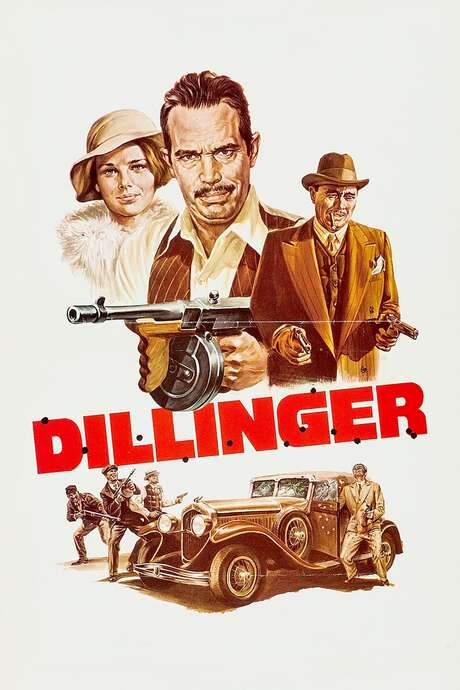
Dillinger 1973


Directed by

John Milius
Made by

American International Pictures
Where to Watch Dillinger
See current US streaming, rental, and purchase options for Dillinger (1973) via JustWatch.











Dillinger Plot Summary
Read the complete plot summary and ending explained for Dillinger (1973). From turning points to emotional moments, uncover what really happened and why it matters.
Melvin Purvis is driven to take down the most notorious criminals of the Great Depression, a time when bank robbers have become folk heroes to a public distrustful of financial institutions and the law. Facing a wave of high-profile crimes, Purvis vows to personally hunt down the men he deems responsible, including John Dillinger and his volatile gang, among them Pretty Boy Floyd and Baby Face Nelson, as well as the more elusive figures in Dillinger’s orbit such as Homer Van Meter, Harry Pierpont, and Charles Mackley. The pursuit intensifies as Purvis makes clear to fellow agent Samuel Cowley that vengeance is personal and that he is prepared to push beyond standard methods when necessary.
Dillinger, swaggering through crime with his crew, including Van Meter, Pierpont, and Mackley, carries himself like a legend, even as his exploits attract love and trouble in equal measure. He crosses paths with a bar patron named Billie Frechette who, despite not recognizing him at first, is swept into his life and joins the spree as his lover. The romance complicates the crime wave as the gang roams the Midwest, their confidence tested after a bold East Chicago robbery that costs them a teammate and forces the remaining members to scatter.
Purvis begins a ruthless campaign to shut down the gang, eliminating some of the crew and capturing others, while Dillinger’s crew grows more audacious. In a tense sequence at Crown Point, Dillinger is jailed but manages a daring escape by fashioning a soap bar into a gun and convincing guards to release him. This break also marks the moment Dillinger commits a federal offense by driving a stolen car across state lines. He chooses to bring along a fellow prisoner, Reed Youngblood, and together they reconnect with the gang, adding new members like Nelson and Floyd to the mix as they embark on another wave of robberies that unsettles Purvis and the press alike.
The law’s hunt reaches a fever pitch with a gruesome shootout in Mason City, Iowa, followed by the notorious raid on the Little Bohemia lodge in Wisconsin, which ends in chaos and the deaths or wounds of several gang members. As the gang fractures under pressure, Purvis and federal agents close in, while local vigilantes also contribute to the net tightening around the outlaws. The pursuit culminates in Chicago, where Dillinger’s fate takes a dramatic turn.
In a tense moment outside a cinema, Dillinger and his companions exit the Biograph Theater while Purvis and his team close in. Dillinger’s encounter with safety and law closes in the alley as Purvis, having lured him toward his firearm, shoots the gangster down. The capture is swift, but the aftermath of the raid raises questions about deceit and intervention, including Purvis’s decision to leverage the assistance of a woman connected to Dillinger.
The epilogue reveals the fates that followed. Billie Frechette’s life ultimately ends in hardship and poverty, while Anna Sage faces deportation to Romania despite Purvis’s promises. Purvis himself retires from the FBI and eventually takes his own life, and Dillinger’s image endures in the FBI’s targets used for marksmanship training. The story closes with the reminder that the legend of Dillinger and his era left its mark on both public imagination and the men who pursued them.
Dillinger Timeline
Follow the complete movie timeline of Dillinger (1973) with every major event in chronological order. Great for understanding complex plots and story progression.
Purvis vows to personally hunt the gang
Following the Kansas City Massacre in June 1933, FBI chief Melvin Purvis declares he will personally pursue the most dangerous outlaws. The vow marks a shift from large-scale campaigns to targeted, personal vendettas against the gang. The public is drawn into the drama as Purvis promises decisive action.
Dillinger's continuing crime spree with his crew
Dillinger remains boastful about his exploits as he operates with Homer Van Meter, Harry Pierpont, Charles Mackley, and others. The gang's confidence grows as they pull off robberies across the Midwest. The film frames this period as a public fascination with their outlaw image.
Dillinger meets Billie Frechette at a bar
Dillinger visits a bar and robs the patrons to impress Billie Frechette, hoping to win her attention. She fails to recognize him, which underscores the glamor and danger surrounding the criminals. Billie becomes his lover and travels with the gang on subsequent heists.
Billie becomes part of the gang's world
Billie Frechette becomes Dillinger's lover and accompanies him on their exploits. Her presence adds a personal dimension to the gang's dangerous lifestyle. The relationship intensifies the stakes as law enforcement closes in.
East Chicago robbery and dispersal
During a robbery in East Chicago, the gang suffers losses and is forced to scatter, fracturing the crew. The loss of Mackley and other members weakens their cohesion. This setback tightens Purvis's growing pressure on the gang.
Purvis moves against members; Dillinger not yet charged federally
Purvis disposes of Underhill and Klutas and captures George Kelly, tightening the net on the organization. Dillinger still cannot be charged federally because his crimes have not yet violated a federal statute. The tension rises as Purvis shifts from pursuit to prosecutable enforcement.
Dillinger captured in Arizona and sent to Crown Point
Dillinger is captured by local authorities in Arizona and transported to Crown Point, Indiana, to face charges. The move places him behind bars and raises the stakes for his escape plans. The film builds anticipation for what will come next.
Escape from Crown Point using a soap gun
Dillinger carves a bar of soap into the shape of a gun and fools the guards, staging a dramatic breakout. He then crosses state lines, committing his first federal crime by driving a stolen car. The escape cements his reputation as a cunning, fearless outlaw.
Reunion with gang; Midwest crime spree
Dillinger frees Reed Youngblood and reunites with the gang, now including Nelson and Floyd. The group embarks on a Midwest crime spree that unsettles Purvis and captivates the public eye. The pursuit intensifies as lawmen close in.
Mason City bank robbery and shootout
The gang robs a bank in Mason City, Iowa, triggering a violent shootout that results in Youngblood's death and wounding another member. The episode showcases the brutal costs of the outlaws' spree. Purvis and the authorities intensify their efforts afterward.
Little Bohemia lodge raid
Hiding at the Little Bohemia lodge in Wisconsin, the gang becomes the target of a large FBI raid led by Purvis. The confrontation costs numerous agents' lives and scatters the gang once more. The raid marks a turning point that narrows Dillinger's support and disperses his group.
Purvis and Sage recruit to trap Dillinger
In Chicago, Purvis devises a plan to capture Dillinger with the help of Anna Sage, a brothel owner, who is promised protection from deportation. Sage's cooperation is instrumental in luring Dillinger toward a trap near the theater. The tension builds as the trap is put in motion.
Dillinger captured at Biograph Theater
Dillinger and Sage attend Manhattan Melodrama at the Biograph Theater. Purvis's team corners him when he goes for his gun, and Purvis shoots him in the alley. The capture marks the end of Dillinger's reign as a publicized outlaw.
Epilogue: fates of the players
Sage is deported despite Purvis's promises, and Purvis later commits suicide after retirement. Frechette dies penniless, and Dillinger's likeness is adopted for the FBI's target practice. The epilogue ties together the personal costs of the era's criminal pursuit.
Dillinger Characters
Explore all characters from Dillinger (1973). Get detailed profiles with their roles, arcs, and key relationships explained.
Anna Sage (Cloris Leachman)
A Chicago brothel owner who becomes Dillinger’s ally and lover. She navigates danger with pragmatism and uses her position to influence events, ultimately becoming entangled in Purvis’s trap. Her choices reflect a desire to survive within a brutal world where loyalty is transactional.
Melvin Purvis (Ben Johnson)
FBI field office chief driven by a personal vendetta against Dillinger and his crew. He pursues them with calculated resolve, willing to push legal boundaries to end their crime spree. His method showcases the tension between righteous duty and vigilante-like actions in a high-stakes chase.
Baby Face Nelson (Richard Dreyfuss)
A hot-headed member of the gang whose violence accelerates the group's downfall. He embodies reckless impulse and fearless intimidation, often driving the most dangerous confrontations. His temperament amplifies the volatility of the crime wave surrounding Dillinger.
John Dillinger (Warren Oates)
Charismatic and boastful gang leader who thrives on audacious heists and media attention. He navigates danger with wit and a fearless attitude, yet his charm masks a ruthless pragmatism. His escapes and crime sprees propel the narrative’s momentum and myth-making.
Homer Van Meter (Harry Dean Stanton)
A loyal but volatile gang member whose presence heightens tension in the capers. He blends streetwise gruffness with a willingness to take risks, making him a constant threat in close-quarters confrontations. His actions contribute to the gang’s eventual unraveling.
Charles Mackley (John P. Ryan)
A member of Dillinger’s crew who participates in the Midwest robberies and the escape dynamics. He represents the ordinary criminal seeking fortune through audacious crime, adding depth to the gang’s collective dynamic. His fate underscores the perilous path the group treads.
Harry Pierpont (Geoffrey Lewis)
A key accomplice who helps orchestrate robberies and survive the law’s pressure. He embodies the pragmatic, calculating side of the gang, balancing loyalty with self-preservation. His presence intensifies the internal risk as law enforcement closes in.
Samuel Cowley (Roy Jenson)
A lawman figure within Purvis’s circle, contributing to the enforcement effort and the pursuit’s intensity. He represents the formal apparatus arrayed against the criminals. His role anchors the back-and-forth between investigators and outlaws.
Reed Youngblood (Frank McRae)
A prisoner-turned-ally who temporarily joins Dillinger’s efforts, navigating the shifting loyalties of the gang. His presence adds a layer of unpredictability to the escape and pursuit sequence. He embodies the turbulence of the era’s criminal world.
Pretty Boy Floyd (Steve Kanaly)
A flamboyant gang member whose actions contribute to the era’s notorious image. He helps fuel the public fascination with crime while adding to the gang’s enforceable pressure. His involvement amplifies the sensationalism surrounding their exploits.
Billie Frechette (Michelle Phillips)
Dillinger’s lover who accompanies him on a crime spree and becomes part of the inner circle. Her role illustrates personal relationships within the criminal world and the impact of the outlaw lifestyle on loved ones. She ultimately faces hardship and fades from the spotlight.
Eddie Martin (John Martino)
A gang member who participates in the wider sequence of robberies and escapes. He contributes to the ensemble’s dynamics and the operational challenges they face during each caper. His presence completes the core crew’s makeup.
Big Jim Wollard (Read Morgan)
A member of Dillinger’s crew whose role supports the group’s operations and improvisations during high-stakes robberies. He provides steady presence within the ensemble and shares in the risks of their activities. His inclusion reinforces the collective nature of the gang.
Mary (uncredited) (Ann Ault)
A minor, uncredited character whose presence signals the cross-section of society touched by the criminal era. Though not central to the plot’s core action, her inclusion hints at the broader human impact of the era’s upheaval. She embodies the many quiet stories woven into the crime wave’s backdrop.
Dillinger Settings
Learn where and when Dillinger (1973) takes place. Explore the film’s settings, era, and how they shape the narrative.
Time period
1930s
Set during the Great Depression, the narrative centers on the early 1930s drug of crime and desperation. The Kansas City Massacre (1933) anchors the plot in a year of stark economic collapse and social upheaval. The period is depicted as one where public distrust in banks and institutions feeds the outlaw myth and intensifies manhunts.
Location
Crown Point, Indiana, East Chicago, Indiana, Little Bohemia Lodge, Wisconsin, Mason City, Iowa, Chicago, Illinois, Arizona
The action shifts across key Midwestern and urban locations, rooting the story in the American heartland. It moves from the jail in Crown Point to gunfights in Mason City, lodges in Wisconsin, and the bustling streets of Chicago, reflecting the era’s ubiquity of crime. A temporary hideout in Arizona shows the gang’s reach beyond the Midwest during their crime spree.
Dillinger Themes
Discover the main themes in Dillinger (1973). Analyze the deeper meanings, emotional layers, and social commentary behind the film.
🎭
Glamour
The film portrays Dillinger and his gang as folk heroes, celebrated by the public and the media even as they commit violent crimes. It contrasts their daring escapes with the real harm they inflict on victims and communities. The allure of rebel glamour challenges viewers to see beyond sensational headlines.
⚖️
Law & Order
Purvis pursues the gang with relentless determination, often crossing legal boundaries in pursuit of justice. The narrative questions whether stringent law enforcement can be moral without ethical compromise. It highlights the friction between procedural legality and perceived necessity in a crisis year.
🗞️
Consequences
The epilogue underscores the human cost: Sage’s deportation, Purvis’s eventual suicide, and Frechette’s penniless end. It suggests that fame earned through crime comes at a heavy price for loved ones and does not guarantee lasting power or justice. The legacy of Dillinger’s likeness being used for target practice underscores the era’s conflicting uses of notoriety.

Coming soon on iOS and Android
The Plot Explained Mobile App
From blockbusters to hidden gems — dive into movie stories anytime, anywhere. Save your favorites, discover plots faster, and never miss a twist again.
Sign up to be the first to know when we launch. Your email stays private — always.
Explore the mobile appDillinger Spoiler-Free Summary
Discover the spoiler-free summary of Dillinger (1973). Get a concise overview without any spoilers.
In the bleak heat of the Great Depression, the United States trembles under a wave of daring bank robberies that have turned outlaws into folk legends. The fledgling FBI, still carving its identity, is forced to confront a public that distrusts both its banks and its lawmen. Into this volatile mix steps Melvin Purvis, a determined agent whose personal resolve drives him to hunt the era’s most notorious criminals. He moves through a landscape of dust‑blown towns and shadowed train stations, where every whispered name carries the weight of whispered admiration and dread.
At the heart of the chase is John Dillinger, a charismatic figure whose swagger and audacity make him a magnet for both adulation and danger. Surrounded by a rotating cast of hard‑boiled companions—Pretty Boy Floyd, Baby Face Nelson, and others—his crew flits through the Midwest like a restless storm, each appearance raising the stakes for both the public and the authorities. Dillinger’s magnetic personality also draws in a woman named Billie Frechette, whose unexpected involvement hints at the personal costs hidden behind the larger-than-life myth.
The film’s tone balances gritty realism with a lingering sense of mythic romance, capturing the uneasy dance between hero worship and the relentless pursuit of justice. Cinematic light falls on cracked storefronts and rain‑slicked streets, while a jazz‑tinged score underscores the tension that crackles like static between lawmen and outlaws. The narrative never settles into simple good‑versus‑evil; instead, it paints a portrait of a nation grappling with its own fragility, where the line between legend and criminal can blur with each daring escapade.
As the FBI tightens its net, the story becomes a high‑stakes game of cat‑and‑mouse across the heartland, each side aware that the next encounter could tip the balance. The atmosphere is charged with anticipation, leaving the audience to wonder whether Purvis will outmaneuver the outlaw’s charm or whether the myth of Dillinger will outlast the law’s reach.
Movies with Similar Twists and Themes
Uncover films that echo the narrative beats, emotional arcs, or dramatic twists of the one you're exploring. These recommendations are handpicked based on story depth, thematic resonance, and spoiler-worthy moments — perfect for fans who crave more of the same intrigue.
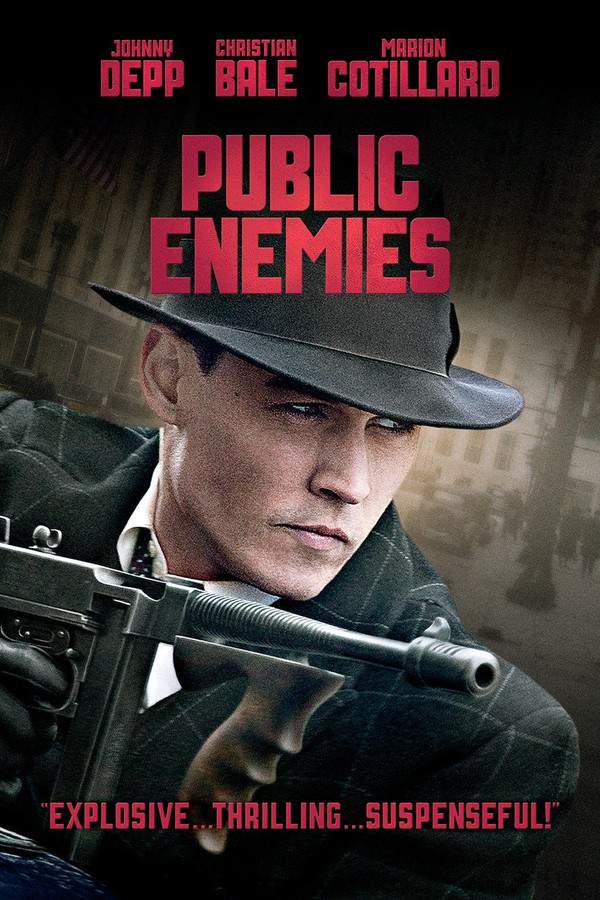
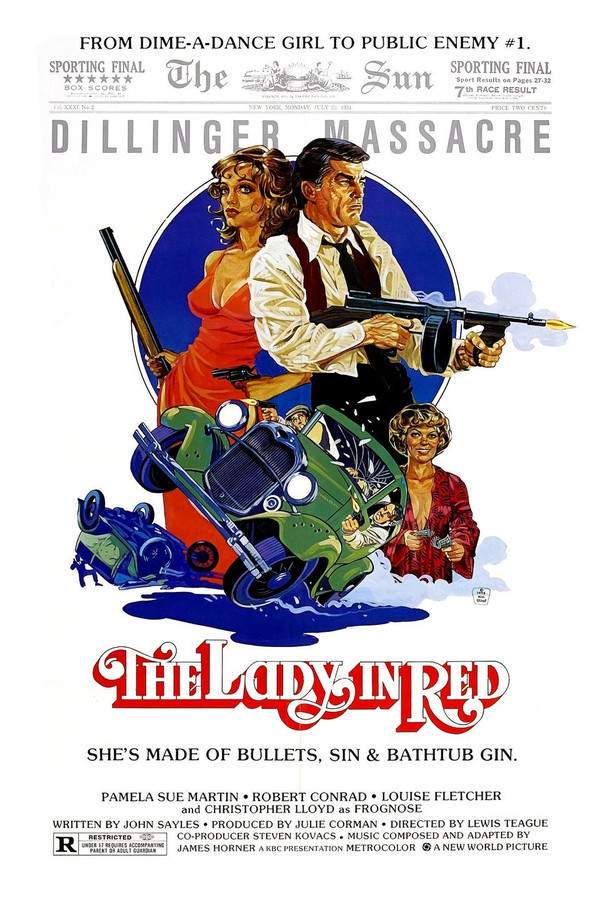


Featured on this page

What's After the Movie?
Not sure whether to stay after the credits? Find out!
Check out our other apps:

SAT Sphere
Build confidence for the Digital SAT.

Mori Atlas
Discover wild places worth protecting.

Luntero
Search smarter for a home in Amsterdam.

Plot Explained
Unravel movie endings and hidden clues.

Pokechamp
Dive into Pokémon data and battle logic.

Driving Theory
Get ready for your European theory test.

Movie Dust
Plan your next cinema trip with ease.

Musemap
Find art and culture as you travel.

Selkobase
Compare credentials before committing.

Local Manual
Turn an unfamiliar country into practical next steps.

Lernavi
Compare school systems before your next move.

GymRoam
Find a workout stop wherever your plans take you.
Explore Our Movie Platform
New Movie Releases (2026)
Famous Movie Actors
Top Film Production Studios
Movie Plot Summaries & Endings
Major Movie Awards & Winners
Best Concert Films & Music Documentaries
Movie Collections and Curated Lists
© 2026 What's After the Movie. All rights reserved.
Privacy Policy