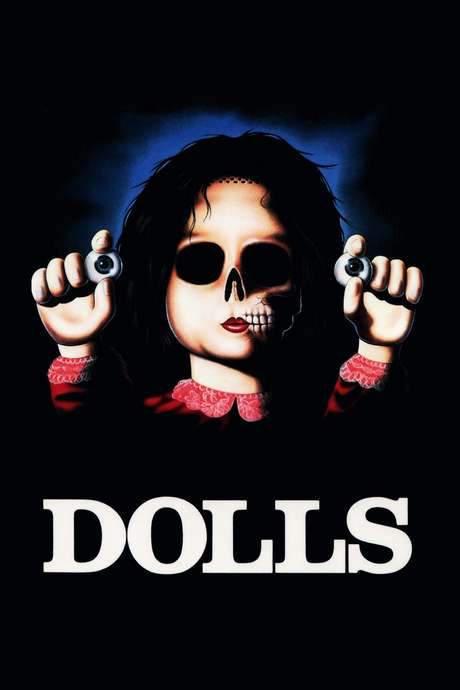
What Is Devil Doll About?
The premise of Devil Doll in 267 words, with nothing given away. The full story follows below.
The fog‑laden streets of post‑war London give way to a velvet‑curtained theatre where a charismatic performer known only as The Great Vorelli commands the stage. Beside him sits Hugo, a silent wooden figure that seems to breathe in the dim glow of the footlights, its stillness unsettling and its occasional movement inexplicably lifelike. The act is a delicate dance of illusion and suggestion, a blend of hypnotic phrasing and ventriloquist precision that leaves the audience aware of a line being crossed but unable to name it.
Into that electric atmosphere arrives Mark English, a sharp‑tongued American reporter sent to uncover the secrets behind Vorelli’s fame. He brings with him Marianne Horn, an adventurous heiress whose wealth and curiosity make her both a perfect subject and a potential prize. Their partnership is instantly charged: Mark’s journalistic skepticism clashes with Marianne’s flamboyant confidence, while both are irresistibly drawn to the magnetic pull of the show and the enigmatic relationship between master and dummy. Their presence begins to ripple through the backstage world, hinting at motives that extend far beyond mere entertainment.
Behind the glittering performances lurks a mood of quiet dread, as whispers speak of hypnotic control that blurs the boundaries between flesh and wood, life and artifice. The theatre becomes a liminal space where reality is questioned and the power of suggestion feels almost tangible. In this world of shadowed corridors and locked cages, Vorelli’s mesmerizing presence suggests that the true spectacle may be the unseen tug of his will, a force that could reach far beyond the stage and into the very fortunes of those who watch.
What Happens in Devil Doll?
The complete story of Devil Doll, from the first scene to the last, in 967 words (about 4 minutes). Spoilers throughout.
Spoilers ahead
Stage hypnotist/magician The Great Vorelli [Bryant Haliday] and his eerie dummy Hugo [Sadie Corre] perform before a packed audience in London, their uneasy dynamic obvious to all who watch. The crowd senses a chill whenever Hugo sits, motionless, in his chair, while Vorelli keeps a tight and locked cage between acts—an ominous reminder that the act isn’t merely stagecraft. Into this world steps American reporter Mark English [William Sylvester], assigned to cover the mysterious performer, who quickly brings along his glamorous companion, Marianne Horn [Yvonne Romain], a wealthy heiress with her own ambitions and a taste for adventure. The pair are drawn into Vorelli’s orbit, and Marianne’s curiosity surfaces as she accompanies Mark to a subsequent show, a choice that will plunge them deeper into a net of hypnotic power and dangerous secrets.
At the London venue, Vorelli invites a volunteer from the audience, and Mark, eager to see beneath the surface, persuades Marianne to volunteer herself. What follows is a show that blends magic with manipulation: Vorelli hypnotizes Marianne and makes her dance the twist, while Hugo appears to animate on his own, scuttling from his chair and moving about as if propelled by a will not his own. The illusion captivates the guests, who attribute Hugo’s movements to clever stagecraft, yet Mark’s eye finds a disturbing truth: the dummy is ordinary in construction, lacking any clockwork, mechanisms, or a hidden operator that could account for such life-like motion. Mark’s suspicions shift from trick to danger when he pursues answers by inviting Vorelli to Marianne’s aunt’s charity ball, hoping to observe the act under more controlled conditions and to uncover what exactly keeps Hugo animated.
The ball takes place at a grand mansion owned by Marianne’s aunt, and the tension between Marianne’s fragile autonomy and Vorelli’s coercive sway escalates. Hugo, seemingly in league with the act, seizes a knife from the buffet and lashes out at Vorelli—an attack that the guests misread as part of the performance, another twist in the spectacle. Mark continues his quiet scrutiny, and a breakthrough comes when he discovers that Hugo is a lifelike puppet only to the casual observer; there is no hidden mechanism—and the truth seems to threaten the entire illusion. Back at Marianne’s home, a darker act unfolds as Vorelli uses his power to subdue Marianne’s will, raping her as Hugo, hidden away, watches with a sentient, anguished plea that he cannot escape the past.
That same night, Hugo appears in Mark’s room and utters a chilling plea: “Help me … 1948 … Berlin,” a fragment of memory that hints at a history far beyond the current stage. Marianne’s health soon deteriorates into a semi-conscious state that doctors cannot explain, and Mark, now deeply invested, begins to piece together Vorelli’s shadowy history. He learns that Vorelli was once a medical doctor who dabbled in Eastern mysticism, a man who was eventually disbarred. Through a colleague, Mark meets Mercedes, who lived to tell the tale of Vorelli’s earlier experiments and the fates of his assistants. Mercedes explains that Hugo once worked for Vorelli in 1947, and that the puppet was hypnotized in such a way that he could not feel pain as part of their act. In a chilling sequence, Hugo is stabbed on stage, initially unfeeling, but later flinching—proof that something beyond trickery binds Hugo to the puppet. The death is hushed as an accident, but Mercedes’ testimony is a catalyst for Mark’s resolve: there is a deliberate cruelty at the heart of Vorelli’s routines, and Marianne’s life may depend on exposing it.
As Marianne regains a spark of consciousness, Magda Gardinas [Sandra Dorne], Vorelli’s current assistant and lover, becomes a target of his temper and a potential whistleblower. Magda’s outrage at the rape of Marianne prompts a dangerous exchange, and Vorelli retaliates by pressuring Hugo into murder, urging him to strike Magda with a knife when the stage crew are away. The plan is executed with cold precision, and Magda’s fate becomes a grim reminder of the lengths to which Vorelli will go to protect his secrets. Vorelli then fills the ranks with a fresh, younger assistant named Grace [Heidi Erich], whom he also puts under his hypnotic control, expanding the troupe’s capacity to hypnotize and manipulate.
The plot thickens as Vorelli targets Marianne again, visiting her home and using his power to bind her to the idea of marriage. He confides in Hugo a chilling scheme: to marry Marianne in Spain and transfer her spirit into another doll before letting her body die—an inheritance scheme hidden beneath the veneer of love. In a cruel turn, Hugo, confined in his cage, resists the plan and lashes out at the doll meant for Marianne. The struggle escalates into a clash where the two souls—Vorelli’s and Hugo’s—interact in a terrifying, tangible way. Hugo’s ferocity breaks the doll’s façade, and Vorelli soon reasserts control, locking Hugo back in his cage. Mark enters the scene just as Vorelli speaks in Hugo’s voice, claiming that Hugo’s soul has shifted into Vorelli’s body and that Marianne’s hypnotized state has been broken. The revelation is as monstrous as it is astonishing: Hugo and Vorelli have traded places in a literal, existential exchange, and the former puppet begs for help from Mark as the room holds its breath.
In the end, what began as a sensational stage act spirals into a confrontation that tests truth, desire, and the price of power over the mind. The Great Vorelli’s mastery over Hugo’s body and Marianne’s will is unmasked, but the final twist leaves Mark and the audience with a haunting question: who truly wields the power—the hypnotist or the puppet? And as the puppet’s cry fades, the implications linger, a reminder that some performances reach beyond the stage and into the deepest corridors of the human psyche.
Devil Doll Timeline: Every Key Event in Order
13 key events in the order they happen, from “London stage premiere and tense setup” to “The revelation of the soul swap”. 13 events name a place, across 11 locations.
- 1
London stage premiere and tense setup
Stage hypnotist The Great Vorelli and his dummy Hugo perform before a packed London audience. The audience notices a growing tension between Vorelli and his puppet, which he keeps locked away in a cage between acts. American reporter Mark English is assigned to cover the act and convinces his girlfriend Marianne Horn to attend the show.
When:Evening Where:London theatre
- 2
Marianne hypnotized on stage
During the show, Vorelli selects a volunteer and hypnotizes Marianne, making her dance the twist. The hypnotism appears to have a real effect, until Hugo seems to move on his own during the ventriloquism routine. Mark watches closely, suspecting there is more to Hugo than a simple dummy.
When:During the show Where:London theatre
- 3
The ball invitation and test
To get a closer look at Hugo, Mark convinces Marianne to invite Vorelli to her aunt's charity ball. Onstage during the ball, Hugo moves to seize a knife from a buffet and tries to stab Vorelli, but the act continues as if nothing happened. Guests believe the stabbing was part of the illusion.
When:Evening of ball Where:Marianne's aunt's mansion, London
- 4
Hugo exposed as a real dummy by Mark
Mark secretly examines Hugo and discovers there is no mechanism or operator to power the puppet. He realizes Hugo is truly a lifelike puppet controlled by something unseen. This discovery shakes his confidence in Vorelli's stage craft.
When:During the ball Where:Aunt's mansion (ballroom/backstage)
- 5
Rape and a chilling hint from Hugo
That same night, Vorelli uses hypnotic power to subdue Marianne as she stays at the mansion. He rapes her, and in Mark's room Hugo suddenly appears and pleads for help before vanishing. The night ends with Marianne in a state of shock.
When:Night Where:Marianne's aunt's mansion; Mark's room
- 6
Marianne falls into a coma
Marianne lapses into a semi-conscious coma that doctors cannot alleviate. In a lucid moment she tells Mark that 'He keeps calling me' and to 'Make him stop.' Mark links her condition to Vorelli's hypnotic control and vows to uncover the truth.
When:Following the ball Where:Hospital
- 7
Mark investigates Vorelli's past
Mark consults a colleague and learns that Vorelli was once a medical doctor dabbling in Eastern magic and was disbarred. The revelation suggests a dangerous blend behind the illusion. This drives Mark to pursue the former associates of Vorelli.
When:Shortly after Marianne's coma Where:London, investigator's office
- 8
Mercedes reveals Hugo's backstory in Berlin
Through a former assistant named Mercedes in Berlin, Mark learns that Hugo worked for Vorelli in 1947 and was hypnotized into a pain-free state. Mercedes recounts how Vorelli stabbed Hugo on stage, and Hugo reacted with pain only later. The incident was ruled an accident, and no one believed Mercedes's story, despite a theatre worker testifying the puppet moved after Hugo screamed.
When:1947-1948 Where:Berlin
- 9
The theatre worker's testimony
A theatre worker testifies that the dummy moved immediately after Hugo screamed in pain, contradicting the illusion that Hugo is merely a puppet. The story supports Mercedes's claim that Hugo's soul was involved in the act. Mark's confidence grows that Vorelli engineered Hugo's death.
When:During investigation Where:London theatre
- 10
Magda's confrontation and fatal outcome
Vorelli's current lover Magda grows enraged at the rape and threatens to expose him. Vorelli taunts Hugo into murdering Magda with a knife, exploiting the chaos as stage crew are elsewhere. The attack demonstrates the depth of Vorelli's control over others.
When:During the night of the ball Where:Theatre backstage
Show the other 3 events of Devil Doll Hide the last 3 events
- 11
Grace becomes the new hypnotic instrument
Vorelli hires a younger assistant named Grace to replace Magda and subjects her to the same hypnotic control. He uses Grace to maintain his act and extend his hold over Marianne's fate. The power of his methods grows more dangerous with each manipulation.
When:Shortly after Magda's murder Where:Theatre
- 12
Marianne's marriage proposal and plan to transplant her spirit
Vorelli visits Marianne and hypnotizes her into agreeing to marry him. He confides his plan to Spain, where he intends to transfer Marianne's spirit into another doll before letting her body die and inheriting her wealth. He opens Hugo's cage, intending to discipline Hugo for his recent rebellions.
When:Before the finale Where:Marianne's home
- 13
The revelation of the soul swap
Hugo bursts into Marianne's life through a struggle with Vorelli, and the two souls interact as the puppet and the man battle. Vorelli locks Hugo back in his cage and claims Hugo's soul is now in his body, while Marianne's hypnotized state is broken. Mark arrives as Vorelli, speaking through the voice of Hugo, begs for help while the truth of the swap becomes clear.
When:Final confrontation Where:Vorelli's room
Who Are the Main Characters in Devil Doll?
7 characters, among them The Great Vorelli (Bryant Haliday), Marianne Horn (Yvonne Romain) and Mark English (William Sylvester): who each one is and the part they play in the story. Every profile links to the actor’s page.
- TG
The Great Vorelli (Bryant Haliday)
Played by Bryant Haliday
A renowned stage hypnotist who blends illusion, medical arrogance, and Eastern mysticism. He can subdue others with a single will and weaponize minds for his gain, including raping Marianne and imprisoning Hugo within a doll. His charm masks a dangerous, controlling personality that will stop at nothing to protect his act and wealth.
- 🧠 Mind control
- 🪄 Illusionist
- 🎭 Villain
- MH
Marianne Horn (Yvonne Romain)
Played by Yvonne Romain
A wealthy heiress swept into Vorelli’s orbit and into hypnotic submission. She becomes the instrument of Vorelli’s plan, then a victim trapped in a paralytic trance that Mark must unravel. Her struggle reveals the fragility of autonomy against charismatic power.
- 💎 Heiress
- 🧠 Mind-control victim
- 🫂 Victim of manipulation
- ME
Mark English (William Sylvester)
Played by William Sylvester
An American reporter investigating Vorelli, skeptical of the apparent miracles. He becomes Marianne’s ally as he deciphers Vorelli’s past and tries to rescue her from hypnotic control. His persistence drives the investigation into a deadly truth.
- 🗞️ Reporter
- 🕵️ Investigator
- 🧭 Investigator
- HT
Hugo the Dummy (Sadie Corre)
Played by Sadie Corre
The puppet that seems to move of its own accord and later is revealed as a vessel for Hugo's soul. Hugo’s struggles against captivity culminate in a violent clash with Vorelli, highlighting the blurring line between man and automaton.
- 🤖 Puppet
- 🪦 Soul transfer
- 🧭 Tragic figure
- M(
Mercedes (Lorenza Colville)
Played by Lorenza Colville
A former Vorelli assistant who can confirm the backstory of Hugo and the doll’s unsettling past. She serves as a crucial link to the truth behind Hugo’s transfer and Vorelli’s black magic.
- 🗝️ Secret keeper
- 🗺️ Witness
- 🧭 Informant
- MG
Magda Gardinas (Sandra Dorne)
Played by Sandra Dorne
Vorelli's current lover and assistant who becomes entangled in the scheme. Her defiance and threat of reporting the crimes escalate the danger, culminating in a fatal confrontation.
- 💔 Lover turned victim
- 🗝️ Secret relationship
- 🗡️ Threatened
- G(
Grace (Heidi Erich)
Played by Heidi Erich
A younger assistant brought into Vorelli’s hypnotic orbit. She represents a new, more vulnerable target under his control, illustrating the ongoing cycle of exploitation.
- 🤝 Assistant
- 🧭 Hypnosis
- 🆕 Challenger
Where and When Is Devil Doll Set?
Devil Doll is set in London, England, Berlin, Germany and Spain (1940s). Here is why the time and place matter to the story.
When
1940s
Set in the late 1940s, the tale unfolds across postwar Europe. London provides the glittering but sinister backdrop of stage magic and high-society balls, while Berlin's recent war-past haunts the backstory through Hugo's memories. The film hints at a Spain-bound finale in Marianne's future, reflecting a Europe attempting to heal while old powers linger. The time period emphasizes a world where science, superstition, and wealth collide.
Where
London, England; Berlin, Germany; Spain
London serves as the primary stage for The Great Vorelli's act, with his hypnotic show captivating a packed audience. The story moves from smoky theatres to a grand aunt's mansion during a charity ball, showcasing high society’s gaze on illusion and danger. Berlin memories surface in Hugo's past, hinting at a war-ravaged backdrop. The plot also touches on an eventual move toward Spain as a destination for Marianne's fate.
- 🎭 Stagecraft
- 🗺️ Travel
- 🏛️ High society
What Are the Themes of Devil Doll?
3 ideas the story keeps returning to, among them Mind Control, Secrets & Identity and Betrayal & Power.
-
01
Mind Control
The film centers on hypnotism and the manipulation of free will. Vorelli wields psychological power to bend Marianne and Hugo to his will, blurring lines between performer and puppeteer. The narrative probes how control, once granted, can corrupt and destroy lives. The danger lies in believing that will is not one's own.
-
02
Secrets & Identity
Hidden pasts drive the plot: Vorelli's medical history, Hugo's soul transfer, Mercedes' warnings, and Marianne's waking nightmare. The mystery unfolds through clues and testimonials, gradually exposing who is real and who is a vessel for another's spirit. The film treats memory as a fragile key that can unlock or trap a person’s essence. The tension comes from what characters keep concealed.
-
03
Betrayal & Power
Romantic and professional betrayals fuel the drama: Vorelli rapes Marianne, Magda betrays trust, and Hugo rebels against his cage. Power is exercised through fear, manipulation, and the threat of violence. The story asks how much people are willing to sacrifice for ambition, wealth, or love. The climactic struggle exposes the true cost of wielding control.
What Kind of Film Is Devil Doll?
Dark in tone, with steady pacing and a moderate story, going by the plot summary.
- Tone
- Dark
- Pacing
- Steady
- Story
- Moderate
- Intensity
- High
- Ending
- Ambiguous
A tense and disturbing supernatural thriller that builds a chilling atmosphere of psychological manipulation and dread, centering on a hypnotist's dark power over a living puppet and his victims.
- disturbing
- suspenseful
- ominous
- claustrophobic
- oppressive
- chilling
- hypnosis and mind control
- soul transference
- possession
- good versus evil
Content notes: sexual assault, mind control, murder, psychological horror.
Quiz
How well do you remember Devil Doll? Test yourself on the story.