
Defence Counsel Sedov 1988

Directed by
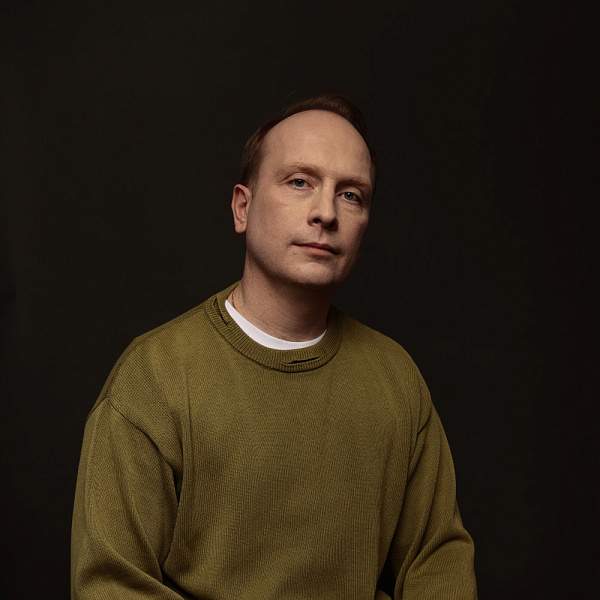
Дмитрий Сорокин
Made by

Mosfilm
Defence Counsel Sedov Plot Summary
Read the complete plot summary and ending explained for Defence Counsel Sedov (1988). From turning points to emotional moments, uncover what really happened and why it matters.
Moscow lawyer Sedov faces a difficult choice when three women from a rural village come to him, pleading to overturn an unjust death sentence handed down to a group of local agronomists under Article 58, a notorious Soviet law aimed at suppressing perceived enemies of the state. At first, he hesitates, aware of the political dangers of taking on a case that could roil the capital’s power structure. Yet the women’s emotional appeal finally sways him, and he travels to the provincial town of Ensk where the trial is taking place, determined to uncover the truth behind the charges.
In Ensk, Sedov begins a careful investigation and slowly reveals a web of lies and procedural violations that taint the entire case. The more he probes, the more he realizes that the proceedings are built on falsified evidence, biased investigations, and secret pressures that threaten to ruin innocent lives. He reaches for a path within the law, appealing to the court’s higher conscience and to the idea that justice must be grounded in facts, not in fear or expedience. He frames his struggle as a test of legality against a backdrop of political theater, noting that real justice should withstand scrutiny rather than bow to expedient verdicts.
As the investigation deepens, NKVD agents arrive at Sedov’s law office and detain him, pulling him into a courtroom drama that exposes the theater of legal proceedings under a regime wary of dissent. The prosecutor pronounces with feverish drama that all officials involved in the investigation were executed as “Trotskyite-Bukharinite agents,” “saboteurs,” and “spies,” while the agronomists are exonerated. The judge and audience respond with a manufactured sense of triumph as the prosecutor congratulates Sedov for his supposed “vigilance” in revealing the latest conspiracy. The televised arc of justice here is a stark reminder that the law can be weaponized and that saving a few lives may come at an immense and unintended cost, as Sedov’s actions ultimately contribute to a greater number of deaths than he intended to prevent.
The film presents a measured, somber meditation on power, fear, and the fragility of due process. It asks hard questions about accountability: when a single prosecutor’s rhetoric can rewrite reality, and when a courtroom becomes a stage for political might rather than a sanctuary for truth. Sedov’s journey—from cautious defender to a man who must face the consequences of a system-configured verdict—offers a nuanced look at courage in a time when law and liberty are in fragile balance.
The film features performances by Vladimir Ilin, Sergey Serov, Natalya Shchukina, and Aleksandr Zharkov, whose presence grounding the story with a sense of immediacy and humanity. Their work helps to illuminate the moral complexity at the heart of a case built on deception and coercion, making the drama feel real and fiercely relevant.
- The cast also includes a broad ensemble of characters portrayed by a range of talents such as Garik Sukachyov, Mikhail Remizov, Albina Matveyeva, Vsevolod Larionov, Aleksandr Sazhin, Vatslav Dvorzhetsky, Mariya Barabanova, Vitaliy Yakovlev, and Tamara Chernova, each contributing to a tapestry that underscores the film’s chilly portrait of a justice system under pressure.
Defence Counsel Sedov Timeline
Follow the complete movie timeline of Defence Counsel Sedov (1988) with every major event in chronological order. Great for understanding complex plots and story progression.
Three village women seek Sedov's help
Three women from a rural village visit Sedov in Moscow, pleading to overturn an unjust death sentence against local agronomists under Article 58. Sedov is wary of the political danger involved in defending such a case. The women's desperation and emotional appeal ultimately push him to consider taking the case.
Reluctant decision to act
Despite fears of reprisals, Sedov decides to take the case after the women's pleas. He understands the risks of challenging the state's narrative. The decision marks a turning point from private defense to confronting state power.
Sedov travels to Ensk for the trial
Sedov travels from Moscow to the provincial town of Ensk where the trial is taking place. The journey situates him within the machinery of a politically charged case. This move sets the stage for his investigation.
Sedov begins an investigation
In Ensk, Sedov questions locals, reviews documents, and begins to see that the case against the agronomists is built on weak or fabricated evidence. He notes early signs that due process has been undermined. The investigation shifts the case from legal argument to exposing systemic failure.
Uncovers fabrication and due-process violations
Sedov uncovers a complete fabrication of the charges and gross procedural violations. He documents coerced testimonies and rigged procedures that distort justice. The case's legitimacy collapses under his scrutiny.
Appeal to the Great Prosecutor
Spurred by his findings, Sedov prepares and submits an appeal to the Great Prosecutor (implied to be Andrey Vyshinsky), seeking relief for the accused and exposing the irregularities. The appeal positions him against the state's power center. It signals a direct challenge to the official narrative.
NKVD arrests Sedov
Soon after, NKVD agents descend on Sedov's law office in Ensk and arrest him. The action demonstrates the regime's intolerance for dissent and preserves control through intimidation. He is taken into custody to face further proceedings.
Sedov in the courtroom
Sedov finds himself in a courtroom where the prosecution stages a dramatic moment around the case. The atmosphere is tense, blending legal theatre with political theater. The proceedings become a focal point of the wider purge.
Dramatic verdict: officials executed, agronomists exonerated
The prosecutor dramatically announces that officials involved in the investigation have been executed as Trotskyite-Bukharinite agents, saboteurs, and spies, while the agronomists are exonerated. The ruling underscores the state's readiness to rewrite justice through public ritual. It reveals the chilling efficiency of the purge system.
Sedov praised for vigilance
The prosecutor urges the court to applaud Sedov for his vigilance in uncovering the conspiracy. The moment frames him as a hero in a contrived narrative. Yet the sense of triumph is muted by the realization that the victory masks further bloodshed.
The cost of justice
Although some innocent lives are saved, Sedov unwittingly becomes responsible for the deaths of many more as a consequence of the purge. The events illustrate the paradox of justice within a repressive system. The moral costs weigh heavily on him.
Aftermath and moral of the story
The story ends with a grim meditation on justice under a totalitarian regime, highlighting the perilous balance between defending the innocent and fueling systemic violence. Sedov's fate remains ambiguous, underscoring how even noble acts can have tragic consequences. The film leaves the viewer to ponder the true price of truth in such a system.
Defence Counsel Sedov Characters
Explore all characters from Defence Counsel Sedov (1988). Get detailed profiles with their roles, arcs, and key relationships explained.
Sedov
A Moscow lawyer who is initially reluctant to take the case due to political risk. He travels to Ensk to investigate the trial and discovers it is a fabrication built on procedural violations. He appeals to the Great Prosecutor, and his actions unleash the machinery of repression, saving some lives while helping to cause others.
Three women from a rural village
A trio who travel to plead for Sedov's help in overturning the death sentence against local agronomists. Their emotional appeal exposes the villagers' vulnerability under a harsh, politically charged legal system. Their faith in justice motivates Sedov to act, even as the system closes in.
Great Prosecutor (Andrey Vyshinsky)
A powerful official who declares officials involved in the investigation executed and exonerates the accused, embodying the state's coercive legal machinery. He frames the case as vigilance against conspirators, masking political expedience with legal rhetoric. His presence anchors the film's critique of show-trial politics.
NKVD Officers
Agents arrive at Sedov’s office to arrest him, embodying the regime’s coercive power. In the courtroom, the state uses fear and swift punishment to suppress dissent. They symbolize the enforcement arm of mass repression that follows the fabricated case.
Defence Counsel Sedov Settings
Learn where and when Defence Counsel Sedov (1988) takes place. Explore the film’s settings, era, and how they shape the narrative.
Time period
1930s Soviet Union
Set in the late 1930s during Stalin's purges and the height of Article 58, the era sees show trials and swift punishments carried out by the NKVD. The climate of fear shapes every decision and every legal maneuver. The Great Prosecutor’s theatrical prosecutions expose how law is weaponized for political ends.
Location
Moscow, Ensk
Sedov begins in Moscow, a major political and legal hub, before traveling to the provincial town of Ensk for the trial. The urban-rural contrast highlights the reach of state justice and the fragility of local rights. Ensk serves as the stage where the case's fabrication and procedural violations come to light.
Defence Counsel Sedov Themes
Discover the main themes in Defence Counsel Sedov (1988). Analyze the deeper meanings, emotional layers, and social commentary behind the film.
⚖️
Justice vs Power
Sedov's pursuit of a fair trial clashes with the state's machinery. The investigation reveals procedural violations and the manipulation of the case for political ends. The story questions whether law can safeguard the innocent when political pressures override the truth.
🗣️
Truth vs Propaganda
The courtroom becomes a stage where appearances mask reality. The film hints at fabricated charges and forced confessions used to justify harsher measures. It shows how information can be weaponized to mold public opinion.
🕊️
Duty and Consequence
Sedov's sense of duty drives him to defend the unjust, yet his efforts contribute to collateral tragedy. The pursuit of justice carries a heavy price for many who are swept up by the regime. The film invites viewers to reflect on responsibility within a climate of mass fear.

Coming soon on iOS and Android
The Plot Explained Mobile App
From blockbusters to hidden gems — dive into movie stories anytime, anywhere. Save your favorites, discover plots faster, and never miss a twist again.
Sign up to be the first to know when we launch. Your email stays private — always.
Explore the mobile appDefence Counsel Sedov Spoiler-Free Summary
Discover the spoiler-free summary of Defence Counsel Sedov (1988). Get a concise overview without any spoilers.
In the winter of 1937, Moscow looms under the weight of a regime that turns ordinary streets into corridors of suspicion. The city’s grand avenues and cramped communal apartments pulse with the quiet dread of a society where law and ideology are inseparable, and every whispered request can ripple into dangerous consequence. The atmosphere is dense with propaganda, the clang of bureaucratic machinery, and an ever‑present sense that the line between justice and terror is being constantly redrawn.
Enter Sedov, a seasoned defence counsel whose reputation rests on a measured intellect and an unshakable belief that the law can still shield the innocent. When three desperate women from a distant village arrive at his office, pleading for help to overturn the death sentences imposed on their husbands, the case forces him to confront the very foundations of the system he serves. Though initially wary of the political peril, the raw humanity in their appeal awakens a compulsion that drives him beyond the comfort of his courtroom routines.
What follows is a collision between a determined lawyer and a hierarchy that guards its own secrets ferociously. Sedov begins to pry open a file that many would prefer to keep buried, drawing the attention of senior officials whose indifference to individual suffering is as chilling as it is absolute. The stakes rise as his pursuit of truth places him on a precarious path, marking him as a fervent enforcer of the very doctrine he seeks to challenge. The tension builds quietly, a slow, oppressive pressure that mirrors the era’s pervasive atmosphere of fear.
The film moves with a stark, almost austere visual style, emphasizing stark shadows and muted palettes that echo the moral ambiguity of its time. Dialogues are measured, heavy with subtext, while the relentless backdrop of state surveillance creates a palpable sense of unease. As Sedov navigates the labyrinthine legal and political landscape, the audience is drawn into a world where conviction can become both shield and sword, and where the quest for justice may lead to unforeseen, unsettling horizons.
Movies with Similar Twists and Themes
Uncover films that echo the narrative beats, emotional arcs, or dramatic twists of the one you're exploring. These recommendations are handpicked based on story depth, thematic resonance, and spoiler-worthy moments — perfect for fans who crave more of the same intrigue.


Featured on this page

What's After the Movie?
Not sure whether to stay after the credits? Find out!
Check out our other apps:

SAT Sphere
Build confidence for the Digital SAT.

Mori Atlas
Discover wild places worth protecting.

Luntero
Search smarter for a home in Amsterdam.

Plot Explained
Unravel movie endings and hidden clues.

Pokechamp
Dive into Pokémon data and battle logic.

Driving Theory
Get ready for your European theory test.

Movie Dust
Plan your next cinema trip with ease.

Musemap
Find art and culture as you travel.

Selkobase
Compare credentials before committing.

Local Manual
Turn an unfamiliar country into practical next steps.

Lernavi
Compare school systems before your next move.

GymRoam
Find a workout stop wherever your plans take you.
Explore Our Movie Platform
New Movie Releases (2026)
Famous Movie Actors
Top Film Production Studios
Movie Plot Summaries & Endings
Major Movie Awards & Winners
Best Concert Films & Music Documentaries
Movie Collections and Curated Lists
© 2026 What's After the Movie. All rights reserved.
Privacy Policy