What Is Death of a President About?
The premise of Death of a President in 305 words, with nothing given away. The full story follows below.
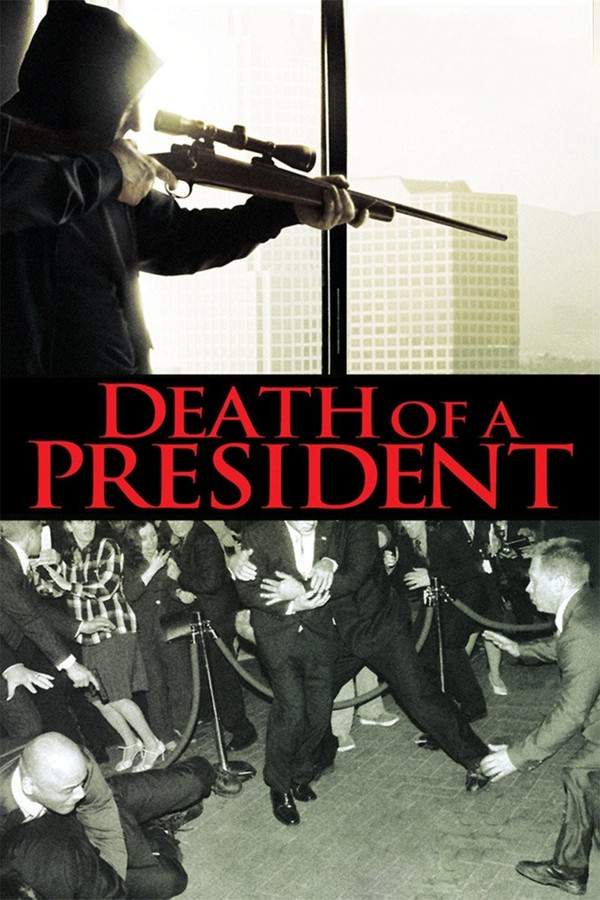
In a world where a single, shocking event reshapes a nation, the film opens with a television‑style documentary that pieces together news broadcasts, interview snippets, and grainy surveillance footage. The sudden death of President George W. Bush in 2007 sends the country reeling, and the camera follows the frantic scramble of officials, journalists, and ordinary citizens trying to make sense of what has occurred. The visual language is deliberately raw, emphasizing the immediacy of a crisis that feels both personal and political.
At the heart of the investigation rises Jamal Abu Kikri, an IT professional of Syrian origin, who quickly becomes the focal point of the official narrative. Parallel to his emergence, Dick Cheney steps into the role of acting president, leveraging the tragedy to argue for expansive security measures. The atmosphere is charged with the tension between a government eager to assert control and a public hungry for answers, a dynamic that fuels a feverish debate over civil liberties and the limits of executive power.
The courtroom becomes another arena where the story unfolds, spotlighting families caught in the crossfire of a high‑profile trial. Zahra watches the proceedings with a mixture of dread and resolve, while voices like Marianne Claybon hint at alternative possibilities that challenge the prevailing storyline. The documentary format allows these perspectives to surface through candid interviews, suggesting that truth may be more layered than the initial accusations imply.
Throughout, the film maintains a somber, investigative tone, constantly reminding the viewer that the mechanisms of surveillance and political maneuvering are as much part of the narrative as the individuals at its center. By interweaving personal testimonies with the broader institutional push for the PATRIOT Act III, the story invites the audience to contemplate how power, fear, and the search for justice intersect when the very foundations of the nation are shaken.
What Happens in Death of a President?
The complete story of Death of a President, from the first scene to the last, in 558 words (about 2 minutes). Spoilers throughout.
Spoilers ahead
Broadcast in 2008, the film unfolds as a TV documentary-style exploration that blends talking-head interviews, news coverage clips, and video surveillance footage to reconstruct the events surrounding the assassination of President George W. Bush in Chicago on October 19, 2007. The narrative follows the immediate aftermath as authorities, media outlets, and political leaders scramble to interpret the attack and its implications. The central figure who rises as the prime suspect is Jamal Abu Zikri (Malik Bader), an IT professional of Syrian origin, whose alleged ties are quickly woven into a broader security narrative.
As the investigation unfolds, Vice President Dick Cheney, acting as president, leans into the possibility of an al-Qaeda connection to justify a sweeping domestic security push. He advocates for the passage of PATRIOT Act III, aiming to broaden the investigative powers of the FBI, police, and other agencies over both citizens and foreign residents, all while contemplating aggressive policy steps that even hint at actions against Syria. In this tense climate, the film tracks how political agendas can intersect with criminal cases, shaping what information surfaces and what remains hidden from public view.
In the courtroom, the story pivots to the families and the legal process. Zahra [Hend Ayoub] listens as the verdict lands on Jamal Abu Zikri: he is convicted of the president’s murder and sentenced to death based on forensics that the film presents as questionable. The case takes a striking turn with a forthcoming report that, supported by interviews with Marianne Claybon (Chavez Ravine), points toward Al Claybon, a Gulf War veteran who lived in Rock Island, Illinois, and is the father of David Claybon, a U.S. soldier killed in Iraq, as the likely killer. The assassin, who purportedly blames Bush for his son’s death, ends his own life after the assassination. A suicide note addressed to his other son, Casey Claybon (Neko Parham), an Iraq War veteran in Chicago, further complicates the mystery and fuels new suspicions about who was truly responsible. The film emphasizes how narratives can shift as new information surfaces, even within the same investigation.
Ten months after the shooting, Zikri remains on death row as government officials delay his legal appeal, highlighting the tension between legal due process and political pressure. In the Rock Island home of the late Al Claybon, Casey uncovers material that suggests his father’s involvement in planning the attack, including a startling top-secret presidential itinerary that outlines Bush’s precise Chicago whereabouts on the day of the crime. This discovery raises the question of how such highly sensitive information could have fallen into the hands of someone connected to the incident, keeping the audience focused on the fragility of information security in high-stakes political moments. The documentary keeps returning to the theme that power and surveillance are deeply intertwined, influencing both the pursuit of truth and the choices of those in government.
As the closing titles roll, the film asserts that Cheney’s USA PATRIOT Act III was signed into permanent law, declaring that it “granted investigators unprecedented powers of detention and surveillance, and further expanded the powers of the executive branch.” The implication lingers: while the hunt for the truth about a single tragic act continues, the legal framework surrounding national security has already expanded, shaping how future cases might be handled and how much room remains for doubt in the pursuit of justice.
Death of a President Timeline: Every Key Event in Order
12 key events in the order they happen, from “Presidential assassination in Chicago” to “PATRIOT Act III becomes law”. 9 events name a place, across 6 locations.
- 1
Presidential assassination in Chicago
President George W. Bush is fatally shot after addressing an economic forum at the Chicago Sheraton. The anti-war rally held earlier adds to the tense atmosphere. News crews immediately begin live coverage of the shooting and its political fallout.
When:19 October 2007 Where:Chicago, Illinois
- 2
Immediate media coverage and political fallout
News outlets report the assassination and debate its implications for U.S. policy and leadership. The incident triggers a flood of analysis about security, terrorism, and the administration's future direction. The TV documentary format emphasizes the rapid news cycle surrounding the event.
When:19 October 2007
- 3
Investigation identifies Jamal Abu Zikri as a leading suspect
Authorities arrest and interrogate war-protesting detainees as the case unfolds. Jamal Abu Zikri, described as an IT professional of Syrian origin, becomes the prime suspect tied to the shooting. Investigators scrutinize potential links to anti-war movements and foreign threats.
When:late October 2007
- 4
Cheney, now president, leverages the case to push security laws
Vice President Dick Cheney assumes the presidency and links the suspected killer to possible al-Qaeda ties to bolster a domestic security agenda. He advocates expanding investigative powers for federal and local agencies as part of a broader crackdown. The push sets the stage for PATRIOT Act III.
When:late 2007 Where:Washington, D.C.
- 5
Conviction and death sentence for Zikri
Zikri is convicted of killing the U.S. President and sentenced to death based on forensic evidence described as dubious. The verdict occurs amid intense courtroom emotion as the defendant's family witnesses the proceedings. The ruling solidifies Zikri’s role in the public narrative surrounding the assassination.
When:August 2008 Where:Illinois courtroom
- 6
New report implicates Al Claybon as the likely killer
A fresh investigation surfaces indicating that the perpetrator was most likely Al Claybon, husband of Marianne Claybon and father of David Claybon. The report ties his identity to a Rock Island, Illinois connection and notes his Gulf War veteran background. It reframes early assumptions about the shooter’s motives and background.
When:late 2008 Where:Rock Island, Illinois
- 7
Claybon’s suicide after the assassination
The person identified as the killer, Al Claybon, dies by suicide in the aftermath of Bush's assassination. His death closes a personal chapter that is later reexamined by new investigative reports. Casey Claybon’s discoveries begin to surface in this period.
When:October 2007 Where:Rock Island, Illinois
- 8
Casey Claybon discovers his father’s planning in the Rock Island house
In his dead father’s Rock Island house, Casey Claybon uncovers evidence suggesting his father’s involvement in planning the shooting. The finding includes references to a top-secret presidential itinerary outlining Bush’s Chicago movements on 19 October 2007. The discovery fuels further questions about the true perpetrator.
When:August 2008 Where:Rock Island, Illinois
- 9
Top-secret itinerary revealed as key evidence
A copy of a minute-by-minute presidential itinerary appears as the most incriminating piece of evidence. It documents Bush’s exact Chicago whereabouts on the day of the assassination, linking the crime to the case under investigation. Authorities continue probing how this highly sensitive document ended up in the suspect's circle.
When:August 2008 Where:Rock Island, Illinois
- 10
Zikri’s legal appeal delays and ongoing investigation
Even ten months after the assassination, government officials delay Zikri’s legal appeal to keep him on death row. The long wait underscores the film’s themes of political manipulation and the opaque nature of evidence. The government’s investigative effort expands as new theories emerge.
When:August 2008 Where:Stateville Correctional Center, Illinois
- 11
Investigation into who obtained the top-secret document
The closing sections of the film note ongoing investigations into how the top-secret itinerary found its way into a private residence. Officials pursue leads about who had access to sensitive information and how it reached Casey and his family. The pursuit highlights concerns about leaks and the abuse of security powers.
When:late 2008
- 12
PATRIOT Act III becomes law
The film ends by stating that PATRIOT Act III was signed into permanent law in the United States. It asserts that investigators gained unprecedented detention and surveillance powers, and that executive authority was expanded. The closing credits frame the act as a lasting and controversial outcome of the events depicted.
When:post-2008 Where:United States
Who Are the Main Characters in Death of a President?
9 characters, among them Zahra (Hend Ayoub), Jamal Abu Zikri (Malik Bader) and Al Claybon (Tony Dale): who each one is and the part they play in the story. 1 of them link to the actor’s page.
- Z(
Zahra (Hend Ayoub)
Played by Hend Ayoub
Zahra is the wife of Jamal Abu Zikri, depicted in the courtroom and in private moments as she faces the wider consequences of the assassination. Her reactions reflect personal loss amid public scrutiny and political upheaval.
- 👪 Family
- 🏛 Politics
- JA
Jamal Abu Zikri (Malik Bader)
An IT professional of Syrian origin who becomes the initial prime suspect. The film presents his arrest and the dubious, contested forensic links, exploring how his identity is woven into a larger narrative of national security.
- ⚖️ Justice
- 🔎 Investigation
- AC
Al Claybon (Tony Dale)
A Gulf War veteran and father of Casey Claybon; portrayed as a central figure in the eventual assassination, whose grief-driven actions are revealed through the investigative trail and the suicide note.
- 🪖 Veteran
- 🧭 Motives
- CC
Casey Claybon (Neko Parham)
Iraq War veteran living in Chicago, son of Al Claybon; his own role as a suspect evolves as a hidden lineage and motive surface through the discovery of his father’s past actions.
- 🧭 Family
- 🧱 Secrets
- DN
Dawn Norton (Patricia Buckley)
Family attorney who navigates the courtroom proceedings surrounding Zahra and Jamal Abu Zikri; she represents the legal side of a high-profile, politically charged case.
- ⚖️ Justice
- 🗣️ Legal
- MC
Marianne Claybon (Chavez Ravine)
Interviews with Marianne Claybon offer an alternate thread, suggesting her husband Al Claybon as the perpetrator and complicating the official narrative.
- 🗣️ Testimony
- 🧩 Mysteries
- DC
Dick Cheney
The vice president-turned-president uses the case to advocate for expansive security powers, including the controversial PATRIOT Act III, shaping policy and law in the aftermath.
- 🏛 Politics
- 🔐 Security
- DC
David Claybon
A U.S. soldier killed in the Iraq War, whose death intensifies the family’s motive and the national reaction to the assassin’s actions.
- 🎖️ War
- 💔 Loss
- PG
President George W. Bush
The president who is assassinated; the event reverberates through politics and international policy as the country confronts terrorism and domestic security.
- 🎯 Leader
- 🗺️ History
Where and When Is Death of a President Set?
Death of a President is set in Chicago, Illinois, Rock Island, Illinois, Stateville Correctional Center… (Late 2007). Here is why the time and place matter to the story.
When
Late 2007
The core events occur on October 19, 2007, when President Bush is fatally shot in Chicago. The narrative then spans the ensuing months as investigations, trials, and political reactions unfold, with the closing notes hinting at long-term security policy changes. The film also references events from earlier decades (e.g., the 1991 Gulf War) to build context for the characters' motives.
Where
Chicago, Illinois, Rock Island, Illinois, Stateville Correctional Center, Illinois
The assassination takes place in Chicago, Illinois, during an economic forum at the Chicago Sheraton Hotel. The film also threads in Rock Island, Illinois, where a top-secret itinerary ties the crime to a veteran’s family history. Central scenes unfold around the Stateville Correctional Center, where the suspect is held and where legal developments play out in a courtroom setting.
- 🏙️ Urban landscape
- 🗳️ Political intrigue
- 🎬 Documentary-style narrative
What Are the Themes of Death of a President?
3 ideas the story keeps returning to, among them Power & Security, Truth & Evidence and Media & Narrative.
-
01
Power & Security
The narrative shows how political leadership leverages a national tragedy to justify expanding security powers. Cheney, now president, pushes for stronger surveillance and a broader FBI reach, framed as protecting the country from evolving threats. The film critiques the ease with which public fear can be harnessed to change laws and civil liberties.
-
02
Truth & Evidence
The story centers on conflicting attributions of the crime—from Jamal Abu Zikri to Al Claybon—highlighting how forensic evidence can be questioned and how political pressure can shape interpretations. The documentary style blurs lines between eyewitness accounts, official statements, and private motives. It questions the reliability of information released to the public during a crisis.
-
03
Media & Narrative
News coverage and televised debates drive the public reaction, influencing perceptions of guilt and legitimacy. The film uses montage of reports, interviews, and court proceedings to show how narratives are constructed around a political assassination. It underscores the power of media in shaping policy decisions and historical memory.
What Kind of Film Is Death of a President?
Tense in tone, with steady pacing and a complex story, going by the plot summary.
- Tone
- Tense
- Pacing
- Steady
- Story
- Complex
- Intensity
- High
- Ending
- Bleak
A tense and sobering political thriller presented as a documentary, creating a feeling of anxious suspense as it explores government overreach and the fragility of truth in a high-stakes assassination investigation.
- tense
- anxious
- suspenseful
- paranoid
- grim
- sobering
- political conspiracy
- crime investigation
- government surveillance
- miscarriage of justice
Content notes: assassination, suicide, political violence, wrongful conviction, death penalty.
Where to Watch Death of a President
Stream it on Hoopla and Howdy, or rent or buy it from Amazon Video and Apple TV Store. US availability and prices from JustWatch.
 Hoopla
  Howdy Amazon Channel
  Kanopy
  YouTube Free



Streaming availability in the US, powered by