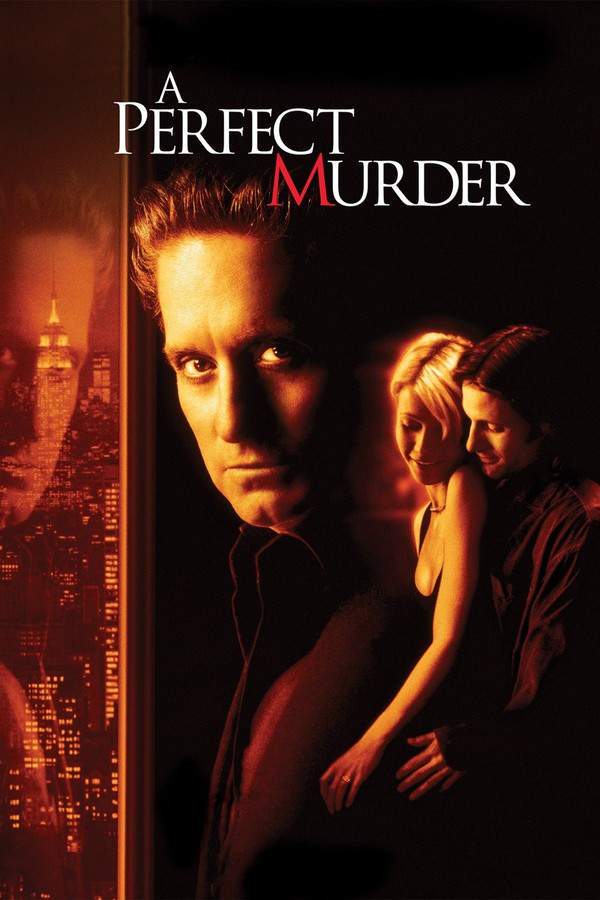
What Is Dear Murderer About?
The premise of Dear Murderer in 282 words, with nothing given away. The full story follows below.
In a world where marriage feels more like a battlefield than a sanctuary, a husband returns from a long business trip to discover unsettling gaps in his wife’s communication. Lee arrives to a house that echoes with silence, his mind already racing through possibilities that threaten the fragile equilibrium of their life together. Beside him, Vivien moves with a charm that masks a restless restlessness, hinting at secrets that lie beneath the surface of their seemingly ordinary existence.
The film settles into a mood of simmering tension, a chiaroscuro of affection and distrust that colors every interaction. Lee is a man haunted by a relentless, almost pathological jealousy, while Vivien is portrayed as a figure who relishes control and deception. Their dialogue crackles with subtext, each glance and pause suggesting a deeper game of power and vulnerability. The setting—a sleek yet oppressive domestic space—amplifies the sense that ordinary life can quickly turn claustrophobic when truth is hidden behind polite façades.
Against this charged backdrop, the notion of a flawless, untraceable act becomes a tantalizing, if dangerous, obsession for Lee. The idea that one could manipulate fate into a perfect symmetry fuels the narrative, inviting the audience to wonder how far a person will go when pushed by doubt and betrayal. The looming presence of the law, represented by an astute inspector, adds an underlying current of scrutiny, reminding viewers that no secret stays buried forever.
The tone is unmistakably noir, blending sharp wit with a dark, introspective melancholy. It invites curiosity about the limits of love and the lengths to which jealousy can drive a person, all while maintaining an elegant restraint that keeps the story poised on the edge of revelation.
What Happens in Dear Murderer?
The complete story of Dear Murderer, from the first scene to the last, in 609 words (about 3 minutes). Spoilers throughout. Names in the text link to 2 cast member pages.
Spoilers ahead
Lee and Vivien Warren are caught in a tumultuous and destructive marriage filled with suspicion, infidelity, and emotional turmoil. Vivien, portrayed as despising, devious, and habitually unfaithful, constantly manipulates those around her, while Lee, haunted by pathological jealousy, struggles to maintain control. Their relationship unravels further when Lee returns from an extended business trip to New York, only to find that Vivien hasn’t written or called him. His suspicion intensifies when he receives several cards addressed to Vivien, signed with the phrase “Love Always,” which fuels his belief that she is unfaithful. Determined to uncover the truth or eliminate his doubts, Lee confronts Vivien’s latest lover, Richard Fenton, an affair she has been involved in.
Fenton admits to his ongoing affair with Vivien, and Lee, driven by jealousy, persuades him to end things by writing a farewell letter to Vivien, implying that he is about to leave her. Lee then kills Fenton, staging the scene to appear as a suicide. He meticulously arranges the surroundings so the letter, written by Fenton at Lee’s insistence, looks like a genuine farewell note. Convinced that his plan is flawless, Lee believes he has committed the perfect crime. However, his confidence shatters when he learns that Fenton and Vivien had actually broken up some time before, and Fenton had only been humoring him, writing the farewell note as a joke or for some other reason.
Overcome with guilt for having murdered an innocent man, Lee realizes that the police, especially Inspector Penbury, question the plausibility of Fenton’s supposed despair, making Lee’s guilt harder to conceal. Meanwhile, Vivien has moved on and is now involved with a man named Jimmy Martin. Seizing an opportunity, Lee attempts to frame Jimmy Martin for Fenton’s murder, thinking that this would serve his interests by removing a rival and diverting suspicion away from himself. As he manipulates the evidence to point towards Jimmy, Inspector Penbury, played by Jack Warner, begins to suspect that not everything is as it seems, though he struggles to prove Lee’s guilt.
Vivien, desperate to save her current lover, pleads with Lee to intervene with the police to clear Jimmy Martin’s name. She promises her fidelity if Lee can devise a plan to free Martin without exposing himself. Lee, convinced that his innocence is at risk, agrees to cooperate, and they work together to change the narrative. Vivien then persuades Lee to write a letter, which she intends to be a suicide note, and she drugs him with his regular medication to hasten his death. During this act, Vivien confesses that she only loved Martin and had lied to Lee all along.
As Lee is near death, Vivien’s true motives become clear when she admits her deception. Her plan is to reunite with Martin, who, despite her efforts, refuses to see her and has reconnected with his supportive ex-girlfriend, Avis Fenton. Vivien’s attempt at emotional reconciliation fails, and she returns to her apartment, seemingly unfazed. Her demeanor shifts from a cover of distress to cold detachment as she is later arrested by Inspector Penbury for Lee’s murder. Her accomplice, Jimmy Martin, is symbolically given her engagement ring, inscribed “‘til death do us part,” reinforcing the film’s themes of betrayal and despair.
The movie concludes with Vivien laughing cruelly, a chilling sign of her descent into madness and moral unraveling. Her laughter symbolizes her complete downfall, highlighting how her manipulative and ruthless personality has led her into a dark spiral of guilt, insanity, and moral ruin. The film leaves viewers contemplating the destructive power of obsession and deception, illustrating how greed, jealousy, and manipulation can lead to tragedy in a seemingly perfect facade of love.
Dear Murderer Timeline: Every Key Event in Order
10 key events in the order they happen, from “Lee Returns from Business Trip” to “End of the Nightmare”.
- 1
Lee Returns from Business Trip
Lee Warren comes back from a lengthy business trip to New York, feeling suspicious because Vivien has not written or called him. This fuels his paranoia and suspicion about her fidelity. He notices several cards addressed to Vivien signed 'Love Always,' which increases his distrust of her affair. His suspicions set the stage for his subsequent actions.
- 2
Confrontation with Richard Fenton
Lee discovers that Vivien is having an affair with Richard Fenton. He confronts Fenton, who admits to the affair but agrees to end it by writing her a farewell letter. Lee persuades Fenton to leave Vivien by staging a scene to look like a suicide, believing he has committed the perfect crime. This act marks the beginning of Lee’s criminal plans.
- 3
Fenton’s Death and Staged Scene
Fenton writes a farewell letter as instructed, and Lee kills him, staging the scene to appear as a suicide. Lee believes this deception will conceal his involvement, and he is confident that he has committed the perfect murder. However, his actions are driven by the desire to protect his marriage and eliminate his rivals.
- 4
Realization of Fenton’s Breakup
Shortly after Fenton's death, Lee discovers that he and Vivien had already broken up some time before, and Fenton was merely humoring him with a fake farewell note. This guilt-ridden realization makes Lee aware that he has murdered an innocent man and complicates his plans further. It introduces doubt into his assumptions about the crime.
- 5
Evidence Points to Jimmy Martin
Learning that Vivien has a new boyfriend, Jimmy Martin, Lee plans to frame him for Fenton's murder. He manipulates evidence to make it appear that Martin is the culprit, aiming to shift suspicion away from himself. Meanwhile, Inspector Pembury begins to grow suspicious but is unable to prove Lee's involvement.
- 6
Vivien’s Plea and Deception
Vivien pleads with Lee to help save Martin from execution, promising to remain faithful if he can provide a way. Lee falsely agrees to change his testimony, claiming Fenton died by suicide and that he later manipulated the scene to look like a murder by Martin. This moment reveals Vivien's manipulative nature.
- 7
Vivien’s Devious Plan
Vivien persuades Lee to write a letter intended as a suicide note, using a dose of his medication to fake his death. Her plan is to eliminate her husband without incriminating herself, with the hope of reuniting with Martin. Her manipulations show her growing deviousness and loss of morality.
- 8
Lee’s Final Moments and Confession
As Lee overdoses on his medication, Vivien confesses to lying about her love for Martin and her involvement in the scheme. She attempts to reconcile with Martin, who rejects her. Lee’s death appears to be the climax of her manipulative plans and her descent into madness begins.
- 9
Vivien’s Arrest and Downfall
Vivien returns to her apartment, where she initially feigns distress but is ultimately arrested by Inspector Pembury for the murder of Lee. The evidence against her is overwhelming, and her cruel laughter symbolizes her complete moral collapse and mental deterioration. Her downfall is sealed.
- 10
End of the Nightmare
The film concludes with Vivien laughing cruelly, indicating her madness and her full plunge into chaos. The ring given back to her with the words 'til death do us part' symbolizes her twisted perception of love and her tragic descent. Her character’s downfall underscores the tragic consequences of betrayal and deceit.
Who Are the Main Characters in Dear Murderer?
3 characters, among them Lee Warren, Vivien Warren (Avis Gynt) and Jimmy Martin: who each one is and the part they play in the story. 2 of them link to the actor’s page.
- LW
Lee Warren
Lee Warren is a jealous and obsessive husband whose desire for control drives him to murder his wife’s lover. His character is marked by pathological jealousy and a desperation to protect his marriage at all costs, ultimately leading to his downfall.
- 🔒 Jealous
- 🔪 Obsessive
- 🔥 Desperate
- VW
Vivien Warren (Avis Gynt)
Played by Greta Gynt
Vivien is a devious and unfaithful wife who manipulates her relationships and deceives her husband. Her cruelty and cunning nature reveal her capacity for moral ambiguity, ultimately contributing to her tragic downfall.
- 🎭 Manipulative
- 😈 Devious
- 💔 Unfaithful
- JM
Jimmy Martin
Played by Maxwell Reed
Jimmy Martin is Vivien’s current lover, whose innocence and supportive nature contrast with Vivien’s manipulations. His desire to stay out of trouble and rebuild his life define his character.
- ⚖️ Naive
- 🤝 Supportive
- 🚪 Out of reach
Where and When Is Dear Murderer Set?
Dear Murderer is set in London and England (Late 1940s to early 1950s). Here is why the time and place matter to the story.
When
Late 1940s to early 1950s
The events take place in the post-World War II era, a period characterized by reconstructing social norms, lingering wartime tensions, and a focus on crime dramas. The setting reflects the social and cultural atmosphere of that time, emphasizing traditional values and the discretion of private lives.
Where
London, England
The story is set predominantly in London, a city known for its historic buildings, bustling streets, and as a hub of business and social activity. The city’s atmospheric background enhances the film’s themes of suspicion and intrigue, creating a fitting stage for a psychological thriller involving crime and deception.
- 🌆 Urban
- 🏛️ Classic architecture
- 📝 Detective story
What Are the Themes of Dear Murderer?
2 ideas the story keeps returning to, among them Murder & Deception and Justice & Guilt.
-
01
Murder & Deception
The movie explores themes of murder, manipulation, and deception. Central characters engage in lies and schemes, revealing the dark side of human nature. The film highlights how obsession and jealousy can lead to tragic outcomes.
-
02
Justice & Guilt
The narrative delves into the themes of justice and guilt, exemplified by Inspector Penbury’s investigation and the moral struggles of the characters. The story examines how guilt influences behavior and the pursuit of truth.
What Kind of Film Is Dear Murderer?
Dark in tone, with steady pacing and a moderate story, going by the plot summary.
- Tone
- Dark
- Pacing
- Steady
- Story
- Moderate
- Intensity
- High
- Ending
- Bleak
A tense and cynical British noir that methodically charts the psychological unraveling of a jealous husband and his manipulative wife, creating a claustrophobic atmosphere of paranoia and moral decay.
- tense
- paranoid
- claustrophobic
- cold
- cynical
- calculating
- jealousy
- infidelity
- murder
- psychological manipulation
Content notes: murder, suicide (staged), poisoning, emotional abuse, infidelity.
Quiz
How well do you remember Dear Murderer? Test yourself on the story.
Where to Watch Dear Murderer
. US availability and prices from JustWatch.
Streaming availability in the US, powered by