What Is Dead Man’s Bluff About?
The premise of Dead Man’s Bluff in 291 words, with nothing given away. The full story follows below.
In the waning years of the chaotic 1990s, Russia’s streets pulse with a restless energy that feels both raw and precarious. Neon‑lit alleys of Nizhny Novgorod echo with the clang of unfinished business, while the shadows of the new market economy hide a ruthless logic where survival often hinges on a single, decisive act. The film captures this volatile atmosphere with a crisp, observational style, letting the bleak urban landscape speak as loudly as the characters who move through it.
Sergei and Simon are two young men whose loyalty to each other is as sharp as the world they inhabit. Bound by a shared past and a grim sense of duty, they find themselves thrust into a high‑stakes assignment: transport a suitcase packed with heroin under conditions that leave no room for error. Their relationship is forged in a world where the only familiar solution to a problem is a single bullet to the head, and the looming threat of death presses on every decision they make. The tension between their street‑wise instincts and the cold, business‑like demands of the underworld creates a compelling dynamic that drives the story forward.
The tone is taut and unflinching, mixing brutal realism with a detached, almost academic observation of the era’s moral decay. The cinematography leans into muted palettes and stark lighting, underscoring the characters’ constant balancing act between desperate ambition and the thin line of survival. As the duo navigates the perilous terrain, the audience is invited to feel the weight of every moment, each glance hinting at the larger forces that shape their fate without ever spelling them out. This relentless mood makes the journey feel both intimate and emblematic of an entire generation caught in the relentless churn of post‑Soviet Russia.
What Happens in Dead Man’s Bluff?
The complete story of Dead Man’s Bluff, from the first scene to the last, in 862 words (about 4 minutes). Spoilers throughout. Names in the text link to 9 cast member pages.
Spoilers ahead
In 2005, a university professor opens with a lecture on the primitive accumulation of capital, using the chaotic 1990s as a stark example of how wealth was seized and built in the era. The camera then flash-forwards to 1995 in Nizhny Novgorod, where a tense interrogation scene unfolds. Three masked men burst in with pistols, but the leader lowers his disguise to reveal a police officer named Stepan, who wastes no time: he shoots the torturer in the head and pocketing a scrap of paper that seems to hold some crucial clue.
From there, the story introduces three brutal players: Koron, Bala, and Baklazhan. They are short on opportunity until Stepan reaches out, enlisting them for a new job that promises payoff and power. The film quickly shifts to the two young bandits who will drive much of the drama: Semyon, known as Simon, and Sergei, who work under the seasoned crime boss Sergei Mikhailovich, commonly called Mikhalych. Semyon and Sergei are tasked with pressuring a drug lab to pay protection money, a grim mission that spirals into much more violence than they anticipated.
Sergei takes the lead in negotiations at the lab, but the situation deteriorates as Simon and Sergei end up spraying the room with gunfire, leaving the others dead and forcing them to salvage what remains—the drugs—in an attempt to appease Mikhalych, who erupts with fury at their failure. The next command is ruthless: Mikhalych orders the pair to swap a suitcase full of cash for a suitcase filled with five kilograms of heroin, to be delivered to an associate. On the way, the duo bumps into their old associate, a bandit named Kaban, who presses Sergei to consider a life away from crime and even hints at Moscow as a possible new start.
Unbeknownst to them, Stepan has gleaned the entire plan from the scrap of paper and hires Koron to intercept the exchange. He also hires Mozg, his old foe, to hunt down Koron’s gang after the heist and to ensure the money lands back in the right hands. The ambush goes wrong for Sergei and Simon as Koron’s crew ambushes them and seizes the money, heightening the stakes for Mikhalych’s cartel.
When Sergei and Simon finally reach Mikhalych, the crime lord orders them to locate Stepan and discover where the heroin was taken, then to kill the traitor. The two track Stepan to his apartment, where they beat a confession from him: Stepan admits he played a role in the ambush and reveals where to find Koron and the heroin. A brutal turn follows as Simon executes Stepan.
The action shifts to Koron’s apartment, where Baklazhan is found bound but soon breaks free and grabs a gun. He shoots Sergei, wounding him, before Simon finishes Baklazhan off. With Sergei wounded and bleeding on the couch, the pair reach out to their friend Lyoshik, a medical student, who extracts the bullet. As the pair flee, they reflect on a past conversation with Kaban and decide to head to Moscow, taking the heroin with them to fund a fresh start outside Mikhalych’s orbit.
Fast-forward to 2005, and the world has shifted yet again. Sergei has become a State Duma deputy, and Simon works as his assistant. They have built a securities trading firm, a kind of legitimate front for their previous life of crime. Mikhalych now works as a security guard for them, while Mikhalych’s son Vladik serves as an errand boy, a stark contrast to the chaotic power once wielded by the older man. The film closes with a sobering line: life in Russia has become harder, a reflection on how the 1990s’ brutal energy hardened into a different, perhaps subtler, kind of danger in the new millennium.
- Stepan Voronov casts a long shadow as the lawman turned gangland insider, whose betrayals set off a chain of deadly events.
- Koron and Baklazhan epitomize the ruthless opportunists who survive by shifting loyalties and seizing every chance.
- Semyon and Sergei are the central duo whose violent ascent from street criminals to influential operators mirrors the film’s meditation on power, loyalty, and desperation.
- Mikhalych anchors the world of crime with a calculating, aging presence, whose shifting role—from boss to security figure—underscores the era’s new economic realities.
- Kaban and Mozg appear as unpredictable forces who tilt the balance of power through force and intimidation.
- Vladik represents the next generation embedded in a system that blends crime, legitimacy, and family ties, a reminder of how the past persists in the present.
The narrative blends brisk, brutal set-pieces with a cool, observational tone, drawing a throughline from the nihilistic energy of the 1990s to the more regulated, but still morally gray, landscape of the 2000s. The film’s mood is built on stark contrasts: the neon-lit pulses of crime-era Moscow versus the sober, procedural pace of political power; the casual brutality of gang violence against the steady, almost bureaucratic veneer of wealth and influence. The result is a sprawling, character-driven tale about how violence, ambition, and the pursuit of capital shape lives—and how choices made in youth echo across years, reshaping a nation as much as a person.
Dead Man’s Bluff Timeline: Every Key Event in Order
12 key events in the order they happen, from “Opening lecture frames the story around capital accumulation” to “2005: a new facade of crime and power”. 7 events name a place, across 7 locations.
- 1
Opening lecture frames the story around capital accumulation
A university professor opens the film with a lecture on the primitive accumulation of capital, using the chaotic 1990s to illustrate how wealth was seized and built. The monologue sets a cool, analytical tone for the rest of the movie, connecting economic theory to street-level violence. The frame establishes the film's theme: how power and money reshape lives over time.
When:2005 Where:University lecture hall
- 2
1995: the Nizhny Novgorod break-in
Three masked men burst into a tense room in Nizhny Novgorod; the leader lowers his disguise to reveal Stepan, a police officer who wastes no time shooting the torturer in the head. He pockets a scrap of paper that seems to hold a crucial clue. The act sets the stakes and introduces the cast of hardened players.
When:1995 Where:Nizhny Novgorod
- 3
Stepan recruits Koron, Bala and Baklazhan
Stepan reaches out to Koron, Bala, and Baklazhan, recruiting them for a new job that promises payoff and power. The recruitment signals a shift from lone incidents to a coordinated network. The trio becomes key players in the coming crime wave.
When:1995
- 4
Simon and Sergei introduced; Mikhalych's cartel
The two young bandits, Semyon (Simon) and Sergei, operate under the aging crime boss Mikhalych. They run the gauntlet of extortion, pressing a drug lab to pay protection money. Mikhalych is central to the plan's stakes and the gang's ambitions.
When:1995
- 5
The lab negotiation and shootout
Sergei leads negotiations at the drug lab, but the situation spirals as Simon and Sergei unleash gunfire, killing others and forcing a salvage operation for the missing drugs. They smuggle what remains to appease Mikhalych, whose fury burns hot at their failure. The violent misstep tightens the net around them.
When:1995 Where:drug lab
- 6
The cash-for-heroin swap
Mikhalych orders a brutal exchange: swap a suitcase full of cash for five kilograms of heroin, to be delivered to an associate. The plan tightens the stakes and foreshadows the heist's fallout. The criminals move to execute the deal that will test loyalties.
When:1995
- 7
Encounter with Kaban
On the way, the pair encounter Kaban, a former associate who hints at a life away from crime and even Moscow as a fresh start. The suggestion plants seeds of possible escape from Mikhalych's orbit. The meeting foreshadows forthcoming tensions and choices.
When:1995
- 8
Stepan learns the plan and enlists help
Stepan learns the entire plan from the scrap of paper and hires Koron to intercept the exchange. He also recruits Mozg, his old foe, to chase Koron’s gang and ensure the money lands back in the right hands. The web of loyalty and betrayal tightens as the operation moves forward.
When:1995
- 9
Ambush and the theft of the money
Koron’s crew ambush Sergei and Simon, seizing the money and heightening Mikhalych’s risk. The violent raid escalates the war between rival factions and demonstrates the peril facing everyone involved. The money disappears into the higher-stakes game of power.
When:1995 Where:on the road/ambush site
- 10
Confrontation at Stepan's apartment
Sergei and Simon track Stepan to his apartment, where Stepan confesses and reveals where to find Koron and the heroin. In a brutal turn, Simon executes Stepan, cutting one dangerous thread from Mikhalych’s operation. The revelation shifts the balance of power again.
When:1995 Where:Stepan's apartment
- 11
Baklazhan, Lyoshik and the Moscow escape
At Koron's apartment, Baklazhan is found bound but breaks free, grabbing a gun and wounding Sergei before Simon finishes him off. Sergei bleeds on the couch as Lyoshik, a medical student, extracts the bullet. The pair flee with the heroin, headed for Moscow to start anew.
When:1995 Where:Koron's apartment; Moscow
- 12
2005: a new facade of crime and power
Fast-forward to 2005, Sergei has become a State Duma deputy and Simon works as his assistant, running a securities trading firm as a legitimate front. Mikhalych now serves as their security guard, while Vladik, Mikhalych’s son, acts as an errand boy. The film closes with a sober reflection: Russia’s brutal energy of the 1990s persists in a different, subtler danger.
When:2005 Where:Russia
Who Are the Main Characters in Dead Man’s Bluff?
11 characters, among them Sergei Mikhailovich (Михалыч) — Nikita Mikhalkov, Semyon (Simon) — Dmitriy Dyuzhev and Sergei (the other) — Aleksey Panin: who each one is and the part they play in the story. Every profile links to the actor’s page.
-
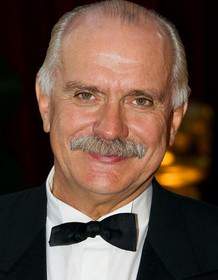
Sergei Mikhailovich (Михалыч) — Nikita Mikhalkov
Played by Nikita Mikhalkov
An aging, calculating crime boss who anchors Mikhalych’s cartel. He rules through fear and measured ruthlessness, yet demonstrates a rare talent for adapting to shifting power dynamics. By 2005, he operates as a security figure within the newer, legitimacy-colored order, illustrating how the old guard persists in a changing world.
- 🔪 Violent
- 🧠 Calculating
- 💼 Power
- S(
Semyon (Simon) — Dmitriy Dyuzhev
Played by Dmitriy Dyuzhev
A volatile, ambitious young bandit who drives much of the drama with his readiness to use force. Alongside Sergei, he pressures a drug lab and frays the edges of loyalty as violence becomes a path to power. His arc traces a rapid ascent that tests boundaries between crime, money, and possibility of a fresh start in Moscow.
- ⚡ Violent
- 🧭 Ambitious
- 💰 Money-driven
- S(
Sergei (the other) — Aleksey Panin
Played by Aleksey Panin
A bold, impulsive partner to Semyon who navigates the brutal negotiations and escalating violence. His actions mirror a relentless drive for advantage, propelling the duo toward opportunities that blur the line between street crime and bigger payoffs. He embodies the rapid, high-stakes shift in the criminal landscape.
- 🗺️ Opportunistic
- 💥 Violent
- 💰 Money-driven
- SV
Stepan Voronov — Viktor Sukhorukov
Played by Viktor Sukhorukov
A lawman turned gangland insider whose familiar voice masks a dangerous willingness to betray. He orchestrates moves behind the scenes, setting in motion a chain of deadly betrayals that destabilize the criminal hierarchy. His arc ends in a brutal confrontation that underscores the era’s treacherous power dynamics.
- 🕵️♂️ Cunning
- 🤝 Betrayal
- 💼 Manipulator
- K—
Koron — Sergey Makovetskiy
Played by Sergey Makovetskiy
A ruthless fixer who intercepts the exchange and commands a merciless crew. He embodies the opportunistic brutality that thrives on shifting loyalties and calculated violence. His actions escalate the stakes as the plan spirals toward chaos and consequence.
- 🧨 Interception
- ⚡ Opportunistic
- 🗡️ Ruthless
- B—
Baklazhan — Grigorij Sjmatvinda
Played by Grigorij Sijatvinda
A volatile member of Koron’s crew whose bound-with-violence moment marks the brutal, out-of-control nature of the gang. He embodies the impulsive impulse that detonates violence and complicates the criminals’ fragile plans. His fate underscores the cost of the life they pursue.
- 🔫 Violent
- 🧨 Impulsive
- 🔪 Brutal
- K—
Kaban — Yuri Stepanov
Played by Yuri Stepanov
A seasoned bandit who pushes for a possible fresh start, even hinting at Moscow as a new chapter. He operates as a gray-area mentor figure, illustrating how old loyalties clash with the lure of a cleaner slate. His presence foreshadows the cross-pollination of criminal networks across cities.
- 🗺️ Strategist
- 💬 Persuasive
- 🤝 Liaison
- M—
Mozg — Garik Sukachyov
Played by Garik Sukachyov
Known as the brains of the operation, Mozg crafts schemes and anticipates moves. He represents the calculated, cerebral side of crime—planning, calculating risk, and orchestrating pursuits to stay ahead of law enforcement. His role highlights the era’s shift toward calculated, systemic crime.
- 🧠 Brain
- 🧭 Planner
- 💼 Strategist
- L(
Lyoshik (Lyo–shik) — Sergey Glazunov
Played by Sergey Glazunov
A medical student who plays a crucial, humane role by extracting a bullet, symbolizing a moment of humanity amid violence. He becomes a pivotal fixer of consequences, showing how knowledge and public-spirited acts intersect with criminal peril. His presence adds a human counterpoint to the brutality.
- 🩺 Healer
- 🧭 Insight
- 👨🎓 Student
- K—
Katya — Renata Litvinova
Played by Renata Litvinova
A waitress/secretary who functions at the periphery of Mikhalych’s world yet provides crucial information-flow and support. Her position underscores how ordinary lives become entangled in the criminal economy. She embodies the quiet, observant aspects of the era’s everyday reality.
- 💬 Secretary
- 🧭 Connector
- 🕰️ Observer
- V—
Vladik — Vladik Tolochko
Played by Vladik Tolochko
The son of Mikhalych and a symbol of the next generation embedded in crime and legitimacy. He serves as an errand boy, illustrating how family ties and inherited dynamics persist within the shifting power structure. His presence marks the enduring thread of personal loyalties across eras.
- 🎒 Family
- 🧭 Legacy
- 🔗 Dependence
Where and When Is Dead Man’s Bluff Set?
Dead Man’s Bluff is set in Nizhny Novgorod and Moscow (1995–2005). Here is why the time and place matter to the story.
When
1995–2005
The film roots itself in the mid-1990s Russia, starting with a brutal confrontation in Nizhny Novgorod. It then leaps to 2005 to show the long-term impact of those events, revealing how violence and crime have evolved into sophisticated, legitimacy-smuggling operations. This dual timeline highlights the era’s transition from chaotic opportunism to a more guarded, economically driven order.
Where
Nizhny Novgorod, Moscow
The story primarily unfolds in 1995 in Nizhny Novgorod, a city emblematic of post-Soviet turbulence where crime and opportunism surge amid economic chaos. Neon-lit streets and shadowy back rooms frame the violent deals that drive the plot. By 2005, the narrative widens to Moscow-adjacent power dynamics, illustrating how the criminal world adapts to a more regulated, capital-driven landscape.
- 🏙️ City
- 🧭 Post-Soviet Era
- 💰 Crime & Capital
What Are the Themes of Dead Man’s Bluff?
3 ideas the story keeps returning to, among them Power & Wealth, Loyalty & Betrayal and Era of Change.
-
01
Power & Wealth
Wealth acts as a magnetic force for violence and moral compromise. The aging Mikhalych builds a cartel that withstands time, gradually weaving illicit influence into legitimate structures. The protagonists’ pursuit of money pulls them toward risky gambits, underscoring how capital reshapes loyalties and institutions in post-Soviet Russia.
-
02
Loyalty & Betrayal
Loyalty proves fluid and frail, shifting as individuals chase security and status. Betrayal threads through the narrative—from covert schemes to sudden double-crosses—that redefine who can be trusted. The characters’ alliances fracture and reassemble, mirroring the era’s unstable moral compass.
-
03
Era of Change
The film traces a transition from the nihilistic energy of the 1990s to a newer, more regulated yet morally gray 2000s. Violence, ambition, and capital collide in a landscape where crime can masquerade as legitimacy. Through this shift, the story probes how individuals survive and adapt when political and economic structures evolve.
What Kind of Film Is Dead Man’s Bluff?
Dark in tone, with fast pacing and a moderate story, going by the plot summary.
- Tone
- Dark
- Pacing
- Fast
- Story
- Moderate
- Intensity
- High
- Ending
- Bittersweet
A fast-paced, brutal dark comedy that throws viewers into the chaotic violence of 1990s Russian crime, leaving a cynical residue as ambition curdles into a more bureaucratic form of power.
- brutal
- tense
- cynical
- gritty
- darkly humorous
- oppressive
- organized crime
- betrayal
- rise to power
- desperation
Content notes: torture, execution, gun violence, dead bodies, beating.
Quiz
How well do you remember Dead Man’s Bluff? Test yourself on the story.