What Is Dante’s Inferno About?
The premise of Dante’s Inferno in 298 words, with nothing given away. The full story follows below.
In the smoldering heart of Victorian London, a circle of painters, poets, and idealists gathers around a shared obsession with beauty, myth, and truth. The film opens on a hushed studio where canvases breathe with the rich textures of medieval tapestries and the flicker of gaslight, setting a tone that is both sumptuous and unsettling. Against this backdrop, the world feels like a living work of art, where every gesture is a brush‑stroke and every conversation hints at deeper reveries.
Lizzie Siddal arrives as the enigmatic muse whose frail grace captivates the restless imagination of Dante Gabriel Rossetti. Their bond is forged amid a swirl of sketches, lingering glances, and whispered verses that echo through the halls of the Pre‑Raphaelite Brotherhood. The relationship is tender and turbulent, a fragile dance between inspiration and obsession that colors both their creations and their private lives.
Around them, a constellation of notable figures adds layers to the atmosphere. Christina Rossetti offers a lyrical counterpoint with poetry that frames the unfolding drama, while Fanny Cornforth provides a more grounded, comforting presence. The ambitious architect of design, William Morris, and the visionary painter Edward Burne‑Jones bring their own fervent quests for artistic purity, and the charismatic critic John Ruskin drifts through the studio, his gaze both admiring and probing. Even the charismatic Jane Morris glides through the scene, her own beauty and intellect influencing the creative tide.
The film paints a portrait of an era steeped in intensity, where love, loyalty, and the relentless pursuit of artistic perfection mingle with the subtle shadows of personal vulnerability. A mood of haunting elegance pervades, inviting the viewer to linger over each lingering glance and unfinished line, and to wonder how such luminous brilliance can coexist with the quiet, unsettling undercurrents that pulse beneath the surface.
What Happens in Dante’s Inferno?
The complete story of Dante’s Inferno, from the first scene to the last, in 432 words (about 2 minutes). Spoilers throughout. Names in the text link to 10 cast member pages.
Spoilers ahead
Lizzie Siddal, Judith Paris, sits at the center of a stark opening as the exhumation of her desiccated body is shown, followed by a shot of Rossetti, Oliver Reed, dancing among the flames of Reynolds and Gainsborough paintings. A figure of the young Lizzie dressed as Joan of Arc rises above the blaze. Lizzie is seen modelling for Millais’ Ophelia and for a painting of Joan by Rossetti. The voice-over notes that she eats little and often throws it up, shaping a fragile, tormented bond between muse and artist that lasts for years. She and Rossetti spend several years together while he paints and draws her, but she spurns his advances, even slashing him with a needle when he presses himself on her. Rossetti turns to the more accommodating Fanny Cornforth, Pat Ashton.
Lizzie Siddal, Judith Paris, is introduced to laudanum by Emma Brown, Janet Deuters, to alleviate her stomach pain, and Christina Rossetti, Iza Teller, warns that Dante Gabriel needs a patron. Christina Rossetti brings a voice-over with her poem In an Artist’s Studio, speaking of Lizzie and her frailty, and Lizzie looks ill. Rossetti and Christina visit William Holman Hunt, who is painting The Light of the World. Hunt asks Rossetti to look after his girlfriend Annie Miller, Caroline Coon, while he travels to the Holy Land to paint The Scapegoat, but Rossetti engages in an affair with Annie and Hunt returns to a wounded dynamic.
John Ruskin, Clive Goodwin, visits Rossetti’s studio and shows a growing interest in Lizzie’s art. Rossetti then meets Edward Burne-Jones, Norman Dewhurst, and William Morris, Andrew Faulds, in Oxford, where they work on the Oxford Union murals and cross paths with the striking Jane Burden, who will become Jane Morris, Gala Mitchell. Jane marries Morris and Rossetti weds Lizzie. Lizzie becomes increasingly hysterical due to laudanum and Rossetti’s philandering, and she ultimately dies from an overdose. Rossetti buries his unpublished poems with her, a secret that haunts him for years.
Some years later, Charles Augustus Howell persuades him to dig the poems up, but Rossetti is relentlessly haunted by the image of the dead Lizzie and slides into a dependence on chloral. Fanny Cornforth rescues him from a suicide attempt, but Rossetti grows more and more obsessed with Morris’ wife Jane. He sleeps with Jane when Morris is away in Iceland, but Jane remains distant. Isolated, with only the loyal Fanny to care for him, Rossetti sinks further into addiction, and the story traces how a brilliant circle of artists and lovers navigates love, loyalty, and the fragility of genius within the Pre-Raphaelite Brotherhood.
Dante’s Inferno Timeline: Every Key Event in Order
12 key events in the order they happen, from “Exhumation and Pre-Raphaelite origin” to “Fanny's rescue and final descent into obsession”.
- 1
Exhumation and Pre-Raphaelite origin
The film opens with the exhumation of Lizzie Siddal's desiccated body and a montage of Rossetti dancing among the bonfire flames of Reynolds and Gainsborough paintings. A voice-over declares Rossetti a founder of the revolutionary Pre-Raphaelite Brotherhood. The sequence links Lizzie's fate to the birth of a radical art movement.
- 2
Lizzie as Joan of Arc above the flames
A spectral image of Lizzie dressed as Joan of Arc rises above the flames, marking her as a muse and symbol within Rossetti's circle. She stands as a living emblem of the Pre-Raphaelite myth being built around him. The moment sets the tone for her central role in his art.
- 3
Lizzie's modelling and fragile health
Lizzie models for Millais' Ophelia and for Rossetti's painting of Joan, securing her status as the movement's prized muse. Offstage, she eats little and often vomits, signaling a fragile health beneath the glamorous facade. The combination foreshadows the personal costs of their art.
- 4
Troubled relationship and shifting affections
Rossetti and Lizzie spend several years together as he paints, but she spurns his advances, even slashing him with a needle when he presses himself on her. Their relationship grows fraught, marked by pursuit and resistance. Rossetti increasingly seeks solace with his other muse, Fanny Cornforth.
- 5
Laudanum enters Lizzie's life
Lizzie is introduced to laudanum by Emma Brown to ease her stomach pain, beginning a troubled dependence. Christina Rossetti urges Lizzie to consider that Dante Gabriel needs a patron, highlighting pressure from family and society. Christina's voice-over recites In an Artist's Studio, underscoring Lizzie's vulnerability.
- 6
Hunt, Annie Miller, and the affair
Rossetti and Christina visit William Holman Hunt, who is painting The Light of the World. Hunt asks Rossetti to look after his girlfriend Annie Miller while he is away in the Holy Land painting The Scapegoat, but Rossetti has an affair with Annie and Hunt spurns her on his return.
- 7
Ruskin's visit and Lizzie's art
John Ruskin visits Rossetti's studio and takes an interest in Lizzie's art, recognizing talent within the circle. The visit underscores the mingling of patronage, critique, and romance in their lives.
- 8
Oxford meeting and Jane Burden
Rossetti meets Edward Burne-Jones and William Morris in Oxford, where they begin painting the Oxford Union murals and encounter the beautiful Jane Burden. The meeting seeds future collaborations and tensions inside the Brotherhood.
- 9
Marriages within the circle
Jane Burden marries William Morris, while Rossetti marries Lizzie, tying the artists more closely to the personal network that fuels their work. The alliances deepen both creative collaboration and personal entanglements.
- 10
Lizzie's decline and death
Lizzie's health deteriorates under laudanum and Rossetti's infidelity, culminating in her overdose and death. After her death, Rossetti buries his unpublished poems with her, sealing them in memory.
- 11
Digging up the poems and haunting addiction
Some years later, Charles Augustus Howell persuades Rossetti to dig up the buried poems, bringing the earlier work back into circulation. The act haunts Rossetti and coincides with a slide into chloral addiction.
- 12
Fanny's rescue and final descent into obsession
Fanny Cornforth rescues Rossetti from a suicide attempt, but he remains obsessed with Morris's wife Jane and resumes an affair with her when Morris is away. Jane remains distant, and Rossetti sinks further into addiction while isolated by his passions.
Who Are the Main Characters in Dante’s Inferno?
13 characters, among them Dante Gabriel Rossetti (Oliver Reed), Elizabeth Siddal (Judith Paris) and William Morris (Andrew Faulds): who each one is and the part they play in the story. Every profile links to the actor’s page.
-
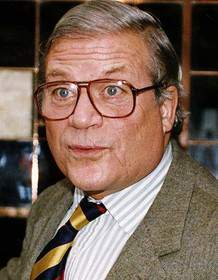
Dante Gabriel Rossetti (Oliver Reed)
Played by Oliver Reed
Ambitious painter and founder of the Pre-Raphaelite Brotherhood; passionate, volatile, and increasingly plagued by addiction. He alternates between deep devotion to Lizzie Siddal and numerous affairs, fueling his art and his downfall. His fixation with image and fame drives much of the film's tension, culminating in a self-destructive spiral.
- 🎨 Painter
- 💔 Obsessive
- 🌀 Turbulent
- ES
Elizabeth Siddal (Judith Paris)
Played by Judith Paris
Lizzie Siddal serves as Rossetti’s muse and partner, modeling for Ophelia and Rossetti’s Joan painting. She struggles with illness and laudanum, resisting Rossetti’s advances while his infidelities intensify the strain. Her life ends in tragedy, leaving a haunting legacy on Rossetti and his work.
- 🌹 Muse
- 💊 Vulnerable
- 🧭 Intense
- WM
William Morris (Andrew Faulds)
Played by Andrew Faulds
A fellow artist-poet who meets Rossetti in Oxford and later marries Jane Morris; a key member of the circle whose ambitions intersect with the group’s artistic pursuits. He embodies the ideal of the artist as a social force and contrasts with Rossetti’s more volatile path.
- 🪵 Designer
- 🖌️ Artist
- 🔗 Marriage
- JM
Jane Morris (Gala Mitchell)
Played by Gala Mitchell
Jane Burden becomes Jane Morris, captivating Rossetti and influencing the circle with her beauty and presence. Her relationship with Morris and Rossetti’s obsession with her weave through the narrative, highlighting the era’s gender dynamics within artistic circles.
- 💃 Muse
- 🌟 Icon
- 💬 Social Catalyst
- AM
Annie Miller (Caroline Coon)
Played by Caroline Coon
Hunt’s girlfriend whom Rossetti cares for while Hunt is away; Rossetti’s later affair with Annie exposes the fragile loyalties within the group. Her presence marks the tension between personal duty and desire.
- 🎭 Romantic Figure
- 💔 Conflicted
- FC
Fanny Cornforth (Pat Ashton)
Played by Pat Ashton
Loyal companion who supports Rossetti through suicide attempts and personal turmoil. Her steadiness offers a counterpoint to Rossetti’s unraveling obsessions, illustrating loyalty within the circle.
- 💪 Loyal
- 🧭 Grounding
- 💞 Complex
- CR
Christina Rossetti (Izabella Telezynska)
Played by Izabella Telezynska
Christina’s voice appears as a poet in commentary and as a moral observer, reflecting on Lizzie’s illness and the family’s artistic pressures. Her perspective adds a lyrical layer to the tale of devotion and duty in art.
- 🗣️ Poet
- 🎤 Reflective
- JR
John Ruskin (Clive Goodwin)
Played by Clive Goodwin
A prominent critic who visits Rossetti’s studio and takes an interest in Lizzie’s art. His presence signals the interweaving of art criticism, patronage, and personal connections within the circle.
- 🗺️ Critic
- 🏛️ Authority
- AS
Algernon Swinburne (Christopher Logue)
Played by Christopher Logue
Friend and fellow poet who threads through the artistic milieu, contributing to the dialogue around poetry and painting in the Pre-Raphaelite milieu.
- 📝 Poet
- 🌀 Collaborator
- EB
Edward Burne-Jones (Norman Dewhurst)
Played by Norman Dewhurst
A fellow artist who encounters Rossetti’s world in Oxford, contributing to the collaboration and rivalry within the circle.
- 🎨 Artist
- 🧭 Mentor
- DB
Derek Boshier (Millais)
Played by Derek Boshier
Represents Millais, part of the broader Pre-Raphaelite group, contributing to the mural projects and the collective artistic energy.
- 🎨 Painter
- 🧩 Collaborator
- DG
Dougie Gray (Hunt)
Played by Dougie Gray
Edward Burne-Jones’s contemporary, a painter who witnesses the circle’s emotional and creative highs and lows, including the impact of Lizzie and Rossetti’s relationship dynamics.
- 🎭 Artist
- 🔥 Tormentor-turned-ally
- EB
Emma Brown (Janet Deuters)
Played by Janet Deuters
Emma introduces laudanum to Lizzie Siddal to ease her pain, a pivotal moment that foreshadows the drug’s spiraling effect on the group.
- 🧪 Connector
- 🩸 Catalyst
Where and When Is Dante’s Inferno Set?
Dante’s Inferno is set in London, Oxford, Holy Land and Iceland (Mid-19th century (1840s–1860s)). Here is why the time and place matter to the story.
When
Mid-19th century (1840s–1860s)
Set in Victorian England during the birth of the Pre-Raphaelite Brotherhood, the film tracks a decade of radical artistic experimentation and social pressure. The era’s emphasis on beauty, poetry, and reform frames the characters’ choices and tensions. The period culminates in personal tragedies and a lasting, though contested, artistic legacy.
Where
London, Oxford, Holy Land, Iceland
The story unfolds across 19th-century England, centered in London studios and Oxford where murals are created. It follows the fierce circle of the Pre-Raphaelite Brotherhood, navigating birthplace of artistic revolt and intimate dramas. Travel to the Holy Land and Iceland marks key turning points in the artists' ambitions and inspirations.
- 🎨 Art
- 🗺️ Travel
- 🕰️ Victorian Era
What Are the Themes of Dante’s Inferno?
4 ideas the story keeps returning to, among them Artistic Obsession, Love & Betrayal and Addiction & Despair.
-
01
Artistic Obsession
Artists chase beauty and perfection, often blurring lines between admiration and fixation. Rossetti’s relentless pursuit of Lizzie Siddal and his other muses drives both creation and conflict. The Pre-Raphaelite circle becomes a crucible where brilliance clashes with personal cost. The film suggests that genius can come at the expense of relationships and health.
-
02
Love & Betrayal
Romantic entanglements fuel jealousy, power dynamics, and heartbreak within the studio. Lizzie’s frail health and Rossetti’s infidelities fracture trust and lead toward tragedy. The relationships with Annie Miller and Jane Morris highlight gendered complexities in a male-dominated art world. The narrative demonstrates how love can both inspire and destroy.
-
03
Addiction & Despair
Laudanum eases Lizzie’s pain but damages her health and agency, while chloral deepens Rossetti’s dependence. The addiction isolates Rossetti and threatens his art, pushing him toward darker impulses. The film portrays substance use as both a symptom of the era’s pressures and a catalyst for its tragedies. Personal demons intersect with artistic ambition to shape the fate of the characters.
-
04
Patronage & Legacy
Patrons and peers influence the artists’ careers and reputations, shaping opportunities and risks. Christina Rossetti’s commentary underscores tensions between patronage and artistic integrity. The plot references Howell persuading Rossetti to recover buried poems, linking memory and legacy to creative output. Fanny Cornforth’s loyalty and Rossetti’s evolving obsessions further complicate what endures after death.
What Kind of Film Is Dante’s Inferno?
Dark in tone, with steady pacing and a moderate story, going by the plot summary.
- Tone
- Dark
- Pacing
- Steady
- Story
- Moderate
- Intensity
- High
- Ending
- Bleak
A dark and melancholic biographical drama that charts the tragic descent of a brilliant poet into addiction and obsession, set against a backdrop of troubled love affairs and artistic fervor.
- troubled
- morbid
- melancholic
- obsessive
- tormented
- somber
- artist biography
- troubled relationships
- love and loss
- creative obsession
Content notes: suicide, drug abuse, exhumation.
Quiz
How well do you remember Dante’s Inferno? Test yourself on the story.