What Is Copacabana About?
The premise of Copacabana in 314 words, with nothing given away. The full story follows below.
In the glittering bustle of 1940s New York, the city’s vaudeville circuit and the famed Copacabana nightclub pulse with music, bright lights, and the promise of stardom. The world is a kaleidoscope of cabaret flamboyance, where ambition collides with spectacle and every night offers a new stage for daring performers to be discovered—or discarded—by the fickle eyes of producers and patrons alike.
_ Lionel Q. Devereaux_, a charismatic and overly confident talent agent, has spent a decade courting both fame and the affection of his longtime fiancée, Carmen Navarro, a talented Brazilian singer whose voice could light up any room. Their partnership, though steadfast, has yet to break through the crowded entertainment scene, leaving them scrambling for a breakthrough that could finally put them on the map. Lionel’s flair for showmanship is matched only by his desperation to turn the tide for both his career and Carmen’s livelihood.
Determined to seize an opportunity, Lionel concocts a daring scheme: he will present Carmen as two separate acts, each cloaked in its own extravagant costume and distinct persona. The rapid transformations and layered deceptions become a whirlwind for Carmen, whose talent must now navigate the dizzying pace of double identities. As a result, a parade of admirers and suitors—producers, managers, and curious onlookers—find themselves irresistibly drawn into the charming confusion, each mistaking one incarnation for another and adding a playful, farcical tension to the nightly performances.
Around them swirl a cast of colorful characters: the ambitious nightclub producer Steve Hunt, his sharp‑witted secretary Anne Stuart, a rival manager known only as Liggett, and a Hollywood heavy‑handed eye in Anatole Murphy. Their interactions, peppered with jokes, flirtations, and artistic rivalry, heighten the film’s breezy, musical tone. The story unfolds as a vivacious tribute to showbiz illusion, where costume changes become comedy, ambition fuels romance, and the stage itself seems to revel in the delightful chaos of double lives.
What Happens in Copacabana?
The complete story of Copacabana, from the first scene to the last, in 388 words (about 2 minutes). Spoilers throughout.
Spoilers ahead
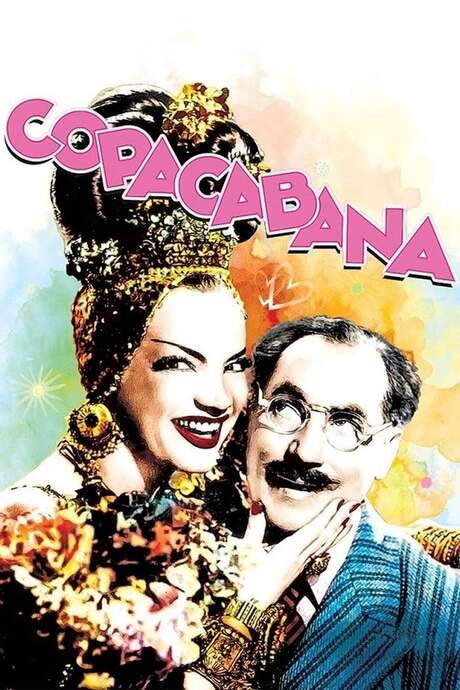
In New York’s bustling vaudeville scene, Lionel Q. Devereaux [Groucho Marx] and his longtime fiancée, the Brazilian singer Carmen Navarro [Carmen Miranda], have been engaged for ten years but remain far from stardom. They’ve worn out their welcome at a theatrical hotel, and the manager gives them 24 hours to settle their bill.
With money tight, Lionel restructures the act: Carmen becomes the talent while he acts as her savvy manager. He heads to the famous Copacabana nightclub, where he pressures producer Steve Hunt [Steve Cochran] to audition Carmen. When asked about his other clients, Lionel produces a racing form that lists the name on the sheet as Mlle. Fifi [Carmen Miranda], a veiled Parisian belle he wants Carmen to embody.
The Copa hires both Carmen and Fifi for its floor show. Steve is drawn to the pair, and to shield Carmen, Lionel claims he’s engaged to her. Steve then turns to Fifi and asks her out, while Anne Stuart [Gloria Jean], Steve’s secretary, privately resents the producer’s dating.
Liggett [Ralph Sanford], a professional rival, convinces Lionel to sell Fifi’s contract to him for a mere $5,000. Unknown to Lionel, Hollywood producer Anatole Murphy wants to star Fifi in movies and would pay Liggett $100,000 for the deal.
Liggett grows suspicious when he sees the veiled Fifi hop into a taxi and then Carmen emerges from it. Anne reveals to Carmen that the enigmatic Fifi has siphoned Steve’s attention away. To help Anne, Lionel and Carmen stage a fake fight between Carmen and Fifi in Carmen’s dressing room. The ruse ends with Fifi disappearing.
The incriminating conversation is overheard, and Lionel is blamed and arrested for Fifi’s murder. He argues with the police, insisting Fifi was a ruse, but no one believes him and he makes several escape attempts.
Steve finally confesses that his interest in Fifi was motivated by business, and that he is truly in love with Anne. Meanwhile, Carmen arrives dressed as Fifi, removes her veil for all to see, and reveals that the two women are one and the same.
Murphy, impressed by the extraordinary story, buys the premise for a film. Lionel becomes involved in the production and even earns screen credit for much of the process, from casting to development. The film opens with a lively Copacabana-inspired number that caps the tale.
Copacabana Timeline: Every Key Event in Order
11 key events in the order they happen, from “Debt and eviction loom over their act” to “The Copacabana song opens the film”. 11 events name a place, across 10 locations.
- 1
Debt and eviction loom over their act
Lionel Q. Devereaux and Carmen Navarro are a long-suffering vaudeville duo, living on borrowed time at a New York City theatrical hotel. The manager delivers a hard 24-hour deadline to settle their mounting bill. The pressure pushes them to rethink their act in hopes of a breakthrough before they are turned away.
When:Within 24 hours Where:New York City (theatrical hotel)
- 2
A plan to brand Carmen as the star
Lionel proposes a split act: Carmen will be the talent, while Lionel acts as her savvy agent. He believes a focused, star-driven package could revive their fortunes. The idea sets the stage for the Copa audition and the rise of Mlle. Fifi as a rival persona.
Where:New York City
- 3
Carmen pushed toward a Copa audition
Lionel goes to the Copacabana nightclub and pressures producer Steve Hunt to audition Carmen. He pitches Carmen as a potential headliner and tries to secure a spot on the Copa's program. Steve's skepticism makes the audition critical for their future.
When:audition day Where:Copacabana nightclub, New York City
- 4
Mlle. Fifi is introduced as a veiled rival
Lionel presents a racing form with the name Mlle. Fifi and urges Carmen to audition as the Parisian belle in disguise. The act hinges on keeping two distinct personas onstage, even though Carmen is the wearer of both veiled and unveiled identities. The Copa hires both Carmen and Fifi for performances.
When:same day Where:Copacabana
- 5
The two-woman illusion and backstage tension
Carmen must perform rapid costume changes to sustain the illusion of two different women. Steve finds himself attracted to the girls, while Lionel uses a claimed engagement to shield Carmen from the producer. Anne Stuart, Steve's secretary, secretly longs for the producer and resents his dating of Fifi.
Where:Copacabana dressing room
- 6
Liggett’s cash offer and Murphy’s looming payoff
Rival agent Liggett persuades Lionel to sell Fifi's contract for $5,000, a fast cash decision Lionel accepts. He is unaware that Hollywood producer Anatole Murphy would pay $100,000 for Fifi's discovery. Liggett's appetite for profit grows as suspicions about the veiled Fifi begin to rise.
Where:New York City
- 7
Suspicion and the staged confrontation
Liggett grows suspicious after seeing the veiled Fifi enter a taxi and Carmen emerge from the vehicle. To buy time and protect Carmen, Lionel and Carmen stage a pretend fight in Carmen's dressing room. The staged altercation ends with Fifi mysteriously disappearing.
Where:Copacabana dressing room; city streets
- 8
Fifi’s alleged death and Lionel’s arrest
Lionel reports to Steve that Fifi has been found dead in the river, and expresses satisfaction at having 'killed' her. The overheard statement triggers suspicion and the police arrest him for Fifi’s murder. He protests that Fifi was a fabrication, but no one believes him, and he faces imprisonment as the investigation continues.
Where:New York City; the river
- 9
Steve’s confession and Carmen’s reveal
Steve admits his interest in Fifi was driven by business, and that he is actually in love with Anne. Carmen then enters dressed as Fifi, removes her veil, and reveals that Carmen and Fifi are the same person. The revelation reframes the entire affair and undermines Lionel's alibi.
When:climax Where:Copacabana stage/dressing room
- 10
Murphy buys the premise; the film project begins
Producer Murphy purchases the entire premise, embracing the sensational true-story angle. Lionel quickly becomes involved in shaping the film, taking credit for almost every aspect from casting to development. The deal bridges their vaudeville past with a new Hollywood chapter.
Where:Hollywood, California
- 11
The Copacabana song opens the film
The movie opens with a number about the Copacabana, anchoring the story in the very club that catalyzed the chaos. The audience is treated to a meta-textual wink as the real-life ambitions of the characters feed into the screen version. Lionel’s inside track in the production is rewarded with screen credit.
Where:Copacabana / Hollywood
Who Are the Main Characters in Copacabana?
6 characters, among them Lionel Q. Devereaux, Carmen Navarro and Mlle. Fifi: who each one is and the part they play in the story. Every profile links to the actor’s page.
-
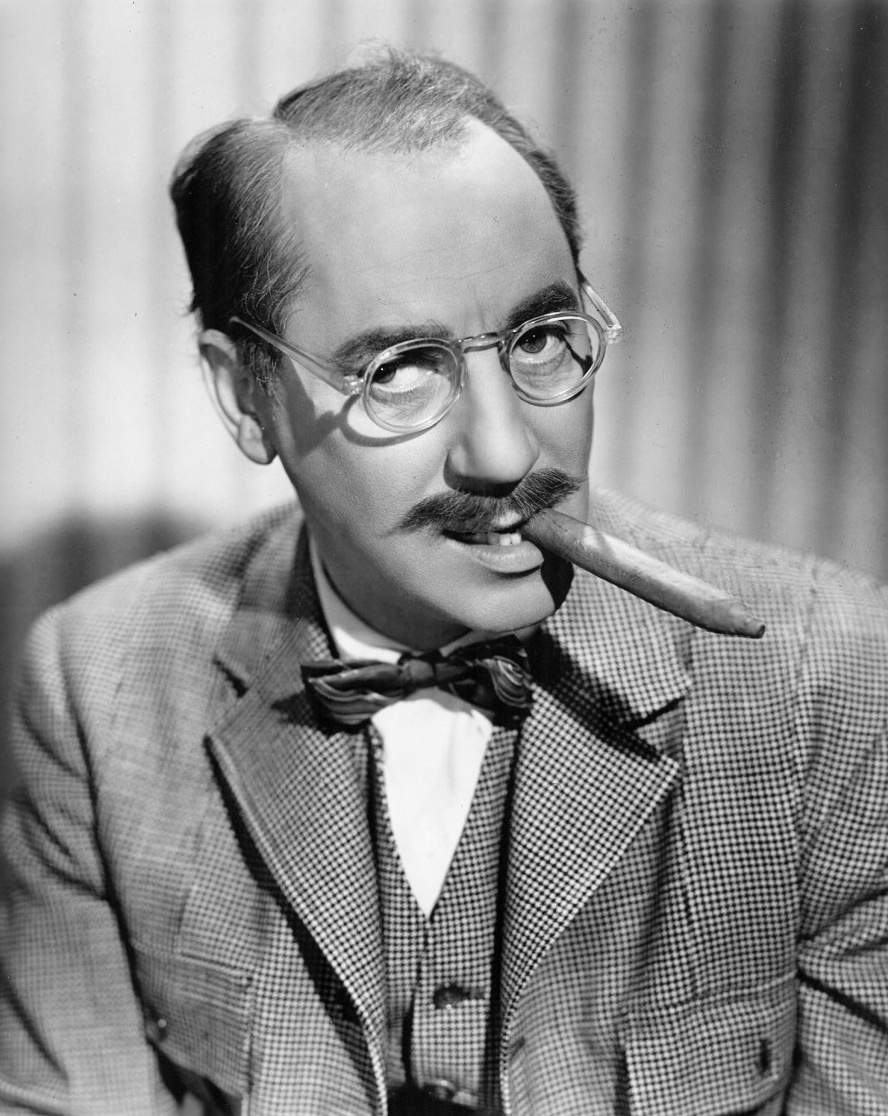
Lionel Q. Devereaux
Played by Groucho Marx
A flashy but talentless vaudeville partner who scapegoats the act’s success by presenting Carmen as the talent and himself as her manager. He schemes to cash in on two acts and secure bigger deals, showing a ruthless appetite for fame. His greed leads to reckless decisions, including the plan to fake a murder to cover his tracks.
- 🎩 Showman
- 💼 Schemer
- CN
Carmen Navarro
Played by Carmen Miranda
A Brazilian singer who becomes the driving force behind the two-identity act, playing both Carmen Navarro and the veiled Mlle. Fifi. She uses the double persona to seize opportunities and manipulate Steve’s attention, all while maintaining control of the unfolding ruse. Her flair for performance hides a calculating, collaborative streak with Lionel.
- 🎤 Singer
- 💃 Performer
- MF
Mlle. Fifi
Played by Carmen Miranda
The veiled Parisian dancer created to mirror Carmen, appearing as a separate star to outshine the real performer. The ruse relies on the belief that Fifi and Carmen are distinct, increasing tension as the deception grows. Fifi’s disappearance amid the scheme provokes the central murder scare that drives the plot.
- 🪞 Deception
- 🎭 Showbiz
- SH
Steve Hunt
Played by Steve Cochran
The show producer who is initially drawn to Carmen and then to Fifi, using romantic interest as leverage to shape business deals. He becomes entangled in the deception while pursuing his own romantic and professional interests. In the end, his true feelings for Anne complicate the love triangle forged by the ruse.
- 🎬 Producer
- 💌 Love interest
- AS
Anne Stuart
Played by Gloria Jean
Steve’s secretary who secretly loves the producer and resents his attention to Fifi. She becomes a catalyst in revealing the truth behind the staged performances, using her position to assist in exposing the deception. Her presence tightens the romantic and moral stakes of the plot.
- 💌 Unrequited love
- 🕵️♀️ Insider
- L
Liggett
Played by Ralph Sanford
A rival agent who pushes Lionel to sell Fifi’s contract for a quick payoff, then grows suspicious as the ruse escalates. His greed and opportunism threaten to derail the entire scheme, contributing to the tension that leads to the climactic unraveling of the plot.
- 💼 Rivalry
- 💰 Greed
Where and When Is Copacabana Set?
Copacabana is set in New York City and Copacabana nightclub (1940s). Here is why the time and place matter to the story.
When
1940s
Set in the mid-1940s, the story captures a moment when vaudeville faded and nightclub acts thrived. Stagecraft, rapid costume changes, and sharp business deals define backstage life. The era’s mix of glamour and grit frames the characters' ambitions and schemes.
Where
New York City, Copacabana nightclub
New York City provides the backdrop for a bustling nightclub world. The Copa, a famed nightclub, is the glittering heart of the story where performers juggle acts, costumes, and contracts. The city’s energy and glamor shape the cutthroat atmosphere of show business.
- 🌃 Nightlife
- 🎭 Showbiz
- 🏙️ Urban setting
What Are the Themes of Copacabana?
3 ideas the story keeps returning to, among them Showbiz, Identity and Romance.
-
01
Showbiz
The world of the Copa amplifies fame hunger and the pressure to shine on stage. Auditions, rapid costume changes, and staged rivalries reveal how appearances can be manufactured as easily as performances. The film uses humor to explore the costs of chasing stardom in a glamour-driven industry.
-
02
Identity
Carmen and her alter ego Mlle. Fifi illustrate how a crafted persona can outshine a real one. The lies about two separate acts create a tangled web that nearly unravels, including a staged murder to cover tracks. The plot shows how masks and roles can become more valuable than truth in the showbiz machine.
-
03
Romance
Romantic tensions drive the drama: Steve's attraction to Carmen (and the veiled Fifi) collides with Anne's unrequited love for the producer. Lionel and others manipulate feelings to secure contracts, leading to comic misunderstandings and a dramatic reveal. The ending uses romance to propel the film's twists into entertainment.
What Kind of Film Is Copacabana?
Light in tone, with fast pacing and a moderate story, going by the plot summary.
- Tone
- Light
- Pacing
- Fast
- Story
- Moderate
- Intensity
- Low
- Ending
- Happy
A fast-paced, farcical comedy of errors filled with rapid costume changes and romantic misunderstandings, delivering a lighthearted and energetic spectacle centered around show business ambition.
- comedic
- farcical
- energetic
- deceitful
- romantic
- playful
- show business
- double identity
- romantic deception
- vaudeville
Quiz
How well do you remember Copacabana? Test yourself on the story.