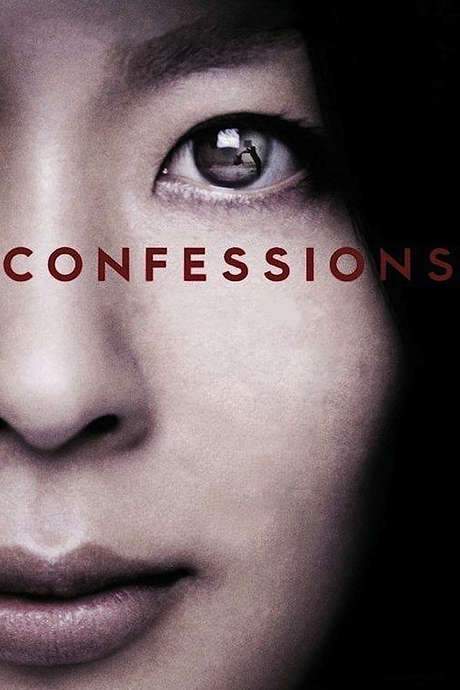
Confessions 2010

Directed by

Tetsuya Nakashima
Made by

DesperaDo
Confessions Plot Summary
Read the complete plot summary and ending explained for Confessions (2010). From turning points to emotional moments, uncover what really happened and why it matters.
In this grim, restrained psychological drama, a grieving teacher uses a shocking act to reveal the consequences of unchecked cruelty. Yuko Moriguchi, a junior high school teacher whose husband Yoshiteru Terada is battling an HIV-related illness, begins bringing their four-year-old daughter Manami Moriguchi to school with her. When Manami is found dead in the school’s swimming pool, Yuko makes a bold, bitter choice: she will resign before spring break and publicly name two students in her class as Manami’s killers. She will not arrest them, she explains, because they are minors under the Juvenile Law of 1947, but she will force them to confront the truth in a way that only a teacher can impose.
From this moment, Yuko’s search to uncover the truth centers on a clue: a small purse with a bunny mascot among Manami’s belongings. The purse points to Naoki Shimomura, one of the students she has tagged as suspect. A flashback fills in the gaps: in a shop, Yuko refuses to buy a purse for Manami because she has just bought a jacket with the same bunny logo; a chance encounter with Shuya Watanabe foreshadows a grim connection between the two families. Shuya, whom the class knows as the other “Student A,” later visits Yuko in an empty science lab, where he initially confesses to killing Manami in a moment of supposed remorse, only to mock her with a calculated, cruel “> just kidding.”
As the class absorbs Yuko’s revelation, she makes clear that she will not name the students aloud, keeping them anonymous to protect their status as minors. Yet she shows how she arrived at her conclusion, essentially guiding the rest of the class to deduce that Shuya and Naoki are the ones she intends to hold morally accountable. The heart of the confession is a terrible, drastic action she takes to force accountability: she injects milk cartons with the HIV-positive blood of Manami’s father, prompting panic among the students and forcing a brutal reckoning about guilt, responsibility, and the limits of justice. The narrative then unfolds in a mosaic of first-person accounts from Yuko, Shuya, Naoki, and Mizuki Kitahara, each offering a fragment that slowly forms a larger, more disturbing picture of motive and consequence.
The tragedy accelerates as Naoki retreats into isolation, convinced he has contracted HIV because of the tainted milk. Naoki’s mother, [Yoshino Kimura], notices the damage and contemplates murder–suicide to break the shame that binds them both, a plan that ends in tragedy as Naoki indiscriminately kills his mother during the struggle, leading to his arrest by the police. The film reveals a deeper twist: Naoki was not merely reacting to the accusation—he knew Manami was unconscious when Shuya’s device rendered her immobile by the pool, and he chose to dispose of her regardless. The revelation reframes the earlier offenses, underscoring a bitter irony: Shuya dreams of glory through science but cannot kill what he pretends to; Naoki kills when he says he does not.
Meanwhile, Shuya’s own history deepens the unease. He explains that his mother abandoned the family, which fed his obsession with scientific achievement and experimentation—ranging from a flashy electrified anti-mugging wallet to more unsettling experiments that spilled into public view. His early invention earned him accolades, yet a separate murder case involving a poisoned parent once overshadowed him, shaping a mind driven by notoriety and control. Shuya’s actions grow increasingly reckless as he and Naoki become entangled in a dangerous dynamic around the Manami case. Mizuki Kitahara, played in the narrative by [Ai Hashimoto], is drawn into Shuya’s orbit, sharing a budding, troubling connection that is violently cut short as Shuya turns on her in a brutal confrontation and stores parts of her body in a refrigerator.
The climax unfolds in a tense game of cat and mouse between Shuya and Yuko. Shuya receives an email from his mother that hints at reunion, but he soon discovers it was part of Yuko’s ruse—an elaborate manipulation to force him into a final, devastating act. He travels to the university where his mother works, only to find she has remarried and is away on her honeymoon. A carefully orchestrated bomb in the graduation ceremony becomes a chilling tool of revenge, a gesture that Yuko relocates to her target—the room where Shuya’s mother has just returned. The tension spirals as Yuko explains that this is her ultimate revenge: she has driven Shuya to kill his own mother. In the school’s assembly hall, Shuya experiences a breakdown as Yuko arrives, presenting what could be a path to redemption—only to puncture it with one final twist of cruelty: “> just kidding.”
- This harrowing spiral is anchored by a cast whose performances illuminate the moral ambiguities at every turn. Hirofumi Arai plays Shuya’s father, a figure shaped by his own times; Ikuyo Kuroda embodies Shuya’s complicated relationship with his mother; and the film’s intricate psychology is sharpened by the presence of other students and teachers who become collateral in a narrative about guilt, secrecy, and the high price of truth. The result is a bleak meditation on how a single, cruel choice can unmoor a community, turning ordinary lives into a chamber of echoes that never quite settle.
Confessions Timeline
Follow the complete movie timeline of Confessions (2010) with every major event in chronological order. Great for understanding complex plots and story progression.
Yuko's family life and Manami's daily presence at school
With her HIV-positive husband gradually worsening, Yuko Moriguchi maintains a fragile balance at home while bringing her four-year-old daughter Manami to the school. The arrangement keeps the family connected but also tethers Manami to the school environment. The routine foreshadows how far the family and the classroom will be pulled into tragedy.
Manami's death in the school pool
Manami is found dead in the school swimming pool, sending shock through Yuko, her students, and the school community. The loss triggers a wave of grief and questions about who could have harmed someone so young. Yuko's grief soon hardens into a resolve to uncover the truth.
Yuko resigns and publicly hints at two killers
In a calm but chilling move, Yuko tells her class she will resign before spring break and reveals that two students in the class—Student A and Student B—murdered Manami. She refuses to name them outright, instead inviting the students to deduce the guilty parties. Her confrontation sets the moral and legal stakes for everyone involved.
The bunny-purse clue and Naoki's implication
While sorting through Manami's belongings, Yuko discovers a small purse with a bunny mascot that seems linked to the crime. This clue leads her to confront Naoki Shimomura, the classmate identified as Student B. The purse becomes a pivotal trigger that moves the investigation from rumor to a pointed accusation.
Shop flashback: Yuko, Manami, and Shuya cross paths
In a flashback, Yuko is in a shop with Manami when she refuses to buy the purse because she has already bought a jacket with the same bunny motif. Shuya Watanabe notices her and loudly questions why Manami cannot have the purse, setting up tensions that will echo through the students later. The encounter foreshadows conflicts between the teacher and students.
Shuya confesses in the science lab and nearly dies
Shuya visits the school's empty science lab and bluntly admits to killing Manami, then rushes to jump out a window, feigning remorse as he taunts Yuko with 'just kidding.' The moment reveals the chilling arrogance and cruelty behind his actions. It also exposes the fragile line between confession and further manipulation.
Yuko names the law and reveals the HIV-milk plan
In the classroom, Yuko explains why she won't publicly name the students due to Juvenile Law. She then lays out how she deduced the killer and shockingly reveals that she injected HIV-positive blood from Manami's father into the milk cartons. The class erupts in panic as the implications of her action sink in.
Post-revelation fallout and shifting perspectives
The narrative fractures into who is responsible as the class grapples with guilt, fear, and shifting loyalties. Mizuki Kitahara begins to tell her side of things, and the film intercuts with flashbacks to deepen the mystery surrounding the deaths. The aftermath centers on how the students and teachers confront responsibility.
Naoki's descent and the murder of his mother
Naoki isolates himself, believing he has contracted HIV from the contaminated milk. His mother, wracked with shame, plans murder-suicide to free them both, but Naoki stabs her to death in the struggle and is arrested by the police. This act compounds the tragedy and deepens the mystery around Manami's death.
Revealing how Manami really died
It is revealed that Naoki did not throw Manami into the pool to make her death look accidental as previously claimed; he knew she was unconscious after Shuya's botched murder attempt and threw her in anyway. The truth reframes the earlier narrative and shows how deception and fear drove the tragedy. The revelation shifts some blame away from the initial ringleader and tightens focus on the dynamics among the students.
Shuya's backstory and early inventions
Flashbacks reveal Shuya's troubled upbringing and his fixation on scientific achievement. His electrified anti-mugging wallet earns him recognition but also points toward the chilling drive behind his later actions. The history explains, in part, why he pursues control through experimentation and notoriety.
Mizuki's confession and Shuya's murder of Mizuki
Mizuki Kitahara confesses she identifies with the poisoned girl and begins a relationship with Shuya. He ends up killing her and storing pieces of her body in his fridge, underscoring his detached, controlling nature. This brutal act heightens the sense that any ordinary person in the class could be swept up in his calculations.
Shuya's graduation-day bomb plan and its misfire
Shuya travels to the university for graduation, expecting a reunion with his mother who is away on honeymoon. He plants a bomb in his own school and links it to his phone, intending to explode during his speech. The device fails to detonate, setting the stage for Yuko's climactic intervention.
Yuko's ultimate revenge and the 'just kidding' moment
Yuko arrives at the graduation assembly and reveals that she orchestrated the cascade of events to force Shuya into a brutal reckoning with his past. She declares that redemption can begin, only to deadpan and say 'just kidding,' upending his sense of control. The twist recasts the entire saga as a twisted pedagogical exercise.
Confessions Characters
Explore all characters from Confessions (2010). Get detailed profiles with their roles, arcs, and key relationships explained.
Yuko Moriguchi (Takako Matsu)
A junior high school teacher who confronts a devastating personal tragedy by orchestrating a public confession. She believes teachers must make students confront their actions, even at immense personal and ethical cost. Her method—injecting HIV-positive blood into milk—reveals a willingness to cross moral lines to force accountability. Her resolve is tempered by introspection on the consequences of vengeance.
Shuya Watanabe (Yukito Nishii)
Student A, a bright but disturbed pupil with a talent for crafting dangerous devices. He taunts and toys with authority and danger, seeing science as a means to prove himself. His actions escalate from manipulation to real harm, including killing Mizuki and orchestrating plans that threaten others. He remains emotionally volatile, driven by a need for recognition and mastery.
Naoki Shimomura (Kaoru Fujiwara)
Student B, quiet and initially compliant, who becomes an active participant in the murder scheme. He helps Shuya test the device and ultimately commits the crime against Manami by dumping her into the pool. Naoki's later actions—killing his mother—reflect a deeper rebellion against family shame and societal expectations.
Mizuki Kitahara (Ai Hashimoto)
A classmate who identifies with the victim and becomes entangled with Shuya. She suspects Yuko’s claims and questions the plausibility of the milk contamination theory. Her vulnerability and curiosity draw her closer to Shuya, ending tragically when he kills her and preserves parts of her body.
Manami Moriguchi (Mana Ashida)
The four-year-old daughter whose death at the school pool provokes the entire sequence of events. Her loss is the emotional trigger for Yuko’s drastic choices and the unraveling of the students’ lives. Manami’s presence haunts the narrative as a symbol of innocence corrupted by adult actions.
Confessions Settings
Learn where and when Confessions (2010) takes place. Explore the film’s settings, era, and how they shape the narrative.
Location
Japan, junior high school, university, shopping area
The film unfolds in contemporary Japan, primarily within a suburban/urban school environment. Key locations include a junior high school with a science lab and a pool, plus scenes at a nearby university where Shuya’s mother works. The backdrop of urban Japan amplifies the social pressures and moral tensions driving the characters’ actions.
Confessions Themes
Discover the main themes in Confessions (2010). Analyze the deeper meanings, emotional layers, and social commentary behind the film.
🗡️
Revenge
Revenge drives the central action as Yuko turns a personal tragedy into a public reckoning. The narrative examines whether vengeance can ever be just, and at what cost it comes to the avenger and the bystanders. The film uses a calculated confession as a weapon to coerce accountability from those involved.
🎭
Guilt
Guilt saturates multiple characters: Yuko grapples with the impact of losing her daughter and taking drastic action; Naoki and Shuya carry the weight of their roles and the consequences that follow. The story tracks how guilt reshapes relationships, silence, and self-perception. It reveals that guilt can propel people toward destructive choices as a way to escape shame.
🔎
Truth and Deception
The narrative unfolds through shifting perspectives that challenge what is true and who is responsible. Yuko’s confessional on the milk incident reframes the crime, while Mizuki’s suspicions hint at alternate truths. The film emphasizes how appearances and narratives can obscure real motives, leading to a chilling manipulation of the truth.

Coming soon on iOS and Android
The Plot Explained Mobile App
From blockbusters to hidden gems — dive into movie stories anytime, anywhere. Save your favorites, discover plots faster, and never miss a twist again.
Sign up to be the first to know when we launch. Your email stays private — always.
Explore the mobile appConfessions Spoiler-Free Summary
Discover the spoiler-free summary of Confessions (2010). Get a concise overview without any spoilers.
In a muted suburban town where the rhythm of daily life is dictated by school bells and quiet neighborhoods, a middle‑school teacher carries a grief that eclipses the ordinary. Yuko Moriguchi has built her world around her classroom and the fragile hope offered by her four‑year‑old daughter, yet a devastating loss shatters that equilibrium and thrusts her into a relentless quest for meaning. The film’s tone is stark and unflinching, employing a restrained visual palette that mirrors the inner desolation of its protagonist while hinting at the hidden currents flowing beneath the school’s polished façade.
The setting unfolds within the familiar corridors of a junior high, a place that feels both safe and oddly oppressive. Within these walls, the students—still navigating the turbulence of adolescence—are revealed to be more complex than the innocence their age suggests. Yuko’s husband, quietly battling an illness, adds another layer of vulnerability to the family’s dynamic, underscoring how personal struggles can amplify the weight of collective trauma. The community’s veneer of civility begins to crack, suggesting that the school itself is a microcosm of broader societal tensions.
As Yuko delves deeper into the circumstances surrounding the tragedy, the narrative adopts a psychological‑drama rhythm, drawing the audience into a maze of whispered rumors, half‑conversations, and the unspoken anxieties of teachers and students alike. The film’s style is deliberately measured, allowing each lingering glance and subdued dialogue to build an atmosphere of suspense without resorting to overt exposition. Through careful observation, Yuko senses that the children she once taught may harbor secrets that reflect a darker side of the very environment meant to nurture them.
The story therefore centers on a grieving mother‑teacher whose search for answers becomes an unsettling exploration of accountability, concealed truths, and the fragile boundaries between innocence and culpability. Within this tightly woven world, the audience is invited to linger on the tension between public respectability and private desperation, wondering how far a single, determined individual will go to illuminate the shadows that linger in a community’s collective conscience.
Featured on this page

What's After the Movie?
Not sure whether to stay after the credits? Find out!
Check out our other apps:

SAT Sphere
Build confidence for the Digital SAT.

Mori Atlas
Discover wild places worth protecting.

Luntero
Search smarter for a home in Amsterdam.

Plot Explained
Unravel movie endings and hidden clues.

Pokechamp
Dive into Pokémon data and battle logic.

Driving Theory
Get ready for your European theory test.

Movie Dust
Plan your next cinema trip with ease.

Musemap
Find art and culture as you travel.

Selkobase
Compare credentials before committing.

Local Manual
Turn an unfamiliar country into practical next steps.

Lernavi
Compare school systems before your next move.

GymRoam
Find a workout stop wherever your plans take you.
Explore Our Movie Platform
New Movie Releases (2026)
Famous Movie Actors
Top Film Production Studios
Movie Plot Summaries & Endings
Major Movie Awards & Winners
Best Concert Films & Music Documentaries
Movie Collections and Curated Lists
© 2026 What's After the Movie. All rights reserved.
Privacy Policy