
Code Unknown 2000

Directed by
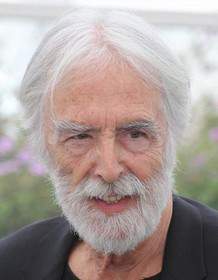
Michael Haneke
Made by

MK2 Films
Code Unknown Plot Summary
Read the complete plot summary and ending explained for Code Unknown (2000). From turning points to emotional moments, uncover what really happened and why it matters.
Across a mosaic of interwoven stories, the film traces how strangers in a crowded city brush against each other, their lives brushing past in a tangle of misunderstandings and quiet hardships. A group of deaf children plays a game of charades in French sign language, a moment that quietly foregrounds how easily meaning slips between people and how easily fear or confusion can go unspoken.
On a Paris street, Anne [Juliette Binoche] crosses paths with Jean [Alexandre Hamidi], who is searching for his brother Georges [Thierry Neuvic] in Kosovo. Anne learns that Georges has left his countryside life behind, and Jean asks to crash at Anne’s apartment. Jean leaves with the keys but scorns the moment by throwing the remnants of his pastry at Maria [Luminița Gheorghiu], a Romanian homeless woman, prompting Amadou [Ona Lu Yenke] to step in and push for an apology. The confrontation escalates quickly: the police arrive, Amadou is arrested, Jean is released, and Maria is escorted to the airport for deportation, a sequence that casts light on how fragile dignity can be under pressure from authorities and circumstance.
Back at home, the tension continues to mount as Amadou’s family confronts the police ransacking their space and the fear that their son may have been unjustly targeted. After Amadou is released, he goes on a date, while Anne quietly reveals in a social circle that Amadou is the man who attacked Jean—an accusation that lingers and ripples through their small circle. Later, Amadou reappears as an instructor, leading a group drumming performance that offers a moment of communal rhythm amid the resulting misunderstandings. Anne herself shifts between reality and performance, rehearsing scenes for different films and acting out terror and humor with a looseness that blurs lines between life and cinema.
In parallel, at home and on the move, Anne attends a scene of everyday life that hums with unspoken fear: the sounds of a crying child in the walls of her apartment, a memory linked to the earlier deaf-charade sequence, and the way Georges returns from Kosovo a man haunted by civilian fragility. He wanders through the city with an eye for people on trains, even as he contemplates his own imprisonment during the war. The narrative tints its portrayal of grief with quiet ambivalence, leaving room for doubt about whether the child who screamed was the same deaf girl who acted out in the game.
The film then shifts to the farm town where Georges’s father, Josef Bierbichler, endures poverty with a stubborn sense of duty. He explains that his younger son Jean has gone missing, but his stance is not one of active searching, a detail that deepens the elegiac mood of missed chances and stubborn silences.
In Romania, Maria reconnects with family in a rundown apartment, recounting moments that haunt her—giving money to a gypsy woman and washing her hands for fear of contamination, while in Paris a well-dressed man once offered money and then drew back, leaving Maria to continue begging in a world that remains indifferent to her humanity. The film closes on a quieter, unresolved note: an untranslated sign-language gesture from a different child, a final, wordless reminder of lives that carry on beyond what the screen can capture.
The result is a slow-burning, humane tapestry that refuses to simplify its characters into easy moral judgments, instead presenting a series of intimate, imperfect portraits that illuminate how communication, sympathy, and misinterpretation shape ordinary lives.
Code Unknown Timeline
Follow the complete movie timeline of Code Unknown (2000) with every major event in chronological order. Great for understanding complex plots and story progression.
Opening scene: deaf children play sign-language charades
A group of deaf children play a game of charades using French sign language. A young girl acts out gestures of fear, slowly stepping backward toward a wall as she tries to protect herself. The other children struggle to guess what she is conveying, hinting at the film's theme of hidden meanings and miscommunication.
Anne meets Jean on a Paris street
Anne walks through a Paris street and runs into Jean, who is seeking his brother Georges in Kosovo. She tells him Georges is away, and Jean asks to stay at Anne's apartment. The encounter sets in motion a web of intersecting lives.
Pastry throw and confrontation
Jean leaves with the keys but throws a pastry at Maria, a Romanian homeless woman. Amadou confronts Jean and demands an apology. A police altercation ensues, Amadou is arrested, Jean is released, and Maria is escorted to the airport for deportation.
Amadou's mother speaks to police
Back at home, Amadou's mother discusses her distress with the police as they ransack the apartment and arrest her son. She laments the injustice she perceives and worries for her family. The scene highlights the tension between the characters' private struggles and state authority.
Amadou on a date and public accusation
After his release, Amadou goes on a date, attempting to move past the incident. In the same restaurant, Anne informs her friends that Amadou attacked Jean without cause. The moment blends personal relationships with public suspicion and rumor.
Amadou leads a group drumming session
Amadou is later seen participating in a group drumming performance as an instructor. The rhythmic gathering offers a counterpoint to the earlier conflict and shows another facet of his character. The scene emphasizes community and the healing potential of music.
Anne rehearses scenes for films
Anne rehearses for different films, effectively acting out scenes of terror and humor that blur the line between reality and fiction. Her craft foregrounds the film's meditation on perception and storytelling. The practice mirrors the characters' own performances within their lives.
The crying girl in the apartment
At home, while ironing, Anne hears her neighbors and a young girl crying loudly, sounding like physical beatings. The sound deepens the sense of danger and ambiguity surrounding the girl and whether she is the deaf child from the game. The moment expands the film's web of interwoven private traumas.
Georges returns from Kosovo
Georges arrives back from Kosovo, overwhelmed by civilian life after the war. He is haunted by memories and seems detached, spending time photographing people on the train and pondering his imprisonment. The return contrasts his internal turmoil with the external world.
Grocery store conversation about the screaming child
In a grocery store, Anne recounts the story of the screaming child to Georges, who remains apathetic. He resists engaging with the emotional weight of the tale and instead fixates on his own preoccupations. The exchange highlights differing responses to trauma.
Georges' train-time reflections
Georges spends days observing and photographing people on the train, haunted by his wartime imprisonment. The train's motion becomes a metaphor for his unsettled mind and the pull between memory and present life. He remains distant from the others as his thoughts linger on the past.
Funeral for petite Françoise
Anne attends the funeral of petite Françoise, the girl whose screaming she heard earlier. She does not confront the grieving parents, and the film leaves open whether this child is the deaf girl from the sign-language game. The scene adds to the film's theme of unresolved guilt and ambiguous connections.
Farm-town visit and Jean's disappearance
Anne and Georges visit Georges' father in a farm town. The father, living in poverty, says that his younger son Jean has disappeared but refuses to actively search for him. The confession deepens the sense of family strain and the fragility of connection.
Maria's arc: from Romania to Paris
In Romania, Maria reconnects with family in a run-down apartment and recounts sending money to a gypsy woman, followed by worry that she might have contracted a disease. Later, back in Paris as a homeless woman, she continues to seek money on the streets, illustrating persistent hardship. The arc ties her journey across continents to the film's broader themes of survival and dignity.
Ending sign-language gesture
The film ends with an untranslated sign-language gesture from a different child, echoing the opening game's mystery. The final moment leaves audiences with a lingering question about communication and understanding across the stories.
Code Unknown Characters
Explore all characters from Code Unknown (2000). Get detailed profiles with their roles, arcs, and key relationships explained.
Anne Laurent (Juliette Binoche)
An actress who rehearses for films and projects scenes of terror and humor into real life, blurring the line between performance and reality. Her interactions reveal a sensitivity to others' pain while she often remains emotionally distant, navigating a web of misunderstandings and ambiguous connections. She moves through Paris with a curiosity that both exposes and complicates the lives around her.
Georges (Thierry Neuvic)
Anne’s boyfriend who has left his father’s farm and is troubled by civilian life after being in Kosovo. He spends time photographing people on the train and appears emotionally adrift, embodying the era’s trauma. His return from conflict contrasts with the everyday reactions of others, highlighting how memory and war shape perception.
Jean (Alexandre Hamidi)
A young man seeking his brother Georges and staying at Anne’s apartment. His casual actions—such as leaving with pastry remnants—interact with more serious tensions around homelessness and violence, illustrating how ordinary behavior can collide with larger social issues.
Amadou (Ona Lu Yenke)
A man whose life intersects with violence and arrest, later appearing as an instructor in a group drumming setting. His experiences reflect the vulnerable positions of migrants and marginalized individuals within urban spaces. He embodies resilience amid social scrutiny and conflict.
Maria (Luminița Gheorghiu)
A Romanian woman who has known homelessness and hardship, she returns to Paris after a period in Romania. Her past interactions with wealthier individuals contrast with the demeaning treatment she sometimes receives, underscoring themes of dignity and vulnerability in urban capitalism.
Aminate (Maimouna Hélène Diarra)
Amadou’s mother who expresses distress as police ransack their home and arrest her son. Her perspective anchors the film’s portrayal of family bonds amid threat and uncertainty, highlighting maternal concern and resilience.
Bauer (Josef Bierbichler)
Georges’ father living in poverty within a farm town. He speaks of his disappeared younger son Jean and reveals a stubborn, unresolved sorrow about family, home, and the fragility of connection across generations.
Code Unknown Settings
Learn where and when Code Unknown (2000) takes place. Explore the film’s settings, era, and how they shape the narrative.
Time period
late 1990s
The events unfold in a contemporary late-1990s setting, with references to regional conflict and migrant presence in Europe. The Parisian urban milieu juxtaposed with rural and border contexts situates the characters within a tense, transitional era. The period accentuates themes of memory, perception, and upheaval.
Location
Paris, Kosovo, Romania, farm town
The narrative traverses a bustling Parisian street and a distant farm town, reflecting contrasts between urban life and rural poverty. It also shifts to Romania as a backdrop for a homeless character's past, highlighting displacement and migration. Together, these locations anchor the interconnected stories and the social tensions they reveal.
Code Unknown Themes
Discover the main themes in Code Unknown (2000). Analyze the deeper meanings, emotional layers, and social commentary behind the film.
💬
Communication
The film centers on how people fail to understand each other across language and social borders. Sign language, spoken words, and misreads create misunderstandings that propel the characters into conflict or confusion. The act of speaking and interpreting becomes a motif for truth and ambiguity. Scenes of miscommunication drive much of the drama and ambiguity.
🌍
Displacement
Characters navigate forces of displacement: homelessness, migration, and the search for belonging. Maria’s homelessness in Paris and her Romanian background reflect the fragility of survival in a sprawling city. The film links personal displacement to broader social and political currents, including policing and deportation. The sense of exile threads through multiple story strands.
🏙️
Urban Alienation
Parisian life is depicted as a site of detachment where individuals drift between encounters and indifference. Anne rehearses scenes of fear and humor, while others drift through trains, markets, and apartments without meaningful connection. The city functions as a backdrop that amplifies isolation and curiosity about others' lives. The characters often confront the emptiness behind bustling urban rhythms.
🎭
Reality vs. Image
The boundary between reality and fiction dissolves as characters perform, reinterpret, or misread events. Anne’s acting blurs with her real experiences, echoing the film’s central question of what is true. The recurring motif of performance—whether in cinema, signs, or daily life—challenges the viewer to distinguish perception from fact. Ambiguity invites multiple interpretations of each moment.

Coming soon on iOS and Android
The Plot Explained Mobile App
From blockbusters to hidden gems — dive into movie stories anytime, anywhere. Save your favorites, discover plots faster, and never miss a twist again.
Sign up to be the first to know when we launch. Your email stays private — always.
Explore the mobile appCode Unknown Spoiler-Free Summary
Discover the spoiler-free summary of Code Unknown (2000). Get a concise overview without any spoilers.
In the bustling heart of Paris, a seemingly small encounter sets off a ripple that draws together five disparate lives. The city’s endless streets and crowded cafés become a backdrop for quiet collisions, where language—spoken, signed, or left unsaid—shapes the fragile connections that form. The film moves with a measured, almost lyrical pace, letting the ambient hum of the metropolis and the soft gestures of its inhabitants speak louder than any overt drama.
Anne, a dedicated actress, finds her world subtly altered when her relationship with her photographer boyfriend, Georges, a former war correspondent, begins to intersect with events far beyond the studio lights. Georges carries the weight of distant conflict, his lingering memories coloring his view of the city and its people. Meanwhile, his brother Jean arrives searching for a forgotten key, a simple code that promises access to a place tied to his sibling’s past, and his restless curiosity pulls him into the lives of strangers.
A Romanian immigrant named Maria offers a glimpse into the precarious existence of those living on society’s edge, while a deaf teacher, Amadou, embodies the film’s meditation on communication—his classroom’s silent charades echo the broader theme that meaning often slips through the cracks of ordinary interaction. Their paths intersect in moments that feel both accidental and inevitable, underscoring how a minor incident can bind together individuals from different walks of life.
Through its muted color palette and patient storytelling, the film invites viewers to linger on the spaces between words, to sense the tension in a shared glance or a lingering pause. It is a humane tapestry that celebrates the everyday, reminding us that in a city of millions, even the smallest gestures can carry the weight of countless untold stories.
Movies with Similar Twists and Themes
Uncover films that echo the narrative beats, emotional arcs, or dramatic twists of the one you're exploring. These recommendations are handpicked based on story depth, thematic resonance, and spoiler-worthy moments — perfect for fans who crave more of the same intrigue.


Featured on this page

What's After the Movie?
Not sure whether to stay after the credits? Find out!
Check out our other apps:

SAT Sphere
Build confidence for the Digital SAT.

Mori Atlas
Discover wild places worth protecting.

Luntero
Search smarter for a home in Amsterdam.

Plot Explained
Unravel movie endings and hidden clues.

Pokechamp
Dive into Pokémon data and battle logic.

Driving Theory
Get ready for your European theory test.

Movie Dust
Plan your next cinema trip with ease.

Musemap
Find art and culture as you travel.

Selkobase
Compare credentials before committing.

Local Manual
Turn an unfamiliar country into practical next steps.

Lernavi
Compare school systems before your next move.

GymRoam
Find a workout stop wherever your plans take you.
Explore Our Movie Platform
New Movie Releases (2026)
Famous Movie Actors
Top Film Production Studios
Movie Plot Summaries & Endings
Major Movie Awards & Winners
Best Concert Films & Music Documentaries
Movie Collections and Curated Lists
© 2026 What's After the Movie. All rights reserved.
Privacy Policy