What Is Close-Up About?
The premise of Close-Up in 297 words, with nothing given away. The full story follows below.
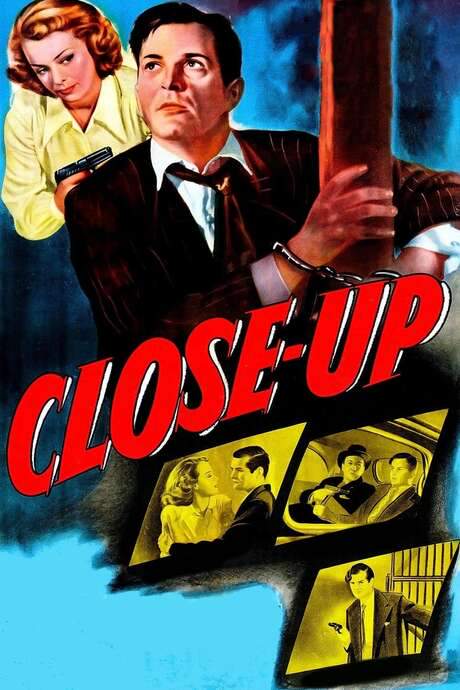
In the restless streets of post‑war New York, a city still humming with neon and the clatter of ambition, Phil Sparr makes his living behind a lens. As a newsreel photographer, he moves through crowds, capturing ordinary moments that later become part of the nation’s collective memory. The rhythm of his work is steady, the world around him a blur of skyscrapers, traffic, and the occasional flash of humanity that begs to be documented.
One night, while framing the ordinary, Phil’s camera catches an incongruous figure—a man whose face, caught in stark close‑up, hints at a past that should have long been buried. The realization that he has inadvertently recorded a notorious Nazi war criminal sets the ordinary into motion, turning the city’s ordinary pulse into a race against hidden threats. The very act of observing becomes a perilous invitation, thrusting Phil into a shadowed underworld that watches his every frame.
Seeking a way through the maze of danger, Phil encounters Peggy Lane, a sharp‑eyed magazine reporter whose curiosity matches his own. Their partnership is forged in the immediacy of the moment, each aware that the other’s skills could be the difference between anonymity and exposure. Both are drawn into a fragile alliance where trust is earned in whispers, and the line between observer and participant blurs beneath the fluorescent glow of the city’s nightscape.
The film’s tone is a brisk, noir‑tinged thriller, where every alleyway could conceal a gaze, and the click of a camera shutter feels like a siren calling danger closer. The atmosphere is thick with the tension of being seen and unseen, a tight‑knit tapestry of suspense that asks what happens when a simple photograph turns a man’s ordinary life into a frantic chase through a world where history refuses to stay hidden.
What Happens in Close-Up?
The complete story of Close-Up, from the first scene to the last, in 364 words (about 2 minutes). Spoilers throughout.
Spoilers ahead
Phil Sparr [Alan Baxter] is a newsreel photographer in New York City who, while filming outside a bank, stumbles into a high-stakes financial plot. Inside the bank, Mr. Fredericks [Michael Wyler], an associate of Joseph Gibbons, notes that an enormous withdrawal of 800,000 dollars is about to be processed the next day. Phil unintentionally captures Martin Beaumont [Richard Kollmar] as he exits the building, drawing the attention of the criminals. Beck [Russell Collins], Fredericks’s ally, quickly moves to secure the film, spinning a quick story about his wife and girlfriend not needing to see him in the footage.
Phil then meets Peggy Lane [Virginia Gilmore], a diligent magazine reporter, and the two head to deliver the reel to Beck. This fragile alliance is complicated when Phil’s boss, Harry Avery [Loring Smith], reveals a bombshell: Beaumont is actually Kurt Bauer, a notorious Nazi war criminal. The tension escalates as Phil arranges a rendezvous with Peggy at his apartment, only to be kidnapped by Gibbons [Phillip Huston], who poses as a New York City detective.
A daring escape follows as Phil slips away on the Hoboken ferry, but his return to the office is grim: his boss has killed the hitman sent to erase the film. Desperate, Phil entrusts the film can to a cabbie to take to the police, yet the criminals overpower the driver and abduct Phil and Peggy. Peggy, who appears to be aligned with the criminals, undergoes a change of heart and makes a move to help save Phil from a deadly fate.
Beaumont has hired Gibbons to fly him out of the country, but Gibbons tries to double-cross him and seize all the money. Beaumont outsmarts the betrayal and heads toward a seaplane, using Phil as a shield in the tense getaway. Peggy alerts the authorities, and a confrontation erupts when Gibbons arrives, resulting in a gunfight that ends with Beaumont killing Gibbons and his henchman, though Phil pursues Beaumont, and the crime lord is fatally shot by the police. In the aftermath, Phil gratefully acknowledges Peggy for saving his life even as she heads toward jail, bringing a fragile, ironic end to a night of deception, danger, and narrow escapes.
Close-Up Timeline: Every Key Event in Order
15 key events in the order they happen, from “Phil shoots outside a bank” to “Ending: Peggy's fate and gratitude”. 15 events name a place, across 14 locations.
- 1
Phil shoots outside a bank
Phil Sparr, a newsreel photographer, is doing a fashion shoot outside a busy New York bank. The location places him near money and potential danger, foreshadowing the chase for the footage. The scene establishes the bank as the catalyst for the conspiracy that follows.
When:Afternoon Where:New York City, outside the bank
- 2
A large withdrawal is planned
Inside the bank, Fredericks informs that he will close his account tomorrow and withdraw $800,000. The sum signals a lucrative payoff and draws criminals toward the footage. The bank's routine becomes the launchpad for the plot.
When:Morning Where:Inside the bank, New York
- 3
Beaumont is filmed leaving the bank
Phil unintentionally films Martin Beaumont as he leaves the bank, recording a man of interest on camera. The footage becomes a target for those who want it. The recording triggers pursuit by Beck and the gang.
When:Afternoon Where:Bank exterior, New York
- 4
Beck approaches Phil to buy the film
Beck, Fredericks' associate, offers to buy the film and tells a story about his wife and girlfriend not needing to see him in it. Phil senses danger and weighs his options between profit and safety. The encounter marks the first direct link between the footage and the criminals.
When:Afternoon Where:Near the bank
- 5
Phil meets Peggy Lane
Phil meets magazine reporter Peggy Lane, and they decide to deliver the film to Beck. Their collaboration combines journalism with a high-stakes criminal chase. Peggy's presence adds a new dynamic to the pursuit.
When:Afternoon Where:New York
- 6
Beaumont's true identity revealed to Avery
Phil's boss, Harry Avery, learns that the man behind the alias is Kurt Bauer, a wanted Nazi war criminal. The revelation escalates the danger surrounding the footage. It also shifts who can be trusted among the principals.
When:Evening Where:Phil's office
- 7
Rendezvous planned; kidnapping begins
Phil arranges a rendezvous with Peggy at his apartment to hand off the film, but Gibbons, posing as a detective, kidnaps Phil. The trap demonstrates the criminals' reach and willingness to seize control. Peggy becomes entangled in the danger as well.
When:Night Where:Phil's apartment, New York
- 8
Phil escapes on the Hoboken ferry
Phil makes a daring escape from his captors by slipping away on the Hoboken ferry. The waterborne exit pushes the chase into a new territory and reveals Phil's resourcefulness. The escape changes the balance of power in the pursuit.
When:Night Where:Hoboken ferry, New Jersey
- 9
Back at the office—the hitman is killed
Upon returning to his office, Phil finds that his boss has killed the hitman who was sent to knock him off and steal the film negative. The act confirms the ruthlessness of Avery and the criminals. It also injects a sense of urgency to protect the footage at all costs.
When:Next day Where:New York office
- 10
Abduction of Phil and Peggy
Phil tries to give the film can to a cabbie to take to the police, but the criminals knock out the cabbie and kidnap Phil and Peggy. The capture dumps them back into danger and accelerates the plot toward a final confrontation. Peggy's loyalties begin to shift under pressure.
When:Evening Where:New York City street
Show the other 5 events of Close-Up Hide the last 5 events
- 11
Peggy's change of heart
Peggy is revealed to be tied to the criminals, but she experiences a change of heart and acts to protect Phil from harm. Her decision creates a glimmer of hope amid the mounting peril. This turn deepens the moral complexity of the story.
When:During captivity Where:Captivity/criminal hideout
- 12
Beaumont negotiates flight; Gibbons plots double-cross
Beaumont hires Gibbons to fly him out with the $800,000, but Gibbons schemes to take the money for himself. Beaumont remains one step ahead, turning the tables on his would-be betrayer. The power shift tightens the conspiracy around the seaplane plan.
When:Evening Where:Seaplane base / airfield
- 13
Confrontation at the seaplane base
Beaumont heads to meet the seaplane, using Phil as a shield to ensure his escape. Peggy calls the cops to intervene amid the tense standoff. The plan hurtles toward a violent resolution.
When:Evening Where:Seaplane base / waterfront
- 14
Gunfight and the fall of the mastermind
Gibbons arrives and engages in a gunfight with Beaumont by the water. Beaumont kills Gibbons and his henchman, but Phil pursues the mastermind and the police shoot Beaumont. The climax leaves Phil alive but winds up with a heavy loss.
When:Late night Where:Seaplane base / waterfront
- 15
Ending: Peggy's fate and gratitude
Phil thanks Peggy for saving his life before she leaves for jail. The ending underscores the personal cost of their battle against the criminals. The footage remains a symbol of courage amid a world of danger.
When:Aftermath Where:New York / jail
Who Are the Main Characters in Close-Up?
6 characters, among them Phil Sparr (Alan Baxter), Beck (Russell Collins) and Peggy Lane (Virginia Gilmore): who each one is and the part they play in the story. Every profile links to the actor’s page.
- PS
Phil Sparr (Alan Baxter)
Played by Alan Baxter
Phil is a quick-thinking newsreel photographer whose work pulls him into a criminal conspiracy after he unintentionally films a key suspect leaving the bank. He remains resourceful and determined to protect the film, even as he is pursued by killers and coerced by criminals. His courage and curiosity drive him to seek help from Peggy while navigating intense danger. He embodies the detective-hero ethic in a high-stakes urban chase.
- 📰 Journalist
- 🎯 Resourceful
- 🧭 Quick-thinking
- B(
Beck (Russell Collins)
Played by Russell Collins
Beck is a calculating associate who tries to broker the sale of Phil’s film, spinning a tale about keeping his wife and girlfriend off the record. He demonstrates a willingness to manipulate others for financial gain and to stay ahead of the plot. He is a key early antagonist in the scheme, driving the momentum of pursuit and double-cross. His scheming nature keeps the danger escalating.
- 💼 Schemer
- 🎭 Deception
- 🧩 Manipulator
- PL
Peggy Lane (Virginia Gilmore)
Played by Virginia Gilmore
Peggy is a magazine reporter who becomes intertwined with Phil’s case. She shifts from suspect to ally, showing courage and resourcefulness as she helps save Phil. Her involvement reveals a deeper ethical instinct and willingness to take risks to do the right thing. By the end, she plays a pivotal role in guiding the pursuit of justice.
- 🗞️ Reporter
- 🤝 Ally
- 💡 Insight
- JG
Joseph Gibbons (Phillip Huston)
Played by Phillip Huston
Gibbons is a ruthless criminal who poses as a detective to kidnap Phil and recover the film. He is a key weapon in the criminal network, willing to shoot and double-cross to seize the money. His actions accelerate the danger and set up the climactic confrontations that follow.
- 🕶️ Villain
- 🔫 Kidnapper
- 💣 Co-conspirator
- MB
Martin Beaumont (Richard Kollmar)
Played by Richard Kollmar
Beaumont appears as the mastermind behind the operation and is revealed to be Kurt Bauer, a wanted Nazi war criminal. He orchestrates the flight plan to escape with the funds, manipulating events to protect himself. He outsmarts rivals until the final confrontation, ending in a gunfight and police action that seals his fate.
- 🧠 Mastermind
- 💰 Greed
- 🕵️♂️ Double-cross
- HA
Harry Avery (Loring Smith)
Played by Loring Smith
Harry Avery is Phil’s boss, a pivotal authority figure who discovers the full scope of the plot. He acts decisively when the danger escalates, even killing the hitman sent to remove Phil and steal the film. He anchors the office side of the story, representing institutional power and quick, sometimes brutal, justice.
- 🗂️ Boss
- ⚖️ Authority
- 🗡️ Enforcer
Where and When Is Close-Up Set?
Close-Up is set in New York City and Hoboken. Here is why the place matters to the story.
Where
New York City, Hoboken
Set against the busy streets of New York City, the story moves from a bank exterior to a bustling newsroom. A pivotal moment unfolds aboard the Hoboken ferry, illustrating the city’s transport links as routes for pursuit and escape. The urban backdrop—banks, offices, and crowded sidewalks—creates a tense, fast-paced atmosphere where crime collides with media coverage.
- 🏙️ Urban setting
- 🗽 City in flux
What Are the Themes of Close-Up?
3 ideas the story keeps returning to, among them Truth, Crime and Courage.
-
01
Truth
Truth drives the plot as Phil’s footage becomes crucial evidence against a web of manipulation. Deception is woven through every alliance, forcing characters to question loyalties. Journalists, criminals, and police collide as the real motives behind the heist come to light. The resolution hinges on separating fact from fiction, even as loyalties blur.
-
02
Crime
A network of schemes centers on a massive bank withdrawal and a plan to flee with $800,000 and a valuable film negative. The criminals exploit every opportunity to profit, using deception and coercion to stay ahead. The pursuit spans offices, alleys, and the ferry, heightening tension as the crime unfolds. The story remains focused on the mechanics of crime and the scramble to stop it.
-
03
Courage
Courage emerges through quick thinking and risky cooperation between Phil and Peggy. They confront danger and betrayal, putting their safety on the line to safeguard the film. Resourcefulness and resolve enable them to resist coercion and outmaneuver the conspirators. The finale celebrates resilience under pressure.
What Kind of Film Is Close-Up?
Tense in tone, with fast pacing and a straightforward story, going by the plot summary.
- Tone
- Tense
- Pacing
- Fast
- Story
- Straightforward
- Intensity
- High
- Ending
- Bittersweet
A fast-paced and tense thriller that plunges a photographer into a dangerous conspiracy with a Nazi war criminal, creating a constant sense of anxiety and life-or-death urgency from start to finish.
- tense
- suspenseful
- anxious
- gritty
- paranoid
- thrilling
- crime investigation
- nazi fugitive
- journalistic integrity
- betrayal
Content notes: murder, gun violence, kidnapping, nazi war criminal.
Quiz
How well do you remember Close-Up? Test yourself on the story.