
What Is Circle About?
The premise of Circle in 325 words, with nothing given away. The full story follows below.
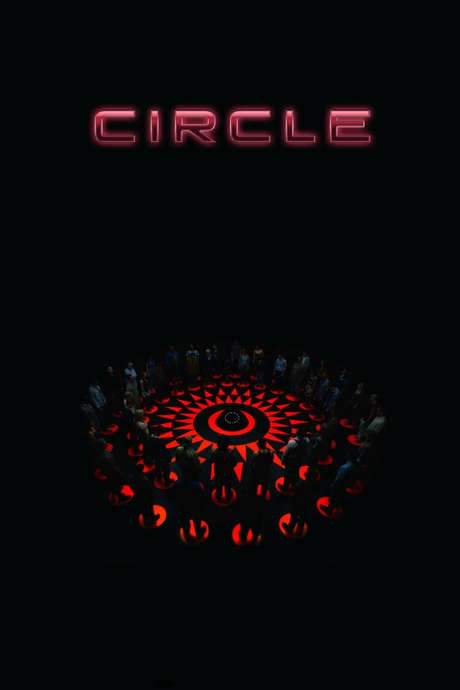
In a stark, dimly lit chamber that seems to stretch forever, fifty strangers awaken with no memory of how they arrived. Their only guidance is a simple, terrifying rule: every two minutes a hidden mechanism at the room’s center will claim one of them. Arranged in concentric circles and forced to stare at each other, they are left with a relentless ticking that turns the space into a pressure‑cooker of uncertainty, where silence is as oppressive as the unseen force that dictates life and death.
The atmosphere is a blend of clinical horror and psychological thriller, punctuated by the occasional flash of a lethal beam that snatches a body without warning. Within this claustrophobic arena, a diverse cross‑section of humanity is thrust together—Eric, a determined young man whose background hints at both intellect and resolve; an elderly figure whose weary eyes suggest hidden stories; a pregnant woman whose vulnerability is evident; a small girl whose innocence is stark against the grim setting; and a bearded man whose calm demeanor masks deeper convictions. Their disparate ages, cultures, and personal histories become both a source of tension and a fragile thread of connection as they search for meaning.
As the minutes tick down, the group’s initial panic gives way to a desperate need for cooperation. Conversations flicker between attempts to recall any clue about their captivity and whispered theories about the purpose of the chamber. Trust is tested, alliances form and dissolve, and each individual’s moral compass is examined under an unrelenting spotlight. The environment itself seems to probe the very core of human behavior, asking what can be preserved when survival is measured in seconds.
The film sways between cold, metallic visuals and the raw, anxious humanity of its characters, creating a mood that is both claustrophobic and oddly expansive. It invites viewers to wonder who—or what—has set this deadly stage, and what will be revealed when strangers are forced to confront their deepest instincts together.
What Happens in Circle?
The complete story of Circle, from the first scene to the last, in 1,024 words (about 4 minutes). Spoilers throughout. Names in the text link to 15 cast member pages.
Spoilers ahead
Fifty people awaken in a darkened room, arranged in two concentric circles around a mysterious black dome. If anyone moves off their platform or touches another, alarms scream and a lethal beam from the dome strikes, pulling the body away in an instant. A man tries to calm the growing panic, but the device silences him mid-sentence, and soon after, another person dies every two minutes. The fear spreads as the group confronts a brutal, impersonal trap that leaves them with only questions and a shrinking circle of survivors.
As confusion deepens, they discover a strange, unsettling mechanism: the room’s technology lets them vote for who dies using hand gestures, with arrows on the floor showing each person’s vote to themselves but not to others. Attempts to boycott the process fail, because a death occurs every two minutes regardless. The situation becomes a grim social experiment, with every choice watched, weighed, and judged by those left alive.
Amid the chaos, a college student named Eric, Michael Nardelli, proposes a tactic to slow the onslaught by pre-selecting who will be vulnerable in the next rounds. To buy time for thought, the group agrees to target the elderly first, an unsettling plan that splits the room into factions and stirs long-buried fears about age, worth, and survival. Eric’s youngest energy collides with a weary pragmatism as the plan takes shape, and memories begin to surface—Eric recalls trying to flee Los Angeles, only to be pulled into the air and wake in a red room with other humans.
Not long after, the oldest man in the chamber, the [Oldest Man] Bill Lewis, speaks of having seen or heard aliens, and his later death under the dome confirms the room’s merciless logic. The group’s suspicions grow sharper as they begin recognizing familiar faces: a man identifies the woman beside him as his wife, and another man recalls the doctor with whom he was having an affair. A tattooed man, [Cesar Garcia], is eliminated after acknowledging a cop’s accusation of domestic violence, and the discussion expands to broader social tensions when minorities are quickly targeted and a dispute about racism flares up among the survivors. An African-American man, [Mustafa Speaks], voices the accusation that the process has become racist, only to be dismissed by others until a cop’s racist rant ignites a swift, fatal consequence.
The captives learn they cannot vote for themselves, and efforts to distribute votes evenly lead to strategic plays and tragic results. One participant tries to give a second vote for a pregnant woman, prompting Eric to vote for him; a tie ensues and the man dies in a runoff. Some choose to sacrifice themselves to buy time, while others debate the moral weight of theists, atheists, and personal beliefs under pressure. A harsh moment arrives when a homophobic lawyer targets a lesbian, and the lawyer is killed as a consequence. The group realizes that, to determine a winner, one of the final two people must abstain from voting—an ethical trap that forces painful choices.
The room fractures into two camps. One faction, led by Eric—the Marine—and a one-armed man, strives to save a pregnant woman and a little girl by sacrificing themselves. The other faction, led by a bearded man, [Kaiwi Lyman], and a banker, [Daniel Lench], argues that everyone is equal and no one should receive special protection, pressing for immediate elimination of the vulnerable. After the Spanish translator is eliminated, a Hispanic immigrant [David Saucedo] and the little girl tie in votes, leading to a dramatic confrontation and the self-sacrifice that follows. The couple at the center of the ruse—who had pretended to be husband and wife to curry favor—are revealed, and the husband is forced to vote with Eric’s bloc, resulting in his own elimination.
As the voting pressure intensifies, Eric’s faction suffers heavy losses, yet they push toward a narrow victory with a six-way tie resolved in their favor. A silent man, who has never voted, becomes a pivotal figure and is eliminated, leaving only Eric, the pregnant woman, the little girl, and the silent participant. Eric theorizes that aliens might be using the process to study humanity’s values, a grim hypothesis that becomes central to the ending. When the silent man dies, the remaining trio faces a cruel moral calculus: the two who choose to sacrifice themselves simultaneously. The girl dies by suicide, and Eric casts a last-second vote to kill the pregnant woman, only to learn that the unborn child counts as a person and must be considered. Eric votes to kill the child, and then wakes up in Los Angeles, where he joins a group of people—mostly children and pregnant women—watching a fleet of alien crafts hovering over the city.
Throughout the ordeal, the film weaves together a tense, methodical portrait of fear, ethics, and survival under pressure. The dynamics of trust and betrayal unfold in small actions and whispered conversations, with each character’s past and identity threaded into the present danger. The strangers’ attempts to understand why they were chosen, how they arrived in this red-dream chamber, and who might be pulling the strings fuel a chilling meditation on humanity when confronted with an unknown intelligence. The final twist—a return to Los Angeles and the sight of extraterrestrial forces monitoring Earth—suggests a larger game at work, where human values are tested both in life-and-death moments and in the quiet, intimate choices that define who they are.
Note: The first-time references to specific characters include actor links:
- Eric, Michael Nardelli
- Wife, Julie Benz
- Doctor, Jacquelyn Houston
- Little Girl, Molly Jackson
- Pregnant Girl, Allegra Masters
- Bearded Man, Kaiwi Lyman
- Banker, Daniel Lench
- Spanish Translator, Marisol Ramirez
- Hispanic Man, David Saucedo
- Oldest Man, Bill Lewis
- African American Man, Mustafa Speaks
- Cop, Michael McLafferty
- Tattooed Man, Cesar Garcia
- Husband, Matt Corboy
- One-Armed Man, Zachary James Rukavina
- Spanish Translator (again would appear only once per actor in this summary)
This version preserves the core plot, expands on the social dynamics and moral questions, and keeps the language clear and accessible while maintaining a neutral tone.
Circle Timeline: Every Key Event in Order
15 key events in the order they happen, from “Awakening and the deadly dome” to “Ending in Los Angeles”. 15 events name a place, across 2 locations.
- 1
Awakening and the deadly dome
Fifty people awaken in a dark room arranged around a black dome. Any movement or contact with others triggers an automated beam that kills the offender, and the body is quickly removed. A man is killed mid-sentence when he tries to calm the panicked crowd.
When:Immediately after awakening Where:Dark room around the dome
- 2
The voting system is revealed
The group discovers they can vote for who dies using hand gestures, and arrows on the floor reveal each person’s vote to others. They attempt to boycott the process, but a two-minute clock persists and a participant is selected to die regardless. The tension escalates as the mechanism becomes their only control over survival.
When:Shortly after discovery of the votes Where:Dark room around the dome
- 3
A plan to buy time: elder elimination
A college student proposes eliminating the elderly in future rounds as a way to buy time for collective reasoning. The group debates the ethical implications, but the clock and fear push them toward accepting the tactic. The strategy polarizes opinions and sets the tone for future selections.
When:Early in confinement Where:Dark room around the dome
- 4
Eric’s memory and a suspicious witness
Eric recalls attempting to flee Los Angeles and being abducted into a red room with other humans. An old man nearby claims he saw aliens, but the group dismisses him and eliminates him. The revelation deepens the mystery of their abduction and the aliens’ interest.
When:Soon after initial awakenings Where:Dark room around the dome
- 5
A targeted vote against a cancer survivor
The college student aggressively targets a 52-year-old cancer survivor for elimination, despite objections from those who resist labeling her elderly. The group’s bias and fear guide who stays and who goes. This moment highlights the moral ambiguities at stake in every vote.
When:Early rounds after the memory reveal Where:Dark room around the dome
- 6
Personal ties surface and a violent past is revealed
Several participants recognize others as spouses or lovers, exposing intimate histories within the circle. A tattooed man is eliminated after admitting to domestic violence following a cop’s accusation, underscoring how personal histories influence the vote.
When:Mid-confinement Where:Dark room around the dome
- 7
Racism and the cop’s rant
As minorities are targeted, an African-American man complains that the process has become racist. The cop launches into a racist tirade, and the crowd ultimately selects him next, illustrating how bigotry can dictate who survives.
When:During the escalating rounds Where:Dark room around the dome
- 8
Voting mechanics produce a tie
The group learns they cannot vote for themselves and attempts to distribute votes to everyone. One man receives a second vote for a pregnant woman, prompting Eric to vote for him; the tie is resolved by a runoff that results in another death.
When:In the middle phase of rounds Where:Dark room around the dome
- 9
Religious tension and a provocative death
An atheist antagonizes the theists who praised the volunteers’ faith and is briefly spared before being killed for mocking the girl regarding her boss paying for her breast enlargement. The moment underscores how religion and personal insults can become fatal in this environment.
When:Mid to late rounds Where:Dark room around the dome
- 10
A homophobic attack and its consequence
A homophobic lawyer targets a lesbian participant and is killed as a consequence of the escalating mob justice. The group’s intolerance continues to shape who remains in the game.
When:During later rounds Where:Dark room around the dome
Show the other 5 events of Circle Hide the last 5 events
- 11
The schism forms: sacrifice versus survival
Two rival blocs emerge: Eric’s pro-sacrifice faction and a bearded man with a banker’s pragmatic stance against sacrifice. They clash over whether to save a pregnant woman and a little girl or to eliminate them to preserve themselves.
When:Approaching the final rounds Where:Dark room around the dome
- 12
A pivotal elimination and the husband’s manipulation reveal
The Spanish translator is eliminated; a tie between a Hispanic immigrant and the little girl leads the bearded man to sacrifice himself. The husband is forced to align with Eric’s bloc, but under interrogation, the couple admit their pretended relationship was to curry favor, resulting in the husband’s elimination.
When:During the schism phase Where:Dark room around the dome
- 13
Eric’s faction clears the field
Eric’s bloc inflicts heavy losses on the opposing faction and eliminates the remaining threat, shrinking the circle to four survivors: Eric, the pregnant woman, the girl, and a silent man who has never voted. The moral calculus of the game nears its climax.
When:Final stretch Where:Dark room around the dome
- 14
The silent vote and the girl’s death
The silent man is eliminated, and the girl dies by suicide in a bid to buy more time. Eric’s last-second vote targets the pregnant woman, only to learn that the unborn child also counts as a person, forcing him to rethink his move.
When:Very end of the confinement Where:Dark room around the dome
- 15
Ending in Los Angeles
Eric awakens in Los Angeles and joins a group comprised mainly of children and pregnant women, watching alien crafts hover over the city. The reveal suggests the aliens have been studying humanity through their life-or-death game, leaving the truth about their experiment unanswered.
When:Post-confinement ending Where:Los Angeles
Who Are the Main Characters in Circle?
16 characters, among them Eric (Michael Nardelli), Pregnant Woman (Allegra Masters) and Little Girl (Molly Jackson): who each one is and the part they play in the story. 15 of them link to the actor’s page.
- E(
Eric (Michael Nardelli)
Played by Michael Nardelli
Eric is a college student who emerges as a de facto leader, pushing for aggressive tactics to prolong the group’s survival. He views the game as a test and seeks to control outcomes by orchestrating votes and alliances. His pragmatic, sometimes ruthless approach exposes a willingness to sacrifice others to save himself and those he deems worthy.
- 🎯 Leader
- 🧠 Strategist
- ⚖️ Moral Conflict
- PW
Pregnant Woman (Allegra Masters)
Played by Allegra Masters
The pregnant woman becomes the central moral anchor of the room, embodying vulnerability and worth. She becomes a focal point for debates about whether all lives should be equally protected or if certain lives warrant different considerations under extreme pressure. Her presence intensifies the stakes and ethical debates among the captives.
- 👶 Pregnant
- 🧡 Vulnerable
- ⚖️ Value of Life
- LG
Little Girl (Molly Jackson)
Played by Molly Jackson
The little girl represents innocence and the potential future of humanity. Her life becomes a litmus test for the group’s humanity, with some arguing she must be spared while others prioritize the greater good. Her presence underscores the emotional weight of decisions that would otherwise be abstracted as numbers.
- 👧 Innocence
- 💔 Vulnerable
- 🧭 Moral Benchmark
- BM
Bearded Man (Kaiwi Lyman)
Played by Kaiwi Lyman
A bearded man is part of the cross-section of the captives who contributes to the factional debates. He represents a practical, cautious voice in contrast to more radical viewpoints. His role underscores how different personalities react to moral tests under extreme confinement.
- 🧔 Veteran
- ⚖️ Cautious
- 🧠 Pragmatic
- OM
One-Armed Man (Zachary James Rukavina)
Played by Zachary James Rukavina
The one-armed man is a symbolic figure within Eric’s faction, contributing to the tension between sacrifice and survival. His presence highlights how physical or symbolic disabilities influence perceptions of worth and leadership in crisis.
- 🧑🦽 Resilience
- 🧭 Moral Compass
- 🗳️ Voting Symbol
- H(
Husband (Matt Corboy)
Played by Matt Corboy
The husband is drawn into the group’s debates through a forced alliance with Eric’s bloc. His revelation about a false relationship with his wife exposes the manipulability of personal ties when survival is at stake. He ultimately faces a dire decision that tests loyalty and truth.
- 💑 Relationship
- 🧠 Strategist
- 🛡️ Protectors
-

Wife (Julie Benz)
Played by Julie Benz
The wife character anchors the human costs of the voting game, illustrating how couples and close relationships complicate choices under pressure. Her presence emphasizes how love and loyalty influence decisions in life-and-death scenarios.
- 💍 Relationships
- ❤️ Loyalty
- 🧠 Psychology
- D(
Doctor (Jacquelyn Houston)
Played by Jacquelyn Houston
The doctor, connected to a past affair, embodies professional ethics colliding with raw survival instincts. Her perspective highlights how expertise is tested when rules break down and human lives hinge on split-second judgments.
- 👩⚕️ Medical
- 🧠 Ethics
- 🏥 Professional
- RM
Rich Man (Daniel Lench)
Played by Daniel Lench
The rich man represents wealth and power, whose opinions reflect elitist rationalizations of who deserves protection. His stance becomes a point of contention in the room, illustrating how privilege shapes ethical decisions under pressure.
- 💼 Wealth
- 🧠 Power Play
- ⚖️ Moral Criterion
- L(
Lesbian (Mercy Malick)
Played by Mercy Malick
The lesbian character becomes a target in a sequence that tests the group’s tolerance and prejudices. Her experience exposes how bigotry can be weaponized in the struggle for control and survival.
- 🏳️🌈 Identity
- 🧠 Bias
- ⚖️ Human Dignity
- AA
African American Man (Mustafa Speaks)
Played by Mustafa Speaks
The African American man voices concerns about possible racism within the voting process. His stance brings a critical examination of fairness and equality to the group’s deliberations, challenging attempts to scapegoat or segregate.
- ✊🏽 Equality
- 🧠 Critical Voice
- 🗳️ Voting
- T(
Translator (Rivka Rivera)
Played by Rivka Rivera
The translator character functions as a bridge between people, interpreting fears, motives, and lies. Her presence underscores language as a tool of cohesion or manipulation in crisis.
- 🗣️ Communicator
- 🔍 Clarity
- 🧭 Mediation
- TM
Tattooed Man (Cesar Garcia)
Played by Cesar Garcia
The tattooed man is part of the cast who embodies a rough-and-ready realism. His candid admissions and reactions reveal how past violence and personal history color current decisions and judgments.
- 🎭 Expressive
- 🧠 Realism
- 🗡️ Violence
- OM
Old Man (Bill Lewis)
Played by Bill Lewis
The old man in line embodies experience and a warning against rash elimination. His fatal decision makes a statement about age, wisdom, and vulnerability within the group’s deadly calculus.
- 👴 Experience
- 🧭 Wisdom
- ⚖️ Value of Age
- H(
Howard (Old Man Liar) (Howard S. Miller)
Played by Howard S. Miller
Howard, labeled the liar, exposes deception and the dangers of false narratives within a closed system. His presence explores how truth and manipulation influence who is trusted and who is sacrificed.
- 🗣️ Deception
- 🧠 Trust
- 🗳️ Influence
- AA
African American Man (additional)
An additional mention of a Black man in the group reinforces the film’s explicit attention to race dynamics as the voting process unfolds.
- ✊🏽 Race
- 🧠 Social Dynamics
- 🗳️ Assessing Worth
Where and When Is Circle Set?
Circle is set in Darkened room with a central black dome (Present day). Here is why the time and place matter to the story.
When
Present day
Events unfold in contemporary times with modern technology and societal norms. The confinement and the dome function as a high-tech experiment rather than a historical setting. The story ends with the protagonist returning to Los Angeles, grounding the surreal ordeal in a recognizable cityscape.
Where
Darkened room with a central black dome
A sealed chamber gathers fifty strangers in two concentric rings around a towering black dome. Any movement, attempt to touch others, or disrupt the formation triggers alarms and, eventually, lethal beams. The space itself becomes a controlled laboratory for a brutal social experiment, revealing how proximity and surveillance shape behavior.
- 🔒 Isolated
- 🧠 Psychological
- 🧩 Experimental
What Are the Themes of Circle?
4 ideas the story keeps returning to, among them Psychology, Morality and Alien Observation.
-
01
Psychology
The film examines how fear, scarcity, and crowd dynamics deform moral judgment under pressure. People quickly reveal biases, prejudices, and hidden loyalties as they navigate life-and-death decisions. The social experiment exposes the ease with which groups rationalize cruelty. Individuals are tested to see what they value most when humanity is distilled to survival.
-
02
Morality
Characters must choose between self-preservation and protecting the vulnerable. The pregnancy and child become focal points that force divergent ethical frameworks to collide. The game-like voting system forces brutal choices, reframing what counts as a fair or just life. The aliens’ experiment casts humanity’s morality under a harsh, objective lens.
-
03
Alien Observation
Aliens observe human behavior through a deadly chess match, using the system to probe what people deem valuable. The twist reveals that the entire setup serves as a test to understand humanity’s capacity for cooperation, sacrifice, and bias. The outside world is hinted at as an arena the aliens monitor for pattern recognition. Humanity’s choices in the room become a data set for an unseen audience.
-
04
Group Dynamics
The room fractures into factions, with alliances forming and dissolving around shared agendas. Competing groups attempt to shape outcomes by manipulating votes, identities, and loyalties. Personal histories surface, turning strangers into proxies for long-buried conflicts. The repeated cycles of cooperation and betrayal drive the narrative toward a grim collective verdict.
What Kind of Film Is Circle?
Tense in tone, with fast pacing and a moderate story, going by the plot summary.
- Tone
- Tense
- Pacing
- Fast
- Story
- Moderate
- Intensity
- High
- Ending
- Ambiguous
A relentlessly tense and claustrophobic thriller that methodically pits fifty strangers against each other in a brutal social experiment, creating an atmosphere of high-stakes anxiety and grim moral calculus.
- suspenseful
- claustrophobic
- anxious
- grim
- oppressive
- paranoid
- moral dilemma
- social experiment
- survival
- prejudice
Content notes: graphic death, psychological torture, suicide, racist language, domestic violence allusion.
Quiz
How well do you remember Circle? Test yourself on the story.
