
Circle (2015): Cast & Plot
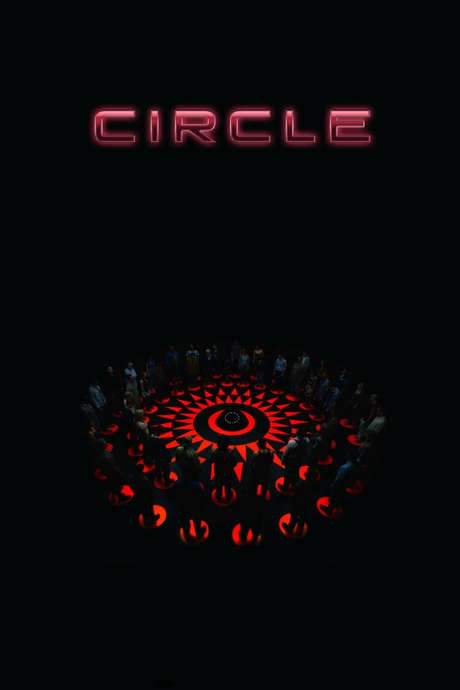
Circle is a 2015 mystery thriller directed by Aaron Hann and Mario Miscione, starring Michael Nardelli as Eric, Bill Lewis and Cesar Garcia. It is partly based on The Circle by Sara B. Elfgren and Mats Strandberg. It runs 1 hour 26 minutes.
- Released
- Runtime
- 1h 26m (86 min)
- Directors
- Aaron Hann and Mario Miscione
- Original language
-
 English
 - Studio
- Votiv Films
- After the credits
- No No extra scene
What Is Circle About?
The premise of Circle without spoilers, adapted from The Circle by Sara B. Elfgren and Mats Strandberg. The whole story is in the plot summary further down.
Fifty strangers find themselves trapped within a vast, enigmatic chamber, with no recollection of how they arrived. Arranged in a circle facing inward, they soon discover a terrifying rule: every two minutes, one of them will be executed by a mysterious device at the room’s center. As the death toll rises, they must work together to uncover the purpose of their imprisonment and find a way to survive.
Circle Cast & Characters
Michael Nardelli leads the cast as Eric, with Bill Lewis as Oldest Man and Cesar Garcia as Tattooed Man. Directed by Aaron Hann and Mario Miscione; 50 actors are credited in all.
- Co-director Aaron Hann
- Co-director Mario Miscione
- Michael Nardelli as Eric
- Bill Lewis as Oldest Man
- Cesar Garcia as Tattooed Man
- Mustafa Speaks as African American Man
Also Starring in Circle
· 46 more- Kaiwi Lyman Bearded Man
- Daniel Lench Rich Man
- David Saucedo Hispanic Man
- Julie Benz Wife
- Jacquelyn Houston Doctor
- Molly Jackson Little Girl
- Allegra Masters Pregnant Girl
- Rivka Rivera Translator
- Marisol Ramirez Woman #1
- Michael McLafferty Lawyer
- Michael DiBacco Cop
- Matt Corboy Husband
- Zachary James Rukavina One-Armed Man
- Lawrence Kao Asian Kid
- Gloria Sandoval Foreign Woman
- Autumn Federici Woman #4
Show all 50 cast members Show fewer cast members
- Mercy Malick Lesbian
- Lisa Pelikan Cancer Survivor
- Jordi Vilasuso Soldier
- Carter Jenkins College Guy
- John Edward Lee Counting Man
- Kurt Long Deacon
- Fay DeWitt Old Woman
- Sara Sanderson Pretty Girl / Christina
- David Reivers Bruce
- Rory Uphold Woman #3
- Leandra Terrazzano Woman #2
- Howard S. Miller Howard / Old Man Liar
- Rene Heger Atheist
- Jay Hawkins Panicking Man
- Han Nah Kim The Asian Girl
- Kevin Sheridan Man #1
- Vee Kumari Quiet Woman
- Floyd Foster Jr. Old Man #2
- Muneer Katchi Silent Man
- Aimee McKay Beth
- Ashley Key Young Girl
- Cameron Cruz Guy
- Brent Stiefel Young Man
- Daniel Yelsky Shaun
- Jamie Lee Redmon Teenage Girl
- DeMaris Gordon Older Woman #2
- Emilio Rossal Man #3
- Marc Cedric Smith Pilot
- Nasrin Mohammedi Muslim Woman
- Shane Spalione Man #2
Circle Plot Summary
What happens in Circle from start to finish, spoilers included, with a timeline of 15 key events. The opening is below; the full summary is a 5-minute read.
Spoilers ahead
Fifty people awaken in a darkened room, arranged in two concentric circles around a mysterious black dome. If anyone moves off their platform or touches another, alarms scream and a lethal beam from the dome strikes, pulling the body away in an instant. A man tries to calm the growing panic, but the device silences him mid-sentence, and soon after, another person dies every two minutes. The fear spreads as the group confronts a brutal, impersonal trap that leaves them with only questions and a shrinking circle of survivors.
Full summary
The whole story of Circle, scene by scene
Circle Trailers & Videos
7 videos: 3 trailers and 4 teasers.
- Trailer Official Trailer
- Trailer Circle - Official Trailer
- Teaser Official Alternate Teaser A
- Teaser Teaser C
How Well Do You Know Circle?
9 questions about the story, each with a hint if you get stuck. Pick an answer to see whether you were right.
Question 1 of 9
- Question 1: not answered
- Question 2: not answered
- Question 3: not answered
- Question 4: not answered
- Question 5: not answered
- Question 6: not answered
- Question 7: not answered
- Question 8: not answered
- Question 9: not answered
How many people are initially trapped in the room at the start of the film?
Circle Also Known As
10 alternative titles, including “Круг” and “Kring”.
- Also known as
-
- Круг
- Kring
- Cercle
- Der Kreis
- Círculo
- 써클
- 詭打牆
- 生存回圈
- サークル
- เซอร์เคิล
Seen Circle?
Circle FAQ: Cast, Runtime & Release Date
Runtime, release date, director, cast, the book behind it and post-credit scenes of Circle, each answered in a sentence.
How long is Circle?
Circle runs 1 hour 26 minutes (86 minutes).
When was Circle released?
Circle was released on May 28, 2015.
Who directed Circle?
Circle was directed by Aaron Hann and Mario Miscione.
Who is in the cast of Circle?
Circle stars Michael Nardelli as Eric, Bill Lewis as Oldest Man and Cesar Garcia as Tattooed Man, among 50 credited actors.
Is Circle based on a book?
Yes. Circle is partly adapted from The Circle by Sara B. Elfgren, Mats Strandberg and Per Carlsson.
Does Circle have a post-credit scene?
No. Circle has no extra scene during or after the credits.
Coming soon to your phone
The Plot Explained Movie Summary App
From blockbusters to hidden gems: plot summaries, endings explained and timelines on your phone. Save your favorites and never miss a twist again.
Be the first to know when it launches. Your email stays private, always. Learn more about the app
