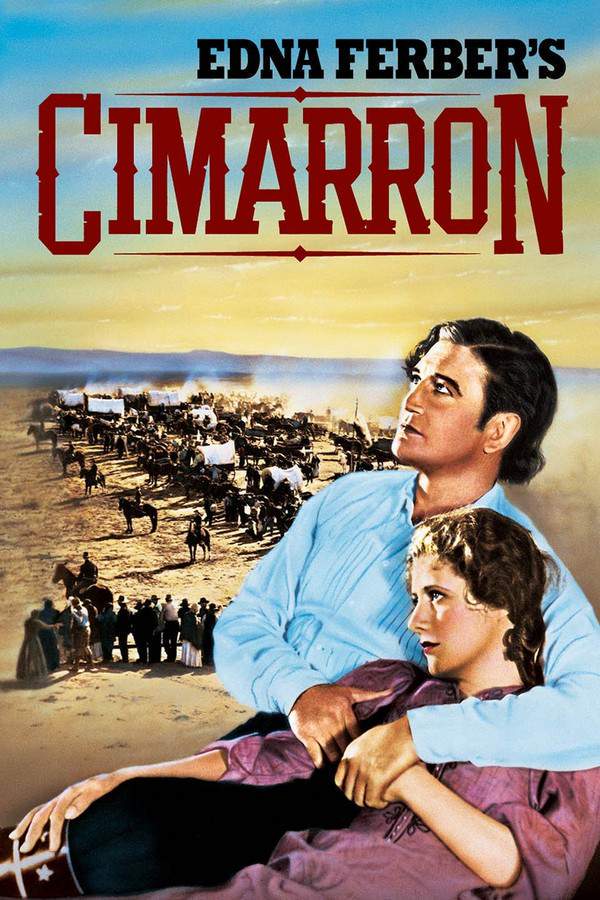
What Is Cimarron About?
The premise of Cimarron in 313 words, with nothing given away. The full story follows below.
In the restless spring of 1889, the promise of the Oklahoma land rush draws a Kansas couple away from the comforts of city life and into a raw, untamed territory where the horizon seems to stretch forever. The open plains pulse with ambition, and every battered wagon carries a hope that the land itself might be reshaped by sheer will. Against this backdrop, Yancey Cravat, a sharp‑minded lawyer, arrives with grand designs of building a future from the ground up, while his young wife, Sabra, steps beside him into a world that rewards resilience as much as ingenuity.
The frontier town that soon rises from dust becomes a crucible for both enterprise and survival. Yancey channels his legal acumen into shaping the community’s foundations, but it is Sabra who finds herself at the helm of the fledgling newspaper that will chronicle every triumph and trial. The paper’s ink stains more than just paper; it marks a declaration that civilization can emerge amid the chaos of a newly claimed land. Within its pages, the couple’s contrasting strengths—his vision and her determination—begin to echo the broader tension between order and the wildness that still simmers beneath the prairie’s serene surface.
As the years unfurl, the couple’s partnership is tested by the relentless demands of frontier life. The prairie’s harsh realities force them to constantly renegotiate roles, ambitions, and the very nature of their relationship. While Yancey pursues opportunities that pull him toward new horizons, Sabra learns to wield the power of the press, shaping public opinion and carving a place for herself in a world that rarely expects a woman to lead. Their story swirls with the promise and uncertainty of a land in transition—a canvas where personal dreams meet the sweeping forces of change, leaving the audience eager to see how love, ambition, and survival will intertwine on the edge of a new America.
What Happens in Cimarron?
The complete story of Cimarron, from the first scene to the last, in 582 words (about 3 minutes). Spoilers throughout.
Spoilers ahead
The film unfolds against the swift, uncertain tide of the 1889 Oklahoma land rush, when thousands surge into the Oklahoma Territory in a bid to claim free government land. Among them, Yancey Cravat and his young wife, Sabra, cross the border from Kansas, chasing a life that can be built from the ground up in a place that promises opportunity but demands grit. In the heat of the scramble, Yancey is outmaneuvered by a young woman named Dixie Lee, who stakes the most coveted piece of dirt—Bear Creek—that Yancey had marked as his own. That single encounter sets a tone of hardship and shifting fortunes that frames the rest of the tale.
With his grand plans for a flourishing ranch dashed, Yancey makes a bold move into the boomtown of Osage. There, he confronts down-on-his-luck outlaws and exacts a fatal justice when Lon Yountis, a man who killed Osage’s previous publisher, crosses his path. Yancey’s experience in publishing nudges him toward a new vocation: he founds the Oklahoma Wigwam, a weekly newspaper that aims to turn the rough frontier into a respectable town. The enterprise brings him into closer contact with his community, and it helps articulate a vision of Osage as a place where law and order, commerce and culture, can coexist.
The Cravats’ life grows richer with the birth of their daughter, Donna, but it is destabilized by a new threat: a gang of outlaws led by “The Kid,” an old acquaintance of Yancey’s. In a tense confrontation, Yancey rises to defend the town and kills The Kid, sealing his reputation as a man who will do whatever is necessary to protect his people. Yet the act weighs on him with guilt, planting a quiet ache that follows him through years of changing seasons.
Seeking a new horizon, Yancey leaves Sabra and their children to pursue another land rush—the Cherokee Strip. Sabra steps into the breach, taking over the Wigwam and raising their children while Yancey fights battles elsewhere and returns home after serving in the Spanish‑American War for five years. He returns not for personal reconciliation alone, but to stand by Dixie Lee, who has been charged with a public nuisance and whom he helps secure an acquittal. The town’s pulse beat on as Osage continued to grow and evolve.
As the territory inches toward greater maturity, the state of Oklahoma finally achieves statehood in 1907, buoyed by an early oil boom that reshapes its economy. The paper and its proprietor become symbols of progress, with Yancey using editorials to support Native American tribes who share the landscape’s dramatic transformation. Yet, as the years pass, Yancey vanishes from Osage once more, and Sabra’s stance hardens. She becomes vehemently anti–Native American, even as her son grows up with an Indian partner—a contradiction that underscores the complexity of a region upending old loyalties.
Time wears on, and Sabra’s political arc rises dramatically: she eventually becomes the first female member of Congress from Oklahoma, celebrated for championing the interests of a state increasingly shaped by its diverse communities, including her by-then Indian daughter-in-law. The arc of their lives converges again in a final act of peril and sacrifice: Yancey resurfaces to rescue numerous oil drillers from a devastating explosion, risking his life to save others. He dies in Sabra’s arms, his long journey complete, the frontier legend finally at rest in the arms of a woman who has witnessed every transformation—from land rush to statehood, from hostility to a fragile, hopeful reconciliation.
Cimarron Timeline: Every Key Event in Order
12 key events in the order they happen, from “Oklahoma land rush begins; Cravat family crosses into the Territory” to “Final reunion and Yancey’s death”. 12 events name a place, across 8 locations.
- 1
Oklahoma land rush begins; Cravat family crosses into the Territory
Thousands head to the Oklahoma Territory to claim free government land during the 1889 rush. Yancey Cravat and his wife Sabra cross the border from Kansas to join the throngs. The rush triggers a scramble for fortune and a new frontier life.
When:1889 Where:Oklahoma Territory border (Kansas-Oklahoma border)
- 2
Dixie Lee outwits Yancey for Bear Creek
During the race, Yancey is outwitted by Dixie Lee, a young prostitute, who secures the Bear Creek claim he had targeted. The maneuver deprives him of what might have been his prime homestead. The incident foreshadows the ruthless competition of the frontier.
When:1889 Where:Bear Creek
- 3
Yancey moves to Osage and confronts Lon Yountis
With his ranch plans foiled, Yancey moves to the boomtown of Osage. He confronts Lon Yountis, the outlaw who killed the town's former publisher, and shoots him dead. The kill clears a path for Yancey's future in Osage.
When:late 1889–1890 Where:Osage
- 4
Yancey founds the Oklahoma Wigwam
Drawing on his publishing background, Yancey establishes the Oklahoma Wigwam, a weekly newspaper, to give the frontier camp a sense of order and legitimacy. The paper helps shape Osage's early community and politics.
When:circa 1890s Where:Osage
- 5
Donna's birth; The Kid threatens Osage; Yancey confronts him
After the birth of their daughter Donna, a gang of outlaws led by The Kid threatens Osage. Yancey steps in to defend the town and ultimately kills The Kid to protect the community.
When:early 1890s Where:Osage
- 6
Yancey leaves for the Cherokee Strip land rush
Guilt over The Kid's death drives Yancey to leave Sabra and their children to pursue the Cherokee Strip land rush. His departure marks a rupture in their marriage and a turn toward new opportunities elsewhere.
When:circa 1890s Where:Cherokee Strip, Oklahoma
- 7
Sabra runs the Wigwam; Yancey returns after five years
While Yancey is away, Sabra takes over the Wigwam and raises their children. He returns after five years, having served in the Spanish-American War, and reunites with his family and their town.
When:circa 1898–1899 Where:Osage
- 8
Yancey defends Dixie Lee and wins acquittal
Not only does he return, but he also represents Dixie Lee in a public nuisance trial and wins her acquittal. His involvement highlights his influence as a publisher turned advocate.
When:circa 1900–1903 Where:Osage courtroom
- 9
Oklahoma gains statehood and oil prosperity grows
Osage and the Oklahoma Territory grow as statehood approaches, realized in 1907. The early oil boom of the 1900s enriches settlers and reshapes Osage's economy.
When:1907 and early 1900s Where:Oklahoma
- 10
Yancey vanishes again; Sabra hardens toward Native Americans
In the following years, Yancey disappears for several years. Meanwhile Sabra pursues a hardline stance against Native Americans, even as her son grows involved with an Indian woman.
When:early 1910s Where:Osage
- 11
Sabra becomes Oklahoma's first female congresswoman
Years later, Sabra becomes the first woman elected to Congress from Oklahoma. She uses her position to champion Native American relatives, including her daughter-in-law.
When:1921 Where:Washington, D.C.
- 12
Final reunion and Yancey’s death
Sabra rushes to Yancey's side after he rescues numerous oil drillers from a devastating explosion. He dies in her arms, marking the end of his long life of frontier leadership.
When:late life (post-1921) Where:Osage/Oil field
Who Are the Main Characters in Cimarron?
4 characters, among them Yancey Cravat (Richard Dix), Sabra Cravat (Irene Dunne) and Dixie Lee: who each one is and the part they play in the story. Every profile links to the actor’s page.
- YC
Yancey Cravat (Richard Dix)
Played by Richard Dix
A driven frontier entrepreneur and former newspaperman who founds the Oklahoma Wigwam to shape a rough camp into a hopeful town. He outsmarts rivals, faces violent threats, and wrestles with guilt after killing The Kid, leading him to seek new land and later return to Osage. His arc spans love, ambition, and personal sacrifice as he dies in Sabra’s arms.
- 💡 Ambition
- 🗡️ Frontier Justice
- 💔 Guilt
-
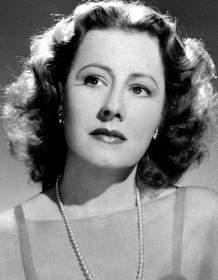
Sabra Cravat (Irene Dunne)
Played by Irene Dunne
Yancey’s wife and a resourceful, strong-willed figure who helps guide the family through frontier upheavals. She later becomes a pivotal guardian of the Wigwam and raises the children while navigating evolving political and social landscapes, even as she contends with anti-Native sentiment in the community.
- 🗞️ Power
- 🧭 Resilience
- 🏛️ Politics
- DL
Dixie Lee
Played by Estelle Taylor
A young prostitute who disrupts the Bear Creek land grab by attracting attention and influencing the land rush outcome. She becomes entangled with the Cravats and is central to a notable legal case in which Sabra helps secure her acquittal, illustrating frontier vulnerabilities and the role of women in the town’s morality debates.
- 💃 Morality
- 💼 Influence
- 🧭 Frontier Sex & Power
- TK
The Kid
Played by Stanley Fields
An outlaw and old acquaintance of Yancey who leads a gang threatening Osage. Yancey’s confrontation with The Kid epitomizes frontier violence and justice, and his eventual encounter with the Kid marks a turning point in Yancey’s stay in the territory.
- 🗡️ Outlaw
- ⚔️ Rivalry
- 🕯️ Redemption
Where and When Is Cimarron Set?
Cimarron is set in Oklahoma Territory, Osage and Bear Creek (1889–1907). Here is why the time and place matter to the story.
When
1889–1907
The narrative spans the core frontier era from the 1889 land rush through Oklahoma’s statehood in 1907. It follows the rise of Osage as a settled community amid the turn-of-the-century boom in oil and industry. The tale also touches the era’s wider events, including the Spanish–American War and the early oil boom.
Where
Oklahoma Territory, Osage, Bear Creek
The story unfolds on the late 19th-century Oklahoma frontier, starting with the 1889 land rush into the Oklahoma Territory. It centers on the boomtown of Osage, where settlers chase land and opportunity amid lawlessness and ambition. The Bear Creek claim becomes a focal point in the race between claimants and fortunes.
- 🗺️ Frontier
- 🇺🇸 Oklahoma Territory
- 💎 Oil Boom
What Are the Themes of Cimarron?
3 ideas the story keeps returning to, among them Media & Influence, Law & Justice and Frontier Change.
-
01
Media & Influence
A central thread is how journalism shapes community power. Yancey builds the Oklahoma Wigwam to frame Osage as a respectable town, and Sabra later wields editorial influence in politics and law. Dixie Lee’s public case intersects with press power, illustrating how media can sway public opinion and outcomes.
-
02
Law & Justice
Frontier justice collides with formal law as outlaws threaten Osage. Yancey’s confrontations with The Kid epitomize the rough pursuit of order on the frontier, while his later actions test the boundaries between vigilante and lawful action. The period’s legal proceedings and personal guilt drive character choices.
-
03
Frontier Change
The story tracks the transformation from border camp to settled town as Oklahoma approaches statehood. Land rushes, newspaper politics, and the oil boom redefine wealth and power on the prairie. Native American presence and shifting alliances reveal the region’s complex social landscape.
What Kind of Film Is Cimarron?
Hopeful in tone, with steady pacing and a complex story, going by the plot summary.
- Tone
- Hopeful
- Pacing
- Steady
- Story
- Complex
- Intensity
- Medium
- Ending
- Bittersweet
A sweeping, decades-spanning epic that balances the harsh struggles of frontier life with a persistent undercurrent of hope, culminating in a bittersweet but meaningful conclusion.
- epic
- hopeful
- melancholic
- reflective
- dramatic
- nostalgic
- frontier life
- marriage
- pioneering
- newspaper
Content notes: death of spouse, frontier violence.
Quiz
How well do you remember Cimarron? Test yourself on the story.
Where to Watch Cimarron
Stream it on Artiflix and Plex, or rent or buy it from Amazon Video and Apple TV Store. US availability and prices from JustWatch.
Stream 3
 Artiflix
  Plex
Plex  Plex Channel




Streaming availability in the US, powered by