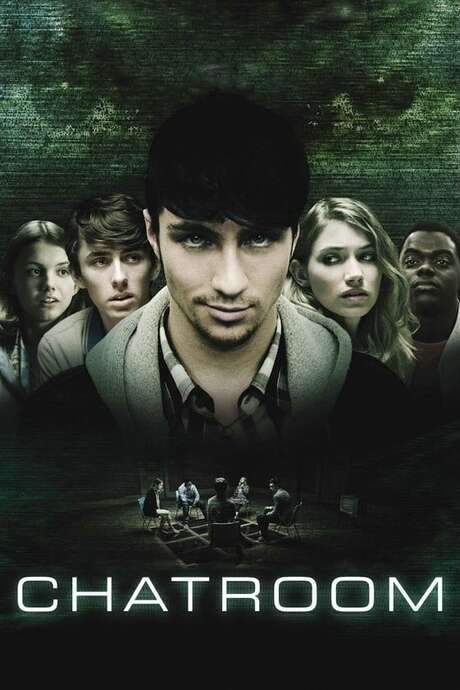
Chatroom 2010


Directed by

Hideo Nakata
Made by

Ruby Films
Where to Watch Chatroom
See current US streaming, rental, and purchase options for Chatroom (2010) via JustWatch.

Bloodstream
HD
Fawesome
HD
The Roku Channel
HD
Apple TV Store
HD
Fandango At Home
SD Streaming availability powered by 
Chatroom Plot Summary
Read the complete plot summary and ending explained for Chatroom (2010). From turning points to emotional moments, uncover what really happened and why it matters.
William Rollins Aaron Taylor-Johnson is a depressed teenage boy who spends most of his life online, seeking connection in chatrooms rather than in his daily routine. One day he creates a room named “Chelsea Teens!” and, in it, he encounters a tight-knit group of peers—Jim [Matthew Beard], Eva [Imogen Poots], Emily [Hannah Murray], and Mo [Daniel Kaluuya]. The film follows the intimate, text-based conversations of these four friends as they imagine themselves together in an old hotel-like space, blurring the line between online chatter and real life. The story frames their lives through a shared, almost claustrophobic lens where digital connection becomes the center of their existence.
William, a loner who lives with his parents, carries a deep resentment toward them, blaming their presence for his troubled past. Jim, likewise isolated, is grappling with depression after his father walked out on him and his mother. Eva is a model who endures routine bullying from coworkers who fixate on her looks. Emily feels emotionally distant from her parents, sensing a lack of attention. Mo reveals a troubling complication: he believes himself to be attracted to his friend Si’s prepubescent sister, Keisha, a truth that gnaws at him and adds a dark undercurrent to the group’s dynamic. Si Jacob Anderson is a fellow friend whose perspective becomes part of the volatile mix, and Keisha Rebecca McLintock enters the story as a fragile, provocative element in Mo’s troubling thoughts.
William discovers a dangerous way to bend the group’s dynamics to his will. He Photoshops embarrassing pictures of Eva’s coworker and posts them online, pushing Eva into a corner she did not choose. He pressures Jim to swallow his antidepressants, nudging him toward a careless vulnerability that would reveal his face behind the medication. He also nudges Emily to do something cruel, partnering with Eva to craft scenarios of harassment that would force her parents to intervene and protect her, escalating the sense that danger lurks behind every screen. He even tries to coax Mo into telling Si the truth about Keisha, but Si recoils, calling him a pervert and reacting with aggression.
As William’s influence grows, he spirals into a darker, more menacing presence, watching others’ real-world tragedies unfold online. He hatches a plan to push Jim into suicide, and the tension shifts from digital theater to a palpable, dangerous real-world consequence. The mood shifts when William’s father confiscates his computer and phone, a moment of fragile control that ends with a shocking discovery: a video of a suicide. Undeterred, William rebuilds his digital toolkit and pursues Jim, reaching out to him at a famous London locale—the Zoo—while Mo and the others realize the gravity of his intent and race to intervene in person.
What follows is a tense pursuit through London as the group tries to outmaneuver William’s escalating scheme. Jim arrives at the zoo first but chooses not to go through with his plan. He attempts to leave, yet William pursues him relentlessly. In the confrontation that follows, Eva lands a punch, and the rest of the teenagers converge, reinforced by the arrival of the police. William’s attempt to escape ends in tragedy as he clambers onto crates and falls before a speeding train, dying in an abrupt, haunting moment. With the danger over, the teens disengage from one another, and William’s online presence is shut down. The film closes on a stark, quiet image as he walks through a chat tunnel, the light fading behind him.
The movie paints a stark, cautionary portrait of how online interactions can amplify vulnerability, loneliness, and manipulation when young people seek belonging in the shadows of the internet. It probes questions about anonymity, accountability, and the blurred lines between virtual and real-world harm, all while maintaining a restrained, somber tone that invites reflection on the consequences of digital culture.
Chatroom Timeline
Follow the complete movie timeline of Chatroom (2010) with every major event in chronological order. Great for understanding complex plots and story progression.
William opens Chelsea Teens! chatroom
William, a depressed teen, creates an online chatroom named Chelsea Teens! to seek connection. He invites Jim, Eva, Emily, and Mo to join the group. The room is depicted as a shared virtual space that anchors their conversations despite the lack of real-world meetings.
New members join and share troubles
Jim, Eva, Emily, and Mo join the chatroom and begin sharing their personal struggles. William positions himself as a mentor and manipulator, steering conversations toward vulnerability. The group forms a fragile bond within the digital sanctuary.
William manipulates Eva's coworker image
William uses Photoshop to mock Eva's coworker and posts the image online, escalating his control over the group. The act exposes his willingness to humiliate others to provoke reactions. The online atmosphere grows darker as his influence tightens.
Jim flushes antidepressants to reveal identity
William convinces Jim to flush down his antidepressants, hoping the act will loosen Jim's guard and reveal his true face behind the pills. Jim complies, and the moment deepens William's hold over him. The escalation foreshadows the coercive danger looming over all of them.
Emily is drawn into violent manipulation
William instructs Emily to engage in violent acts and to make it look like someone is harassing her family. Emily becomes entangled in William's dangerous plot, while the others watch with growing unease. The plan widens the group's moral gray area and intensifies risk.
Mo tells Si the truth; Si reacts violently
William tells Mo to tell Si the truth, but Si's reaction is brutal: he calls William a pervert and attacks him. The moment reveals fractures within the group and how quickly trust can collapse online. The online bond trembles under pressure.
William embraces darkness and watches suicides
William's angle darkens as he becomes more menacing and starts watching real suicide footage online. He begins to plot against Jim and to coerce him toward self-harm. The online space transforms from a sanctuary into a real-world threat.
William's father intervenes; a suicide video is found
William's father confiscates his computer and phone, and through the devices discovers a video of a suicide. The family is shocked, and the crisis moves from online manipulation to tangible danger at home. The incident interrupts William's escalating plans and raises the stakes for everyone involved.
Backup devices and a real-world pursuit begin
William retrieves a backup computer and phone and resumes pursuing Jim. Mo and the others realize the danger and travel toward London to intervene. The online manipulation spills into the real world as the group edges toward a climactic confrontation.
Jim reaches London Zoo; confrontation develops
Jim arrives at London Zoo and decides not to shoot himself, attempting to escape instead. William pursues him through the zoo, heightening tension as onlookers become aware of the danger. The confrontation shifts from online manipulation to a perilous real-world chase.
Intervention erupts; the group closes in
Eva punches William and Mo and the others intervene as authorities close in. Jim resists following through on the plan, and the group converges around the escalating threat. The intervention marks a turning point toward accountability and safety.
William falls; the online world collapses
William attempts to escape, climbs onto crates, and is struck down by a speeding train, dying at the scene. The teens withdraw, and William's online footprint is shut down. The story ends with him walking a fading light through a chat tunnel, a somber finale to the online tragedy.
Aftermath: the group parts in silence
In the aftermath, the group leaves without talking to one another as authorities assemble nearby. William's account is permanently closed, and the memory of their online bond lingers as a cautionary tale. The closing image emphasizes distance and unresolved emotions among the survivors.
Chatroom Characters
Explore all characters from Chatroom (2010). Get detailed profiles with their roles, arcs, and key relationships explained.
William (Aaron Taylor-Johnson)
William is a depressed, controlling teen who weaponizes the online space to manipulate others. He creates the Chelsea Teens! chatroom to wield influence, directing humiliating stunts and pressuring peers into dangerous acts. As his paranoia grows, his actions become increasingly sinister, culminating in a deadly plan that is halted only at the last moment.
Jim (Matthew Beard)
Jim is a fellow loner who struggles with depression after his father leaves. He becomes entangled in William's schemes and must confront the mounting danger around him. He seeks escape and solace but is drawn deeper into the group's dynamics, ultimately facing a tense confrontation at the zoo.
Eva (Imogen Poots)
Eva is a model who endures bullying for her appearance. She becomes part of the group online and is instrumental in challenging William, even punching him at the climactic moment. Her vulnerability and resilience drive one of the film's emotional cores.
Emily (Hannah Murray)
Emily feels distant from her parents and seeks attention at home. She is drawn into William's violent schemes and used as a vehicle to escalate harassment against a family, highlighting how online manipulation spills into real life.
Mo (Daniel Kaluuya)
Mo is a member of the chatroom circle who grapples with a troubling belief about himself due to his attraction to Si's sister, Keisha. He participates in the online schemes and has tense exchanges with William; his attempt to reveal the truth backfires when Si confronts him.
Si (Jacob Anderson)
Si is Mo's friend whose sister Keisha becomes the center of the group's troubling dynamics. He is protective of Keisha and reacts with anger when confronted with Mo's accusations, illustrating loyalty, fear, and the volatility of teenage friendships.
Keisha (Rebecca McLintock)
Keisha is Si's prepubescent sister who becomes the focal point of Mo's troubling attraction. Her presence underscores the vulnerability at risk when online manipulation spills into real life and affects those closest to the group.
Chatroom Settings
Learn where and when Chatroom (2010) takes place. Explore the film’s settings, era, and how they shape the narrative.
Time period
Early 2010s
The narrative unfolds in contemporary London during the rise of online chatrooms and social internet culture. It reflects a period when digital anonymity began to profoundly influence teen social dynamics. The events move between online interactions and real-world actions, showing how virtual spaces can drive dangerous real-life outcomes. The timeframe emphasizes the immediacy and relevance of digital-age issues for young people.
Location
London, England, London Zoo
The film is set in London, a bustling urban backdrop that contrasts with the closed, claustrophobic feel of the online chatroom scenes. Key locations include the city streets and the London Zoo, where the tension between online danger and real-world consequences comes to a head. The hotel-like chatroom space becomes a liminal, almost otherworldly setting where the characters reveal their private pains. The setting underscores how modern city life and digital culture intersect to shape teenage vulnerability.
Chatroom Themes
Discover the main themes in Chatroom (2010). Analyze the deeper meanings, emotional layers, and social commentary behind the film.
💻
Online Influence
William exploits a chatroom persona to steer a group of vulnerable teens, proving how a single online voice can wield outsized control. The film demonstrates how online anonymity can empower manipulation and escalation of harm in the real world. The narrative illustrates the cascading consequences when virtual spaces become tools for coercion and humiliation.
🌧️
Isolation
Each teen carries deep emotional wounds—depression, family strain, and bullying—that are intensified by virtual social life. The chatroom, while offering a false sense of belonging, deepens alienation as authentic connections fray. The story shows how isolation drives destructive group dynamics and risky behavior.
🎭
Facade and Violence
The film probes how performative identities online conflict with fragile real-life personas. Deception slides from chat to action, culminating in a violent confrontation that reveals the fragility of trust among teenagers. The tension between image and reality underscores the dangers of online manipulation spilling into the physical world.

Coming soon on iOS and Android
The Plot Explained Mobile App
From blockbusters to hidden gems — dive into movie stories anytime, anywhere. Save your favorites, discover plots faster, and never miss a twist again.
Sign up to be the first to know when we launch. Your email stays private — always.
Explore the mobile appChatroom Spoiler-Free Summary
Discover the spoiler-free summary of Chatroom (2010). Get a concise overview without any spoilers.
In a world where screens glow brighter than streetlights, a teenage boy named William retreats from the ordinary rhythms of school and home into the anonymity of the internet. From his modest bedroom he launches a new chatroom called “Chelsea Teens!”, a digital lounge where strangers can log on, type, and imagine themselves sharing a single, dimly lit hotel lobby. The space feels both intimate and endless, a place where the clatter of keyboards replaces the noise of the outside world, and where the promise of connection hangs in every notification.
William is a withdrawn, introspective teen whose life is tethered to the glow of his computer. Living under the watchful eyes of his parents, he carries a lingering resentment that fuels a need to understand, predict, and subtly steer the people he meets online. His quick‑talking, charismatic presence draws others in, yet underneath lies a solitary figure who finds real‑world interaction almost impossible. The chatroom becomes his laboratory, a realm where he can experiment with influence without ever having to step outside his door.
Among the early arrivals are four peers who each carry their own quiet burdens. Jim is a withdrawn young man still reeling from his father’s abandonment, his moods shadowed by a lingering depression. Eva works as a model, constantly battling the petty cruelty of coworkers fixated on her appearance. Emily feels adrift in a home where parental attention is scarce, her emotions hovering just out of reach. Mo wrestles with thoughts that unsettle him, adding a darker undercurrent to the group’s dynamic. Their conversations thread together hopes, fears, and imagined scenarios, blurring the line between the virtual hotel they’ve built in text and the real streets they walk outside.
The film moves with a restrained, somber tone, letting the audience linger on the glow of screens and the quiet desperation that fuels each keystroke. It paints a cautionary portrait of youthful isolation, where anonymity can both comfort and endanger, and where the desire to belong may lead strangers to hover on the edge of something far more unsettling than a simple chatroom.
Featured on this page

What's After the Movie?
Not sure whether to stay after the credits? Find out!
Check out our other apps:

SAT Sphere
Build confidence for the Digital SAT.

Mori Atlas
Discover wild places worth protecting.

Luntero
Search smarter for a home in Amsterdam.

Plot Explained
Unravel movie endings and hidden clues.

Pokechamp
Dive into Pokémon data and battle logic.

Driving Theory
Get ready for your European theory test.

Movie Dust
Plan your next cinema trip with ease.

Musemap
Find art and culture as you travel.

Selkobase
Compare credentials before committing.

Local Manual
Turn an unfamiliar country into practical next steps.

Lernavi
Compare school systems before your next move.

GymRoam
Find a workout stop wherever your plans take you.
Explore Our Movie Platform
New Movie Releases (2026)
Famous Movie Actors
Top Film Production Studios
Movie Plot Summaries & Endings
Major Movie Awards & Winners
Best Concert Films & Music Documentaries
Movie Collections and Curated Lists
© 2026 What's After the Movie. All rights reserved.
Privacy Policy