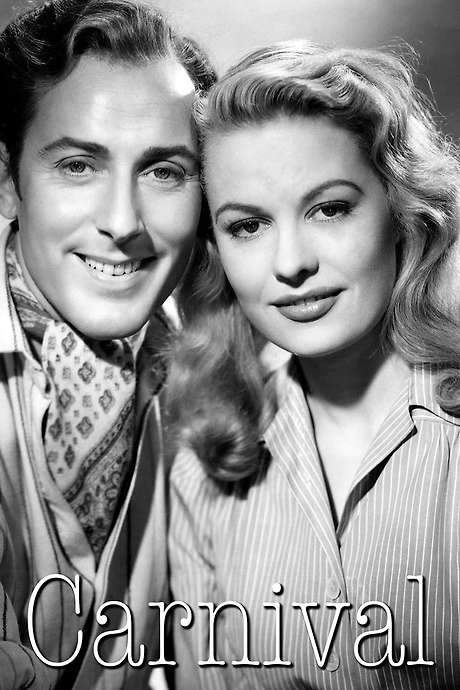
Carnival 1946

Directed by

Stanley Haynes
Made by

Two Cities Films
Carnival Plot Summary
Read the complete plot summary and ending explained for Carnival (1946). From turning points to emotional moments, uncover what really happened and why it matters.
Jenny Sally Gray is born into a life where the theatre’s bright lure sits side by side with everyday struggle. Her father Charlie Raeburn is out at the theatre, watching a clown show—the clown is even his lodger—while three elderly women stand by the bed to lecture Mrs. Raeburn about the follies of a daughter who might choose the stage. This early tension foreshadows a path Jenny steps onto with ease: she grows into a gifted dancer, and the crowd’s attention follows her every move.
As a young performer, she adopts the name Pearl, a shift that signals both glamour and a growing appetite for life’s more glamorous, risky sides. Jenny becomes absolutely stunning to those who glimpse her on stage, and she draws the gaze of many men. During a day spent at an art gallery, she tries to prove that a sculpture of a dancer isn’t truly possible in the real world and, in the process, tumbles, only to be caught by the artist Maurice Avery. Maurice’s presence brings a spark to Jenny’s world, and their growing bond becomes a pivotal thread: he asks her to live with him, but not to marry.
Back at home, the family dynamics swirl with a new lodger, Mr Trewhella. He’s a country man who disapproves of the town’s ways and isn’t shy about voicing his concerns when he notices the male audience’s leering interest in Jenny’s performances. Maurice’s influence is already tugging at her schedule, disturbing rehearsals and nudging her toward a path that could pull her away from family life. Trewhella’s watchful eye and moral stance set up a clash between Jenny’s ambitions and the traditional pressures of the home she returns to each night.
On Jenny’s birthday, Maurice takes her dancing to the Covent Garden Ball and presents a bracelet, hinting at a future they might share in Spain. She leaves the event with a sense of possibility, yet in the morning she wavers and tells her parents she’s leaving. When she goes to Maurice’s studio, she learns that he has already gone ahead, leaving her feelings unsettled. Their mutual friend Fuzz steps in to explain the situation and unexpectedly proposes marriage to Jenny, a path she feels pulled toward in the absence of Maurice. She ends up running off with Fuzz, leaving colleagues and friends with little sympathy for her loss and the fragile choices she makes.
Tragedy and responsibility circle back as her mother dies unexpectedly, and Mr Trewhella reappears with a proposal to marry Jenny and help raise both Jenny and Maisie in Cornwall. Reluctantly, she accepts, stepping into the role of Mistress Trewhella, a title that marks a new, complicated chapter in her life. When Maurice reenters the scene, the two rekindle their forbidden bond, and a final, impulsive moment unfolds: she begs him to take her to Spain, and in a rush of emotion, she faints as he carries her away.
In this story, the allure of art and the pull of home collide, painting a portrait of a young woman navigating her own ambitions, the expectations of others, and the difficult choices that shape a life lived in the public eye.
Carnival Timeline
Follow the complete movie timeline of Carnival (1946) with every major event in chronological order. Great for understanding complex plots and story progression.
Jenny is born into the Raeburn family
Jenny is born into the Raeburn family while her father is away at the theatre. The clown who is also his lodger features in the household, adding a peculiar backdrop to the moment. Three elderly women stand by the bed and lecture Mrs. Raeburn about the folly of her daughter joining the stage.
Jenny appears on stage as a ballerina
Jenny performs on stage as a ballerina, and her father loudly points her out from the balcony. His pride is a spectacle that the audience largely ignores, preferring to watch the performance.
Jenny adopts the name Pearl
She takes the stage name Pearl, signaling a shift in her public persona. She becomes strikingly attractive and begins to draw the attention of men.
The art gallery meet and love affair begins
At an art gallery, she attempts to demonstrate how a dancer's sculpture cannot be physically possible and ends up falling. The artist Maurice Avery catches her, and their love affair begins.
Maurice asks to live with him, not marry
Maurice asks Jenny to live with him, but he makes clear he does not want them to marry. She is drawn to the possibility of a future with him, even as the question of marriage remains open.
New lodger Trewhella moves in and learns of the ballet
A new lodger, Mr Trewhella, moves into the house and is told of Jenny's ballet career. He goes to see Jenny on stage, initiating a watchful dynamic over her life and career.
Trewhella spies after the show and learns of Europe plans
Trewhella spies on Jenny and Maurice as they chat after the show, heightening the sense of surveillance in the house. He learns that Maurice plans to take Jenny to Europe on an artistic tour, though he has not told Jenny yet.
On her birthday, Covent Garden Ball and Spain plan
On her birthday Maurice takes Jenny dancing to the Covent Garden Ball and gives her a bracelet. He tells her he is going to Spain and asks her to join him.
Jenny leaves Maurice; heartbreak and a proposed marriage from Fuzz
She stays out all night and, in the morning, tells her parents she is leaving. Maurice has already gone to Spain, and their mutual friend Fuzz explains the situation and suggests she marry him instead. Jenny runs off with Fuzz.
Mother's death and a new life in Cornwall as Mistress Trewhella
Her colleagues show little sympathy for her loss when her mother dies unexpectedly. Trewhella asks to marry Jenny and to look after both Jenny and Maisie in Cornwall. She reluctantly accepts and becomes Mistress Trewhella.
Maurice reappears; a final tryst and an emergency departure
Maurice reappears and the two resume their affair with a late-night tryst. Jenny asks him to take her to Spain; she faints, and Maurice carries her off to an uncertain future.
Carnival Characters
Explore all characters from Carnival (1946). Get detailed profiles with their roles, arcs, and key relationships explained.
Jenny Pearl (Sally Gray)
Jenny Pearl is a gifted dancer who blossoms on stage, captivating audiences with her charm and presence. She navigates the pull between a demanding career, romantic entanglements, and the expectations of a close-knit family. Her choices—between Maurice's touring world and the security of home—drive the drama and test her loyalty to those she loves.
Maurice Avery (Michael Wilding)
Maurice Avery is an ambitious artist who falls for Jenny's talent and beauty. He offers a life on the road and wooes her with promises of artistic collaboration while avoiding marriage. His presence disrupts Jenny's rehearsals and tests her commitment to family. He embodies a seductive but potentially coercive lure of fame and Europe-bound opportunity.
Mr. Trewhella (Bernard Miles)
Mr. Trewhella is a lodger who becomes a protective yet controlling influence over Jenny. He disapproves of the male gaze and the town's ways, embodying conventional country values. His insistence on marriage and order creates tension between Jenny's independence and family duty. He later becomes Jenny's husband, stepping into a paternalistic role after the mother's death.
Mae Raeburn (Hazel Court)
Mae Raeburn is Jenny's hard-working mother, the family anchor who manages a bustling home. Her death becomes a watershed moment that shifts family dynamics and precipitates changes in Jenny's life. She embodies resilience in the face of hardship and the emotional center of the household.
Florry Raeburn (Catherine Lacey)
Florry Raeburn is Jenny's sister, part of the close-knit family that supports or challenges Jenny's choices. She represents the familial bonds that persist through triumphs and trials, and provides a counterpoint to Jenny's public life with a more intimate, domestic focus.
Fuzz (Michael Clarke)
Fuzz is the mutual friend who offers practical and emotional guidance. He explains the complexities of relationships and participates in the social circle surrounding Jenny. His presence provides humor, loyalty, and a grounded perspective within the theatre world.
Carnival Settings
Learn where and when Carnival (1946) takes place. Explore the film’s settings, era, and how they shape the narrative.
Location
London, Covent Garden, Cornwall, Spain
The narrative unfolds mainly in a British urban setting centered on theatre and family life. Covent Garden serves as the hub of Jenny's public performances and the social spectacle around her. The story also travels to Cornwall as a domestic backdrop after marriage, and hints at a Spain-bound artistic tour, underscoring the lure of Europe beyond the town.
Carnival Themes
Discover the main themes in Carnival (1946). Analyze the deeper meanings, emotional layers, and social commentary behind the film.
❤️
Love vs Ambition
Jenny's romance with Maurice competes with her drive to succeed on the stage. Maurice offers a life of art and travel, but not lasting commitment. The relationship tests loyalty to family, autonomy, and the costs of pursuing fame. The tension between personal happiness and career defines many of her choices.
🧭
Freedom vs Control
Mr. Trewhella embodies traditional, country values and a protective, controlling stance over Jenny's life. His disapproval of male gaze and urban ways reflects social norms that constrain a young woman's ambitions. The threat of arranged marriage or domestic confinement shadows her artistic dreams. The film uses this tension to critique societal expectations placed on women.
🎭
Public vs Private Life
Jenny's on-stage persona contrasts with the secrecy and vulnerability of her personal relationships. The theatre world presents an ideal of glamour while masking manipulation from figures like Maurice. The story reveals the fine line between performance and authentic self, and the price of living in the spotlight.

Coming soon on iOS and Android
The Plot Explained Mobile App
From blockbusters to hidden gems — dive into movie stories anytime, anywhere. Save your favorites, discover plots faster, and never miss a twist again.
Sign up to be the first to know when we launch. Your email stays private — always.
Explore the mobile appCarnival Spoiler-Free Summary
Discover the spoiler-free summary of Carnival (1946). Get a concise overview without any spoilers.
In the swirling elegance of 19th‑century London’s theatres, a young woman discovers a world where music, motion, and applause become the very rhythm of her heartbeat. Born into a household that watches the stage from the periphery, she hones a rare talent for ballet, learning to command an audience with a single, graceful pirouette. The era’s glittering costumes and the hush of the footlights create a luminous backdrop for a life that feels destined for the boards, and her very name begins to echo with the promise of fame.
Yet love pulls her away from that bright promenade. She marries a quiet, steadfast farmer from the rugged cliffs of Cornwall, a man whose steady presence offers security but also a stark departure from the city’s sparkle. As Mr Trewhella settles her into the rhythms of rural life—early mornings, expansive fields, and a community that watches with a different kind of scrutiny—her once‑vivid world narrows. The isolation of the countryside, with its muted colors and relentless labor, sets a delicate contrast against the flamboyant stage she once commanded.
Amid the hush of that distant land, a lingering ache begins to surface. The memory of a former lover, an artist whose brush once captured the movement she embodied, flickers like a distant lantern on the horizon. Maurice’s name, spoken in quiet reverence, carries the scent of canvases, galleries, and the electrifying possibility of a life unbound by convention. As her husband’s watchful eyes sense this quiet yearning, the film settles into a tender, melancholic tone—balancing the yearning for artistic freedom with the responsibilities of a marriage that anchors her in a world far from the spotlight.
Movies with Similar Twists and Themes
Uncover films that echo the narrative beats, emotional arcs, or dramatic twists of the one you're exploring. These recommendations are handpicked based on story depth, thematic resonance, and spoiler-worthy moments — perfect for fans who crave more of the same intrigue.




Featured on this page

What's After the Movie?
Not sure whether to stay after the credits? Find out!
Check out our other apps:

SAT Sphere
Build confidence for the Digital SAT.

Mori Atlas
Discover wild places worth protecting.

Luntero
Search smarter for a home in Amsterdam.

Plot Explained
Unravel movie endings and hidden clues.

Pokechamp
Dive into Pokémon data and battle logic.

Driving Theory
Get ready for your European theory test.

Movie Dust
Plan your next cinema trip with ease.

Musemap
Find art and culture as you travel.

Selkobase
Compare credentials before committing.

Local Manual
Turn an unfamiliar country into practical next steps.

Lernavi
Compare school systems before your next move.

GymRoam
Find a workout stop wherever your plans take you.
Explore Our Movie Platform
New Movie Releases (2026)
Famous Movie Actors
Top Film Production Studios
Movie Plot Summaries & Endings
Major Movie Awards & Winners
Best Concert Films & Music Documentaries
Movie Collections and Curated Lists
© 2026 What's After the Movie. All rights reserved.
Privacy Policy